
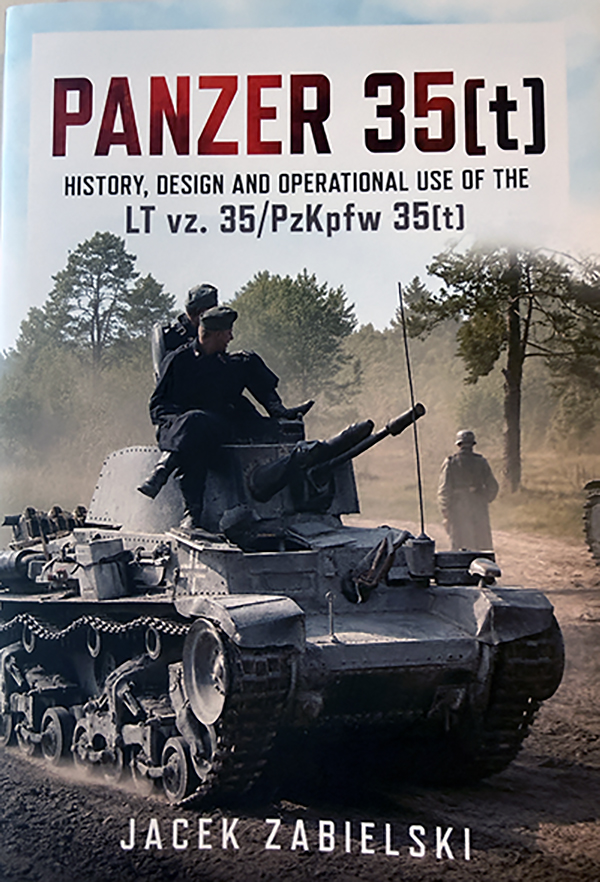
Panzer 35(t): History, Design and Operational Use of the LT vz. 35/PzKpfw 35(t)
Jacek Zabielski’s new monograph arrives as a welcome addition to the literature on early-war light tanks. The LT vz. 35—better known in German service as the Panzerkampfwagen 35(t)—has long occupied an awkward middle ground: important enough to appear in most general accounts of the 1939–41 campaigns, yet rarely given sustained, dedicated treatment in English. This book sets out to correct that imbalance.
Scope and Approach
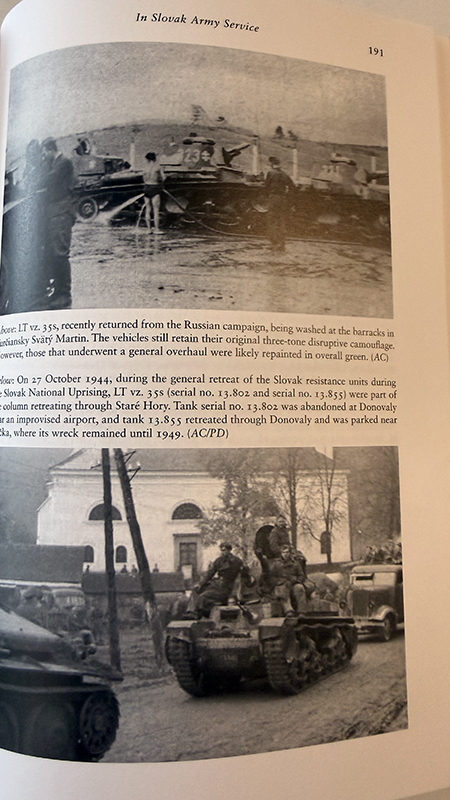
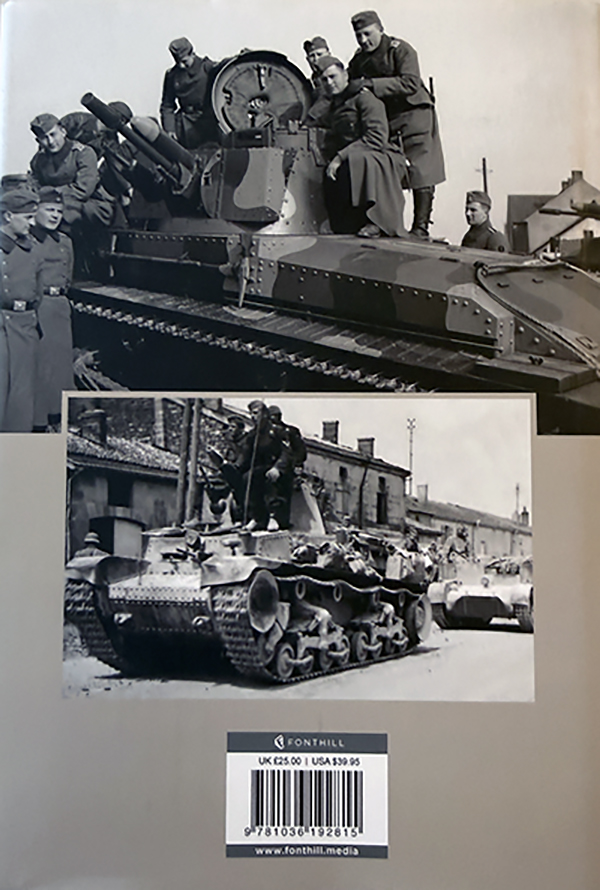
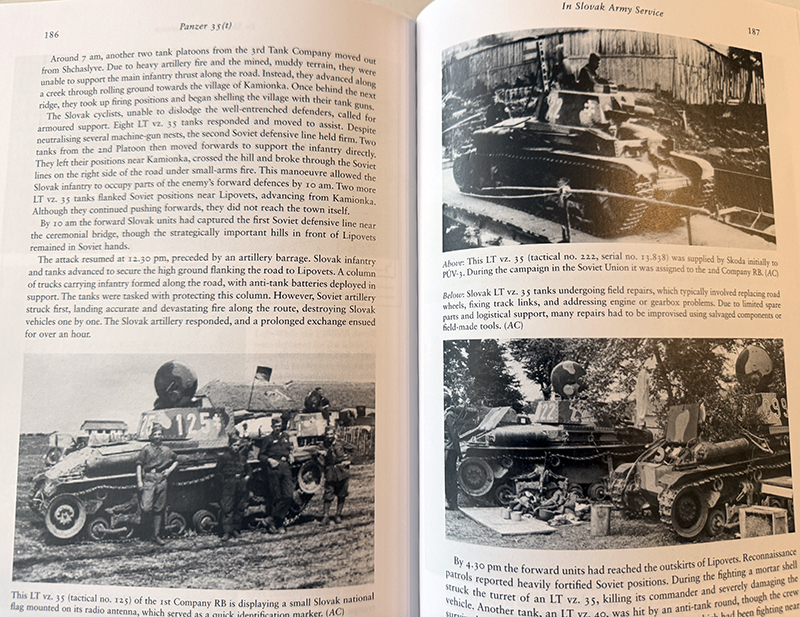
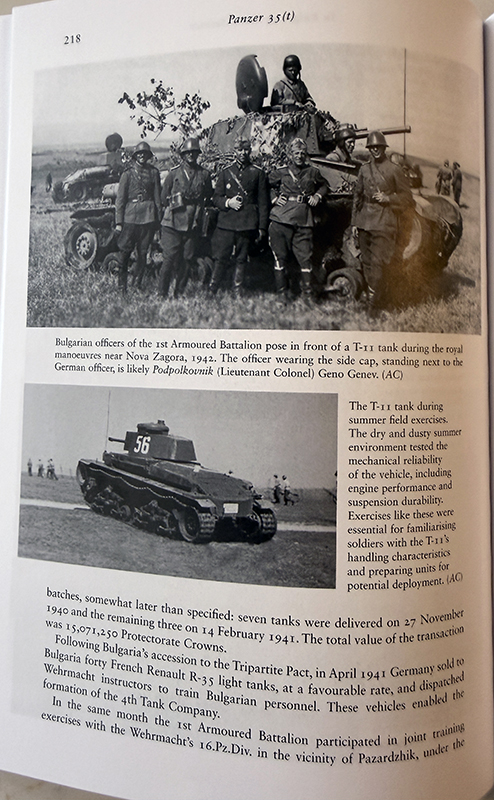
The work covers the tank’s full arc: its origins as a Škoda design for the interwar Czechoslovak Army, technical development, production, and subsequent use by Germany, Slovakia, Romania, Bulgaria, and other operators. Particular attention is paid to mobility, mechanical features, reliability, and the vehicle’s performance in the early Blitzkrieg campaigns in Poland and France, as well as its later service on the Eastern Front before obsolescence set in. The publisher notes roughly 260 black-and-white illustrations supporting the text.
Zabielski, a Polish researcher with a background in international relations and a focus on Central and Eastern European military technology, approaches the subject as both a technical study and an operational history. The result is positioned as a comprehensive single-volume treatment rather than a pure modelling reference or a purely narrative campaign account.
Strengths
The book’s greatest value lies in bringing together the Czechoslovak design history with the German (and Allied) operational record in one place. Many earlier English-language sources treat the 35(t) mainly as a captured asset that temporarily bolstered the Panzerwaffe; Zabielski restores the vehicle’s original context while still giving full weight to its German service. The emphasis on mechanical reliability and adaptability across different armies is a useful corrective to the tendency to judge all early-war light tanks solely by later 1941–42 standards.
For readers interested in the practical realities of German armored expansion before the appearance of larger numbers of Panzer III and IV, the operational sections on Poland and France should prove especially useful. The inclusion of service with Slovak, Romanian, and Bulgarian forces further broadens the picture beyond the usual Wehrmacht-centric view.
Limitations and Caveats
As a very recent release (September 2026), detailed independent assessments of research depth, photo quality, and production standards are still limited. Like most Fonthill monographs, it is a specialized hardcover aimed at enthusiasts rather than a mass-market narrative history; readers seeking extensive color profiles or 1:35-scale drawings may need to supplement it with modelling-oriented titles.
Verdict
Panzer 35(t) fills a genuine gap. It offers a focused, illustrated study of a tank that punched above its weight in the opening years of the Second World War and then faded from the spotlight. Zabielski’s combination of technical detail and multi-national operational coverage makes it a solid reference for anyone serious about early Panzer divisions, Czechoslovak interwar armor, or the broader story of how captured equipment shaped German forces in 1939–41.
Recommended for armor historians, modelers working on early-war subjects, and readers who prefer single-vehicle monographs over broader campaign surveys. A worthwhile addition to the shelf alongside the better-known studies of the Panzer 38(t). My thanks to Casemate and IPMS/USA for the review copy.
Comments
Add new comment
This site is protected by reCAPTCHA and the Google Privacy Policy and Terms of Service apply.
Similar Reviews