In this follow up to his volume on German aircraft, author Mark Wilkins takes an in-depth look at the concepts, design, and construction of the fighters from five of Britain’s most prominent Great War aircraft manufacturers. This profusely illustrated book uses images taken from manufacturers’ drawings and plans, period photographs and advertisements as well as numerous images of museum and privately built and owned replicas.
Reviews
Price on the CCI website shows 30 Pds. Equivavent US currency is $42.53 plus shipping.
Cross & Cockade International is a non-profit UK based group known as the First World War Aviation Historical Society that publishes their journal four times a year. They also provide a free newsletter (sign up on their website) and occasionally publish WWI themed books like the Sopwith Dolphin monograph I reviewed earlier for IPMS USA. This Journal is the sister of the US Journal, Over the Front.
As an avid reader of books regarding the various aerial campaigns of World War Two, when I saw the title of this book I realized that other that reading about The US Army Air Corps’ campaign against the Romanian oil fields I really did not know much about the air war that was fought between Germany and its allies against the Soviet Air Force in southeastern Europe. Given the title of the book, I was looking forward to stories of air combat between Russian Yaks and Laggs and German Messerschmitts and Focke Wulfs, however, this book is actually more of a broad overview of the Russian campaign to drive the Germans from Hungary, particularly the city of Budapest.
Another quick addition to the lovely new Tamiya 1/48th scale F-4B is this decal set which includes decals to recreate the numerous numbers and cautions found on the aircraft's access doors. Also included are decals to recreate yellow canopy rain seals, as well as adding details to engine nozzles.
Inside the package, there is a large foldout sheet with large enough print to add all the appropriate decals for the door markings. What I found nice is the size of the instructions which open to 10” x 14” and are dual sided; top on one side and bottom on the other. Also included in this set are additional markings for the F-4J. The instructions are color coded with black being both B and J versions; Red is specific for the B version and Green is specific for J versions only. And did I mention they are big enough to actually read!
The MiG-25 conjures up, at least for me, huge engines and wicked speed. I remember when the Russian pilot defected to Japan in one. It was impressive looking. That was at a time when the Russian military was very secretive. I’ve always had a love of the bad guys, and in my early military days there was none badder than the MiG-25.
This paperbound book contains 122 pages of information that is easy to read. Once I sat down with the book, I did not want to put it down. There are close to 50 black and white photos, some show unique markings. This book is unique in its ability to follow the combat career of this fighter type. Starting in the first chapter we are taken through the development of the aircraft.
When visiting the D&S website, note that when the page opens it will feature a series of publications labeled, “Detail & Scale Series”. To find the publication being reviewed here, scroll down to find the “Colors & Markings Series” in which this publication is listed.
About the Authors
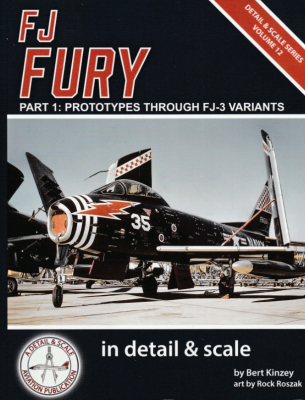
Bert Kinzey is well known as the creator/author of the Detail & Scale series of publications. These publications, as noted in Kinzey’s bio on page 121 of the F9F Cougar publication focused on the details of aircraft featured in the D&S series. Those details included “the cockpit, weapon systems, radars and avionics systems, differences between variants, airframe design and much more.” (D&S F9F Cougar, Page 121).
As a figure modeler for roughly half a century, I’d like to think I know a wee bit about the Napoleonic Wars. And yet, up until recently I really had no idea that the Danes were much involved in that series of scuffles until I sat down with this little volume. Although the author David Wilson doesn’t dwell a great deal on Denmark’s direct involvement, apparently Denmark joined sides with Napoleon when the British attacked the Danish fleet in Copenhagen’s harbor in 1801 and then the city itself in 1807. Napoleon’s eventual defeat also led to the disintegration of the Denmark-Norwegian union and the end to almost a century of peace in the region.
“Air Wars between Ecuador and Peru” is volume 3, Operations over the Cenepa river valley 1995 is the final book in the three part air war series between these two countries. The author who is from Peru goes through great detail from both sides with a strong emphasis from the Peruvian perspective which is understandable. The book is 80 pages of print and eight pages dedicated of colorful aircraft art, photos and a map. There is a list of abbreviations included at the beginning of the book.
This third volume of Claringbould’s aircraft profiles, the first of Allied aircraft, highlights the Douglas A-20 Havoc (Boston to the Commonwealth forces). The A-20, and its stablemate the B-25, were the two-workhorse low level attack aircraft of the US Fifth Air Force in the Southwest Pacific.
Artillery has generally been known as the King of Battle for quite a long time and for good reason. The ability to reach out and touch your opponent on a battlefield is an obvious advantage. And if you can do that first, further, with more power than your opponent there’s a strong chance your forces are going to win the day. Battlefield artillery has come a long way since the United States has been in existence, and the US has found itself at the forefront of that development. This book gives that history a quick glance in both text and pictures.