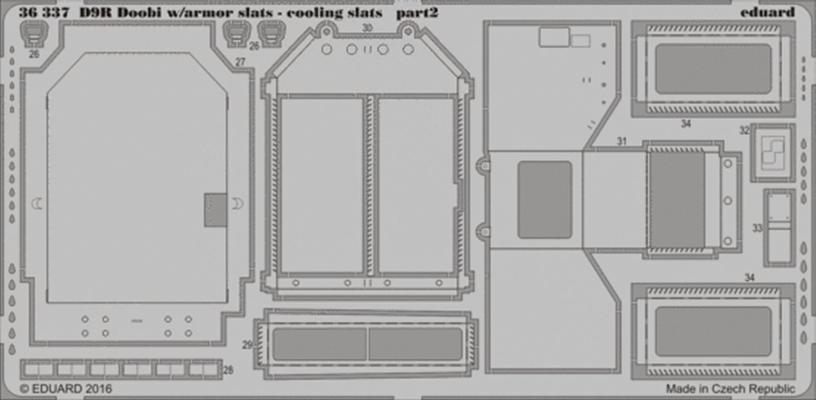
With the recent release of the updated Meng 1/35 D9R Armored Bulldozer to include slat armor, Eduard has released a number of photo-etch detail sets to update the kit and add new details. This is a Meng kit so the detail is fantastic, but there can always be some room for improvement. This set includes replacements for all of the cooling slats and a few other parts.
all 2016
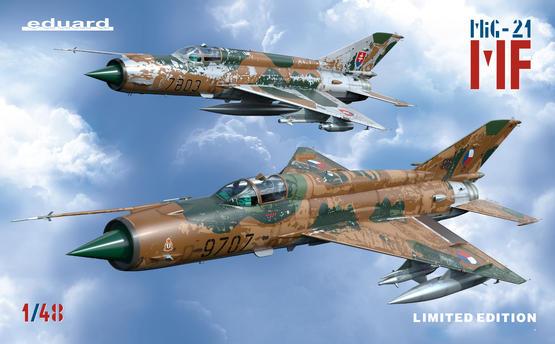
The MiG-21 is one the most iconic and recognizable airplanes ever produced. An astonishing 11,000 aircraft were built in the USSR alone in its 15 year service life in the Soviet Air Force and a number of countries were given licenses to produce it as well. Given the codename “Fishbed” by NATO, the MiG-21 has been in service for more air arms around the world than any other fighter aircraft. With this in mind Eduard has rereleased their fantastic kit of the MiG-21 MF with a staggering number of markings as a new special edition kit.
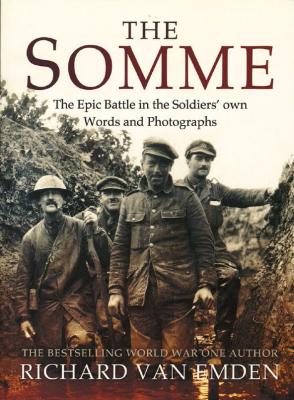
The Somme by Richard Van Emden was originally published in England by Pen and Sword as a hard cover book on May 24, 2016 and a soft cover on June 6, 2016. Casemate released this soft cover edition on August 19, 2016.
London resident Richard van Emden has written profusely on the subject on World War One. He worked as a journalist after graduating from Newcastle University in 1988. He books focus on World War I and include: Tickled to Death to Go, Prisoners of the Kaiser, The Trench, Sapper Martin, Last Man Standing, Britain’s Last Tommies, Famous, Veterans, Boy Soldiers of the Great War, The Soldier’s War, and Tommy’s Ark. He has interviewed over 270 veterans of the Great War and many of those interviews are used in this book. Richard Van Emden also is heavily involved in television programs about The Great War and includes Veterans, Roses of No Man’s Land, The Boy Soldiers of the Great War, and The Real War Horse.
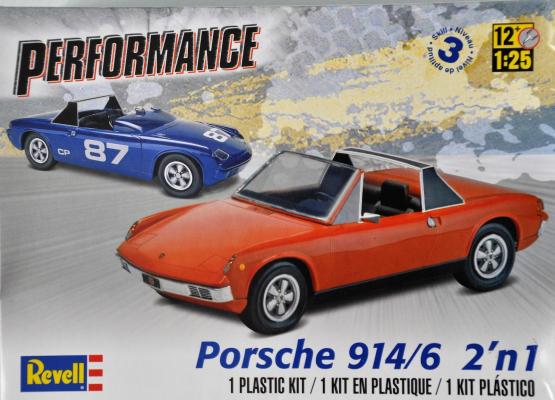
Created as a joint project between corporate partners Porsche and Volkswagen, the 914-6 hit the US market badged as a Porsche. It could have been called a Volkswagen, and in Europe, it was!!!! Produced in two mid-engine versions; a woefully underpowered four cylinder (-4) and six cylinder (-6). Each manufacturer had reservations about both versions. Designed to replace the entry level 912, it became the leading seller in the Porsche stable, the -6 version costing nearly as much as the 911!! The 914 was highly visible both on the road and on the track. I chose to build my sample as the stock version.
Molded in White Plastic, with one sprue of chrome plated parts, some clear parts and four vinyl tires the kit consists of 70 parts. Parts for both the street stock and racing version are included. Instructions and a sheet of decals complete the kit.
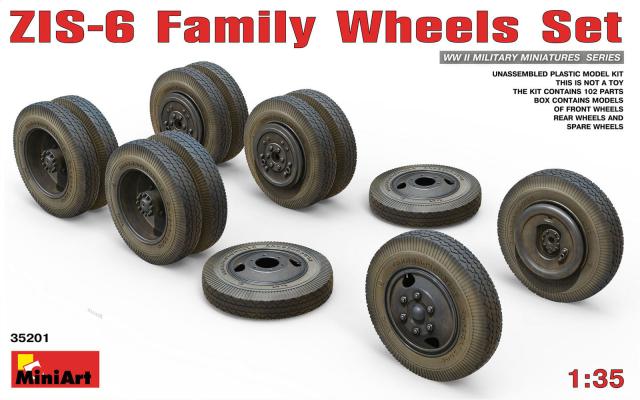
If you are building any of the host of Russian military trucks from the Great War, you may find yourself mumbling at the rather iffy rubber tires frequently included with the kits. Although a number of manufacturers have come out with really excellent kits of these workhorses of the Soviet Army, the tires included seem to be a regular stumbling block.
MiniArt has addressed this problem with a series of new detail sets that create beautifully detailed renditions to replace the soft tires included with most of these kits. This set, for instance, not only provides 12 complete tires, but the various hubs, bolts and brake drums needed as well. Each tire itself is composed of five individual “wafers” that when assembled create a realistic and detailed tread pattern. Finely molded manufacturer’s logos are included, of course.
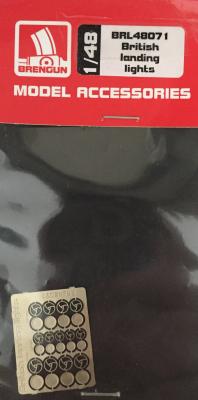
Honestly until I built an Eduard Fulmar last year I didn’t know about the distinctive design of the British landing light. Now, if you are so inclined to add a great scale detail to your British aircraft look no further. Brengun has a wonderful set of photoetched landing lights for most any 1/48 British subject.
Thanks to Eduard for providing more of their excellent aftermarket parts for IPMS USA to review, and to IPMS leadership for sending it to me!
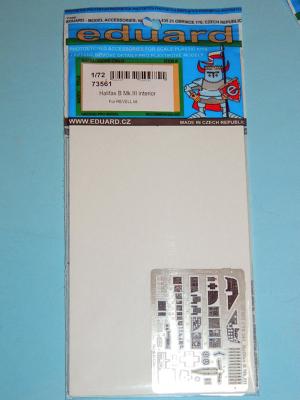
This set vastly improves the appearance and detail of Revell’s 1/72 halifax B III. The kit consists of all the requisite improvements for the forward crew section on the Halifax: a new pilot seat, seat harnesses, instrument/control panels, engine throttles and control levers, radio and bulkhead details, and sidewall details.
This set is simple to use and improves the kit cockpit with little fuss. The parts are not self-adhesive, so there is a need to use your favorite cement/glue to attach things. I use Gator Loups’ polyurethane “Gator glue” for the instrument lamentations, and superglue to attach everything else.
This is a single media kit comprised of 85+ styrene parts, DS tracks, no photo etched parts fret, and a standard set of instructions, they need to be reviewed very carefully before gluing any parts together.
Thanks to Eduard for providing more of their excellent aftermarket parts for IPMS USA to review, and to IPMS leadership for sending it to me!
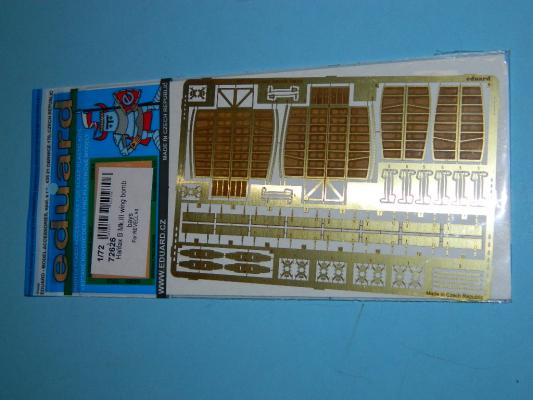
Early British bombers were designed with wing bomb bays; these have been overlooked in the past, but this set brings the mystery of this equipment out of the darkness and improves the appearance and detail of Revell’s 1/72 Halifax B III; Consisting of all the requisite improvements for the wing bomb bays, including bomb racks, doors, and mounting hardware.
This set is simple to use; Revell provides convenient guides on the inside of the lower wing sections to make it easy to remove the closed kit doors; use a straight edge and #11 blade to do so. I used thick superglue to attach everything on this set.
A bit of simple folding is required for the bomb interior frames, just be careful of alignment while the glue dries and don’t push them too far out past the exterior of the wing. Take your time, and everything fits.
Thanks to Eduard for providing more of their excellent aftermarket parts for IPMS USA to review, and to IPMS leadership for sending it to me!
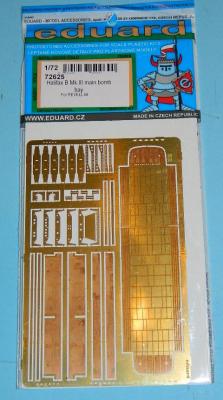
This set vastly improves the appearance and detail of Revell’s 1/72 Halifax II and III; consisting of a ceiling section, individual frame elements and door inserts, with relief detail etched in place, it is well worth acquiring if you intend to build your Halifax with the bomb bay open.
Like many Eduard sets, This main fuselage bomb bay is not for the faint of heart; it requires patience, dexterity, skill, and a lot of luck to pull off a successful installation. Only the hard-core need apply; it is not a beginner set, but in the hands of practiced modelers, makes a huge impact on the final product.
Remember rule 1: Metal work-hardens every time you bend it. Breakage is a way of life… if you try to bend things more than once, you MIGHT get a second chance…
The Kit
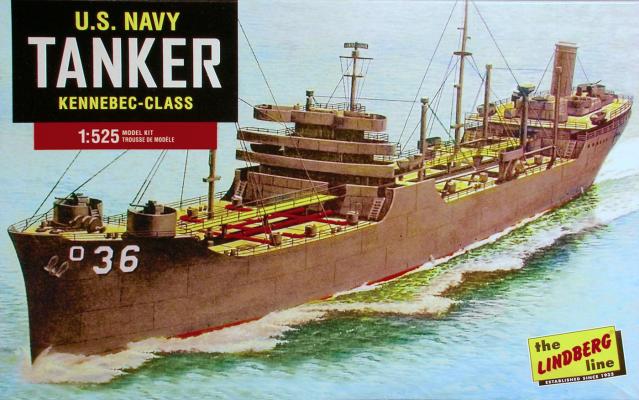
Round 2 Model Company purchased the rights to the entire Lindberg line and they have been releasing selected kits gradually. In the past, “real modelers” disparaged the Lindberg Line as being inaccurate and simplistic, but these kits were never designed to be the be all and end all of accuracy, even at the time long ago when they were released. They were designed to generally represent the subject and do so in a kit that was easy to assemble and reasonably priced. By today’s standards, they are not what most ship modelers are looking for, however if you’ve got a youngster you’re trying to get involved in the hobby or maybe a Brownie or Cub Scout group, they would make great projects and teaching tools. Or, maybe you want to try out some new techniques. These kits would make great test beds for that.
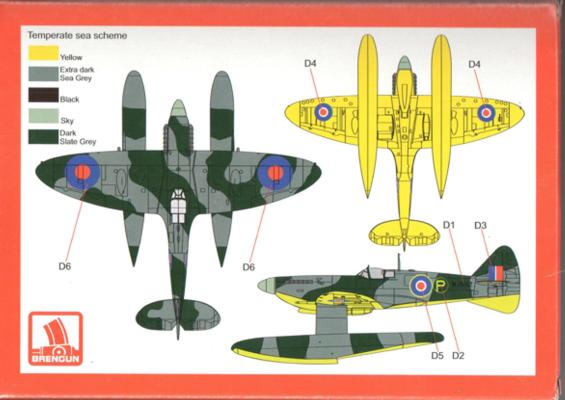
Thank you to the great folks at Hauler-Brengun for bringing a welcome and unique variant of the iconic Spitfire to the scale model world. Thank you also to the IPMS Reviewer Corps staff members who do the hard work in getting us kits to review.
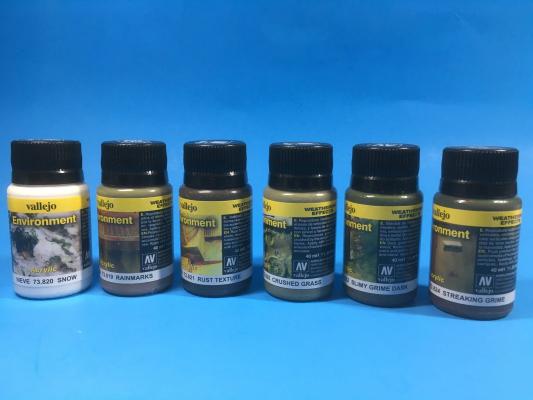
I am very appreciative of Acrylicos Vallejo (AV) for sending new products for review, and I am equally appreciative of all the Review Corps crew members who take care of all of the legwork to get materials to reviewers and the completed reviews published for the modeling community. It is a privilege to be part of this manufacturer-modeler group effort.
Thanks to Eduard for providing more of their excellent aftermarket parts for IPMS USA to review, and to IPMS leadership for sending it to me!
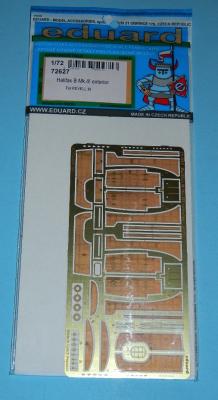
This set seriously improves the appearance and detail of Revell’s 1/72 halifax B III; consisting of all the requisite improvements for the landing gear bays, and a few sundry other bits and pieces like the aft fuselage between the tail turret and mainframe, plus details for the landing gear frames.
This set is simple to use and improves the kit exterior. Main gear bays are improved with front and aft bulhead details, stringers, and detailed sidewalls. The gear doors have interior lamentaitons added for detail, as well as positive-attachment hinges. I used thick superglue to attach everything on this set.
Using a curved #11 blade, I removed the necessary internal plastic details to be replaced as preparatory work.
Background
Of the many consumable items available to the modern-day modeler, pre-cut masking aids are perhaps one of the most useful types on the market. Originally targeting aircraft areas of interest, recent years have seen a tremendous proliferation into other genre – including military vehicles.
The Product
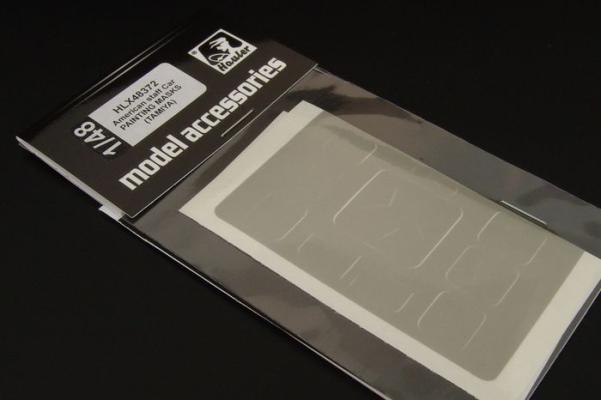
A recent and pleasant surprise was to see Hauler offer a masking set for Tamiya’s 1/48 scale US Staff Car kit. Having that model on the near-term build list, I just had to jump at the chance to try some Hauler masks for the first time. The set contains two sheets of finely cut, super-thin vinyl masks for glass areas and wheel hubs, and stencils for national insignia stars. A single sheet of placement diagrams is more than sufficient for applying the masks.
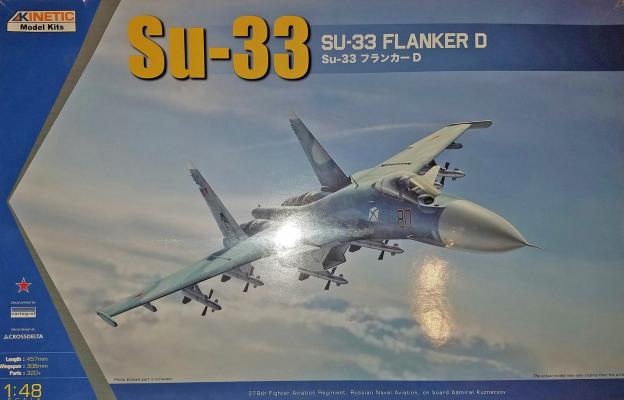
The Su-33 Flanker-D is the carrier based twin-engine air superiority fighter derived from the Su-27. It was first used back in 1995 and officially entered service in 1998. However with the break up of the Soviet Union only 24 of this aircraft were produced. In comparison to the Su-27, the Su-33 has a strengthened undercarriage and structure, folding wings and stabilizers, better engines and of course the wings are larger to increase lift.
We thank Mushroom Model Publications for providing this book for review.
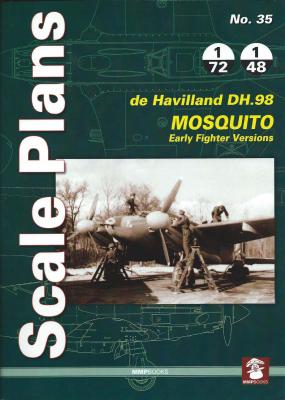
The De Havilland Mosquito was arguably the most versatile and successful twin-engine aircraft of World War II. It was originally designed as an unarmed bomber and reconnaissance aircraft. However, it excelled in other rolls that included day and night fighter, fighter-bomber, pathfinder, and high-speed military transport. It was constructed mainly of balsawood sandwiched between sheets of birch and covered with a fine woven cotton fabric and painted with a coat of silver dope. Its two Rolls-Royce Merlin engines gave it a maximum speed in the 380 mph range. Its beauty and war record has made it one of the most popular RAF aircraft of World War II.
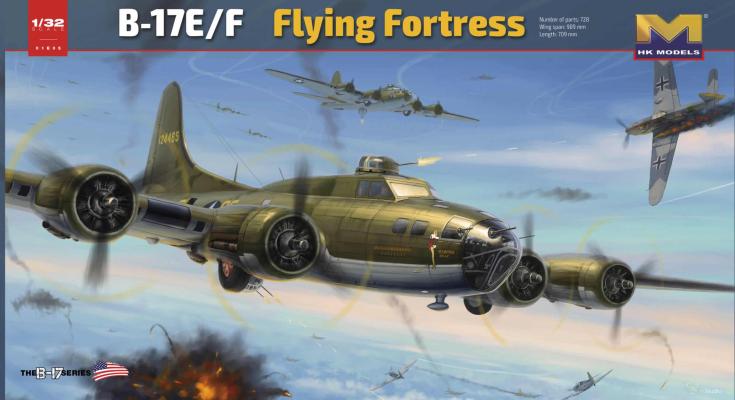
Beginning with the rest of the fuselage assembly (from Part I of my review), the fit of the two fuselage halves was good, but my alignment of the bomb bay catwalk and structure must have been a little off, since it’s slightly closer to one side. I installed most of the glass except for the radio hatch and nose; the waist and nose glass had to be sanded to fit. I used Micro Mask to mask the windows since I couldn’t find an aftermarket mask set for the E model. Some spots must have not been covered, because it was a lot of work to clean off overspray.
Thanks to Eduard for providing more of their excellent aftermarket parts for IPMS USA to review, and to IPMS leadership for sending it to me!
This set is simple to use; Kabuki tape masks for all the clear bits! Included are masks for all the windows, canopy parts, and gun turrets, and wheels. One benefit of these sets is the ability to mask off VERY tiny windows; in this case, all the 1/8” round porthole windows, and some of the intersecting canopy window bits. These can be less than 1/16” across, and are VERY difficult to mask; same with the turret frames, because of the complex curves. Eduard utilizes multiple small tape masks to make sure you cover all the areas without wrinkling, which leads to paint creep under the tape.
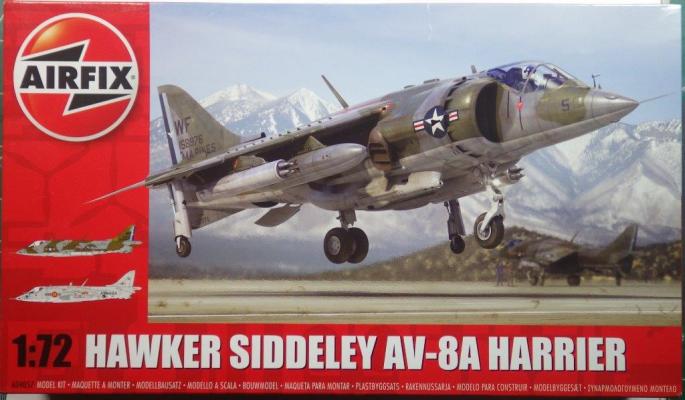
Following its successful introduction into service with the Royal Airforce, the Harrier generated considerable interest for export orders to other countries. The largest demand for the vertical take-off and landing aircraft came from the United States Marine Corps, who saw the excellent potential to provide close air support while operating from the decks of the smaller amphibious landing ships supporting the Marines. Starting in the early 1970s, the Harrier entered service with the USMC. The AV-8A Harrier was used by the Marines until 1979, when it was replaced by the AV-8C, and today the USMC flies the AV-8B Harrier II.
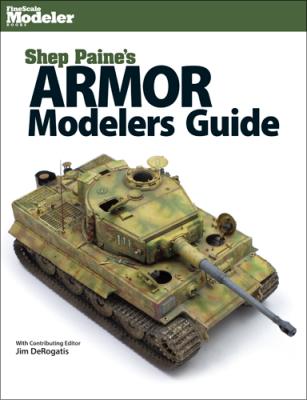
The Introduction is appropriately named ‘The Legacy of Shep Paine’ written by Jim DeRogatis. These four pages offer a wonderful view into the late Sheperd Paine’s life’s work and modeling history. Many of us older modelers first became aware of Sheperd’s work through his tip sheets that came with select Monogram kits of the 1970's then later with Tamiya kits during the 1980's. Shep was also an avid military historian and collector of military artifacts.
The book's contents are divided into two sections, 'The ‘Basics’ by Sheperd Paine and ‘Projects’ featuring eight projects by different modelers. The ‘Basics’ covers all the bases from the fundamentals in chapter one of ‘Assembling Armor Kits’ including a helpful ‘Parts of a Tank’ tutorial.
Researching the subject, its uses, its environments are explained by Shep in ‘Doing Research’ chapter two. Shep also addresses working with scale drawings and evaluating conflicting references.
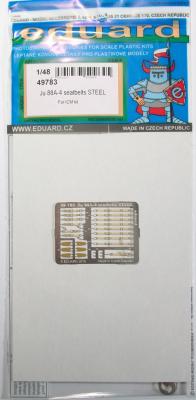
This is a photoetch steel seatbelt set for the ICM Ju88A-4 which has no seatbelts and really needs them. This set is colored and also made of steel which means they are better for forming. They are very realistic and accurate and really make the cockpit stand out.
In the packet is:
- 1 colored photoetch steel sheet
- 1 instruction sheet
Summary
This is a fantastic set for the set for a kit that needs them.
Thanks go to Eduard for providing this set to review and IPMS USA for allowing me to review it for them.
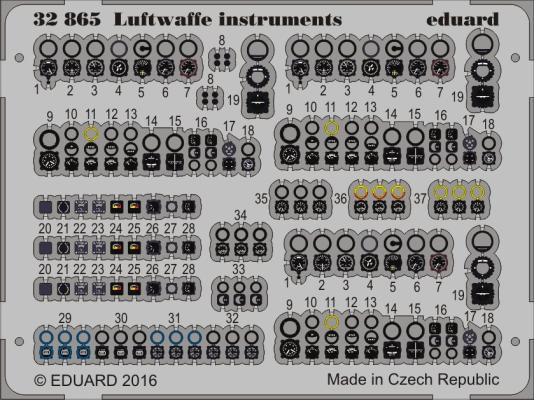
Eduard continues to bring out superb sets meant to help modelers detail kits. This set consists of 100 individual instruments meant for 1/32 WWII Luftwaffe planes. There are multiples of each instrument. The printing on the instruments is awesome and clear.
The instructions show the needed folds and the like. This set will require the modeler to research and determine which instrument goes where. These will let you replace or fabricate a new instrument panel easily. To test them, I sprayed a piece of styrene with RLM 66 paint. I then added the instruments and folded them. You’ll note in the pictures that I got a little heavy-handed with the glue. Once attached, I folded and glued the needed instruments flat. This gives them a nice three-dimensional look. Once glued, I flat-coated the instruments and then added a drop of Kristal Kleer to the instruments to look like the glass.
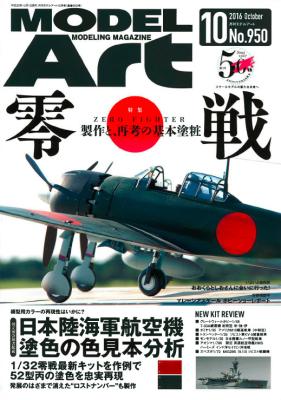
Model Art Issue 950 is typical of other Model Art magazines in that it is written entirely in Japanese, with occasional English words, usually in article titles or in captions. The Model Art magazine is a monthly issue that has evolved from their first issues in 1966 that focuses on all modeling subjects. I’ve attempted to capture the contents below, but please be aware of translation difficulties. There are about 40 pages of advertising, out of the 160 pages, showing what is available and new, always useful for building up that wish list. Nearly all the articles are supported with color photos. A few of the ongoing series are supported with black and white drawings and photos
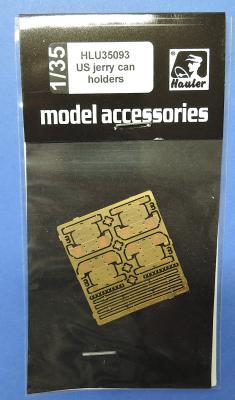
This is a nice set of jerry can holders that can replace the usually over-scaled plastic holders on military vehicles. The photoetch comes on one small fret that is about 1 ½ in. x 1 5/8 in. Four holders are provided with the photoetch. Each holder consists of seven parts: the holder, four bolts, and two straps for the jerry cans.
The bolt heads are actually six-sided hexagons and are microscopic. I soldered the first bolt head into place, but the solder obscured the shape of the head. The subsequent bolt heads were glued into place with superglue, which worked much better.