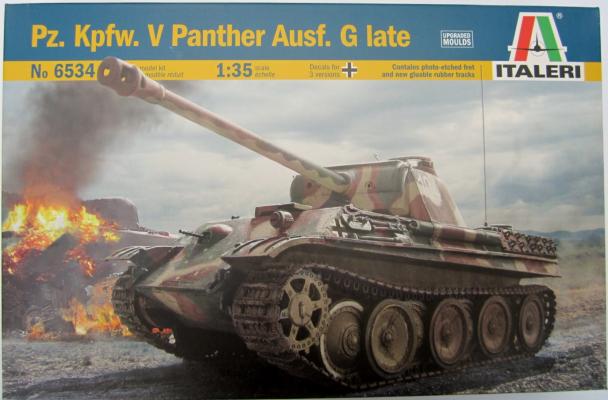
This kit by Italeri is a rebox of their 2012 Pz. Kpfw. V Panther Ausf. G kit # 6493 with the addition of upgraded moulds, photo-etch fret and new gluable rubber tracks as stated on their website. Let me preface my review by stating that as modelers we do not always follow the instructions step by step. We tend to skip around completing steps in advance while letting previous steps dry or bond. For this build and review, I did indeed skip steps, but I will describe what I found in each step, pros or cons, so the builder will be enlightened as to what needs addressed during the build. I also will not review any historical data pertaining to the Panther tank as I assume the builder will review historical data prior to the build. The Panther tank I will be constructing represents Panther #122 under the command of Oberleutnant Rasim, which was destroyed and knocked out east of Berlin in late April 1945.
all 2016
During its heyday the Roman Empire sprawled across the better part of three continents, making it one of the greatest political bodies of its day. To maintain such an empire required an enormous military budget and huge numbers of men at arms (an approach to militarism we can, alas, observe to this day). One of the chief duties of this sprawling military was to hold the edges of this empire from incursion from without.
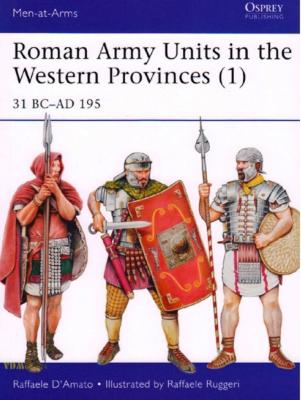
Osprey Publishing and author Raffaele D-Amato have put together a surprisingly exhausting study of the military units comprising Rome’s Western borders – more specifically, what would someday become England, Germany and France.
The newest in Osprey’s New Vanguard series is authored by Jamie E. Prenatt is a Department of Defense senior analyst, with a particular interest in weapon systems development. He has over 30 years of military and civilian intelligence experience. He holds a Masters in Government/National Security Policy from Georgetown University. He has taught military history, war-gaming, and historical miniature painting at the Smithsonian Institution for several years.
Adam Hook began working as an illustrator in 1983. He specializes in detailed historical reconstructions, and has illustrated Osprey titles on subjects as diverse as the Aztecs, the Ancient Greeks, Roman battle tactics, several 19th-century American subjects, the modern Chinese Army, and a number of books in the Fortress series.
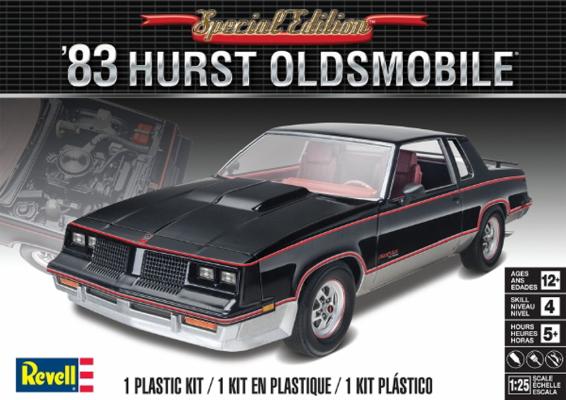
Hurst Performance started working with Oldsmobile in the late sixties and by the time the ‘80’s rolled around they had perfected not only the hi performance “Lightening” shifter but the awesome looking black over silver appearance package featured on the ’83 Hurst Olds.
The Kit
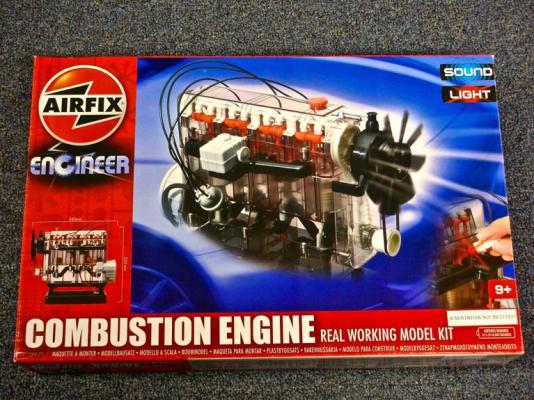
This is one of the kits in the Airfix Engineer line and is designed to teach, so it’s not really a model of a real combustion engine. Rather, it is a representation, and as such is much simplified. That being said, the kit consists of 92 parts, excluding screws. No glue is required for assembly with everything either being pressure fitted or screwed into place. In addition, no painting is necessary. As a matter of fact, it may not even be possible as all parts that are pressure fitted are of a soft, almost vinyl plastic and getting paint to stay put on them could be problematic. But again, this is a representation, not a model of a real engine and the parts are modeled in several colors to make them stand out.
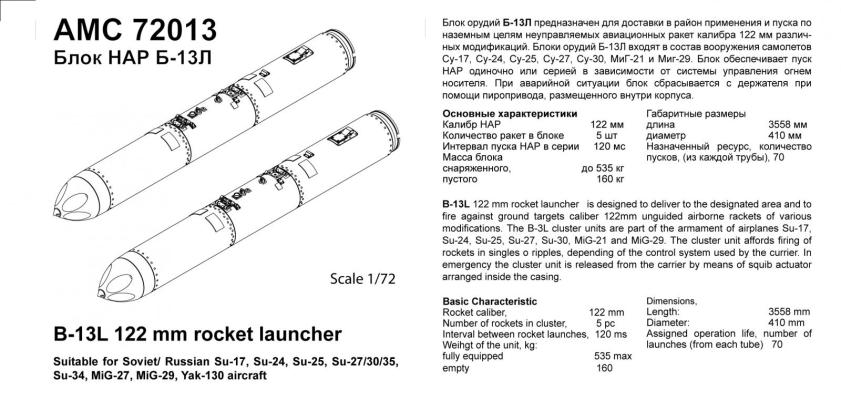
Advanced Modeling is a new company and specializes in Russian and Soviet aftermarket items. They cover 1/48 and 1/72 scale items which are cast in beautiful gray resin. A great set of instructions and comprehensive decal sheet is also included. The resin is firm but not brittle and the details are awesome. For this review, the B13L 122mm rocket launcher is reviewed. It comes with four pieces with a back and front section.
As a bit of background, the S-13 is a 122 mm caliber unguided rocket weapon developed by the Soviet Air Force for use by military aircraft. It remains in service with the Russian Air Force and some other countries. S-13 rockets are shot from 5-tube launchers B-13L, that can be carried by most of Soviet and Russian attack and new fighter aircraft, like Su-17/20/22, Su-24, Su-25, Su-27, MiG-23BN, MiG-27, MiG-29.
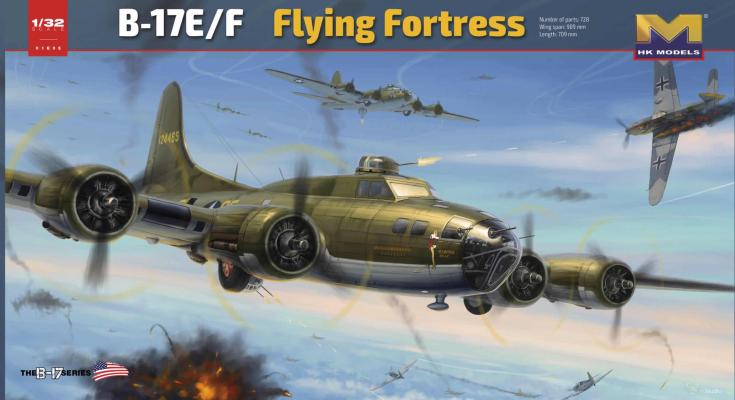
When this huge box arrived, I was excited as it was large (26" x 14" x 6 ") and heavy. It came with no box art, instructions, or decals so I borrowed a set of instructions from HK’s first issue from a friend and also received a PDF file of the new, unfinished instructions. At first glance the kit looked impressive, but it has some of the same problems as the last issue. There were still many injector pin marks on the interior fuselage, and the fuselage parts needed to be washed prior to starting the build because they had a heavy residue on them.
When Eduard released its Fw 190A-8 Royal Class Quattro Combo kit earlier this year it also released overtree sets of each of the four versions that were included in the Combo kit. Kit 70111X was the overtree set for the standard Fw 190A-8 with the four wing-mounted Mg 151 cannons two in the wing roots and the second pair outboard. The upper wing halves have the wing bulges for the outer set of cannons in addition to the inboard bulges for the wing root mounted cannons.
Over the past 30 years Californian Erik Simonsen has worked as a manager and director of communications in the aerospace industry. An avid aviation photographer since the 1960s, Erik also has an intense interest in astronomy and has served as a planetarium director and program manager. Honing skills acquired from a graphics and fine arts background, his blending of aviation photography with special effects techniques has delivered eye-catching imagery. Erik Simonsen’s photography has been featured in corporate advertising and various aerospace-related magazines including, Aerospace America, Air Force Magazine, Aviation Week & Space Technology and Flight international. A member of the International Society for Aviation Photography (ISAP), American Society of Media Photographers (ASMP), Air Force Association (AFA), U.S. Naval Institute (USNI), The Planetary Society, and Senior Member of the American Institute of Aeronautics and Astronautics (AIAA).
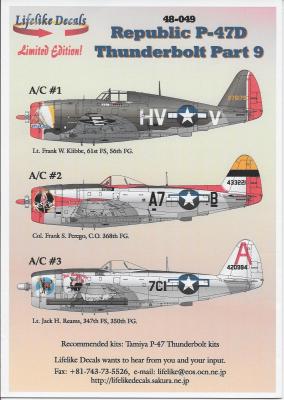
Likelike Decals from Japan just released a few new sheets, and this one covers the P-47D Thunderbolt. Having just reviewed the Mustang sheet released at the same time, you will find some similar comments in this review!
This is yet another example of Lifelike providing a comprehensive set of contents in a standard Ziploc decal bag. Along with a full color placement guide, there is one full page of decals, printed by Microscale, that contains most of the individual markings and a full set of stencils. There is an additional ½ page, also printed by Microscale, containing at least two sets of national insignia (including the oversized stars and bars common on the underside of both wings of some P-47s). Finally, there is a small third sheet, printed by Cartograf, that contains the personal insignia for each aircraft.
The 3 markings options are:
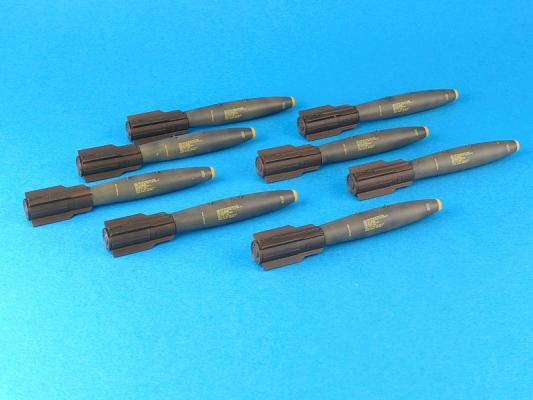
The Mark 82 serMK82 AIR is a 500 pound bomb modified with a BSU-49/B high drag tail assembly. The "ballute" air bag which deploys from the tail provides a high speed, low altitude delivery capability by quickly slowing the bomb and allowing the aircraft to escape the blast pattern. The tail assembly consists of a low-drag canister unit containing a ballute (combination balloon and parachute), and a release lanyard assembly that opens the canister releasing the ballute. The ballute assembly is made from high strength low porosity nylon fabric. When the bomb is released from the aircraft a lanyard unlatches the back cover which opens, releasing part of the nylon bag/retarder. Air turbulence at the rear of the bomb acts on that portion of the retarder, pulling the remainder out of the housing. Ram air inflation is accomplished through four air inlet ports toward the aft end of the ballute.
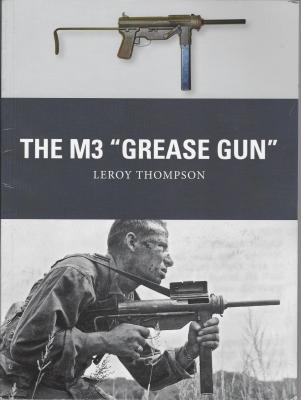
This is the forty sixth volume in the Weapon series. This volume deals solely with the 45 cal. M3 sub machine gun, which was commonly called “The Grease Gun” because of its resemblance to the mechanics grease gun familiar to so many young men in the army. It has also been called Americas Sten Gun because like its British counterpart it was designed to be made with stamped metal welded together. This simple design made it really cheap to manufacture with a net cost of $33.33 to the government. It is hard to believe that this weapon was used by the military for almost 50 years.
This 80 page paperback book is full of pictures and illustrations. Both B&W and color. There is a picture or image on practically every page. The full color illustrations are in the fine detail that the Osprey books are known for. The five chapters cover the development, use and impact of the M3 “Grease Gun”. There is an extensive bibliography for additional resources for research.
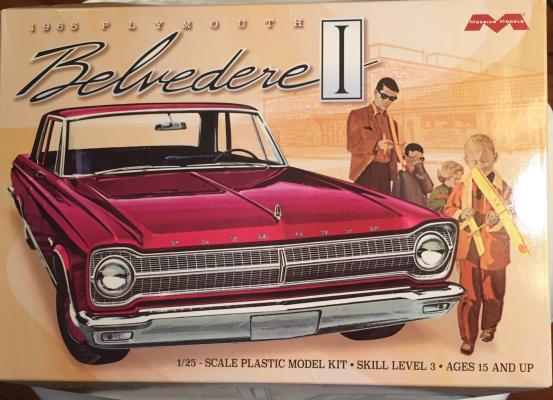
Moebius has followed up on their previous release of the 1965 Plymouth Satellite earlier this year with the Belvedere I, the economy priced B- Body. Referred to as a B-Pillar (“post”) vs. the B-Pillarless Satellite (“hardtop”), the low end Belvedere I was the basis of many a drag race car in the 1960’s, either in the super stock or altered wheel base classes. The kit is not a factory stock car as purchased off the dealer lot, nor the extremely rare A-990 super stock cars. As Moebius Kit Designer / Project Manager Dave Metzner said, the kit is meant “to represent the kind of Belvedere Sedan you'd see at a cruise night these days”. (For those awaiting a super stock drag car, stay tuned for the next version with a Hemi 426 engine.) This kit includes a very nice replica of the dual carb cross ram 426 Max Wedge engine or you can build the engine as a 426 cubic inch Commando V8.
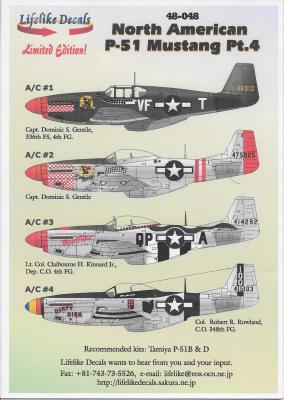
Likelike Decals from Japan just released a few new sheets, and this one covers the P-51 Mustang.
Background
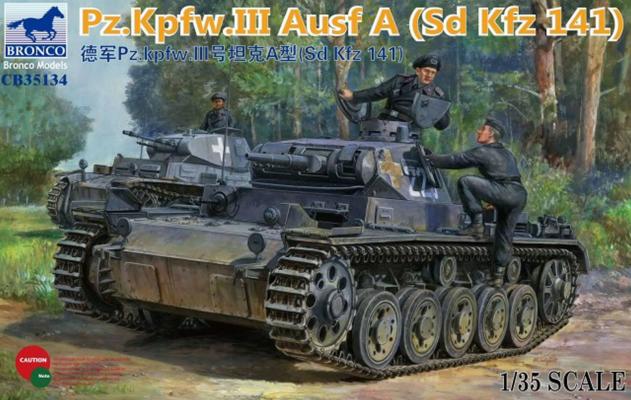
The Panzer III (Pz Kpfw III) was Germany’s first main battle tank, all previous designs being smaller so called “scout” tanks. In early 1934 the German Army, now rearming after the National Socialist (Nazi) takeover of the German national government in 1933, put in motion via the Army Weapons Department plans for a new medium tank weighing 24 tonnes and with a speed of 34 KPH. Daimler-Benz, Krupp, MAN, and Rheinmetall all submitted design proposals and produced prototypes, with Daimler-Benz being awarded a contract for production of the new tank in 1937.
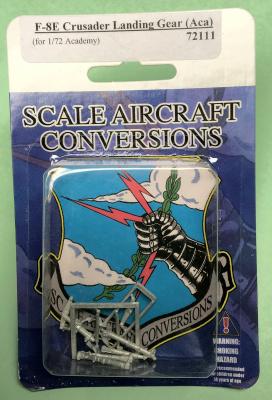
This set includes seven replacement pieces for the landing gear on Academy’s F-8 Crusader. There are three parts for the nose gear including the retraction brace and the main strut and two parts for each of the main gear. The parts are designed to be drop-in replacements for the kit parts.
The first step is to remove the casting seams of each of the parts. I use a small wire brush in my portable Dremel tool at low speed, to polish up the parts and remove these seams. I prefer to do the cleanup before I detach the smaller parts from the casting tree as it is much easier to handle them while they are still on the tree, plus they are much less likely to bend or go flying when they are still attached.
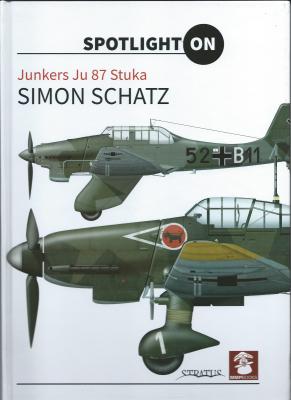
The Spotlight series of books consist of a large number of color profiles of multiple variants of the covered subject. The first page discusses the RLM colors of the various Stukas shown. This is followed by 42 beautiful color profiles from the early Ju-87A1s to the final Ju-87G2s. The last page shows top views of the Ju-87A-1, B-2 and D-5s.
If you love color profiles and I do, you will like this book. The numerous color profiles are beautifully rendered. The modeler will find many schemes for modeling the Ju-87 in any scale. Those who like WWII history, aviation history, Luftwaffe history and modeling will find this book very useful. I recommend it to all of the above.
Our thanks to Mushroom Model Publications for the review copy and my thanks to IPMS/USA for the review opportunity.
Background
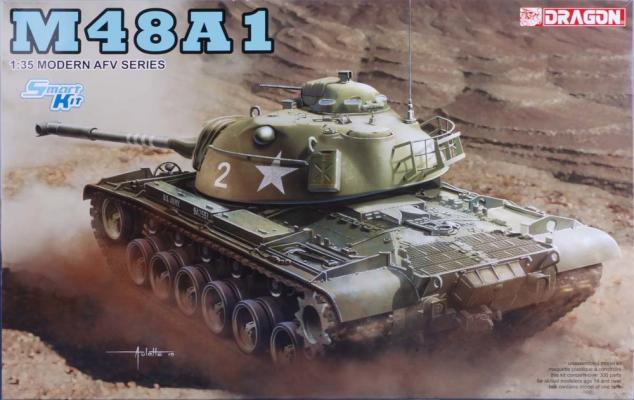
The M48 tank was the third in a series named for the famous WW2 US general, George Patton. The first two were the M46 and M47 Patton tanks, and the M48, though looking similar to its immediate predecessor, the M47, was in fact a completely new design. It incorporated a 90mm main gun, and had a cast steel hull and turret, which was much more rounded than its predecessors, thus offering superior ballistic properties. Initial variants of the M48 had gasoline powered engines, but these proved to be poor performers, and so the M48A3 introduced a better performing diesel engine. Production of the M48 lasted from 1952 until 1959, with a total of just over 11,700 vehicles manufactured.
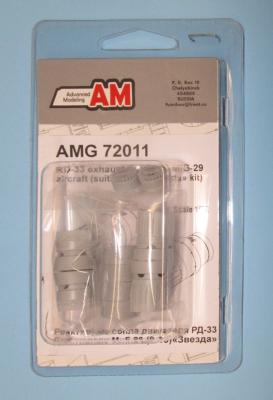
There is a new player in the Aircraft aftermarket world, and they hail from Russia: Advance Modeling. I had not heard of them till they appeared on the IPMS Reviewer list and I thought I would try out their resin exhaust nozzle set for the new Zvezda MiG-29 (9-13). The resin used is a light gray color, captures very fine details, and is easy to cut using a razor saw or equivalent. The package is simple but effective, with parts in clear bags held within a plastic shell that, when a single staple is removed, is hinged at the other end and opens up like an oyster. The instruction sheet is in English and Russian, and unfolds with easy to understand and follow graphics.
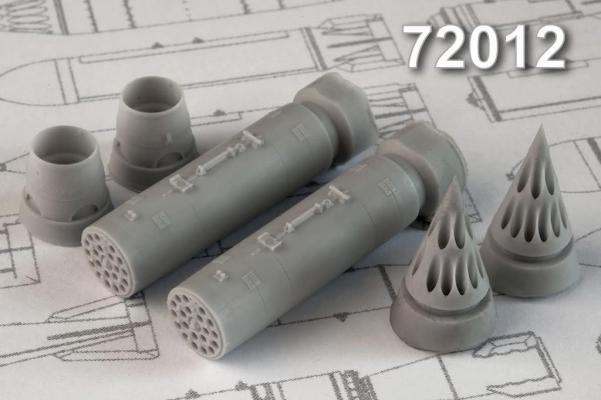
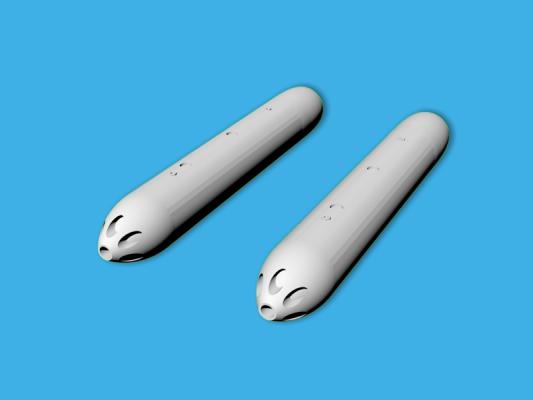
The B8M1 rocket launcher carries 80mm S-8 unguided rockets that can come in a variety of types. It is still in use by various countries and on various planes. Advanced Modeling has produced a wonderful 1/72nd scale version of this weapon to upgrade current kit parts or add something different.
The resin comes with enough parts for two rocket launchers that each consist of three parts - the main body, the nose cone and the back shroud. Simply cut the parts from the casting blocks and make sure they are square. Glue the parts together and fill any seams (I had almost none as the fit was good).
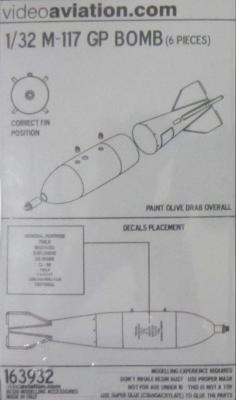
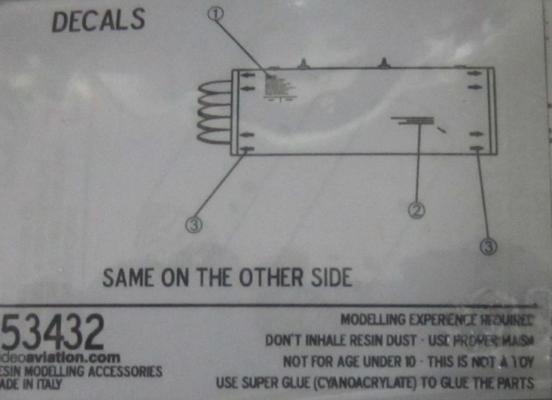
Videoaviation is new to me and once I received the sample for review, I am wondering why I have not seen their fine aftermarket resin sets. Packaged in a sturdy plastic box, resin is protected by bubble wrap. The forward bomb part, fuse and lugs are flash free but the aft section with fins have a very fine mold line that can easily be sanded. Parts are cast in light tan resin. A nice touch is the pour block on the pod is on the underside opposite the side on where it connects to the pylon. This makes it easy to remove that portion and sand contour without damaging features. There are simply four parts to assemble , front & aft sections, fuse and lugs(2). Decals are included with yellow text and clear background
Videoaviation is new to me and once I received the sample for review, I am wondering why I have not seen their fine aftermarket resin sets. Packaged in a sturdy plastic box, resin is protected by bubble wrap with all parts flash free and cast in light tan resin. A nice touch is the pour block on the pod is on the underside opposite the side on where it connects to the pylon. This makes it easy to remove that portion and sand contour without damaging features.
There are simply two parts to assemble , pod and exhaust plume deflector. Looking at reference photos, the plume deflector may be an option so check your references if you even need that part. Both parts can easily be sanded free of the pour base. Instructions show to add lugs to the top but the sample already has these cast in simplifying the assembly. Decals are included with all having a white background except for “Remove before Flight” flags.
Videoaviation is new to me and once I received the sample for review, I am wondering why I have not seen their fine aftermarket resin sets. Packaged in a sturdy plastic box, resin is protected by bubble wrap with all parts flash free and cast in light tan resin. A nice touch is the pour block on the pod is on the underside opposite the side on where it connects to the pylon. This makes it easy to remove that portion and sand contour without damaging features.
There are two choices on rocket types so take notes on what version you are modeling. These parts can easily be sanded free of the pour base. Instructions show to add lugs to the top but the sample already has these cast in simplifying the assembly however the lugs are very delicate and mine were broken. Not a problem if installing on a pylon and that detail will be hidden. Decals are included with all having a white background except for “Remove before Flight” flags.
Thank you to Bert Kinzey and Rock Roszak for continuing to bring back a tremendous resource for the modeler, exclusively in a digital format. Thank you to the IPMS Reviewer Corps for allowing me to test out this new and exciting method of researching history, details, versions and markings of the McDonnell F2H Banshee. The official title is Detail & Scale Series Digital Volume 3, F2H Banshee, Part 1: Prototypes Through F2H-2 Variants.
Thank you to Ginter Books for providing a review copy of their new release, Naval Fighters Number 102, a second volume covering the Grumman S2F/S-2 Tracker and the WF-2/E - 1 B Tracer. I also appreciate all of those in the IPMS Reviewer Corps, who do the heavy lifting to get the reviews done, from start to finish.
Overview
The Tracker holds a special interest for me beyond my personal enthusiasm for USN aviation, an interest honed after hearing two Navy veterans argue about how effective the aircraft was. Naturally, one was a submarine officer, and the other an S2F aviator. This volume adds to the material covered in Part 1, Naval Fighters Number 101, adding brief narratives, squadron insignia images, and photographs related to the aircraft as it was used by reserves, utility, training, and other interesting operational units.