
The UMM Micro Mitre Box is a useful little tool if you’re scratchbuilding or adding detail to a model. Made of aluminum, it’s designed for cutting wood, metal, or plastic using their JLC razor saw. As an aside, it also works with other brands of razor saw, so long as they’re not over .12” thickness. This version of their box allows cuts at 45°, 60°, and 90°. They have recently released an updated version of the box (Micro Mitre Box II) which has a brass rule imbedded in the box that is marked in 1mm increments. There is an adjustable stop device that is screw-mounted in the bottom of the box. It has a flat end and a slanted end to be used to hold the material in place. There are several screw holes to allow the stop to be almost infinitely adjusted for length.
Another in a series of Hasegawa kits replicating office and school furniture, this Science Room Desk and Chairs kit requires a little more time and effort to construction than the previously reviewed Conference Table and Chairs (62002) or School Desk and Chair (62001) kits. The science table and four chairs that are found in the kit took about 30 minutes to build.
The table surface is black, while the table, itself, is white. The stools are a tan color. Hasegawa advertises that this kit does not require glue, and I found that to be true, for the most part. I did fudge a bit and reinforced the “snap” fit of the table parts with a little glue. I also glued the water handles onto the faucet fitting.
Assembly is easy enough for a novice or young person to handle by themselves, so if Junior is looking for a diorama setting for a science experiment, this is it!
Thanks to Hobbico and Hasegawa for providing this review sample to IPMS/USA.
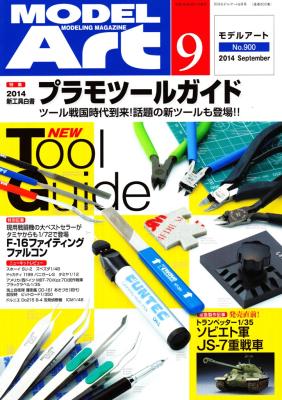
Model Art Modeling Magazine is a monthly magazine that covers aircraft, armor, ships and car modeling. Model Art started releasing magazines in 1966 and has evolved from there over the past forty six years.
Each issue of Model Art consists of a multitude of articles that reach out to all genres of modelers. From what I see, Model Art makes small changes to its format to keep each issue up to date and interesting to the reader.
Hasegawa offers this 1/12th Toy Machine to its expanding collection of 1/12th furniture for offices and schools.
The kit provides parts for two Toy Machines that can be used as “stand alone” devices, mounted one on top of the other, or mounted side-by-side. There are some “toy capsules” that are included. A small plastic bag contains some yellow, red, blue and green spheres, and there are a dozen blue/clear spheres that must be snapped together.
As advertised, the Toy Machines do not require painting, and with the exception of one part they snap together with precision. The only issue I found was that Part A3, the turntable within the machine, did not fit as well as the other parts. A few swipes with a sanding stick took care of the problem.
A number of “signs” are provided on a piece of high gloss paper, and after cutting the favored sign from the sheet, it slips nicely into the machine.
One in a series of kits featuring “office furniture and school furniture”, this kit is the most difficult of the five “furniture” items recently reviewed. Even at that, the difficulty factor is very low. The “difficulty” focuses on the small parts found on the officer chair. Note in the attached images that each coaster on the chair is a single piece, and they are fairly small. Beyond the difficulty resulting from the small size of the coasters this kit, like the others in this series is “fit, snap, done!”
Hasegawa advertises that this kit does not require glue, and I found that to be true. I took the time remove the nubs after removing the parts from the sprues, but that was more out of habit than necessity. Those who are more advanced modelers will probably feel better if they remove the attachment nibs with a sanding stick, but it is not critical to the “fit” of the parts.
One gets parts sufficient for one desk and one chair.
Eduard Models is releasing some very useful tools for the modelers, like this glue applicator, dropper or kapátko (probably in Czech as it is written in the package).
This photoetch fret has a total of 10 applicators. The “jaws” in the applicator comes in two sizes, small and smaller glue drop. The two sizes of drops make this tool useful for different scales or different applications. Each applicator has its own engraved grip for better handling.
I can see this tool being extremely useful while working with photoetch parts (from Eduard, what else!) and it would prevent that ‘blob’ of superglue that we all have dealt with in our builds.
Highly recommended.
I would like to thank Eduard and IPMS/USA for the review sample.
One in a series of kits featuring “office furniture”, this kit is rather easy to assemble, goes together very well, and provides a bit of fun. The kit provides pieces for two tables and four chairs. There is nothing difficult about this kit and I found myself chuckling out loud at least twice as I assembled the parts. Total build time was about 30 minutes.
Hasegawa advertises that this kit does not require glue, and I found that to be true. I took the time remove the nubs after removing the parts from the sprues, but that was more out of habit than necessity.
One gets parts sufficient for four chairs and two tables. The fit is excellent and assembly is very quick and easy. The table surfaces are “brown” as are the seats and chair backs. The tubing for the chairs and tables is gray.
Eduard Models is releasing some very useful tools for the modelers, like this series of templates.
The first set is “Circle and Oval”, SKU: 00027 with a total of 38 circular templates ranging from 0.8 to 6.2 mm. This set also has a fret with 34 oval templates, with sizes ranging from 1.8x1mm to 5.8x10.2 mm.
The next set is “Oblongs and Squares”, SKU: 00028 with 14 templates for each geometry. Their dimension ranges from 3.5 to 5 mm. The Oblongs are ‘rectangles’ with rounded corners.
Finally the last set is “Oblongs”, SKU: 00029 with an amazing total of 52 templates ranging from 0.6 mm to 4 mm.
Not only these templates are useful for scribing panel lines, but also can be used to draw - with a pen - panel lines or to be used to guide a blade when creating masks for windows, mirrors, etc.
The genius of Leonardo Da Vinci goes without saying. His inventions and ideas were years ahead of his time. Many of the things we take for granted today are based on his thoughts and visions. This kit is the newest in Academy’s Da Vinci Machine Series. The Da Vinci Clock uses weights to power a horizontal pendulum. This is a snap together kit. No glue or paint is needed. Parts separate from the sprues easily and parts cleanup is quick and easy. The parts fit was spot on and once pressed together the assembly was tight and firm. Some care is needed when placing the various gears to ensure proper placement. The instructions are clear and show how it all goes together.
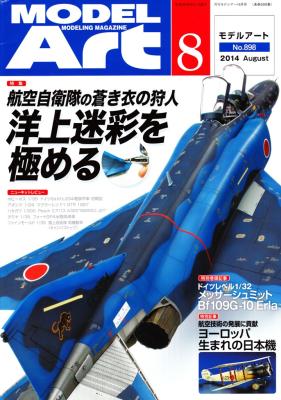
Model Art Magazine is a monthly magazine that covers aircraft, armor, ships and car modeling. Model Art started releasing magazines in 1966 and has evolved from there over the past forty six years.
Each issue of Model Art consists of a multitude of articles that reach out to all genres of modelers. From what I see, Model Art makes small changes to there format to keep each issue up to date and interesting to the reader.
This issue starts off with two short articles. The first being "MA New Item Special" and a diorama that takes place during the U.S. operation in Grenada featuring the new Tamiya Gamma Goat.