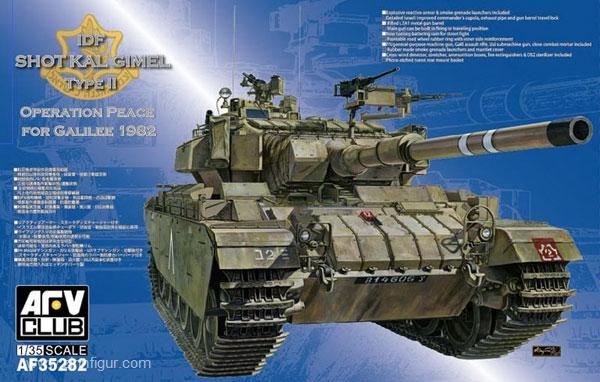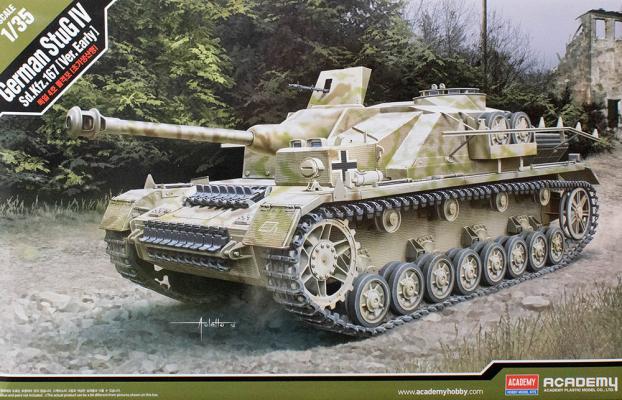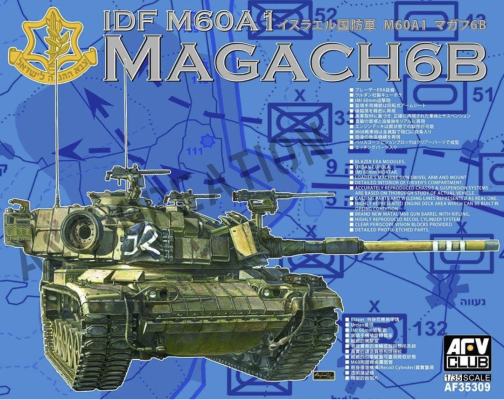
AFV Club has released the third version of Israeli’s rework of the venerable American M109 Self-Propelled Howitzer (SPH). This time around we meet the ‘Doher’, or ‘Galloper’ - an augmented boxing of their recent ‘Rochev Bet’ release. The M109A2 Doher was fielded in 1993, eventually replacing all of the earlier Rochev models in active service by 1997. After the active service units received their share, the IDF began to replace some of the reserve units' vehicles. Today one can find in the reserve units both the Doher & Rochev models.
The book goes into great detail German Campaign on the Eastern front 1941 to 1942.
It covers Germans path from Moscow to Stalingrad which was full of successes and failures for both the Wehrmacht and the Red Army.
I found this book very interesting and fascinating. It was full of such a lot of information and some fantastic photographs that I had never seen before. This whole period of World War two was full of problems created by Hitler’s obsession that he knew better that his high command. occasions.
There are lot of pictures and illustrations that make the book even more interesting.
I recommend this book to everyone with a deep interest the war. The only downside was it could have had a little insight into the actions it fought from an eyewitness perspective to give it more feeling.
Thanks go to Casemate Publishing for providing this book to review and IPMS USA for allowing me to review it for them.
About the Author
Historian and author Alexander Lüdeke's main interests are the military and the history of technology. He has an extensive image library, which includes numerous illustrations, a selection of which can be found in this Fact File.
Overview
A great upheaval in tank construction took place in the 1970s, as new combat techniques, helicopters, weaponry and new types of ammunition reduced the value of a conventional combat battalion. Nevertheless, complete new developments are rare and in this book, Alexander Lüdeke looks at the most important developments that have taken place since 1970.
Introduction
Without giving a lengthy history of the M60 Patton the following is a short summary of the M60A2. The M60A2 nicknamed the “Starship” grew out of the development of the M60A1 with a CVWS (Combat Vehicle Weapons System) turret firing a 152mm conventional round. Planning began in the late 1950s. These were initially named the M60A1E2 then later standardized to the designation M60A2. Production was ended in 1975 with a total production run of 526 vehicles.
In the advertising literature AFV Club states this new kit features:
Pen and Sword Publishers has added to their TankCraft Series. Volume Number 7 titled: Panzer I & II – Blueprint for Blitzkrieg 1933-1941 by Robert Jackson.
This softbound book is 64 pages. Included are some nicely done color profiles, many period wartime photographs, a summary of variants and some description of development, along with a section devoted to modeling the Panzer I & II.
The book starts with some background on German armor development but quickly gets into the Panzer I & II design and development. The variants of each model are discussed and photos of many of the examples are included. A separate section includes later war variants which used the Panzer I & II chassis for other vehicles. For example the Marder and Wespe. The book is well illustrated with some photographs I have not seen before. The color profiles were done just for this publication and are a nice touch for the book.
Table of Contents:
Pen and Sword has started a new series of publications related to Armored Fighting Vehicles (TankCraft Series) and this book is the fifth installment in the series. It covers one of the best WWII-era tanks: The Soviet T-34.
The book is broken down in the following chapters.
- Introduction
- Development and Design
- The T-34 in detail
- Camouflage and Markings
- Model Showcase
- Modelling Products
- Into Service and into Action
- Enter the T-34/85
- The T-34 in Action after the Second World War
The first 3 chapters tell the story of the T-34, going back to the origins of the design in the Christie Tank and its design evolution, culminating on the 3rd chapter where the tank is described from the mechanical, defensive, offensive and even living conditions point of view.
The Kits
You get three 1/72 scale kits and a 54 mm figure in one box here. The kits are an 8-ton halftrack, (SdKfz 7) an 88 mm FLAK 18, and a Panzer IV ausf F2. The figure is Field Marshal Erwin Rommel. There are individual instructions for the vehicles, and the painting and assembly instructions for Rommel are included with the 88 mm FLAK.
I built the kits and figure individually and will go through the process of construction and finishing one at a time.
88 mm Gun, FLAK 18
The Hasegawa 88 mm gun can be displayed either on the travel wheels or deployed for action. Since this came with the halftrack, I decided to build it in “road mode”. The wheel assemblies can be removed, and the side stabilizers can be deployed if desired, as these parts are not glued but can be reset for an “action” display.
The T-60 was a light tank designed for scout and reconnaissance missions that was rushed into production a month after the start of Operation Barbarossa. Over a two-year period, approximately 7,000 of these vehicles were built. The T-60 scout tank was lightly armored, lightly armed with a 20mm canon a a machine gun, that was roundly hated by the two-man crews who operated it. The light armor, less than effective gun and poor engine performance lead to its operators naming it the “brother’s grave for two”. Although it was intended to be a support or reconnaissance vehicle, it often matched up against more superior German armor where it fared very poorly. Until factories could be equipped to produce the T-34, Soviet production continued and efforts were made to upgrade the firepower to a 37mm cannon, but these plans were scraped due to a lack in ammunition, and eventually, the armament upgrades were incorporated into the T-70.
The book is one of the Squadron Signal series “in Action”. It explores the history and development of the Panther tank and its Variants. I have always loved the Panther design and was very happy to have this book to review. The pictures of the Panther in the book are fantastic.
The book has some extremely interesting and diverse photos of the iconic Panther, there are over 180 photographs included. The photos really show the classic lines and design of this wonderful symbol of the World War 2. The book made me want to build a couple of Panther models out of my stash and start building using the book for valuable reference. The last sections of the variants are an extremely interesting addition to the book.
This book should be in every tank lover’s library and I recommend this book to everyone. The great reference photos are ideal for all modeler’s.
Around 1970, Monogram Models released a “Panzer IV” kit in 1/32nd scale. There was no mention on the box top as to what version (Ausführung) it was, simply that it was a Panzer IV “with 75mm gun”. As military vehicle historians dug deeper into the history of German military vehicles from the Second World War period, they learned that the Panzer IV, for example, was produced in a series of “Ausführung”, or versions: Ausf. A, Ausf. B etc. Eventually, model firms figured this out too so that by the early/ mid-1970’s, Italeri was producing kits such as their “German Tank Pz.Kpfw. IV Ausf (H)” while Tamiya had their “Panzerkampfwagen IV Ausf. H”.