Reviews of products for scale automotive models, including motorcycles and motorized vehicles.

Review Author
Doug Cole
Published on
Company
Revell
Scale
1/24
MSRP
$29.99

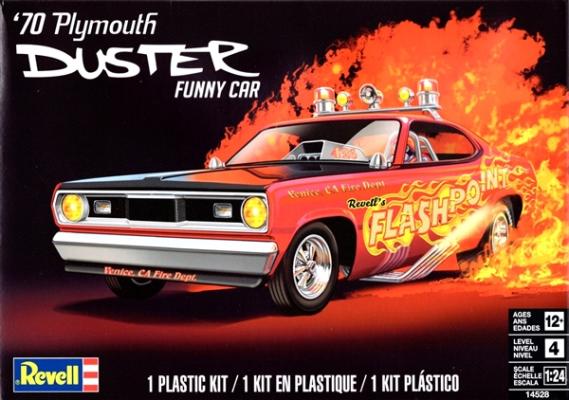
This kit was originally released by Monogram as Tom McEwen's Hot Wheels Plymouth Duster around 1970. Attesting to its popularity, the kit’s been re-released over a dozen times in various versions including Tom Daniel’s “Cop Out” kit, as well as, this fresh new 2023 offering as the “Flashpoint” funny car. I have to hand it to Revell for giving this kit a new lease on life with some excellent and attractive decals.

Molded in 100 pieces of white and clear styrene with chrome plated parts and vinyl tires. The rear slicks are massive wrinkled and weighted tires that really set the model off. Also included is a beautiful new waterslide decal sheet featuring the Flashpoint side script and requisite flames.

Another big help is the expanded 12-page instruction sheet making the assembly a bit easier.
Review Author
Pat Villarreal
Published on
Company
Brengun
Scale
1/72
MSRP
$69.70

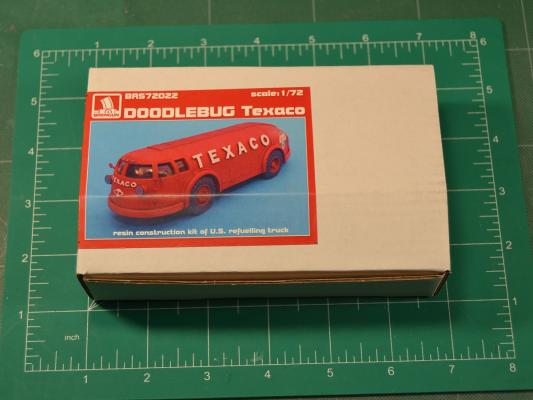
A new multimedia kit from Bregrun. It a 1/72nd scale kit of the Texaco Doodlebug fuel tank truck from the 1930s era.

In the Box

This kit has six (6) resin poured part stubs, 1 photo-etched (PE) sheet, 1 vacuum-formed (VF) clear plastic windscreen with & without frame moldings, and 1 decal sheet. Instructions are printed in black and white on a single piece of paper. Print is on both sides and well-illustrated but not much written commentary.

The resin parts are well molded with a few air bubbles that need filling. I used Superglue/Cyanoacrylate (CA) as the filler. The recessed panel lines are well defined and somewhat wide for this scale but acceptable.

Review Author
Chris Vandegrift
Published on
Company
Hauler
Scale
1/120
MSRP
$25.54

History

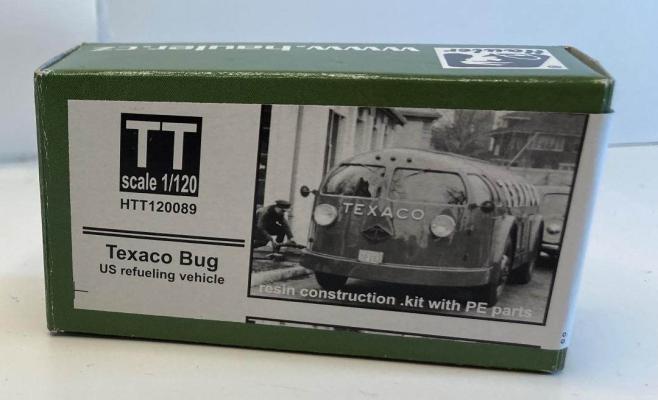
Back in 1935 Texaco was thinking of the future. Commissioned to help market the company it is believed there were 6 Doodlebugs produced. Coincidentally it was the smooth streamlined look of it that drew me in and motivated me to build this for my 1st IPMS review. It was only 6’ tall, carried 1500 gallons of fuel, and featured a unique compound curved glass windshield. I think you would be hard pressed to find a car in the 30’s with this kind of silhouette, let alone a heavy tanker truck.

The Kit

Hauler packages the Texaco Bug in a stiff little box, perfect to protect the delicate parts inside. The resin is crisply detailed, especially for the size of the Texaco Bug in 1/120th scale. There were a few small pinholes that required a very fine application of filler prior to painting. A real bonus is the stick-shift and steering wheel on the PE fret that give the interior some interest as there is plenty of glass to see through into the cab.

Review Author
Jim Stepanek
Published on
Company
Italeri
Scale
1/24
MSRP
$61.99

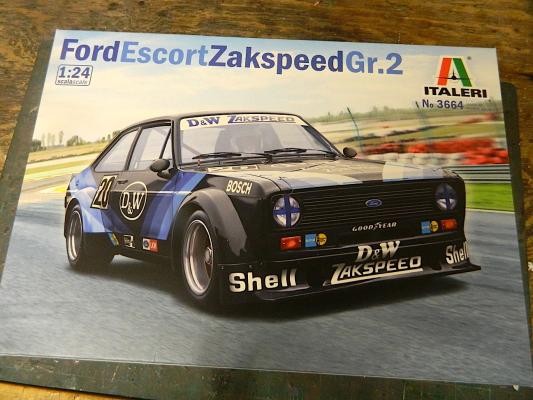
This is a review of the Ford Escort Zakspeed Gr.2.

Engine

The little 4 cylinder engine is well engraved. I was a little disappointed that there was no distributor.

Interior

Interior is wonderfully engraved and everything fits perfectly. There’s seat belt decals for the driver seat. The kit also had seat belt latches but they weren’t supposed to be used.

Body

Body was crisp and clean with no flash. I used a wonderful Tru-Color Grabber Blue because the kit is a Ford. A 2-part urethane clear was used to finish the paint.

Chassis

The suspension parts are separate from the chassis pan as is the exhaust system. There’s really not much detail to the chassis or suspension.

Instructions

The instructions are several pages long with suggested paint color for specific parts.

Review Author
Walt Fink
Published on
Company
Starfighter Decals
Scale
1/24
MSRP
$12.00

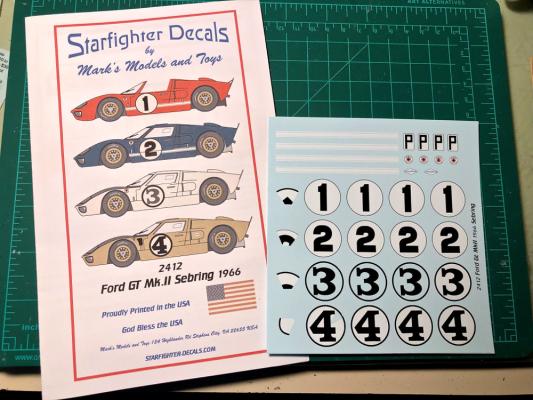
Starfighter’s latest release is their sixth Ford GT decal sheet and features the four Ford GT-40 Mk. II factory entries from the 1966 12 Hours of Sebring. The sheet’s instructions state that the decals will fit on any 1/24 or 1/25 scale plastic or resin Ford GT Mk. II kit, and include PPG catalog number color callouts, plus some individual information to model each of the four cars.

I opted to use the Revell (ex-Fujimi) kit of the #98 GT-40 whose features included the “Gurney bubble” in the right door upper panel which allowed the 6’4” Gurney headroom in the car. Without a little plastic surgery to remove the bubble, that limited my choice of decals to the #2 Shelby American car or the #4 Holman-Moody one. I opted for #4.

All four Ford GT entries were painted in standard Ford factory colors….red, blue, white, and this one, painted Sauterne Gold (PPG43433), and all had black anti-glare noses. I used Tamiya X-31 Titanium Gold to approximate the Sauterne Gold.

Book Author(s)
Michael Ware
Review Author
James Kelley
Published on
Company
Pen & Sword
MSRP
$31.22

Many enthusiasts dream of finding a Bugatti or a Bentley in a barn or a long disused building. In reality, such finds are more likely to be an Austin 7, Ford Popular or a Mini. This book is stuffed with these so called “barn finds”. The author has tried to find out the background to the abandonment and the previous history of the “as found” car when it was in regular use. Why was it put away and apparently forgotten?

Review Author
Chris Smith
Published on
Company
Beemax Model Kits

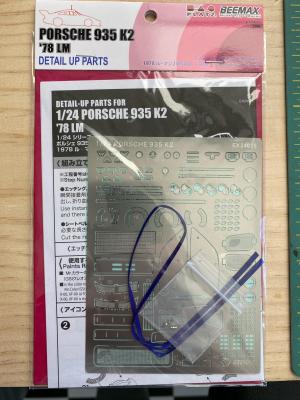
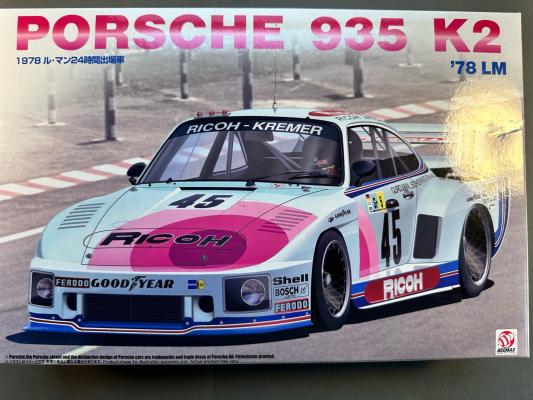
This set provides upgrades to the Porsche 935 K2 78 LM kit # BX24025 from Beemax. It includes a steel fret of metal parts including screens, wing and air deflectors, window straps and clips, seat belt hardware, brake rotor faces, fuel and oil flaps, windshield wiper and panel hold down pins. A strip of fabric for seat harnesses and turned metal ferules for jack connector and antenna, complete with antenna wire, round out the package.

Review Author
Chris Smith
Published on
Company
Beemax Model Kits
MSRP
$32.00

A presence on the racing scene from 1976 to 1981 when FIA rules changes finished their run, the Porsche 935 series of race cars won about a third of the all the races they entered. This car, a 935 K2 series fielded by the Porsche-Kremer racing team ran the 1978 Le Mans race finishing 25th. Kremer would go on to win Le Mans in 1979 with a 935 K3. These cars were powered by flat six 3 to 3.3 liter twin turbo charged engines producing over 700 hp. Based on the 911 body, numerous aerodynamic improvements made these cars serious contenders.

The Beemax kit is a reissue of a Platz kit. The parts are molded in black, white, clear and chrome. Masks are provided for the glass as are rubber tires and mesh for the rear wing vents. Two styles of wheels are provided as are the brake vent disks used by many 935s. Three decal sheets, detailed instructions and a color decal guide round out the kit. Quality of the parts are top notch as is the fit of the parts.

Review Author
Doug Cole
Published on
Company
OKB Grigorov
Scale
1/72
MSRP
$12.57

About the Subject (from Wikipedia)

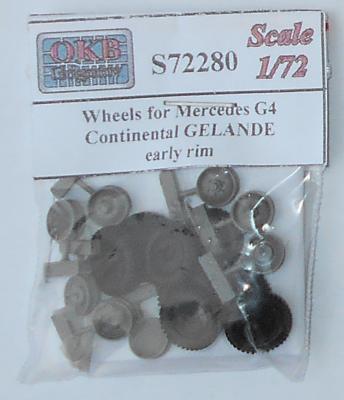
“The Mercedes-Benz W31 type G4 was a German three-axle off-road vehicle first produced by Mercedes-Benz as a staff/command car for the Wehrmacht in 1934. The cars were designed as a seven-seat touring car or closed saloon, and were mainly used by upper echelons of the Nazi regime in parades and inspections, as they were deemed too expensive for general Army use.

The G4 was a development of the G1, launched in 1926. All had an 8-cylinder inline engine, in the first three years of 5018 cc (306.2 cu in) displacement delivering 100 PS (74 kW). It was a 6×4 configuration with four-speed transmission (synchronised upper gears) that transferred drive to all four rear wheels.

Review Author
Joe Staudt
Published on
Company
ICM
Scale
1/24
MSRP
$47.00

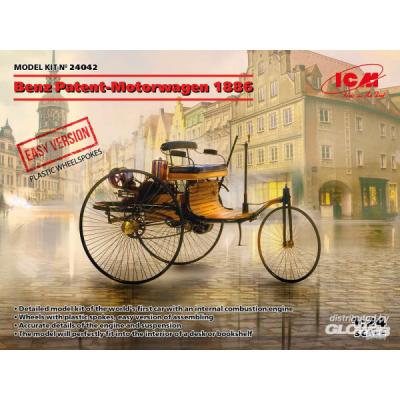
While most Americans might believe otherwise, the first production automobile was built in Germany in 1886 by Karl Benz (of Mercedes Benz fame). The Benz Patent-Motorwagen was built in very small numbers between 1886 and 1893. ICM first released a kit of this vehicle in 2020, with photo-etch parts for the wheels and and drive chains. This year they released an “easy” version of the kit that replaces the photo-etch parts with plastic versions at a significantly lower cost.

The kit comes in ICM’s sturdy thick cardboard box and consists of several sprues of parts in a soft gray plastic. The softness of the plastic is good, because it means that the many small, delicate parts tend to bend rather than break.

The parts had almost no flash and very few mold lines. This is fortunate, because filing or trimming off excess plastic is almost impossible on many of the parts due to their small size and fragile nature.