OK guys, a show of hands; how many of you don’t like Hasegawa kit decals? You’ve had bad experiences with them and hate ‘em to the point that you won’t build or even buy a given Hasegawa kit unless you can get aftermarket decals for it? Not a problem for those Hasegawa F-Teen kits where you easily have many more aftermarket decal choices than kits. However, when it came to cool looking, non-gray jets, like the Mitsubishi F-2, you were stuck….until now.
Roll Models has come out with their own brand of aftermarket resin parts, Loon Models and we'll review two sets in this review- a gun pack set and a set to modify G-10 wings and wheels.
The gunboat Messerschmitt Bf-109 contains some of the best looking markings for the 109. So what is unique about this set? Well for one the centerline gun pod. As far as I can recall this is the only way you can get the centerline gun pod without scratch building it. The packaging refers you to the AJ Press #17 for pictures of the actual pod and installation. This will be very helpful. This will make your 109 different from the rest.
The wing gun pods are nicely detailed, but they don’t look much different from the kit offerings.
Everything is molded in blemish and bubble free light caramel resin you get six pieces, two wing pods, one centerline pod and three 20mm cannons. Each piece will require just a quick little cleanup and each pod will need the hole enlarged for the gun.
Air Modeller magazine was new to me when I volunteered for the review. I was very impressed. This is a 64 page high quality, modeling magazine without any advertising. The magazine seems to cater to the detail conscious modeler. This issue includes five detailed build articles:
- Split Personality F-104G – Part One.
- Handley Page Halifax B. Mk II Series I – Part Two.
- CAC Boomerang
- Ultimate Spitfire
- Curtiss H-75 A3
The magazine also contains an article on new releases, as well as an article showing photos from recent model shows.
Anyone who knows me will tell you my favorite airplane is the Curtiss P-40 and I have a closet full of kits to prove it. One of them is a 1/72 scale Academy kit that I had allotted to the maybe-someday-stack because of conspicuous problems with the way Academy molded the P-40’s fuselage quarter windows. Well, now Aires has (or ‘have’, if you are reading this review in Canada or the UK) added a set of accurate P-40 well bays to their line of resin detail parts, and they’ve brought to my attention another problem area that needs addressing. The kit’s wheel bays are just as inaccurate as the shape of the quarter windows. Fortunately, Aires has done a nice job of solving that problem for me and has led me to move the kit to a higher position in the stack.
When I first “signed up” to do a review of these decals, I wasn’t familiar with the company, or what would be on the sheet. I was interested in the Ki-43 markings, as I find myself building mostly Japanese aircraft recently. When the package arrived, I was very pleasantly surprised at what I saw!
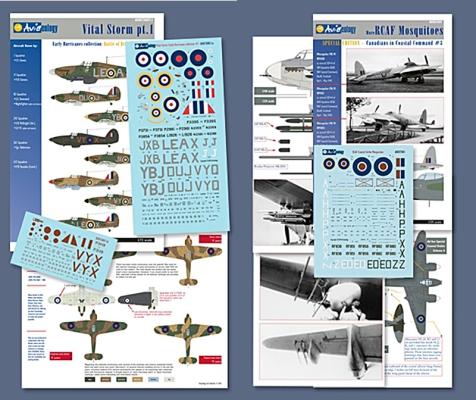
PT Decals sheet #48002 covers some captured WWII Axis aircraft in French service. The decal sheet itself is very well done with markings for all the aircraft listed below. The decals are all in perfect register, and appear to be of the highest quality on the market today. The lower right of the sheet reads “Pierre Tilley / Dutch Decal 2010; Produced in the EEC”
Included with the decals is a very nice, full color fold out with profiles of each of the aircraft represented on the decal sheet (see the accompanying photos to get a better idea of how great this set of decals really is!)
Quickboost has found another item which will enhance a small, but noticeable, part on Trumpeter’s P-40 Warhawk. This particular part is the engine exhaust which is on both front sides of the fuselage.
The Trumpeter part comes in two pieces and needs to be glued. When gluing the parts together, you will notice that the outer edge of each exhaust pipe doesn’t quite fit together and therefore needs to be compressed carefully so as not crush them. After that, it has to be cleaned up as careful as possible so as not to make one shorter than the other.
I would think the reason Trumpeter uses two pieces for each side is because each half can be made like a half pipe then joined together so as to have a hollow center. If this wasn’t done that way, then it would probably have to have been one solid piece, which the builder would have to drill out the center on a curved piece of plastic for each exhaust pipe on each side.
When I heard that IPMS had this book for review, I begged and pleaded to get it, for two reasons; I was in the process of building the Anigrand 1/144 PB2Y-5, and I know a WW2 veteran who flew PB2Ys in the war. Ed Cooper has a lot to say about the quality and factual content of the book. Since he still has his log book from 1944-45, he was able to check facts and dates. Also, he has that great comeback about how something happened: “Have I heard about it? I was THERE!!”
Ed Cooper: The Pilot’s Perspective.
Hi, I’m Ed Cooper, and I flew the PB2Y-5 in both VPB-4 and VPB-13. My good friend, Jim Pearsall, how is building a model of the PB2Y, has allowed me to review this book. How exciting and what a joy I have experienced. In the short time allowed, I have skimmed this book, and hope to read every word and study every photo.
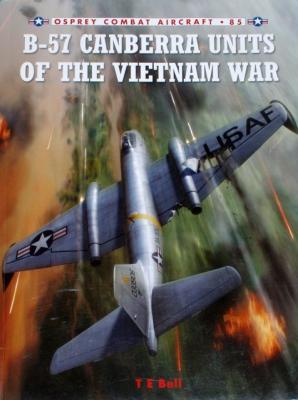
This 8.5 x 11 hardbound publication contains 240 pages and more than 500 photographs, both color and black and white completely one of the most extensive compilations of information on both the F-4D Skyray and F-5D Skylancer. It is well written, very complete and successfully gets the history across to the reader about the Navy’s first delta wing fighter.
The text takes you through design and development programs, the intense rivalry between the Air Force F-102 and the Skyray and the engine changeover to the Pratt-Whitney J-57 that became absolutely necessary to the survival of the Skyray. Also included are short articles on both the F-102 and F-106 for comparison purposes. The aircraft held for a time not only the aircraft low altitude speed record, but “time to climb” records as well. Interesting reading are the pilots comments who obviously loved this machine.
Different modeling books tend to have a “tools round-up” in their introduction chapter. This book includes which probably is the more important tool: “The modelers’ eye”. What is meant here is that you have to study the subject, look at it several times, noticing details each time you look at the subject in order to take notes and attempt to recreate and model whatever you “see” when you are looking at pictures or the real thing you are planning to model.
The following chapter briefly covers the basic techniques of model weathering and then the book dives into very well photographed and highly detailed construction of 11 models, ranging from 1/32nd to 1/72ndscale. Markings range from USAF, to Chilenean and Israeli Air Forces.
The Hellenic Air Force (HAF) is one of the major European operators of the F-16 with 157 on hand and 13 more to deliver. The HAF operates a mix of Falcons including F-16 Cs and Ds, blocks 30, 50, and 52 which means they operate both the GE and P&W engines. I have to say the HAF has one of the coolest camouflage schemes and so I was pleased to see that Two Bobs has released this sheet which covers recent block 50 and 52 F-16 Cs and Ds.
This is not an extravagant sheet since it replicates the spare tactical schemes of the HAF; which means that the flashes of color are predominantly the roundels and tail band. TwoBobs gives you the option to build two complete models of the seven aircraft schemes provided. The stencils include the newer gray markings and the older orange-yellow markings. The decals are printed by Microscale and are crisp and in register. Aircraft covered: