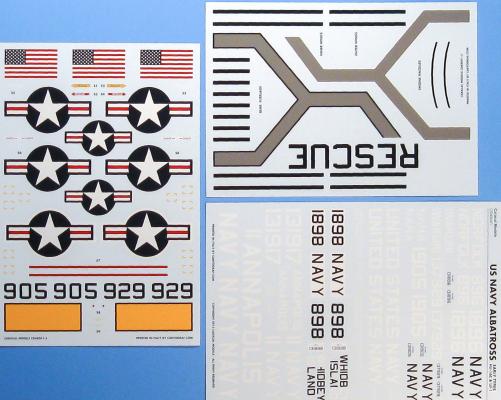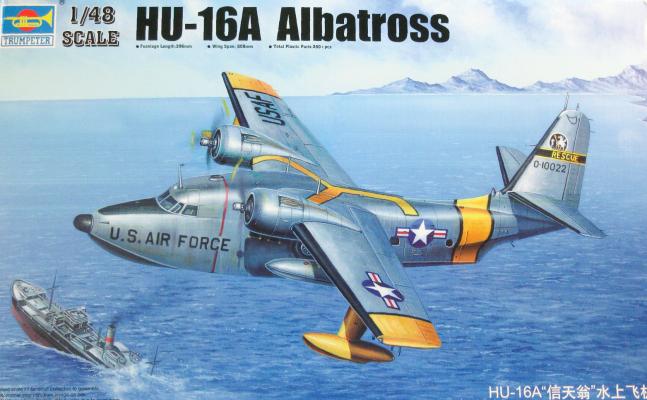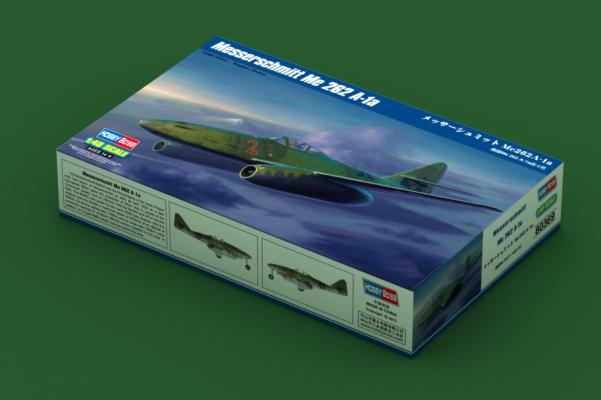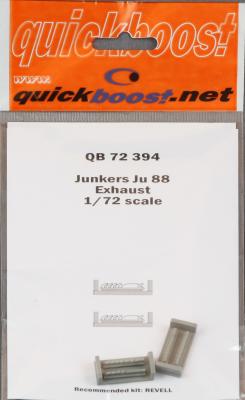
This kit brings back some memories! As model builders, we all remember certain events in our model building history that bring back memories (good or bad) that have influenced our personal model building pastime. This kit, under the Monogram Moniker, was my first attempt at finishing a kit other than OOTB. I used a heated straight pin (under my Dad’s watchful eye) and made bullet strafe marks through the plastic engine nacelle (the one that had the engine in it and the rear fuselage. Of course I now know that it wasn’t accurate but it was a step at making me a better and more interesting model builder.
Thanks again to Ross at SAC for providing IPMS USA this review set, one of what must be by now hundreds of sets he provides for the modelling community. I’m a prolific convert to them!
The Italeri B-57 series, released in the late 1980’s, was a serious jump forward for the modeling community. The only other kits at the time were modified from existing British Canberra kits with the “fish bowl” canopy. The introduction of the B-57 with it’s front and back canopy for the U.S. variants was most timely.
The only problem with the kit was the nose gear was a bit too far extended for ground operation, as the B-57 has a “nose down” attitude when at rest, loaded or not. In order to correct this, one had to cut part of the oleo out, and re-glue the gear together with epoxy or superglue. Some even resorted to installing a pin through the strut, which worked well.
For fans of US Naval Aviation and those fascinated with the Cold War, an incomparable weapon system and platform pairing was the F-14 Tomcat with the AWG-9 radar and the AIM-54 Phoenix missile. The AIM-54 was the long range fangs of the F-14 that gave the aircraft the capability to engage the Soviet Naval Aviation threat and its vast arsenal of anti-ship cruise missiles at very long range. It is ironic that the weapon system developed for the F-111B should end up in the Tomcat, the plane Grumman designed to supplant the faltering Navy F-111. There was and has been no equal to the missile. The Iranians used it to deadly effect in the Iran-Iraq war and it was so highly regarded, it was copied by the Soviet Union for pairing with the Mig-31.
Aerobonus, a new company (new to me, anyway) under the Aires umbrella, has come up with a novel approach for providing flight crew for modelers who want to add a little more life to their aircraft. In these new, very highly detailed sets, the ejection seats are molded with the pilots in them, eliminating the usually imperfect fit of trying to place pilots into empty seats.
The Triple Ejector Rack (TER) is a weapon suspension unit that attaches to an aircraft's main racks (pylons), and can carry up to three weapons. The Triple Ejector Rack has a single drop capability so the aircrew can drop the three bombs individually. Aircraft can carry the full range of Mk80, Mk20 series bombs on TER's. There are a lot of Internet references on these so information is plentiful.
Each issue of Scale Aircraft Modeling follows a basic design and format. There are usually two Feature Articles, an Aviation in Profile piece, industry news and a series of Compact Build Reviews.
The Feature articles for this issue covers a Ex-Adversaries Reunited and A Model 1/72 Mil-Mi-10 Heavy Lift Helo. The Ex-Adversaries build is Tamiya 1/48 Spitfire Mk Vb and FW190A-3 built in after war markings of the Turkish Air Force. The build covers weathering and construction and uses TigerHead decals for the markings. .
The other Feature article takes A Models 1/72nd Mi-10 which is super detailed. This build, by Brain Wakeman, makes the entire issue. First, he started with a limited run kit which presents issues for modelers. Second, there is a fair amount of scratch building and advice and making gems of limited run kits. in the end, the kit is eye-popping and his 500 hours of effort shine in the photos.
Review
The Battle of Britain has been documented many times over. However there are not as many references related to the Luftwaffe air campaign after the peak of September 1940 battles. This book is devoted to fill that gap.
The book is logically split in the following chapters
- Aerobonus; Wing pylons for F-4B/N/J/S (U.S. NAVY version); # 480055; $8.95
- Aires; F-4B/N Phantom II wheel bays; # 4579; $21.95
- Aires; F-4B/N Phantom II auxiliary air intake; # 4578; $12.95
Aires has released several nice detail sets for the new Academy F-4 series, and these three sets go a long way to enhancing the look of the Academy kit. With each of these pieces, as with all Aries work that I’ve ever come across, the engraved lines are petite and the detail is crisp.
Hasegawa continues its releases of the F/A-18 Super Hornet series with a limited edition set for VFA-27 the "Royal Maces 2013", who are part of CVW-5 aboard the USS George Washington. The basic kit components have remained the same since 2006 when this series was released and IPMS/USA has been lucky enough to review the kit several times. That being said, this is a superb kit that makes an excellent representation of the Navy's newest workhorse. I did add one thing to it - TwoMikes resin intakes. I know TwoMikes is on a hiatus at the moment but their intakes are mandatory for this kit. They are white, fit perfectly and they are visible.
The kit includes nine sprues of perfect gray plastic, two sprues of clear parts and one sprue of poly caps. The kit has the option for folding the wings and includes drop tanks but no weapons for the pylons. An ATFLIR pod is included but nothing for the 11 hard points.
Aerobonus latest release is the LAU-3 US Navy Rocket Container. The LAU-series was generally used by the fixed-wing aircraft of the Air Force and Navy. The -3 version delivered 19 air-launched 2.75 FFAR rockets either individually, in sequence, or all at once. This set depicts the Navy version. Looking at various planes, I found pictures of the F4J Fury and Skyraider with these rockets on the pylons, and I am sure there are more, including Phantoms.
This set contains 10 resin parts to make 2 pods. There is also a small decal sheet to cover the markings. There are tail cones and nose cones included. Research shows that these were not in use towards the end of the war. Color is white for Navy use, with the front and back plates being unpainted steel.