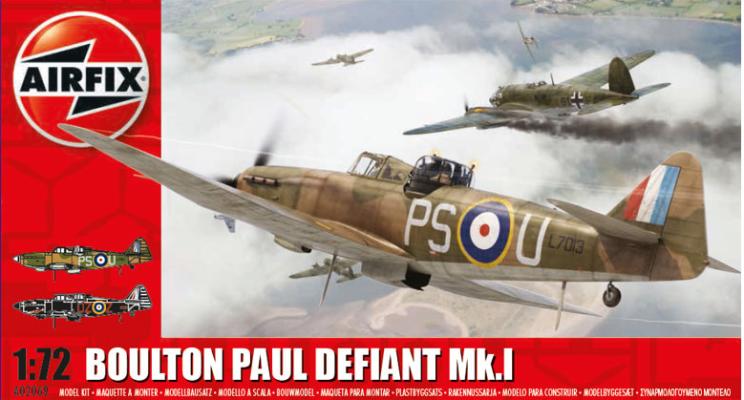
Airfix. The name may have sent shudders down your spine and given you nightmares of bad fit, no cockpit, bad decals, and overly thick canopies, but fear no more. Airfix has jumped into the 21st century and has come out swinging with beautiful new kits. They are accurate in size and shape due to laser scanned 3d modeling of actual subjects. The plastic is soft but in a good way. Liquid and tube cement will make the seams all but disappear so that putty use is minimal if nonexistent. This review is about their new tool 1/72 scale Boulton Paul Defiant.
History
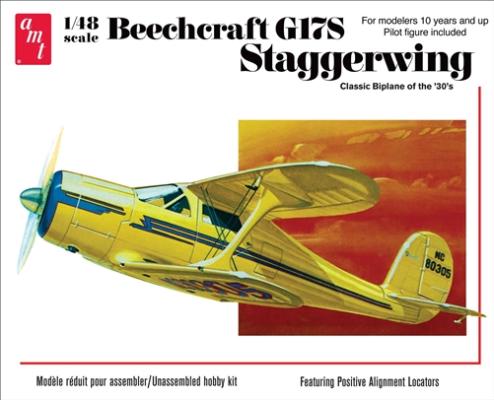
At the height of the Great Depression, aircraft executive Walter H. Beech and airplane designer T. A. "Ted" Wells joined forces to collaborate on a project to produce a large, powerful, and fast cabin biplane built specifically for the business executive. The Beechcraft Model 17, popularly known as the "Staggerwing" was first flown on November 4, 1932. During its heyday it was used as an executive aircraft, much as the private jet is now, and its primary competition were the Waco Custom Cabin and Waco Standard Cabin series of biplanes.
History
The Vietnam War was a helicopter war. Many of the most lasting images are of fleets of helicopters, mostly the ubiquitous UH-1 “Huey,” filling the sky. What would newsreel footage of that war be without a sound track of the “whup-whup-whup” of chopper blades?
Among the many uses the UH-1 was put to was as an early version of the gunship, the ancestor of today’s Apache. Those Huey guns took a crew of four: a commissioned or warrant officer pilot (left seat) and copilot, and two enlisted door gunner/crew chief in back. This four figure kit represents the aviators of those gunships employed in that conflict.
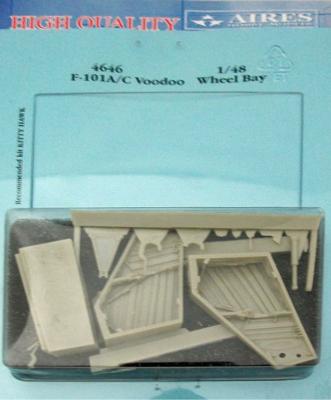
This set replaces parts D1-5, D1-7, E37, part of C9 and Part of C10 from Kitty Hawk Kit number KH80115. The detail quality is as to the normal high standard of the all Aires products. As usual there was no flash or other imperfections. The parts once removed from the mold base are ready to install. The parts will make a great improvement on the kit parts which has very little detail in these areas of the kit. A great price for such fine additional details for this kit.
Thanks to Aires for providing these for review.
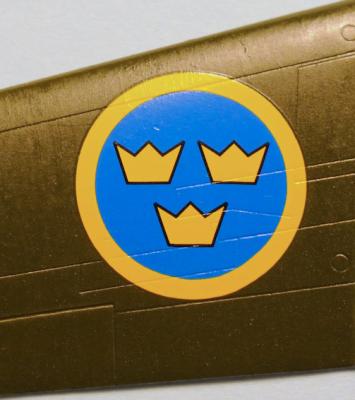
Flying Colors Aerodecals has updated their 1/72 Swedish National Insignia sheet for the recent explosion in Swedish aircraft from Tarangus (Saab Tunnan), Special Hobby (J 9, J 28, J J 21 and J 21R), and Airfix (J 8 Gladiator, J 26 Mustang, J 28 Vampire, and S 31 Spitfire). See the table, below for what it contains, but you can do anything from an Avro Lancaster to Hughes 300. The instructions provide a guide to insignia size for 62 different aircraft to cover your wings and fuselage. If you are in to ‘What If” or fantasy, the sky is the limit.
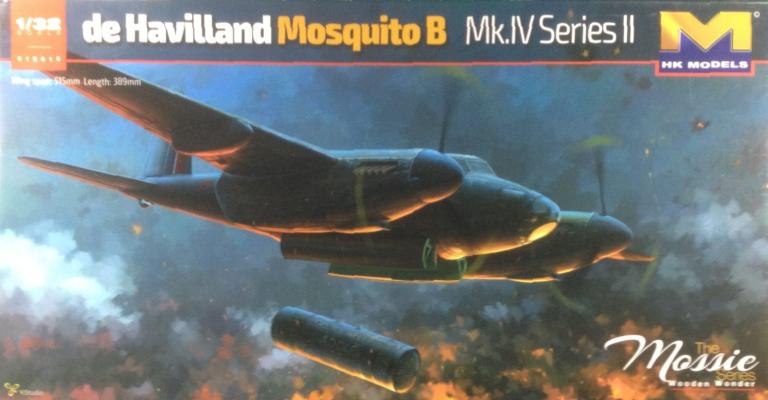
Thank you to Hong Kong Models for providing an innovative and exceptional kit representing a legendary Royal Air Force aircraft, the first kit in a “Mossie, The Wooden Wonder” series. Thank you also to the IPMS Reviewer Corps staff members who do the hard work behind the scenes, getting us kits to review and publishing our work.
This review is last of a two-part review. In this review you will find a brief build summary and conclusion, followed by detailed build log and reference list.
Build Summary
The most striking aspect of the kit is the stunning one-piece molding of the wing, horizontal tail fins, and both forward and aft fuselage components. I can summarize the importance of this molding approach by saying that I had very little seam filling to do, both because of the minimal number of seams present and the excellent fit in nearly all cases.
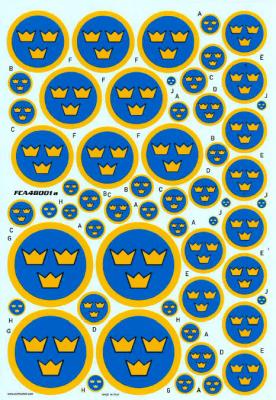
Flying Colors Aerodecals has updated their 1/48 Swedish National Insignia sheet for the recent explosion in Swedish aircraft from Tarangus (Saab Lansen and Viggen), Special Hobby (He 115), and Pilot Replicas (Saab J-21). See the table below for what it contains, but you can do anything from an Avro Lancaster to Hughes 300. The instructions provide a guide to insignia size for 62 different aircraft to cover your wings and fuselage. If you are in to ‘What-If” or fantasy, the sky is the limit.
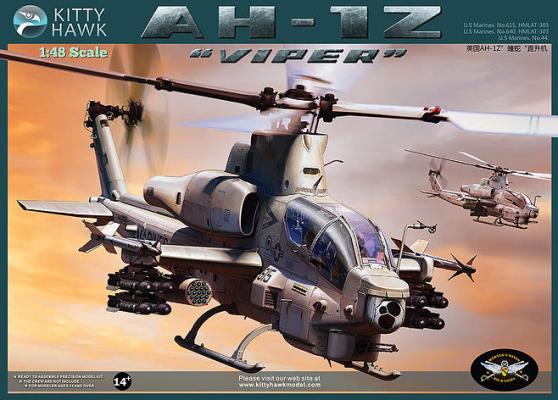
The Kitty Hawk AH-1Z was ready for decals.
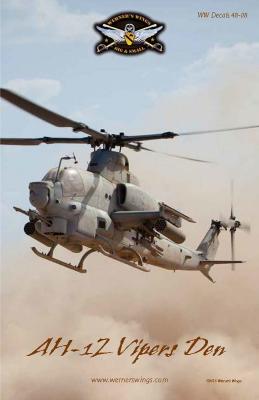
So, on to WW Decals 48-08. One word of caution; decide which aircraft you want to model BEFORE you paint! Floyd gives you eight different choices of aircraft, and there is something different about the color demarcation lines or non-skid paint or patches of other color paint on each aircraft. I didn’t have that forethought, so the end result was there was one aircraft that I could depict, and that was NO. 41 of HMM-268 (REIN). The sheet also contains two sets of common markings.
Having flown the AH-1G, Q, Mod S, Prod S and Prod S (ECAS) while on active duty with the U.S. Army, I am always drawn to any version of the AH-1. It is truly an exciting aircraft to fly and it just looks plain wicked! The aircraft has been around since 1966 and the AH-1Z is the latest incarnation of that airframe, and tends to make you think it’s going to be around much longer, still. And Kitty Hawk has done a great job of presenting us with a detailed model of the Marines’ newest helicopter. And, our very own Floyd Werner was involved in the design and production of this kit from the very beginning. Thanks go to Floyd for all of his time and efforts to produce this kit. Now, if he can just convince them to do a G Model or F model in 1/48 or 1/35, we’ll be on a roll.
The Kit
Upon opening the box you are presented with 4 sprues of grey and 1 sprue of clear plastic, a sheet of decals, an 8 page instruction fold out and a 4 page color & markings guide. The plastic is nicely molded with fine recessed lines, no flash and just a few pin marks. The clear parts a thin and very clear. The decals are in register and look very nice.