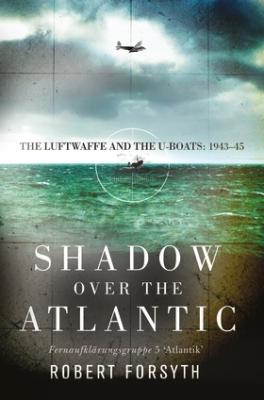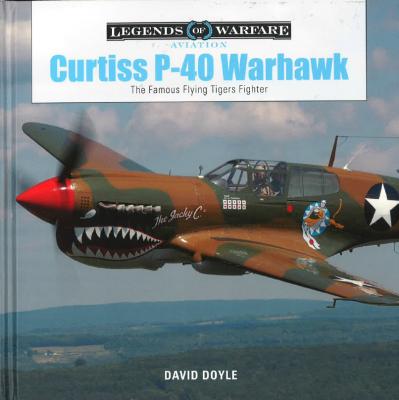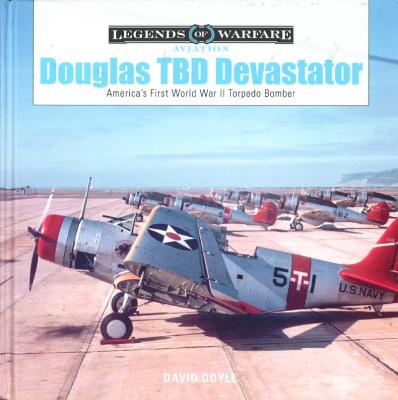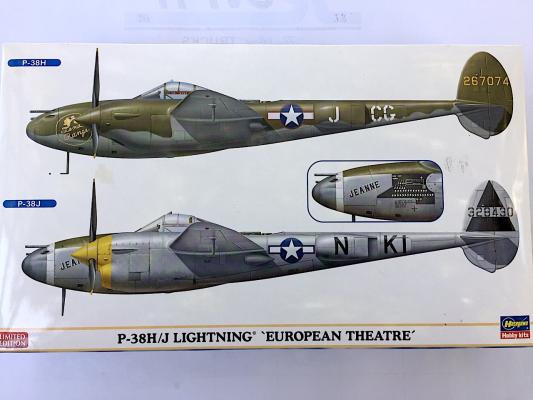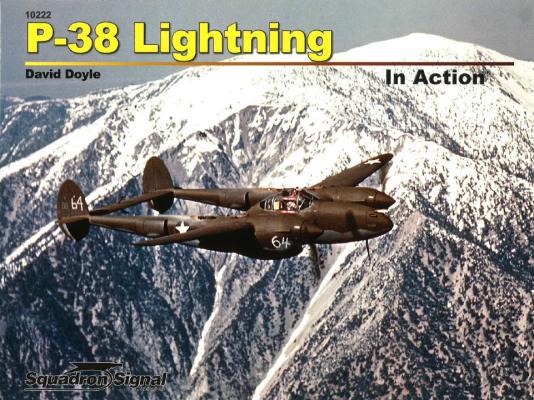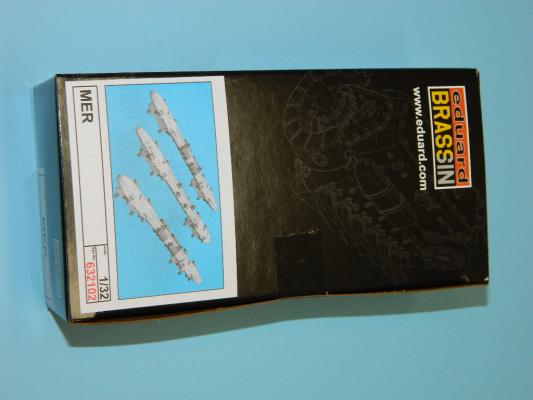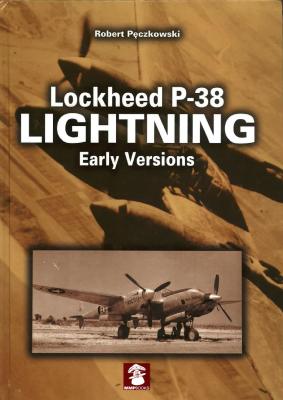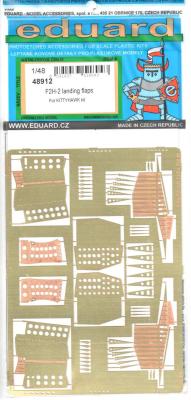
David Doyle’s latest book continues to expand on Squadron Signal’s long standing In Action series that initiated back in 1971. This is a completely updated and expanded edition over Squadron’s earlier Aircraft In Action number 75, a 50-pager on the Bell UH-1 Huey by Wayne Mutza that was published in 1986.
This H8K Emily was certainly an eye opener for me as it to date is the largest model kit I’ve built and in 1/72 scale that is simply amazing. In scale, the wingspan of the Emily is 0.53 meters (20.75 inches). To give you an idea of its true size, the Emily is just a couple of meters smaller in wingspan than a C-130 Hercules. The first boxing of the H8K by Hasegawa in 1/72 dates back to 1967 and was in need of an update. Fast forward to 2017 and thanks to the good folks from Hasegawa we have a simply amazing new tool replacement to their earlier release. As a nice little bonus, Hasegawa includes a poster of a cutaway view of the fuselage with this boxing of the kit. This may only be a limited run bonus, so check the box top for the bonus item markings.
The Defiant is an interesting aircraft and until recently, a largely overlooked subject compared to the popular “mainstream” aircraft from WWII. It has been offered by various model companies like Classic Airframes and Airfix in 1/48 and 172 scale.
This British aircraft was originally intended as a day fighter, with the rear turret harking back to WWI designs that were quite successful in their day. During the early days of the Battle of Britain, the Defiant proved to be vulnerable to head on attacks after BF 109 pilots figured our it had no forward firing, wing mounted guns. The turret had limits to its travel and could not aim the guns low enough while firing forward. The aircraft was also hampered by the significant weight added by the four gun, powered turret, resulting in a less maneuverable platform. It was soon relegated to night fighting duties, where it excelled against the Luftwaffe attempts to bomb Britain at night.
Scale Aircraft Conversions (SAC) offers an extensive range of replacement landing gear parts for a wide variety of kits. I have some experience using SAC items to replace kit parts and I’ve found that the SAC items add strength to the model without sacrificing any of the detail found on the original parts.
I tend to be a rather heavy-handed modeler and I have a history with WWI models which is self-made and not a reflection on the quality of the original kit. I’ve snapped wing struts, tail skids, and I’m especially rough on the undercarriage support structures. Knowing that I’ve “got a problem”, I have found that SAC gear replacement parts are a positive addition to my modeling effort.
This Side-by-Side review compares the original kit parts found in the WNW Sopwith Pup kit to the SAC #3211 replacement parts for that kit.
This set provides a replacement nose pitot for the MiG-25 PD and PDS “Foxbat E” interceptor. The instructions do not list what kit the set is designed for, but the only MiG-25 PD/PDS kit in 1/72 scale that I am aware of is the ICM kit (recently released by Hasegawa under its label too). Unfortunately, I have the Hasegawa kit on back-order, so I was not able to compare the Master Model parts to a kit part for this review.
This set provides a replacement nose pitot for the most of the variants of the MiG-25 Foxbat, other than the PD and PDS “Foxbat E” interceptor. The instructions do not list what kit the set is designed for, but there are a number of different Foxbat kits available from as Hasegawa’s initial offering based on the MiG-25 that Viktor Belenko flew to Japan, up to more recent offerings from ICM and other manufacturers. I had a MiG-25PU already underway, so I used that kit as a comparison kit.
History
The Bf109G-5 and -6 fighters were produced in parallel and were pressurized and non-pressurized versions of the same fighter. The G-6 was most widely produced variant and remained in service till the end of the war. Erich Hartmann was probably the most famous pilot to fly the Bf 109 and is the highest scoring ace in the Luftwaffe.
The kit: Hasegawa has released versions of the G-6 or -14 at least 12 times and nothing has changed with this boxing other than the decals. The parts are crisply molded in grey with recessed detail and little to no flash. The clear parts typical Hasegawa quality and look nice. The resin figure is very nice but has a mold seam line down the middle of his face and back of his head…this will be a pain to clean up.
SE.5a Wolsely Viper
This is an excellent newly tooled kit from Edward, who continue to set the standard for the finest in model kits. This kit will appeal to less experienced modelers, who may not want to use the photoetch or install the plane’s rigging. More advanced modelers will be able to enjoy the detail provided by the photoetch and rigging. Either way, this builds into a beautiful model.
This is a nice resin & photoetch set that replaces the Vickers and Lewis machine guns in Eduard’s new SE.5a kit. The resin has better detail than the kit plastic parts and the Vickers gun is easier to install. Some of the resin and photoetch pieces are extremely small.
Background
The Royal Aircraft Factory SE.5a was armed with a single synchronized .303-inch Vickers machine gun mounted in the fuselage in front of the cockpit. Many versions also had an upper wing-mounted Lewis gun fitted on a Foster Mounting to allow the pilot to fire at overhead aircraft. Eduard’s newly released SE.5a kit includes both guns, which are replaced by the parts in this add-on package.
Eduard has issued two resin propellers as upgrades to the propellers issued with their SE.5a Wolsely Viper kit. The upgraded propellers include resin and photoetch parts with much finer detail than the kit propeller.
The Royal Aircraft Factory SE.5 was introduced in 1917 with a 150 HP V8 Hispano-Suiza 8A engine with two-bladed counter-clockwise (left) rotating propeller. The SE.5a was an improved version of the SE.5 and was one of the fastest fighters of WWI. The SE.5a aircraft was originally produced with a 200 HP Hispano-Suiza 8B gear-driven engine (‘Hisso’), with a counter-clockwise (left) rotating four-bladed propeller. The gear-driven engines proved unreliable, and were quickly replaced with the 200 HP Wolsely Viper direct drive engine with clockwise rotating (right) two-bladed propeller.