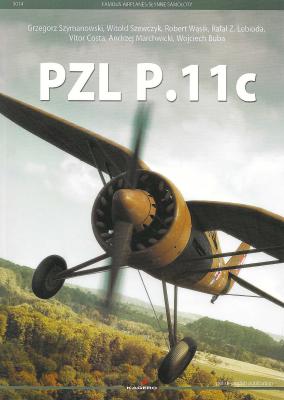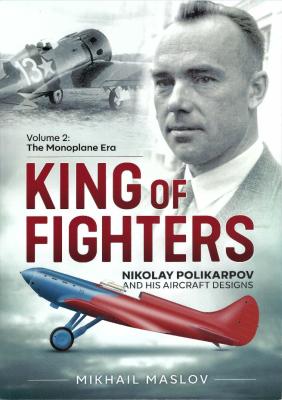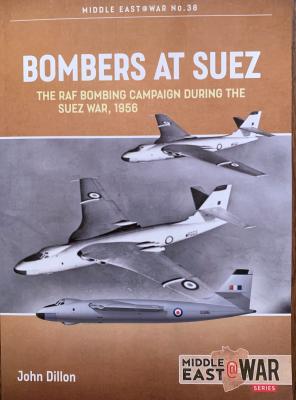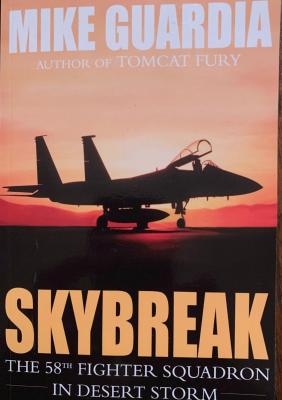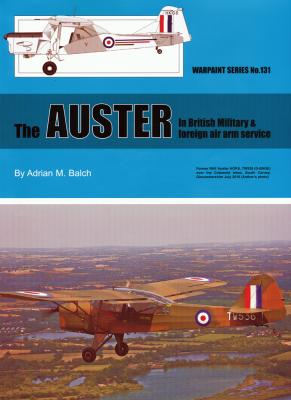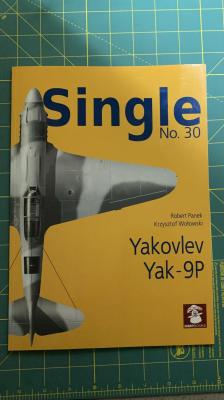
This third volume of Claringbould’s aircraft profiles, the first of Allied aircraft, highlights the Douglas A-20 Havoc (Boston to the Commonwealth forces). The A-20, and its stablemate the B-25, were the two-workhorse low level attack aircraft of the US Fifth Air Force in the Southwest Pacific.
Kagero Publishing is widely known in scale modeling circles as producers of reference books that often come with a bonus decal sheet. That all started in 2001, with their immediately successful “Camouflage & Decals” series. Apparently, they had technical issues surrounding the decal sheets so the series was, unfortunately, short-lived.
“Japanese Fighters” brings the series back to us. Consisting of 40 pages, this A4-sized book starts on page one describing the history of the series, and where the company hopes to go with it. Also on the same page is a chart of colors the Japanese used in WWII, complete with the correct Japanese names for them. All text is in English and Polish.
Toward the end of World War 2, the Germans were coming up with more and more desperate attempts to halt the U.S. and British aerial juggernaut that was daily pummeling their cities and the remnants of their industrial capacity. Cheap, easily assembled point defense weapons became the order of the day, resulting in such oddities as the Me163 Komet rocket fighter and the He162 Salamander, both of which were as much a threat to their pilots as to any Allied airmen. The Junkers EF-126 and its rocket-powered alternative, the EF-127, were supposed to be the logical descendants of the Komet, and although none were built by German industry, the Soviets made prototypes of both aircraft after the war. Apparently the sole unpowered version of the craft crashed on its maiden flight. I couldn’t find where powered versions were ever run.
History
The BR 20 "Cicogna" low wing medium bomber was developed by the Italian aircraft manufacturer Fiat during the 1930’s. It entered service in 1936 and was characterized by its metal frame and retractable landing gear. Modern and fast for the period, it was deployed by the “Aviazione Legionaria” and had its baptism of fire in 1937 during the Spanish Civil War. In September 1940, the “Corpo Aereo Italiano”, consisting of the 13th and 43rd “Stormo da Bombardamento” were similarly equipped with the BR-20. The “Stormi” were stationed in Belgium and supported the Luftwaffe during the Battle of Britain. Despite operational comparisons with modern R.A.F. fighters that exposed the BR-20’s limits, it was used for the duration of WW2 on various fronts by several Regia Aeronautica bomber squadrons.
This book has personal significance to me. As a member of the 23Tactical Fighter Wing in the early 1980s, I got to see A-10s doing their thing including firing that incredible gun at the local gunnery range.
Background
Since the Douglas DC-3 and C-47 was produced in larger numbers than any other transport aircraft, it stands to reason that the plane is well represented in the modeling world. Although the plane has been produced in a number of scales, the majority of the kits are in 1/72 scale. Starting with the old Airfix kit in the sixties, the more recent issues by Italeri and ESCI have featured recessed panel lines and some variations in form, and recently, Airfix is reported to have reissued their kit with more up-to-date features. I have not seen the new Airfix kit, but have built both ESCI and Italeri kits, and they are both exceptionally good kits.
Background and History from Wikipedia
The Panavia Tornado is a family of twin - engine, variable - sweep wing multirole combat aircraft, jointly developed and manufactured by Italy, the United Kingdom and West Germany. There are three primary Tornado variants: the Tornado IDS (interdictor/strike) fighter - bomber, the suppression of enemy air defenses Tornado ECR (electronic combat/reconnaissance) and the Tornado ADV (air defense variant) interceptor aircraft.
This is the 7th volume in a newish series from MA Publications, the British publisher of Scale Aviation Modeller International, Model Aircraft, and Scale Military Modeller. Each of the issues of this series includes multiple build articles, centered on one particular aircraft type. In this case, the P-47 is covered in 1/72, 1/48, 1/32 and 1/24 scales. The booklet starts out with a six-page history of the P-47, including some good photos of operational aircraft. This is followed by 16 build articles.
This is the second volume of two published by Hellion covering the history of the Israeli Air Force from its founding to the present. As with other Hellion volumes, it follows an established format. Using a chronological format, the narrative begins where the last volume left off. The text begins with the end of the Yom Kippur War and ends in 2023 with a little bit of forecasting into the immediate future. The book is heavily illustrated with black and white photos. As with previous volumes, it has a series of color profiles of aircraft and a slim selection of color photographs. They also have an extensive bibliography and foot notes for those of you who would like to continue reading on the topic.
MMP was founded in 1996 by Roger Wallsgrove, to publish "Mushroom Model Magazine". This quarterly modelling magazine was developed from "Mushroom Monthly”, a club newsletter which ran from 1985 to 1995, achieving a world-wide reputation for quality articles, fearless and honest reviews, and a great sense of humor. From 1997 the magazine was produced in collaboration with Robert Peczkowski and Artur Juszczak (Stratus), which meant a big leap in print quality and design. MMP expanded into book publication in 1999, and since then we have built up a list of books on aircraft and aviation, naval, military vehicles, and military history.