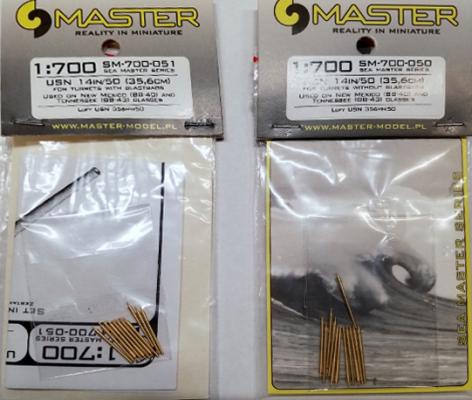
The US Navy's New Mexico Class and Tennessee Class battleships mounted the 14in/50 rifles as main armament. The Trumpeter/Pit-Road 1/700 kit of the 1941 version of the USS Tennessee provides injected gun barrels both with and without blast bags. The injected barrels are molded in relatively soft grey plastic. Removal from the sprue results in a large attachment point remnant. Additionally, the barrel muzzles are molded solid and the small diameter, in 1/700 scale, makes them hard to drill.
all 2016
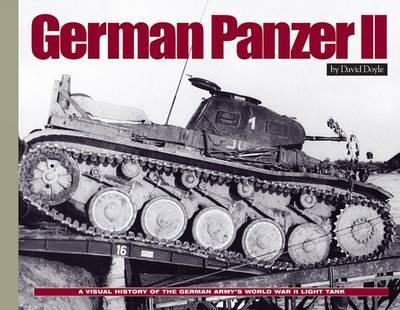
DavidDoyleBooks.com (Ampersand Publishing) out of Memphis TN, is back again with another Military Vehicle book entitled German Panzer II – A Visual History of the German Army’s World War II Light Tank, by popular author David Doyle. Anyone familiar with armor modeling literature and research will recognize this authoritative combination, and this latest release won’t disappoint.
Looking across my personal bookshelf of maybe 200 titles, I can spot several of Mr. Doyle’s books, including 251 Halftrack Visual History and Tiger I In Action, and, of course, my beaten-to-death copy of German Military Vehicles, among others. If you’ve been building armor models for any length of time, you’re probably familiar with his work as well.
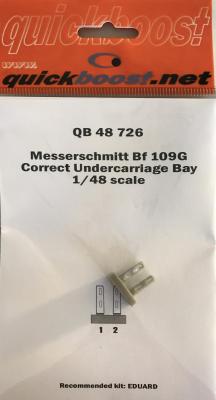
Recently I was given the opportunity by IPMS USA to review Aires Messerschmitt Bf 109G Correct Undercarriage Bay for the 1/48 Eduard 109G series of kits. One of the first things to notice with this product is the excellent presentation of the packaging with the sealed flap on the back of package to allow for easy access to parts.
Upon removal of the resin undercarriage parts you will notice the great detail that we have come to expect from Aires QB products. Once you have removed the undercarriage parts from the resin base you will need to do a little clean-up of the flash with your tool of choice on the openings of the bays (I used the tip of my X-Acto knife). After the flash has been removed they are ready to be glued into the wheel wells of the Eduard Bf 109G.
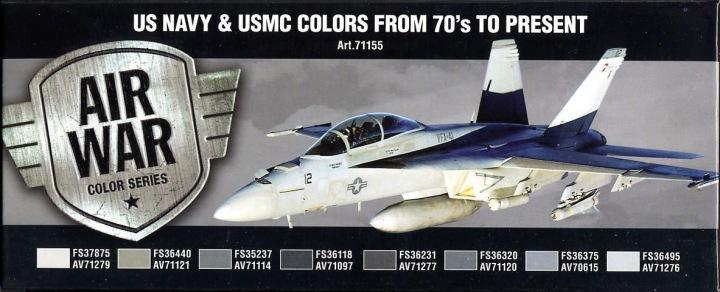
Vallejo makes several different types of paints- some for hand brushing, some for detailing and some pre-thinned for air brushing. Model Air is a range of liquid acrylic colors developed especially for airbrushing and has very finely ground pigments and an acrylic resin which has been designed for durability.
The set reviewed here is for modern US Navy Colors and contains eight 17ml squeeze bottles of:
From the Inside Cover
With their deadly curved katanas, colorful lacquered armor and massive bows, the samurai were the ultimate warriors. Bound by their famous code: bushido, the way of the warrior, they were renowned for their martial prowess and suicidal bravery. In this beautiful new book featuring stunning prints, artwork and photographs, Stephen Turnbull explores their history from its earliest origins, through the Gempei War, Mongol invasions and the Period of Warring States to their tragic demise in the modern period with the Satsuma rebellion of 1877. Examining all aspects of samurai life, their homes and strongholds, beliefs and codes as well as their martial upbringing and equipment, Turnbull clears away the myths surrounding these legendary fighters to tell the complete story of history’s most iconic warrior culture.
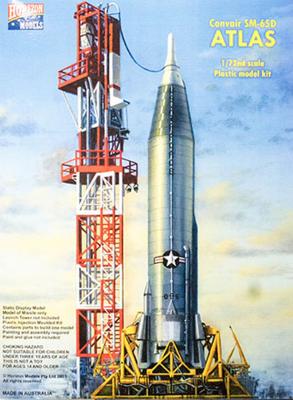
Horizon Models of Australia has released their third kit, the Atlas ICBM in 1/72 scale. This comes after kits of the Mercury Space Capsule and Mercury-Atlas rocket both in 1/72. If you have built either of those then you know you how good Horizons kits are and if not the following review will show you.
The kit is made up of 3 sprues of gray plastic. Two of sprue A and one B. The biggest difference from this kit to the mercury atlas kit is that it is missing the mercury capsule sprue. Horizon gives you three options for payload though, option A is the first SAC launch, option b is the “New Nickle” launch from 1961 and option C is the Mk4 RV test flight from 1960. My choice was to build option C as it launched from the Cape and the other two were from Vandenberg.
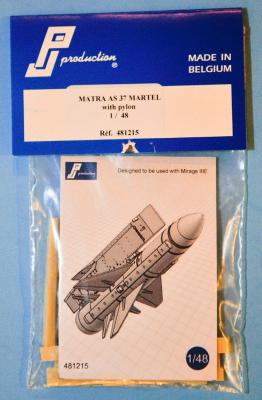
PJ Production has jumped in to help 1/48 Mirage III series model builders. This new release provides one Matra AS 37 Martel along with the pylon as featured on the Dassault fighter. This set is probably focused on the new Kinetic 1/48 Mirage III kits, but it should also work well on the Academy, Eduard, Fonderie Miniatures, Heller, and Hobby Boss kits; along with the older ESCI kit that has also been re-boxed by Revell and Italeri.
Notable is the re-sealable packaging that PJ Production uses that makes the parts easy to review and then stuff back into the package securely. You will want to be careful handling the rear resin fins as their small size makes them an easy sacrifice to the carpet monster. Painting instructions are included with the small instruction sheet. I found several air-bubbles in the resin parts, on the missile body. Gap filling super glue with baking soda quickly solved the issue.
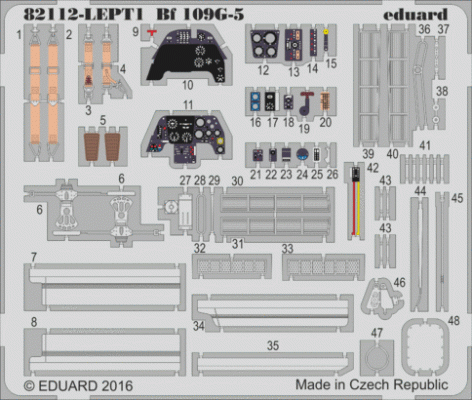
When Eduard releases their Weekend Edition or their Overtree issues they release a small ‘essential’ fret of pre-painted photo etch. Such is the case with the latest release from Eduard.
This one fret of photo etch provides the modeler with a pre-painted instrument panel, seatbelts and interior parts. They also provide radiators, exhaust deflectors, antennas and an access panel. Really, can you paint as well as Eduard prints on their instrument panels? I know I can’t. I love the pre-painted instrument panel and the seatbelts.
Typically, these sets don’t come with instructions but the downloadable kit instructions show where they go.
The key to these LEPT frets is that they are only available for a limited time, normally about a month after the release of the overtree kits.
If you have never used photo etch these are great little sets to practice with while adding detail that I think is superior to the plastic.
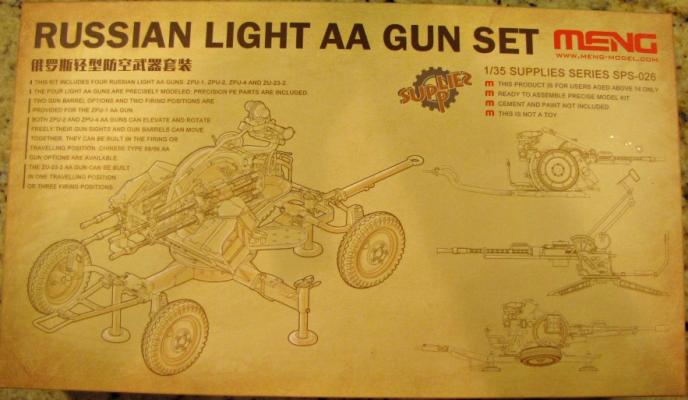
Meng Models exploded on the scene several years ago and has since built a reputation for interesting subjects and well-designed kits. With the release of a Russian Light Anti-Aircraft gun set, I am sure that their star continues to rise for the scale modeling community. You get four weapons – ZPU-1, ZPU-2. ZPU-4, and ZU-23-2 as well as several of their Chinese equivalents. As part of Meng’s Supply series, this is certainly a welcome addition to those who enjoy modeling anti-aircraft artillery. With sixteen sprues and one fret of etched brass, the parts are well molded. They have taken advantage of advances in molding technology and there are many very small and fragile parts. Take care when you remove them from the sprue. The instructions are in a booklet form and come with color profiles of each weapon. You can choose any color you want as long as it’s Russian Green. There are no decals or clear parts.
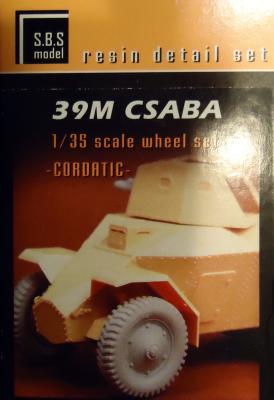
A short while ago Hobby Boss released a charming model of a rarity – the Hungarian 39M Csaba armored car, which clearly shares an ancestry similar to the French Panhard armored car of roughly the same vintage. Although Hobby Boss seems to have done well in the overall design of this kit, it is somewhat let down by the soft rubber tires, which fall below the quality of the rest of the model. Ironically, what detail is evident on the tires is soft and inaccurate, and even includes a misspelling!
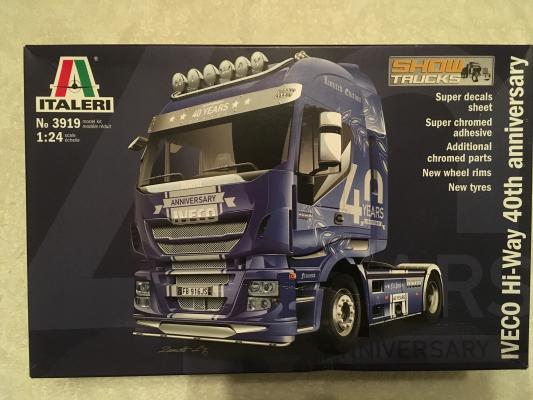
Iveco is an Italian truck manufacturer that builds some of the latest trucks and commercial vehicles in Europe. Acitoinox is a truck accessory parts company, and plays a big part in the fancy stripes and mirrored finish stainless steel 40th anniversary scheme of this subject.
The Iveco Stralis Hi-Way is a re-issued kit with new decals and adhesive “chrome” dress up “stickers”. It comes in a sturdy box that is well sized for the amount of sprues inside. The sprues are mostly individually bagged and protected.
This truck is beautifully detailed with parts reproduced faithfully to the original - outside and inside. I referred to various internet sites for picture references. The plastic is given in approximate colors of black, blue, white and chrome, so it could be built with no painting.
The instructions are well laid out with photo like pictures, a good parts map and paint recommendations.
OK, let’s build this thing!
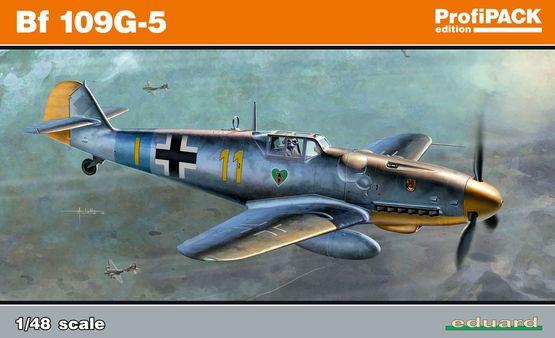
Eduard has four levels of models that they release. The first is normally the Profi-pack with all the plastic, instructions, photo etch, masks, and decals. This is normally followed up by adding Brassin parts that the modeler can choose to add to the kit. The third one is the Weekend Edition which includes the plastic, instructions, and decals. Just a basic kit. The final version, which is normally released just as the Profi-pack is, is the Overtree kits. This is just the plastic parts. It is the least expensive. It does not include instructions, photo etch, masks or decals. The instructions can be downloaded from the Eduard website. So that is taken care of. Now some would think why would they do that? Let’s admit we all have extra decals and may not like what decals come in the kit. Normally when this kit is released there is a small LEPT pre-painted photo etch kit for those that like them.
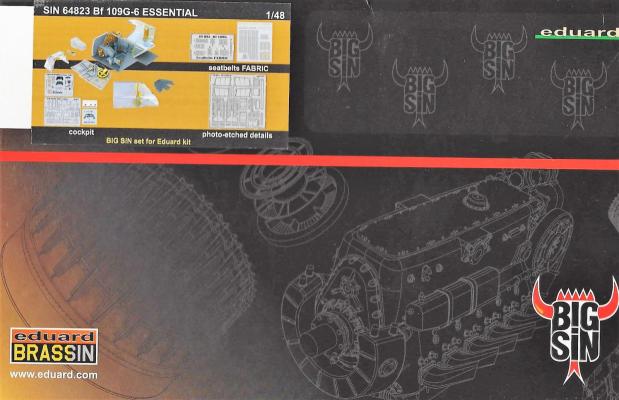
Eduard continues to amaze with the release of its Bf-109G series of models. They’ve taken the kit and provided you with some impressive detail right out of the box. However, they also have their photo etch line and the Brassin line of resin. It was a natural to add this detail to their kits. The problem was that as you add more stuff the aftermarket stuff would become cost prohibitive. Eduard has an answer for that. They offer options in the BigSin series that bundles some of their sets into a lower cost offering. Same great aftermarket but at a lower cost.
This BigSin set offers the new Brassin multi-media cockpit set, fabric seatbelts, and a photo etch set. There is no part of the model that is not addressed. Let me look at each set separately.
History
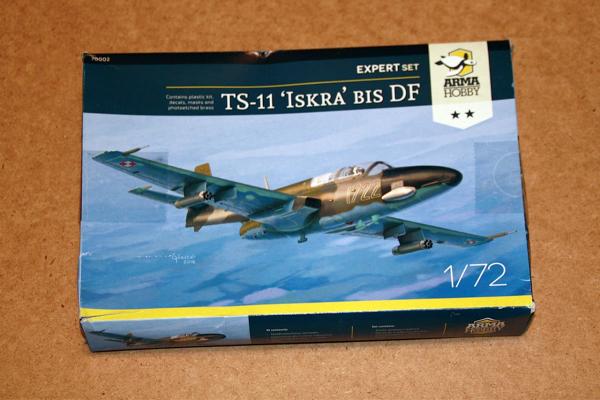
The PZL TS-11 Iskra (English: Spark) is a Polish jet trainer aircraft, used by the air forces of Poland and India. It is notable as the main training aircraft of the Polish Air Force, and as the oldest jet aircraft still in service in Poland.
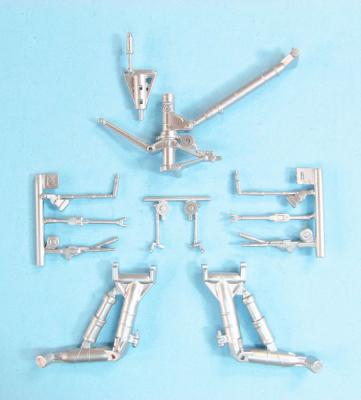
Hot on the heels of the release of the new Kinetic 1/48 F-18C, Scale Aircraft conversions has released a set of replacement gear in white metal. The set comprises 12 parts and includes both the main and nose landing gear.
A couple notes on the SAC parts: The kit nose gear leg has several ejector pin marks and the top of the main strut is two parts. The SAC kit has no ejector pin marks and the main leg is a single solid part. You will need to drill out the main leg to attach the top section but that’s simple. Second, that main gear are complete replacement parts, but the nose gear will have to have several parts added, such as the nose gear light and the landing lights.
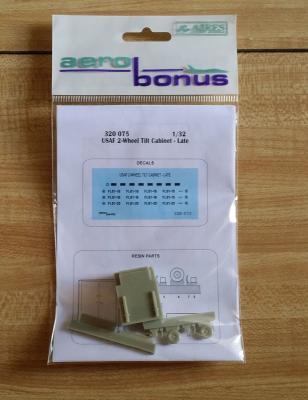
While this cabinet may be small and easily overlooked, it can bring a sense of realism to a 1/32 display or diorama. As a retired C-130 Crew Chief, I have personally used (and abused!) roll around cabinets such as this.
The kit comes with 9 cast resin parts on three runners. One part, the handle on the top of the box, was broken in my sample. Being fragile, it is easily broken, and I suspect that it was broken in transit. My intent was to repair the handle and install it as intended. However, the hungry carpet monster ate both pieces, so I had to create a new handle from brass rod.
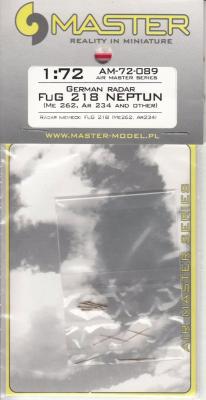
Master Models is a company that makes turned brass aftermarket parts, specifically pitot tubes, refueling probes, and antennas.
The first thing I would like to point out is how good the packaging and instruction sheet is. The packaging consists of a zip-lock type bag while the part is in a smaller bag, keeping it from moving all over. The instruction sheet is very clear and easy to understand, only needing 3 steps. Cut off original part, Drill a hole (0.3 mm), Glue in the new metal part. Just be careful drilling the hole, especially in 1/72. You have to put each antenna group together which includes 3 parts. Mine got a little bent because of how small they are. I needed to use my visor with the highest magnification. Others will probably have an easier time than me if they are used to putting such small delicate parts together.
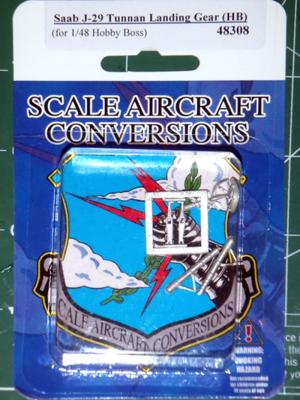
Scale Aircraft Conversions specializes in white-metal replacement parts, now including the 1/48 Hobby Boss Saab J-29 Tunnan.
The set includes 10 parts with the following breakdown:
- Nose gear main strut
- Nose gear wheel housing halve
- Main gear struts (2)
- Main gear retraction scissor struts (2)
These parts are little more than drop-in replacements; the white metal parts actually are the equivalent to several plastic parts, and are interchangeable as they fit the plastic parts almost perfectly.
The main gear retraction struts are molded to their runners with a rather thick base at the pinion point. It took quite a bit of careful sawing to free the part. This resulted in deformed pins with not much "pin" left over even after I had removed the runner. The main gear legs are very thick (which is to scale), and seemed very stable when simply snapped into place.
Parts Count
- 71 White styrene plastic parts on ten spure with two individually wrapped
- 69 Chrome styrene plastic parts on five spure
- 10 Clear styrene plastic parts on one spure
- 4 Vinyl rubber tires
- 1 5 ¾” x 5 1/8” decal sheet
- 1 16 pages, 24 step instruction booklet
All parts are in separate sealed plastic bags and appear to be free of any flash. The chrome is bright and free of scratches. Clear parts are individually wrapped and appear free of scratches. The molds for the rubber vinyl tires appear to be fresh and without flash or mutation. Of note, the white styrene plastic this kit is molded in is extremely easy to work with; carves easily, sands well and reacts nicely with liquid solvent style glues like Tamiya Extra Thin Cement or Tenex 7. Decals have many options, are crisp printed and covered with protective wax paper.
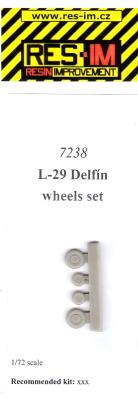
The L-29 Delfin was a jet-powered trainer airplane that was designed by Aero of Czechoslovakia. It was developed to provide the Warsaw Pact nations with a jet-powered replacement for their propeller driven trainers. The aircraft was in production from 1963 until 1974 with over 3,500 produced. In addition to the Warsaw Pact nations, the L-29 has been used by many other countries and in fact, a number are still in use in civilian hands. These can be seen in air shows around the world.
In spite of the wide usage of the L-29 and the associated interesting paint schemes, it has not been well produced as a model. Until recently, the only 1/72 scale kit of the L-29 was from KP of the Czech Republic. Recently, however, a new kit of the L-29 has been issued by AMK.
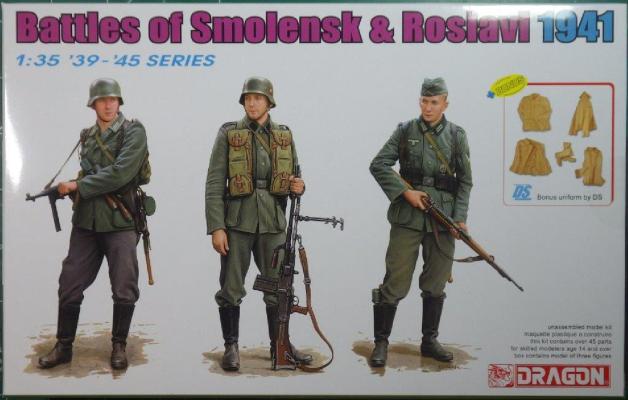
This kit features three figures depicting Wehrmacht soldiers fighting in the battles around Smolensk and Roslavl in 1941. From the start of Operation Barbarossa, the invasion of the Soviet Union, the German forces army had enjoyed many quick successes and had advanced over 300 miles in less than 3 weeks. However, when they encountered the Soviets in the region around Smolensk, the Germans ran into heavier than expected resistance and were delayed for three months from July to September 1941. Although, the Soviet counterattack failed, and resulted in huge losses, including three Soviet armies, this defensive battle slowed the German advance and showed that a Blitzkrieg to capture Moscow was not going to be as easy as expected.
The Kit
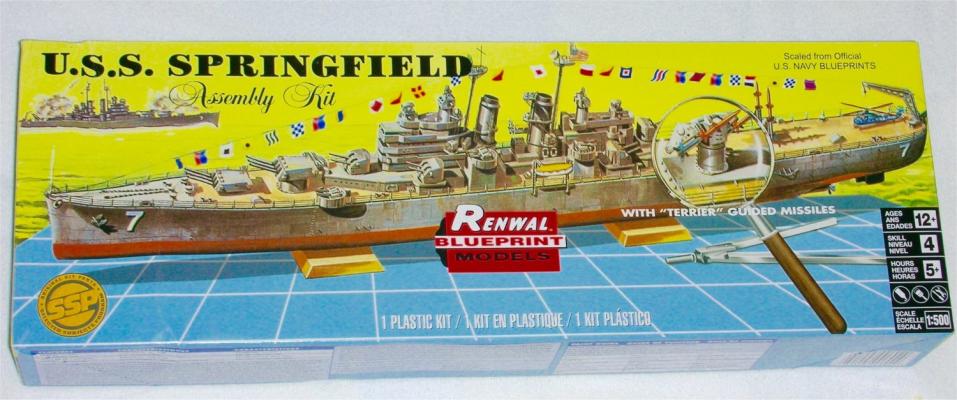
The kit is of the U.S.S. Springfield, one of 27 Cleveland Class light cruisers built by the United States during the Second World War. Her primary role was to provide anti-aircraft protection, but she also served in a shore bombardment capacity. After the war she was laid up but in the late 50’s she was one of three Clevelands to be converted to a guided missile cruiser of the Providence class. Her rear six inch turrets were removed and two twin Terrier SAM missile launchers were installed. She served in this capacity until being decommissioned for the last time in 1974.
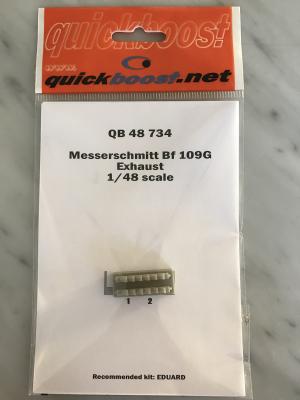
Recently I was given the opportunity by IPMS USA to review Quickboost's Messerschmitt Bf 109G Exhaust for the 1/48 Eduard 109G series of kits. One of the first things to notice with this product is the excellent presentation of the packaging with the sealed flap on the back of package to allow for easy access to parts.
Upon removal of the resin exhaust you will notice the great detail that we have come to expect from Aires Quickboost products. The molding on the exhaust is excellent and they come off of the resin block with little effort, I tried a couple of different methods of removal, on the first one I removed with razor saw and the second on I was able to score with a blade and remove easily.
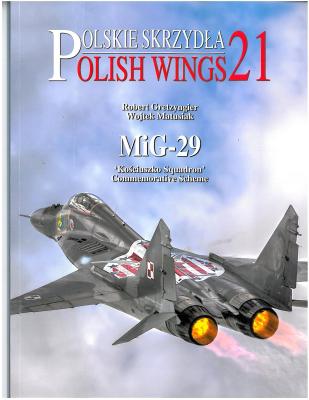
Most of us have seen at least one photograph of a Polish Air Force MiG-29 in recent years with a large multi-color circular badge adorning its upper surface. I know I had seen a couple of MiG-29’s with the special marking, but I assumed they were one-off special markings.
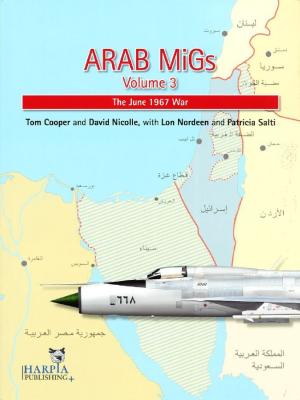
Tom Cooper and David Nicolle's Arab MiG series is an incredible history that addresses the Arab air forces of Algeria, Egypt, Iraq, Jordan, Lebanon, and Syria and from 1955 through 1973. Although MiG aircraft dominate the story, all Post-WWII Arab aircraft are included. The authors have been able to access official archives as well as the combatants involved to provide a unique perspective of the Middle East conflicts. Volume one in this series, published November 19, 2009, covered the background of the Arab air forces from 1955 focusing on MiG-15 and MiG-17 fighters. Volume two, published October 19, 2011, addressed the Arab air force supersonic fighters from 1956 through 1967. Volume three in the Arab MiGs series focuses on the Arab air forces in the June 1967 War. Three additional volumes follow in this series, all with the same thick 256 glossy page count. I counted 148 black and white photographs, 28 color pictures, 17 color side profiles, and three maps.