For any of us that frequent the many scale modeling shows and contests, follow the abundant online forums, blogs, and websites, as well as read any of the numerous modeling technique publications it is very evident that WWII German armor is a niche that alive and well…and kit manufacturers and aftermarket producers are keeping this hunger well fed. A perfect complement to this appetite is a book brought to us from Osprey, “History of the Panzerwaffe Volume I: 1939-1942.” This book is extremely helpful for students of this genre (myself included) to understand the story behind the most recognized armored force in history.
all 2016
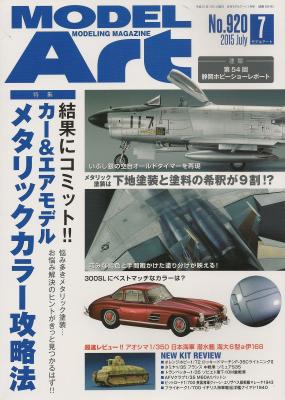
Model Art Issue 920 is typical of other Model Art magazines in that it is written entirely in Japanese, with occasional English words, usually in article titles or in captions. This issue deals specifically with the F-86 in Japanese service, painting the Streak Eagle version of the F-15, Orange Hobby’s F-35 kit and a comparison build of the Mercedes-Benz 300SL from Tamiya. Plus, there are lots of advertisements showing what is available and new, always useful for building up that wish list.
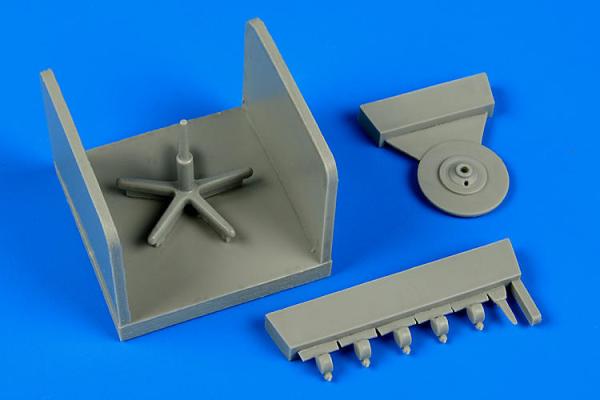
Aires and the Aerobonus line continue their 1/32 scale sets meant for modern airfields and workshops. In this case, the set is a 1/32nd scale mechanics chair. This is similar to a backless office chair. The set comes with eight resin parts including five separate casters, a seat adjustment lever, the seat itself and a magnificent casting in one piece of the chair base.
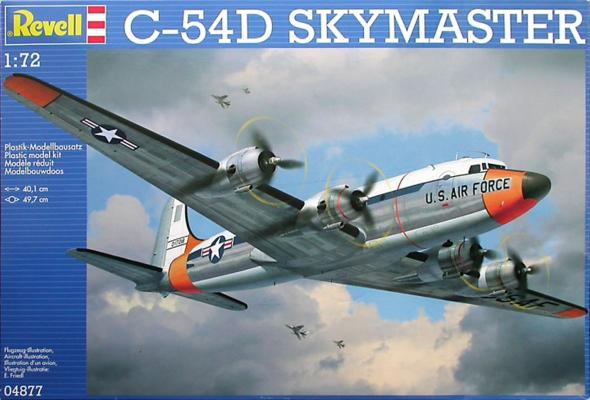
The C-54D was a derivative of the DC-4, which was first designed in 1938. It had a 117 foot, 5 inch wingspan, was 94 feet, 3 inches in length, and was powered by four Pratt & Whitney R-2000-25 engines of 1,450 HP each. By the end of production, Douglas had turned out 1,241 machines. They’re best remembered for their role in the Berlin Airlift where they became known as "Candy Bombers" for dropping candy to refugees by small parachutes on the way in to offload supplies.
The kit comes in a large colorful box, and contains 352 parts molded in light gray plastic. The model has recessed panel lines, and many parts had light flash on them. Due to the high parts count, I highlighted the letters on the sprues to make them easier to identify.
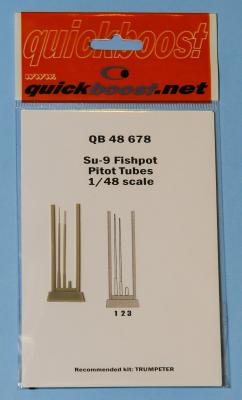
Quickboost provides you with a Su-9 Fishpot nose mounted data probe and a wing mounted pitot tube consisting of two parts. Of note is the re-sealable packaging that Quickboost uses that makes the parts easy to review and then stuff back into the package securely. There supplied two-step instructions address the installation of the wing pitot tube mount.
Quickboost has molded the pitot tubes perfectly in light grey resin with no apparent bubbles. The Quickboost pitot tube provide you with no mold seams to sand off on these tiny parts along with the superior detail. You may note that both Quickboost parts are longer then their corresponding Trumpeter parts. They look fine to me, but you may wish to check them against photos.
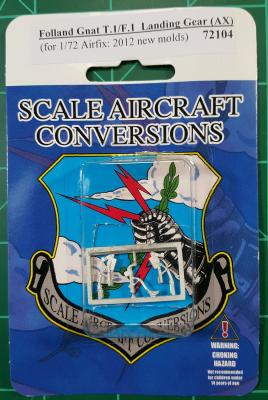
Scale Aircraft Conversions is known for making replacement landing gear for a wide variety of kits in virtually every scale in which model aircraft are available. This set is designed to replace the plastic gear in the Airfix Folland Gnat T.1/F.1 kit.
The set includes both main gear legs with their integral retraction struts and the nose gear. The struts are very sturdy and are made to be drop-in replacements for the kit parts. The parts require very little clean up, though some parts do occasionally become a bit bent during shipping. No worries there, though, since they are very easily straightened. Recommended, especially if you’re adding a bit of weight to make sure your Gnat isn’t a tail sitter. You’ll probably need it, too, considering the normal tail-low stance of the diminutive fighter.
Thanks to Scale Aircraft Conversions for the review sample and to IPMS/USA for the opportunity to review it.
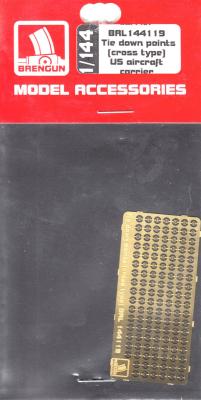
Brengun has come out with a spiffy idea for making your US Navy 1/144 carrier-based aircraft base look even better. It’s a set of PE tie down anchors for the carrier deck.
The tie downs in this set are the “older” cross style. The newer ones, on newer ships are star type. The original tie down anchors on wooden deck carriers looked kind of like a grating which ran from one side of the deck to the other. I found pictures of these with B-25s tied down on the Hornet for the Doolittle Raid.
When the Navy went to angle deck carriers, they had a steel deck. The tie downs were the cross type. They were painted black, and later yellow. There’s a picture below of me standing on the deck of the USS America in 1996, on the ship’s last cruise. The tie downs are cross type, painted black.
Later carriers used the star type, painted yellow, and later white.
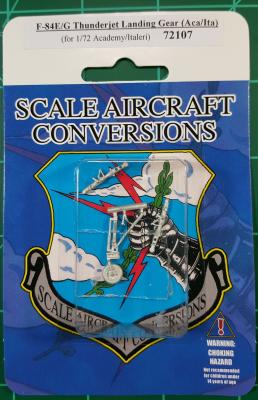
Scale Aircraft Conversions is known for making replacement landing gear for a wide variety of kits in virtually every scale in which model aircraft are available. This set is designed to replace the plastic gear in the Academy and Italeri F-84E/G kits. I think with a bit of work it could be used on the Tamiya kit.
The set includes both main gear legs and the nose gear made in one piece with the nose wheel. The struts are very sturdy and are made to be drop-in replacements for the kit parts. The parts require very little clean up, though some parts do occasionally become a bit bent during shipping. No worries there, though, since they are very easily straightened. Recommended, especially after you’ve added a bit of weight to make sure your Thunderjet isn’t a tail sitter. The nose gear being metal will help with providing enough weight, which is a bit difficult with the nose intake.
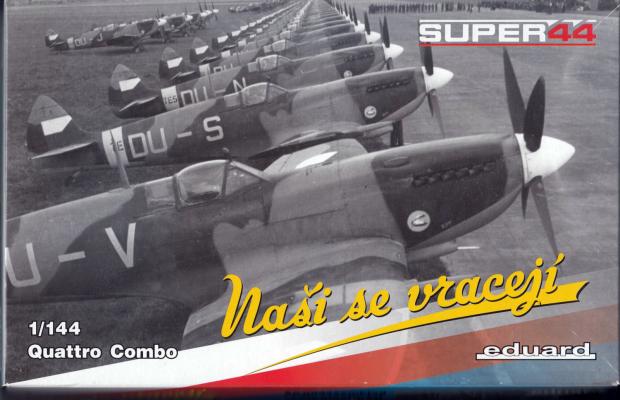
This is another issue of Eduard’s marvelous 1/144 Spitfire IXe kit. This time you get FOUR Spitfires in the box, with eight possible markings.
I was curious about what the Czech language phrase means. I tried several translation sites, but none of them worked. I finally went to Eduard’s web site and contacted them, asking what Naši se vracejí means. I got an almost immediate answer from Libor Havranek of Eduard support. It means “The boys are back”. Cool. Thanks very much for the info.
Since all 8 of the schemes offered in this kit, and they’re all late WW2 or post war, it makes sense. They’re all Czech nationals who flew Spitfires, either for the RAF or the Czech AF. And Eduard pays homage them.
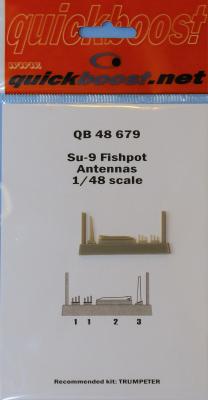
Quickboost provides you with Su-9 Fishpot antennas consisting of four parts. Of note is the re-sealable packaging that Quickboost uses that makes the parts easy to review and then stuff back into the package securely. The supplied instructions address the replacement of the corresponding Trumpeter parts.
Quickboost has molded the antennas perfectly in tan resin with no apparent bubbles. The Quickboost antennas provide you with no mold seams to sand off on these tiny parts along with the superior detail.
Although most paints will adhere to resin alone, I would recommend that you wash the parts to remove any remaining mold release and prime them first. They will need to be installed with your favorite CA (super glue) or epoxy, as the normal plastic glues or solvents will not react with the resin.
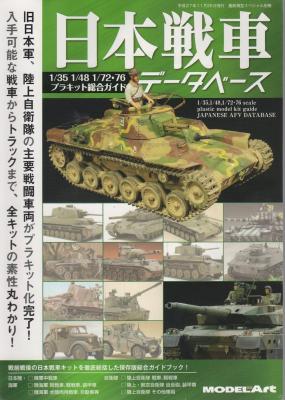
ModelArt is a high quality Japanese language modeling magazine. This edition is a Japanese AFV Database plastic model guide for Japanese military vehicle kits in 1/35, 1/48, and 1/72-76 scales. The guide shows kits of Japanese vehicles, including AFVs, softskins, and figures. The kits are illustrated as built models or an Out-of-the Box view of the kit parts. The text is in Japanese, but there are many high quality photographs that illustrate the kits. The kits have English titles that give the name of the vehicle, kit manufacturer, scale, and name of the modeler.
The sections of the guide are organized by vehicle type. The start of each section includes a few in-action photos of the real vehicles, and at the end of each section is some modeling tips or a sampling of completed kits.
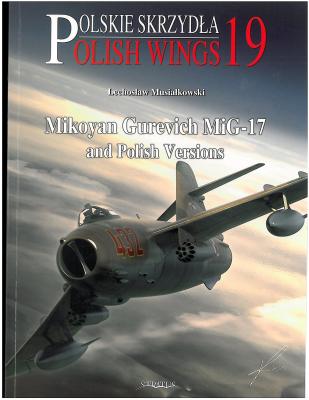
The MiG-17 is a subsonic fighter aircraft developed by the Soviet Union as a follow-on to the very successful MiG-15. The MiG-17 was flown by numerous air forces around the world and several countries, such as Poland were licensed to build MiG-17s.
The book focuses on the various MiG-17 variants operated by the Polish Air Force from 1955 onward. While the initial batch of MiG-17F and MiG-17PF aircraft operated by the Polish Air Force were purchased from the Soviet Union, the majority of the aircraft it used were actually built by Polish industry under a license obtained from the Soviet Union. The license-built aircraft were designated Lim-5 (fighter/interceptor) or Lim-6 (fighter-bomber) and there were a number of variants of each which were differentiated by letter suffixes to the designation.
Sincere appreciation to Model Rectifier for providing yet another review item, and to the IPMS USA reviewer corps leaders for sending it to me!
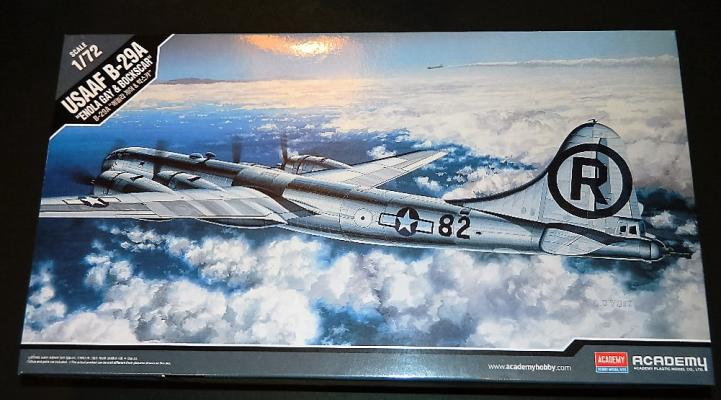
The progeny of this kit goes back to 1992, when it was first released by Academy. It has been available on several occasions with different markings, and parts of it (Most notably the wings and stabilizers) have been re-released as a B-50 and a KC-97 with appropriate additional sprues to address the major differences on these aircraft. I originally reviewed this kit back then, and can say the same observations on that kit are valid today.
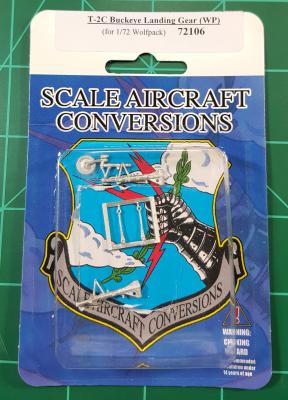
Scale Aircraft Conversions is known for making replacement landing gear for a wide variety of kits in virtually every scale in which model aircraft are available. This set is designed to replace the plastic gear in the Wolfpack T-2C Buckeye kit.
The set includes both main gear legs with their retraction struts, and the nose gear made in one piece with the nose wheel. The struts are very sturdy and are made to be drop-in replacements for the kit parts. The parts require very little clean up, though some parts do occasionally become a bit bent during shipping. No worries there, though, since they are very easily straightened.
Recommended, especially if you’re adding a bit of weight to make sure your Buckeye isn’t a tail sitter. Thanks to Scale Aircraft Conversions for the review sample and to IPMS/USA for the opportunity to review it.
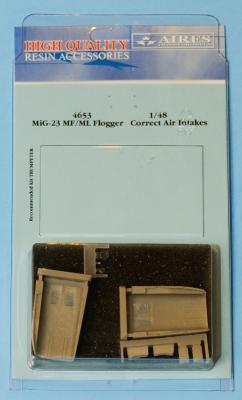
Aires Hobby Models has come out with an excellent upgrade for the Trumpeter MiG-23 MF / ML kits with their Correct Air Intakes set. There are six parts cast in a durable resin material along with four resin clear parts. The Aires parts provide improved air intake detail. The instructions show where the additional parts go and then its simply a swap out for the Trumpeter intakes.
Aires has molded the air intakes perfectly in tan resin with no apparent bubbles. The Aires air intakes are supplied on a four resin sprue with thin resin attachments to the parts that should minimize any cleanup.
Although most paints will adhere to resin alone, I would recommend that washing the parts to remove any remaining mold release and prime them first. They will need to be installed with your favorite CA (super glue) or epoxy, as the normal plastic glues or solvents will not react with the resin.
Thanks to Aires for providing more of their excellent aftermarket parts for IPMS USA to review, and to IPMS leadership for sending it my way.
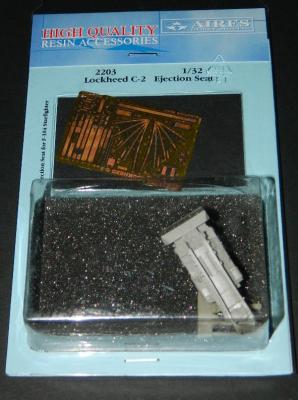
This aftermarket set item replaces the kit ejection seat in any F-104A to C. It is not complex, but does require some vision assistance and gentle skills in the sheet-metalworking department.
This set contains seven extremely-detailed, hard gray resin parts - the entire seat in one cast piece, with two separate foot plates, one ejection initiator handle, two ejection net extension arms, and a buckle fitting; one soft, flexible resin hose, and a fret of photoetch for the harness and fittings. First step is to spray all the gray resin and metal photoetch resin parts with primer. I used my favored primer, Tamiya Gray in a rattle can.
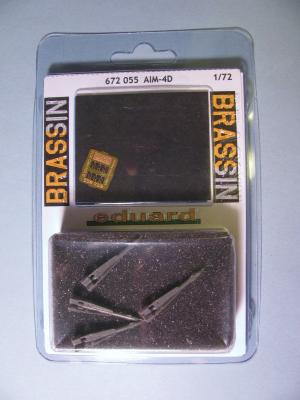
With development beginning in 1946, the Hughes AIM-4 Falcon, or more precisely, a version of a missile that would become the Falcon, was first launched for testing in 1949, and would become the first operational air-to-air missile of the U.S. Air Force. The AIM-4D, or GAR-2B, was the final version of the original missile, and around 4000 of these missiles were built with the first of them entering service in 1963. The missile had a less than spectacular combat record in Vietnam claiming five aircraft (four MiG-17’s and a single MiG-21) for 54 missiles launched, and by 1973, the AIM-4D was no longer operational. The missile was 79.5 inches long, had a 20-inch wingspan, and weighed 135 pounds. Travelling at Mach 3 on its solid fuel Thiokol M58 rocket, the missile had a range of six miles to deliver the 7.6-pound warhead.
Thanks to Piotr at Master models for providing these incredible items to improve our models, and thanks to IPMS Reviewer Corps leaders for sending it to me…
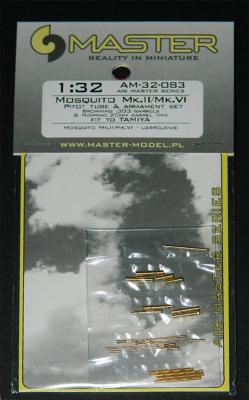
What is in the packet: a detailed instruction sheet, four .303 Machine gun barrels and cooling jackets/spring mounts, with flash hiders, four 20MM cannon barrels, and one turned metal pitot tube.
These are simple replacement items for the kit barrels; they provide a better appearance than the kit items, and are well worth investing in for installation
Replacing the kit .303 gun barrels is easy; carefully cut off the kit barrels, drill holes for the metal barrels, install the spring assemblies then the metal barrels, then slide the cooling jackets over the barrels. The flash suppressors then are cemented on the tip of the barrel. Paint and install in the model to finish.
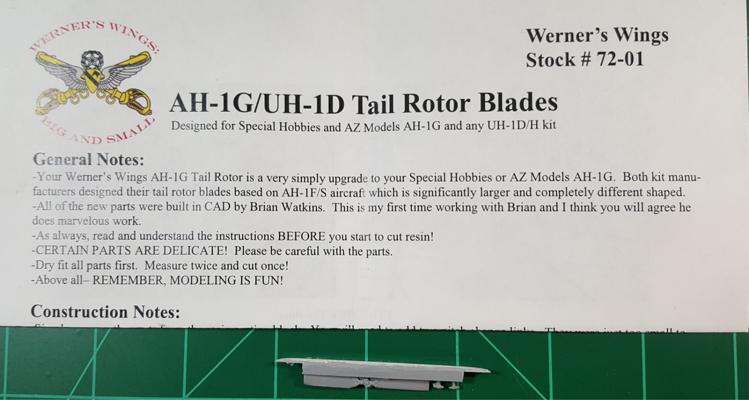
This product is a simple replacement for the tail rotor for AH-1Gs and UH-1Ds. The part is recommended for the AZ Models or Special Hobbies AH-1G kits, but will work with any UH-1D/H kit that has the wrong style of tail rotor. As you can see from the pictures, taken with kit parts from both AH-1G kits, the kit parts have thicker blades with a different shape. Those were based on later AH-1F and AH-1S helicopters and are incorrect for earlier Cobras.
The parts are direct replacements for the kit parts and remove easily from the mold pour plug, with easy cleanup. They are well cast, with no mold flaws or pin holes in the resin. The parts align well with drawings I have of the early Cobras and Hueys. Besides, if anybody would know whether they were correct or not, I think Floyd Werner would.
Thanks to Werner’s Wings for the review sample and to IPMS/USA for the opportunity to review it. Highly recommenced as an easy correction for your early Cobra.
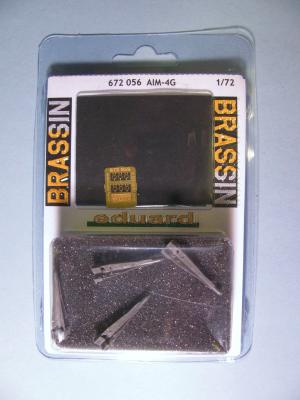
With development beginning in 1958, the Hughes AIM-G Super Falcon was created as a follow-up to the early Falcon missiles, but with a larger rocket motor, bigger warhead, and improved guidance. The AIM-4G, or GAR-4A, was the final version of the improved missile, and around 2700 of these missiles were built with the first of them entering service in 1960, and remaining in use until 1988. The missile was 81.1 inches long, had a 24-inch wingspan, and weighed 145 pounds. Travelling at Mach 4 on its solid fuel Thiokol M46 dual-thrust rocket, the missile had a range of seven miles to deliver the 29-pound warhead.
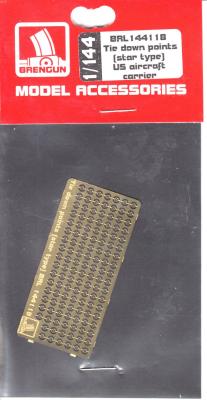
This is my second review of Brengun Carrier tie downs. The first was the “cross” style. This is the newer, more modern star type.
These items are used as the anchor for tying aircraft or anything else that needs to not move, to the deck. A hook at one end of the tie down is put around one of the star legs and the other end is adjusted to hold the aircraft in place.
On the WW2 wooden deck carriers, the tie down anchor was a long piece which ran from one side of the deck to the other, replacing one of the boards in the wooden deck. After the Navy went to steel decks and angle deck carriers, they used a cross type anchor.
Today’s supercarriers use the star type anchor. They can be either yellow or white, depending on what year you’re doing the model. I kind of suspect that when the deck tractors changed over from yellow to white, the anchors changed color too.
“Luftwaffe Eagle” is a first-hand account of one pilot’s experiences during World War II. I wasn’t sure what to expect when I offered to review this book for IPMS, but I have to say I was very pleasantly surprised!
This book was first published in 2007, in the author’s native language of German. It was translated into English by John Weal in 2008, and first published in English in 2009 (in hardcover). This release is the first time it has been available in softcover format.
This combination of the author’s style of writing and the superb (and fluid) translation make this book a pleasure to read. The author begins with a brief summary of his childhood years, then dives directly into his Luftwaffe training and subsequent postings. Each section is filled with personal anecdotes, while steadily following the timeline.
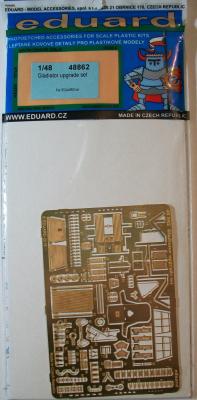
Eduard continues to release great photoetch sets for many kits and this is no exception. This is for Eduard’s own Gloster Gladiator kit 1145. This set adds a lot of missing detail that really adds to the kit. The photoetch parts are for the:
- Cockpit sidewalls
- Internal guns
- A complete seat
- Cockpit doors
- Control surfaces
- Cowling hinges
- Exterior parts
- And a few more
In the packet is:
- 1 photoetch sheet
- 1 instruction sheet
- Summary
This is a must have set for the Eduard kit as it makes it into a great model with all you need to super-detail the aircraft. The only issue I found was that the seat was not easy to install.
Thanks go to Eduard for providing this set to review and IPMS USA for allowing me to review it.
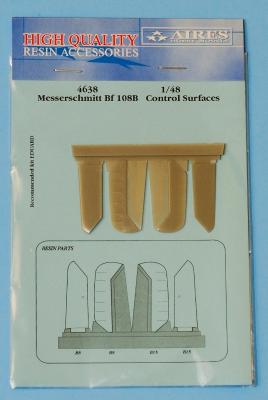
Aires has come out with a nice upgrade for the Eduard Bf 108 series of kits with their horizontal control surfaces set. There are four parts in all, cast in a durable resin material. The Aires parts allow you to alter the position of the elevators and provide improved stabilizer to elevator detail. There are no supplied instructions; you simply swap out the kit provided plastic parts with the new Aires replacements. I’ve included photos of both the Eduard and the Aires horizontal surfaces inserted in the Eduard fuselage.
Aires has molded the stabilizer and elevator perfectly in light grey resin with no apparent bubbles. The Aires stabilizer and elevator are supplied on a single resin sprue with thin resin attachments to the parts that should minimize any cleanup.
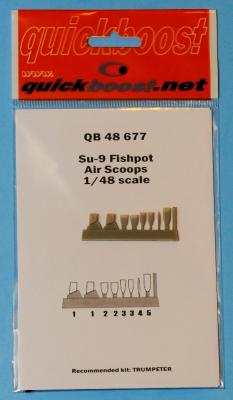
Quickboost provides Su-9 air scoops consisting of eight parts. Of note is the re-sealable packaging that Quickboost uses making the parts easy to review and then stuff securely back into the package. The supplied instructions address the replacement of the corresponding Trumpeter parts.
Quickboost has molded the air scoops perfectly in tan resin with no apparent bubbles. The Quickboost air scoops provide no mold seams to sand off on these tiny parts along with the superior detail.
Although most paints will adhere to resin alone, I would recommend that you wash the parts to remove any remaining mold release and prime them first. They will need to be installed with your favorite CA (super glue) or epoxy, as the normal plastic glues or solvents will not react with the resin.