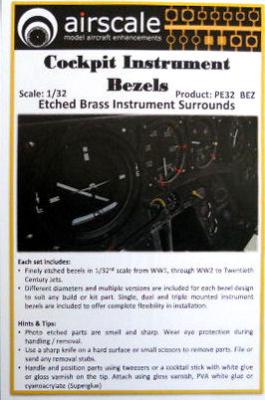
Airscale. You might know this company for their really fine instrument dial decals and cockpit placard decals. I have used these decals on every model I have built that included an instrument panel or dashboard since these products came out. Now, Airscale has included another great product which also works in conjunction with their own decals, as well as decals supplied with kits.
all 2013
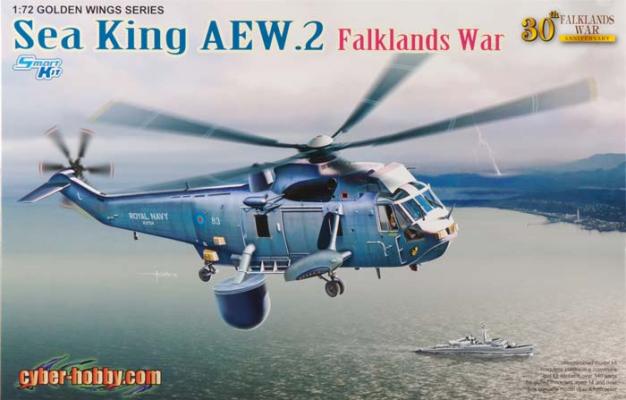
I’ve built most of the major Sea King versions out there; this kit is a new release, not a re-pop of some other company’s work. Earlier in 2012, Cyber Hobby released this kit as an HC.4 troop transport in their Falklands theme; that kit was reviewed by IPMS/USA by Ben Guenther, IPMS# 20101, on 22 Sep 2012, if you would like to read about it (http://web.ipmsusa3.org/content/sea-king-hc4-falklands-war). What you get in this version are the same parts, with the large radome as a major modification for the kit.
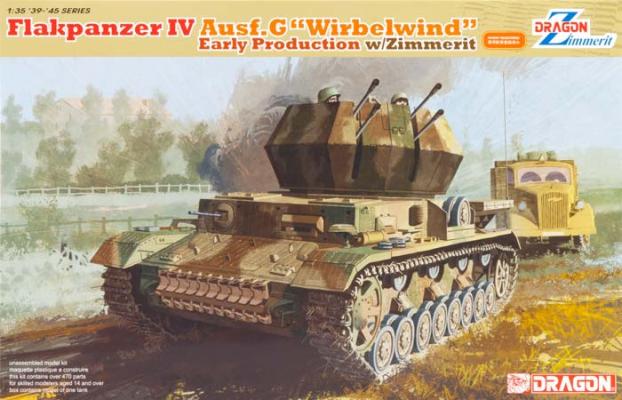
Dragon has released the fourth in its series of German anti-aircraft Flakpanzers, this one sporting a molded-in coat of zimmerit, an anti-magnetic layer of paste added to the glacis, hull sides, and hull front and rear plates. Based on the PzKpfw IV Ausf.G chassis, the Wirbelwind (Whirlwind) utilizes Dragon’s highly acclaimed 2cm Flakvierling 38 four-barreled main armament.
The Kit
As usual with Dragon kits, once you open the box and take out the contents you will find it very difficult to get everything back in. Thankfully for modelers, this is a good thing! As this is one of many PzKpfw IV-based kits produced by Dragon, many of these parts will go unused and into your spare parts box.
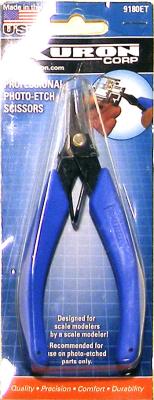
Xuron has released another pair of high-quality clippers from their line of consumer products used by modelers. The extra-long, ultra-sharp tips cut through PE like butter without bending or twisting it. The ergonomically shaped handles offer superb control and stability, as well as comfort. A return spring brings the tool back to the open position after each cut.
First and foremost, these are scissors, not clippers. The shearing point comes mid-way between the two blades, just like a pair of scissors. What this means is that they are excellent at cutting PE parts off the sprues, but they do not cut them flush against one edge, as Xuron’s excellent sprue cutters do with plastic. I was hoping that the company had come up with a way for me to snip off PE parts without having to sand the edges where the tiny metal nubs might remain, but that's just personal preference on my part.
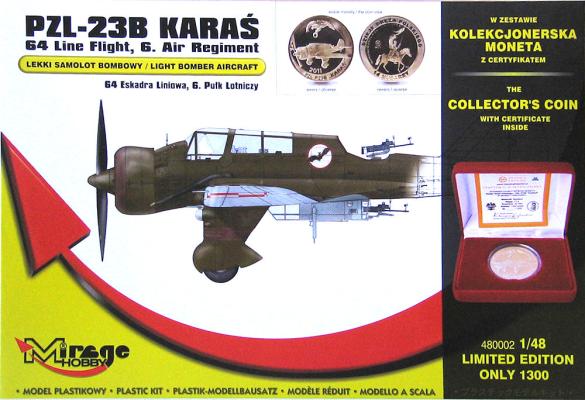
The kit comes in an attractive box with a profile of one of the marking options on the box top. This is a special limited edition and includes a very nice gold colored coin that is packed separately in a fancy red box similar to what you would get a piece of jewelry in. I am not sure what the parts count is, but I'm sure there are well over one hundred parts. The parts are molded in a medium blue-grey color and they have a slightly rough texture. The plastic is a little on the soft side, so care must be taken when sanding and cutting. There is a small photo etch fret with seatbelts and other detail parts. I did not use all of the PE parts because some of them were so thin that they came apart when I cut them from the fret. There is also a small bag of resin parts comprising oxygen bottles, various boxes, and some things that look like duffel bags. The molding on the resin parts is not up to the standards of Aires or CMK, but it is decent.
About the BTR-70
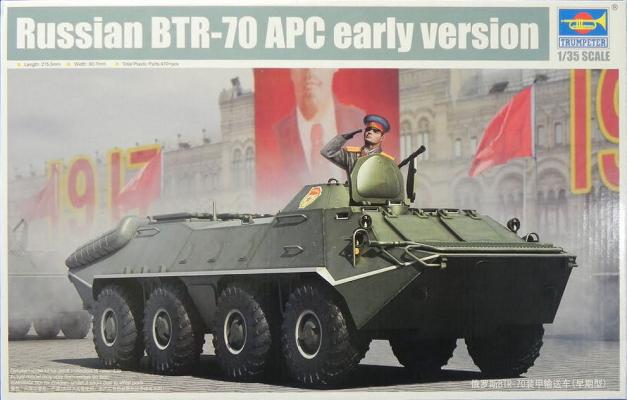
The BTR-70 is an eight-wheeled armored personnel carrier. BTR stands for Bronetransportyor (literally "armored transporter"), originally developed during the late 1960s under the industrial designator GAZ-4905. On August 21, 1972, it was accepted into service and would later be exported to the Warsaw Pact and other allies. Introduced as a successor to the earlier BTR-60, it most closely resembles a BTR-60PB. Other improvements include heavier armor plating and tires less prone to puncture. In other respects, the vehicle is very similar to the BTR-60PB, with a more powerful petrol engine configuration and armament of a primary heavy machine gun and secondary PKT machine gun on a roof-mounted turret.
Airscale is relatively new to scale modeling and has come out with decals in popular scales to aid in detailing instrument panels, and which can also be used for dashboards along with placards, which is another added touch to instrument panels and dashboards. I’m sure that anyone who has bought these products has used them some way in every model that they have built since purchasing them.
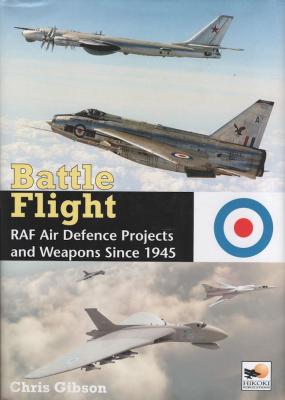
This book looks at the RAF and Britain’s air defense, post-World War II. More specifically, it looks at the defense of Britain from nuclear strikes.
This book is broken down into ten chapters, beginning at the end of WWII when the British defenses were set up to protect her from massive raids by piston-engined bomber aircraft and the post-war realization that the advent of the V-1 and V-2 missiles and the jet engine had rendered all of this obsolete. Add the atomic bomb to this, and the RAF was scrambling to devise new defenses.
The author does a good job of discussing the Soviet threat, as well as all of the various programs that were being devised to deal with it. Those that made it to reality, as well as those that never made it off paper, are all covered. All of the aircraft projects, as well as those involving missile defense, are discussed, with coverage even given to dealing with hijacked airliners.
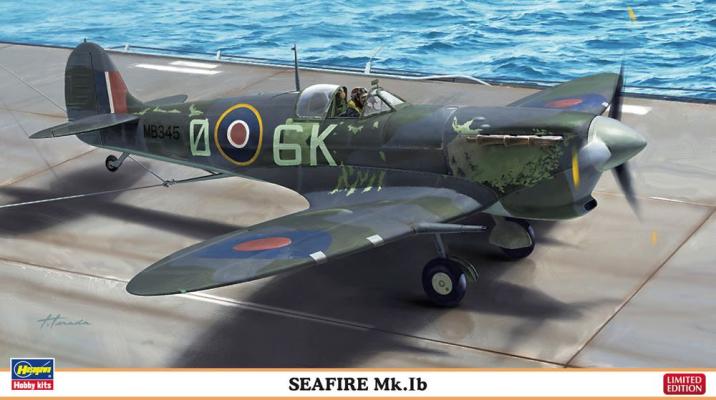
The Seafire Mk.Ib was basically converted from the Spitfire Mk.Vb. The kit follows the heritage of the actual subject, being a “regular” Hasegawa Mk.Vb with a resin plug for conversion into a Seafire Mk.Ib. Be aware this model is a conversion; that means you will have to cut and replace some parts of the plastic fuselage with the resin replacement parts. But as conversion goes, this is an easy one to get your feet wet in the world of conversions.
The boxing includes decals for 4 different finishes on 3 different airframes. The instructions only list 3 camouflage styles, but actually there are markings provided for two different finishes (blue gray/green/sky) of the same airframe (MB 345), before and after being assigned to the HMS Formidable. The other two finishes are for a training unit (blue gray/green/sky) and another one in an overall glossy sea blue, for operations in the Pacific with SEAC roundels.
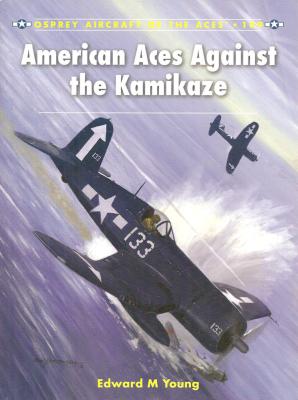
From the Philippines to Okinawa, the unthinkable Kamikaze generated surprise and fear across the US Pacific fleet that outweighed the actual combat effectiveness of these Special Attack units. The new title in the Osprey aces series focuses on the Navy, Marine, and USAAF commands that confronted this new threat. The IJN and IJA lost some 900 aircraft in these mass attacks. 91 pilots from the Navy, Marines and USAAF became aces during these campaigns (most aces were from the Navy).
Edward M Young walks you through the development and first use of the Special Attack units right up to VE day. The Navy’s response and tactics to counter this new threat is very well chronicled. Each ace is covered with his individual tallies and the circumstances of each victory.
Quick and easy. This kit can be described in those two words. This kit was assembled over a period of 3 days, spending no more than 30 minutes during each of the 3 modeling sessions. And when one considers that most of the time was consumed in painting the parts, that tells you that the actual construction process was….quick and easy.
The Parts
The kit consists of 33 parts, 6 of which make up the display base. There are two versions of the Himawari that can be built. An earlier version will use the 8 antennas (parts 15) while the more recent Himawari does not need those parts.
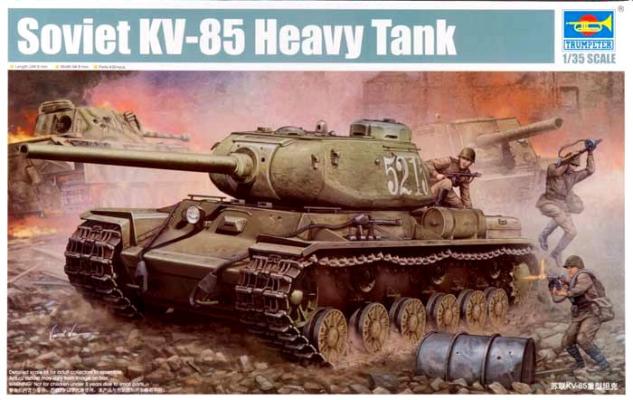
The Kliment Voroshilov (KV) tanks were a series of Soviet Red Army heavy tanks, named after the Soviet defense commissar. The KV series were known for their extremely heavy armor protection during the early part of World War II, especially during the first year of the invasion of the Soviet Union. Later in the war, the KV series became a base of development for the Joseph Stalin (Iosif Stalin, or IS) series of tanks. The KV-85 was a KV-1S with the 85mm D-5T cannon in a new turret, and with the ball mounted hull machine gun removed and the hole welded shut. 148 of these tanks were produced from the second half of 1943 until the spring of 1944 as a stopgap until the IS tank series entered production. This tank had its original turret, but later models were equipped with IS-1 turret.
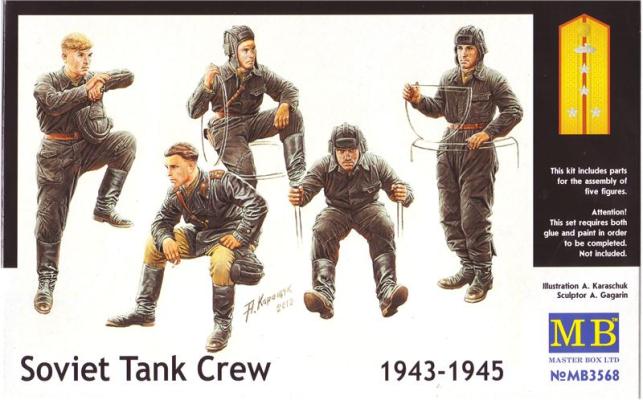
This is a five-figure set of a World War II Soviet tank crew. The first figure is an officer who is sitting and smoking a cigarette He is wearing a blue jacket and khaki pants, but does not have any headgear. The second figure looks like a commander, since he fits into the commander’s hatch of the Trumpeter KV-85 that I am also reviewing. There are two options for his left arm. One is extended with his hand resting on the turret top, while the second one is crossed in front of him and is resting on the split hatch.
The third figure appears to be a loader or gunner, since he sits perfectly on this open hatch. The box art show him with a pistol and a cross-chest belt, but that is not on the actual figure. The next figure is the driver, who is posed as actively driving the tank with both hands on the control sticks. The fifth figure is a crewman who is holding his helmet and has a foot propped up on something in a casual pose.
- Kit No. QB 72 374 Exhaust & Damper Cooler, $5.50
- Kit No. QB 72 375 Gun Barrels, $5.50
- Kit No. QB 72 376 Undercarriage Covers, $5.50
These are simple but clean sets of precisely cast resin replacement parts that quickly and easily improve already good 1/72 scale early P-40 kits. Each set consists of one gray resin block with easily removed molded parts. The hollowed-out exhausts, scale thin damper cooler flaps, machine gun barrels with oblong cooling vents, and detailed undercarriage covers (landing gear doors) are intended for Airfix’s new-tool 1/72 Curtiss Hawk 81-A-2 (P-40B/C) kit, but can fit other kits as well. QB 72 374 has two rows of six round exhaust pipes attached to the resin block by a narrow feed that can be easily sawed free, as can the Damper Cooler (the cowl flaps underneath the rear end of the engine).
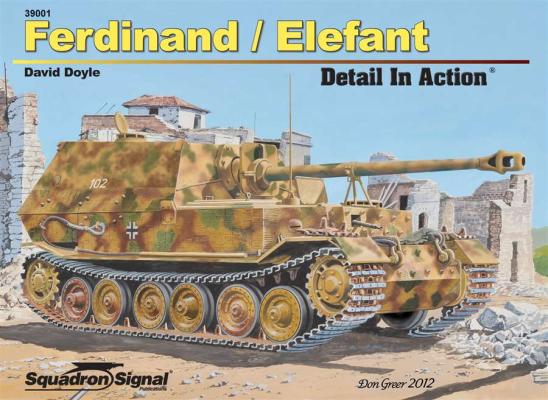
The book Ferdinand/Elefant: Detail In Action by David Doyle is a nice addition to the library of any German armor modeler. It is packed with 80 pages of drawings, photos, and information on the Ferdinand and Elefant tank destroyers. This book also contains a small part in the front covering the Porsche Tiger, which was the predecessor of the Ferdinand/Elefant. In fact, Ferdinand Porsche designed the suspension of these three behemoths.
My favorite part of these In Action books is always looking at the pictures of the actual vehicles during the war. From these photos you can get a sense of how used these tanks were, and how the paint schemes look as compared to the museum specimens. I enjoyed looking at the photos of these giant monsters. An interesting comparison is the photos of the damaged Ferdinand #501 as seen during its capture and, later, in modern times at the museum.
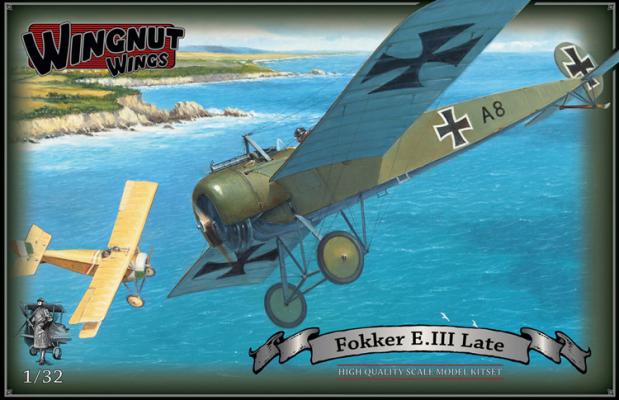
Resuming after a holiday break, I finished the model on January 2. Once the fuselage was closed and the wings and undercarriage were glued, the major work involved rigging the undercarriage, wings and control wires.
Castor Oil, Grim, Mud, Dirt and Goo
Reference photos show that once an Eindecker went into front-line service, it rapidly became stained, oily, and dirty. The two main factors were the dirt and grass airfields, which soon became muddy during most months of the year (except when they became snow-packed ice fields), and the engines which threw off their lubricating fluid as they operated. My understanding is that this was primarily castor oil, or some similar substance that was ubiquitous to all rotary engines. Consequently, I had no choice but to dirty up the wings and fuselage. Fun!
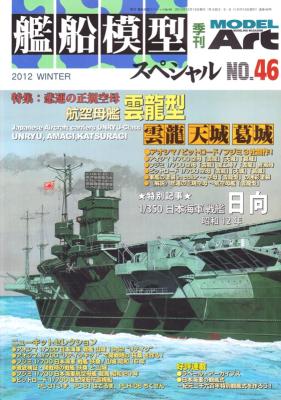
This is Model Art Magazine’s special quarterly issue that focuses on naval subjects. As with the regular Model Art Magazine, this is printed in Japanese with some English subtitles.
In this issue, the main focus is on the IJN Unryu-class aircraft carrier. There is a multitude of color and black and white photographs that show both models and period photos of the ships in this class.
The rest of the issue is a series of smaller articles mainly dealing with IJN subjects. One of the other articles covers models of three Japanese Coast Guard vessels by Pit Road Models. The last non-IJN article covers Revell’s USS Flasher, Growler, and Lionfish submarine model kits. This is not three different kits — it’s the same one marked differently over the lifespan of its molds.
Overall if you have an interest in naval vessels, especially IJN subjects you would find this issue interesting.
Introduction
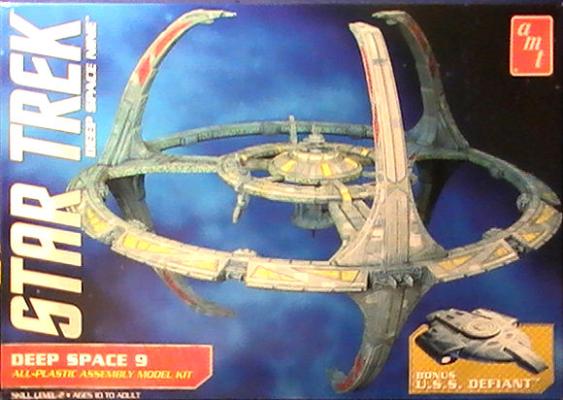
Growing up building all genres of AMT/ERTL/MPC kits, it was sad to watch the demise of the company to a shell of its former self. Being a particularly big Star Trek fan and with AMT being the only game in town all those years ago for Star Trek models (before the internet), it was a sad to see them go.
Then, a few years ago, along came Round2 – acquiring the AMT/MPC molds, fine-tuning several of them, and re-releasing most of the old kits we all remember. Many are being re-released with Retro-Style packaging, while others are being issued with all-new box art and packaging. In late 2012, Round2 re-released Star Trek Deep Space 9 (DS9) in a new, colorful package with a short history of the space station on the box bottom. Thanks to Round2 for reviving those old Star Trek kits, for updating a few of them like DS9 (to include the USS Defiant), and especially for bringing out the new ones!
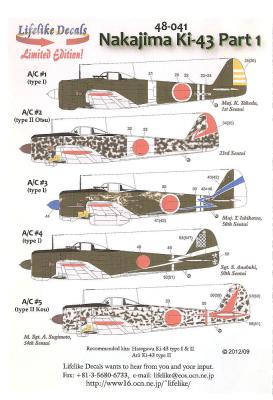
This is one of two new sheets Lifelike Decals has released covering the Nakajima Ki-43. A quick check of Lifelike’s website reveals that this latest addition to their line is only available in 1/48 scale at the moment. The website is definitely worth a visit, as they not only list their products, but from time to time also give updates and corrections to existing decal sets.
The instructions consist of two sheets of paper (approx. 8 1/2” x 11”), each printed on one side and folded together, resulting in a small booklet. One sheet is printed in full color and provides profiles of the aircraft, while the second features in-depth text describing each subject. Clearly, a lot of time and effort has gone into the research on this sheet. 13 different reference books (or websites) are listed and cited throughout the individual aircraft descriptions.
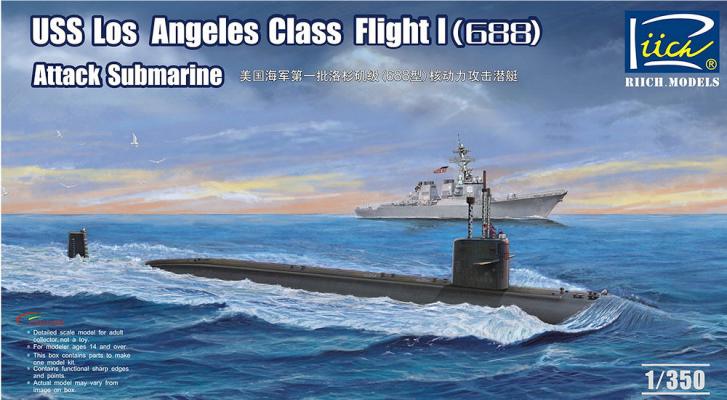
I was a sonar technician on the USS Tecumseh, an SSBN, for 3 years while it was being overhauled at the Newport News, VA, shipyard. We were tied up at a pier during the refit, and the 688 class attack subs were docked at the next pier. As a result, I was able to walk all over LA class subs, visit them, and got pretty familiar with them. Most of the attack boats were being upgraded from Flight I to Flight II at this yard, adding the Tomahawk vertical launch tubes. So I jumped at the chance to build Riich’s 688 class, Flight I model.
I’m not a big fan of the 3-piece hull provided, but the option of making this boat as a waterline model is COOL. I stopped and took photos before I put the upper hull and lower hull together, just to show this.
I had to use a good amount of putty to get the hull sections to mate up, as they didn’t match perfectly. But with some putty and a #10 X-Acto blade, it was pretty easy to get it looking decent.
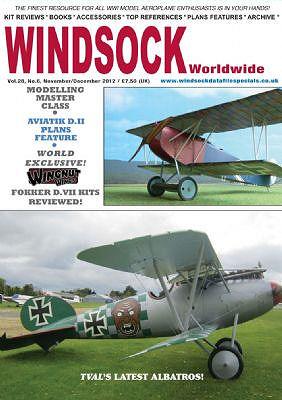
The Nov/Dec 2012 issue of Windsock Worldwide concludes Volume 28 and serves as further proof that Albatross Productions continues to publish the best WW I aircraft modeling magazine available anywhere. This issue of the bi-monthly publication provides a number of exclusives for WW I aircraft model builders and historians. The cover photos provide a look at two of them: Wingnut Wings’ new Fokker D.VII kits, and TVAL’s third full-size replica, an Albatros D.Va.
Inside, the first regular column; the READER’S GALLERY, presents six featured models in 1/48 and 1/32 scale…with one, a Roland D.II cleverly constructed from LEGO pieces. Then, LOGBOOK ENTRIES reviews a new book titled Nachtflugzeug! German N-Types of WW I, and the latest issue of Cross and Cockade International (Vol.43, No.3). Following that, photo coverage is provided of one of the subjects on the cover, TVAL’s replica Albatros D.Va.
Contents
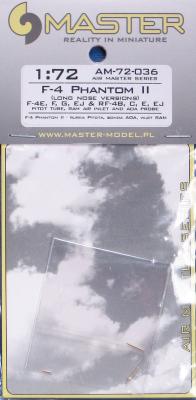
Made for the long-nosed versions of the F-4 Phantom II, Master Model has created a beautiful set of metal probes for your 1/72 build. This set includes the nose-mounted pitot tube, side-mounted Angle of Attack (AOA) probe, and vertical stabilizer-mounted Ram Air Inlet tube. As with previous Master products, the detail and quality of the parts are exceptional, especially considering these are extremely minute parts in 1/72 scale!
Construction
Hasegawa’s newer-tool F-4E was chosen to receive these fine detail parts. A great kit in its own right, you can easily see how much of an improvement these metal replacement parts are compared to the injection molded plastic ones included in the kit.
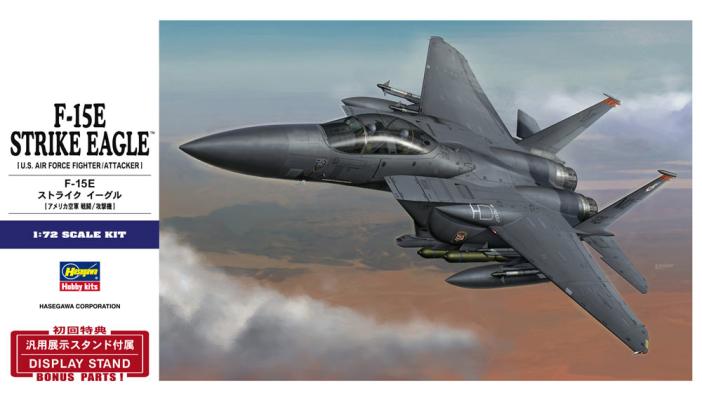
Hasegawa has released their 1/72 F-15E Strike Eagle kit several time, and this latest release (kit#01569) does sport three new sprues and one sprue from their JDAM weapon set that provides the Lantrin pods. Comparing an earlier release to this one, I did notice that some smaller parts are beginning to show fine flashing, at least on this kit that I have. However, the recessed panel lines are still as sharp and fine as ever. You may ask if with these new parts, does this F-15E finally build into the ultimate F-15E? You'll have to read the review to find out, but I will tell you that the new J sprue provides new CFT's, correct pylons, bulged main gear doors, bulged gun door, and two proper instrument panels; the K sprue provides a new arresting hook; and the new M sprue provides the final two CFT pylons. The existing G sprue (clear parts) has been modified to include the wide HUD found on F-15E's (part G6).
I have always been a fan of historical miniature figures, especially if I happen to know who they represent. IMC from Ukraine hase produced a set of figures that are right up my alley. This five figure set is called Stalin and Co., and consists of Joseph Stalin and some of his bad guys. Those represented are Joseph Vissarionovich Stalin, Commissar Nikita Sergeyevich Khrushchev, Minister Vyacheslav Mikhailovich Molotov, NKVD Chief Lavrentiy Pavlovich Beria, and Marshall Nikolai S. Vlasik.
Since I remember all but Marshal Vlasik, I knew what they should look like. I looked up each one as a backup to my memory and found that each figure looks exactly like their photos. I also researched their histories and found that they were truly not nice guys.
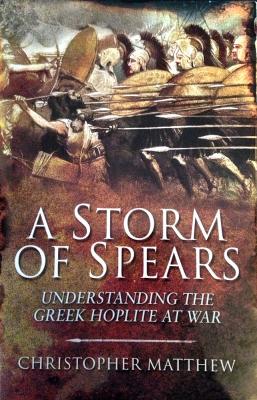
Have you ever struggled over a problem or edited your own writing, only to have someone look at it and see the thing that you couldn’t find or solve in seconds? That’s how I felt reading this book. The Greeks dominated the fourth and fifth century BC battlefields with the Phalanx form of warfare, which combined the use of specially armed and armored soldiers (or Hoplites) in specialized formations. As the title implies, the author has taken a fresh look at old evidence of ancient Greek writers and artists and coupled that with modern research, primarily in the form of re-enactors who put on the Panopy, (or armor) and the weapons – in this case, the thrusting spear of the Greek solders – and tests his theories of methods and tactics. In the process, some interesting and groundbreaking developments emerge that shed new light on just what the ancient writers meant and how much artistic license was used in creating the vase paintings we envision when we think of this period of history.