From the 1983 hit movie “Blue Thunder” comes a 1/48 rendition of the helicopter used in the film, which shared the same name. In the movie, the Blue Thunder was developed as part of project THOR (Tactical Helicopter Offensive Response), as the city of Los Angeles was preparing to host the Olympics in 1984. The main character was Frank Murphy, as portrayed by the late Roy Scheider, and his partner was Richard Lymangood (aka JAFO), played by Daniel Stern. One of the most famous scenes of the movie is when Frank puts the Blue Thunder in a 360 degree loop in order to dismiss his nemesis Col. F.E. Cochrane (played by Malcolm McDowell).
Osprey’s latest book in their “Aircraft of the Aces” series, number 101, covers the Luftwaffe Aces that were primarily engaged against the US (and to a lesser degree, British) heavy bombers attacking the Third Reich during World War II. This book is limited to covering pilots that became aces, shooting down 5 or more “Viermots” (short in German for “four motors”). For some reason, only day fighters are covered in this book, although the British bombers operating at night were also mostly four-motored. Perhaps this is because there has already been an Osprey volume dedicated to German nightfighter aces?
The P-38 Lightning was used in both European and Pacific theaters during World War II. It operated from paved strips as well as fields barely straight enough to throw rocks at. If there was one critical part of the aircraft on which the pilot placed his life during takeoffs and landings, it was the tires.
Ultracast, located north of the border in Canada, offers quite a few accessories for many different modeling subjects. This offering, #48227, is a block tire tread design replacement for any 1/48 scale P-38 kit. The package contains three spoked wheels, two main and one nose. All are cast in a tan resin, and have the pour gate still attached at the flattened bottom of the tire. A razor saw removed the gates quickly, and painting was the next step.
The P-38 Lightning was used is both European and Pacific theaters during World War II. It operated from paved strips as well as fields barely straight enough to throw rocks at. If there was one critical part of the aircraft on which the pilot placed his life during takeoffs and landings, it was the tires.
Ultracast, located north of the border in Canada, offers quite a few accessories for many different modeling subjects. This offering, #48225, is a smooth tire replacement for any 1/48 scale P-38 kit. The package contains three spoked wheels, two main and one nose. All are cast in a tan resin, and have the pour gate still attached at the flattened bottom of the tire. A razor saw removed the gates quickly, and painting was the next step.
History:
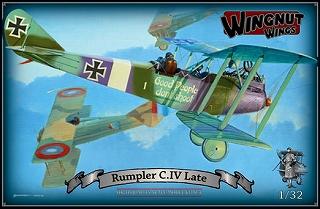
The Rumpler C.IV was one of the outstanding high altitude reconnaissance aircraft of World War I, and it was produced in substantial numbers during 1917 and 1918. Preceded by the C.1 and C.III biplanes, the C.IV had excellent performance, and it could fly higher than most Allied fighters of the time. In addition, it was able to outrun some of them in a shallow dive, making these aircraft extremely popular with their crews. They served throughout the remainder of the war, and a few survived to be used as civilian airplanes in the immediate postwar period.
The Book:
In 1941, Britain had an idea on how to extend the range of the Spitfire MK II so that it would be able to escort and protect their bombers from the Luftwaffe further into Europe. This idea incorporated a 40 gallon fixed fuel tank under the port wing. The only problem was that speed and maneuverability suffered. The tanks were used by the RAF’s 66, 188, and 152 Squadrons.
This set is made by a company named 3D-kits in the UK. I went to their web site and was impressed with what I saw. They have one area where you can download a Spitfire control panel that you can make into a decal and there is information that will answer most questions you might have about the Spitfire conversions they make.
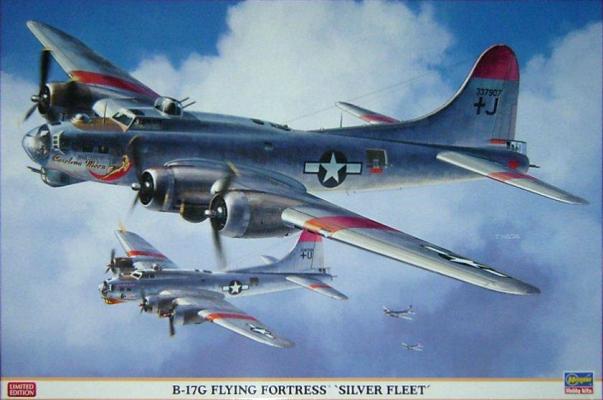
I have been a fan of the B-17 Flying Fortress for as long as I can remember. Seeing the punishment many of these planes took and still brought back their crews is nothing short of amazing.
The Fortress has also been a popular subject for the In Action series. I purchased #1012 back in 1973 and #1063 came out in 1984 and now we have a 3rd volume. However, this time you can get it in the normal soft cover or in hardback (which is my example). So what do we get with this new version?
Once again we get a brief history of each version of the plane from the original Model 299 through the B-17G, including a few pages on the XB-38 and YB-40. Line drawings and pictures show the differences in each model and will help the modeler get these right. I did notice the line drawings showing the development of the airframe appear to be smaller versions of those from the previous volume. However, I did not notice any repeated photos from either of the earlier books.
Almost every scale aircraft modeler will eventually want to move up from just box stock builds into more advanced, more detailed models. Aircraft instrument panels are a key element in upgrading a cockpit in any scale, especially if the canopy is attached in the open position.
Airscale Model Aircraft Enhancements produces a line of instrument dial decals, including its Early Allied Jets set. The 1/48 set includes decals for the instruments that can be found in US and British jet aircraft, such as the F-84, F-86, F-100, F-104, F9F, Meteor, Vampire, and Hunter. Included are airspeed indicator, artificial horizon, gyro magnetic compass, altimeter, and many more.
The Grumman Tigercat was the epitome of WWII US-designed, twin-engined fighters, and was an exceedingly heavily armed aircraft for its size, either for the fighter or strike role. As a night fighter, it shared similar attributes with its Air Force cousin, the P-61 Black Widow, not the least of which was a reduction of its built-in armament as it evolved. As with the Widow, the Tigercat eventually dispensed with its four original 50 caliber machine guns, keeping its remaining four 20mm cannon (necessitated by the installation of its nose-mounted radar, thus displacing the nose-mounted 50s). The 20mm barrels are represented by these Quickboost replacements.
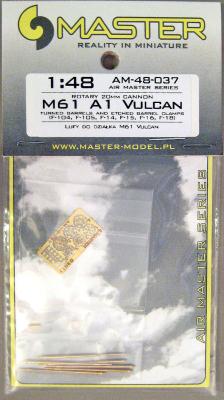
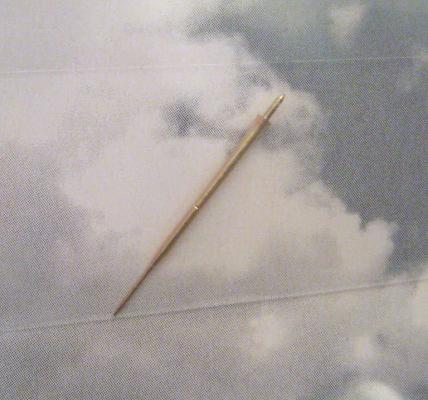
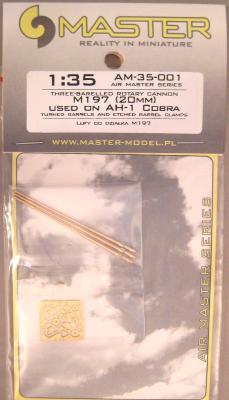
When you look at any of Master Model’s brass gun barrels, you always marvel at what you see. The detail is remarkable regardless of the scale, and the price is hard to believe because it is so low. One of the things that always bothersed me in German WWI aircraft, almost as much as rigging, was annealing and rolling that stupid cooling jacket on Spandau machine guns. And when I finally get it rolled, I had to join it somehow. Soldering is supposed to be how you do it, but I have yet to be successful. So, I ended up with a very soft brass roll that was barely held together on the bottom by superglue. It was guaranteed, at some time during the build, to get dented or just plain squashed. Master Model comes to the rescue with one-piece, turned and perforated cooling jackets and exquisite muzzle and flash suppressor, plus a gun barrel that cannot be duplicated by stretched sprue or brass rod or plastic rod.