The RQ-7 Shadow is a UAV used by the US Army and Marine Corps for surveying the battlefield for damage assessment and just about anything else. It is made to be compact and portable. It is launched by a pneumatic track and recovered with arresting gear similar to what’s used onboard aircraft carriers. Academy has offered a great diorama of this UAV. I could call it a kit but it comes with a base, two choices of pneumatic launchers, and two complete figures, so the term diorama is accurate. Also included are two sheets of decals – one with markings for the UAV and the second with digital camouflage for the figures.
For most modelers, we all will spend lots of time and energy detailing the aircraft to the max, yet when we get to the ordnance, we are left wanting by the kit-supplied items. Eduard comes to the rescue within their Brassin line and provides a great set of Sparrows for your latest detailed build. Designed and molded with the latest technology, they will satisfy the need for detail.
A Little History
The AIM-7 Sparrow family was birthed out of a late 1940’s project to develop an aerial beam-riding rocket out of the HVAR used during WWII. Douglas quickly discovered the size of the HVAR was inadequate for the needed electronics, so the body was enlarged. The result was the AAM-2 Sparrow I, which made its first “interception” in 1952, and was carried onboard Skyknights and later F3H-2M Demons and F7U Cutlasses. It use was limited, but it did pave the way for further development.
The Wright R-1820 Cyclone 9-cylinder radial engine was developed in 1927 from an earlier engine dating back to 1925. The R-1820 entered production in 1931 and became one of the most widely used aircraft engines ever. Aircraft builders liked it because of its excellent fuel economy, durability, low cost maintenance, and low weight/horsepower ratio. Since its introduction the R-1820 has powered thousands of military and civilian aircraft both past and present. One of these aircraft is the North American T-28 Trojan.
Quickboost has released a new R-1820 recommended for use in the 1/48 Roden North American T-28D Trojan (Kit #450). This engine is molded in a medium gray resin. It is smooth, seamless and bubble free. Clean up is minimal. The cooling fins on each cylinder are very well defined and much more complete than those found on the kit engine. This is evident in the comparison picture below.
History
The F/A-18 Hornet is a twin-engined aircraft designed for both fighter and attack missions. The initial versions, the A and B (two seat) entered operation in 1981. The F/A-18C was a visually similar but had a number of improvements related to avionics and weapon carrying capability. It started production in 1987 and has proven successful in the various roles. The Hornet participated in Operation Desert Storm and proved very successful in combat situations. The Hornet is also operated by the Air Forces of Australia, Canada, Finland, Kuwait, Malaysia, Spain and Switzerland.
Items in the Box
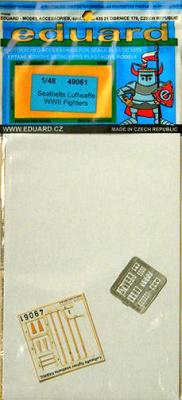
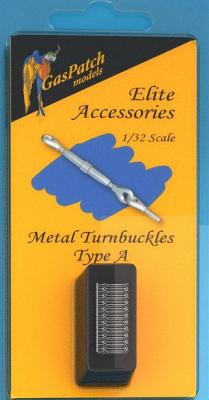
The items are made from photo-etched sheets, two in quantity, made from metal. The assembly instructions are a fold out sheet, printed both sides.
Construction
The build is very basic, as I followed the instruction sheet. Many tiny parts are noted on the photos enclosed.
Finish
None. Same as exterior of aircraft.
Conclusion
The items went on the model well. Care must be taken as the parts are tiny. I would like to thank IPMS and Eduard for allowing me to review this product.
Attached to the front of the powerful Pratt & Whitney 2000 horsepower R-2800 that moved the Grumman F6F-3 Hellcat was a thirteen foot, one inch Hamilton Standard propeller. This new release from Quickboost provides a replacement for the kit-provided propeller, and is a nice upgrade for the Cyber Hobby kit. The detail set comes with a single runner with the four parts attached, as well as the tool used to set the proper pitch on the propeller blades. If you have some experience in working with resin, this will be an easy upgrade to put to use, and if you have little or no experience with resin, this could be a good item to start with.
Cyber-Hobby has recently entered the model aircraft community, and their latest offering is that of a 1/72 scale F6F-3 Hellcat. The kit builds up reasonably well, with good fit for most of the parts, and options such as extended or retracted landing gear, open or closed canopy, and extended or retracted wings. Cyber-Hobby also does a nice job of including the markings for six different squadrons, and in the case of VF-27, there are markings for three different planes with the legendary “cat mouth” motif. The kit itself contains 124 light gray parts spread across seven sprues, as well as 5 clear parts on a single sprue and 4 photoetch pieces on a single fret. The directions are on eight pages (a single sheet of paper with three folds), and are printed in black and blue. The kit will make a great addition to the collection of any modeler who is interested in the venerable Hellcat in this scale.
Many decades ago when I became initially fascinated with early aviation and the adventure of WWI fliers in particular, the aircraft that symbolized that era and fascination was, and still is for me, the Fokker Eindecker. Like most modelers interested in WWI aviation, I considered the Eindecker a favorite kit. Unfortunately, until Eduard began producing quality plastic injection kits, a good, accurate, and relatively easy to build Eindecker was hard to find – and one in the larger scales, almost impossible. Accurate information was equally difficult to come by. Most information in depth was to be found on a few enthusiast WWI aviation sites, and even then, contention was rife and misinformation common. This led to the occasional and mainly entertaining flame wars which would flare up, burn brightly for a time, then die down only to lie smoldering until the next ‘expert’ pronouncement was made.
The Kit
This is another of the 1/144 aircraft for Zvezda’s “Art of Tactic” game system. As such, it’s designed to be robust enough to stand up to handling and repeated abuse. It also means that some of the delightful little details and add-ons you find on other 1/144 fighter kits aren’t there. The kit is only 8 parts plus the stand, and it’s designed to be a snap-together kit. OK, but the horizontal stabs won’t take much handling, and I recommend glue.
Assembly
This was really easy. The single-piece fuselage snaps onto the single-piece wing, the horizontal stabilizers snap into place and immediately fall out, the prop assembly presses onto the pin, the solid canopy presses onto a pin, and the landing gear press into place. I did the painting before putting the prop, gear and canopy on.
History – The Hellenic F-16 Demo Team was created in February, 2010, continuing the legacy of the former Aerobatic Teams of the Hellenic Air Force: “Carrè of Aces”, “Acro Team”, “Hellenic Flame”, “New Hellenic Flame”, and the T-6A Demo Team.
In November, 2010, the first official performance of the F-16 Demo Team of the Hellenic Air Force was made during the Open Days of the HAF at Tanagra Air Base. The aircraft used was the #534 and the pilot was Captain Karachalios.
The current team comprises personnel from the 340 and 343 Squadrons, both of which are based at Souda Air Base. The team consists of two display pilots, two safety observers, one narrator, one camera man and three crew chiefs. The team uses an F-16 Block 52+ configured with Conformal Fuel Tanks.
Team's call sign during the demo flights is “Zeus”, representing the father of the Olympian Gods of the Ancient Greek mythology.