Thank you to Bruce Herke of Osprey Publishing and the IPMS Reviewer Corps for allowing me the opportunity to review this delightful description of the Sopwith Camel. This was a very enjoyable and informative read. I reviewed the book through the eyes of a rank novice (something I seem to be good at) when it comes to World War I aviation. I suspect many of us may have first heard of the Camel as the form-changing doghouse of Snoopy’s fantasies.
I am reviewing these as one set, because if you want to use one, you will certainly want the other.
Model features (taken directly from Wingnut Wings’ website):
Released in October 2012
- High quality decals for 5 aircraft
- 166 high quality injection moulded plastic parts
- 6 photo-etched metal detail parts
- Highly detailed 17 part 100hp Gnome Monosoupape engine
- Optional 2 & 4 blade propellers, instrument boards, undercarriage, aileron controls and ammunition stowage
- Fine in scale rib tape detail
- full rigging diagrams.
You know what? – it’s all true and you get a lot more.
The Aircraft Manufacturing Company de Havilland 2 (AMC DH.2) first flew in June, 1915, was sent to the front in July for evaluation, and was promptly captured in August. This didn't deter the development, and by February, 1916, they were there to stay. By July, 1917, they were slowly replaced by more modern aircraft but continued to serve well into 1918.
A relatively new company on the modeling scene, Great Wall has released a handful of kits to date and, with reference to this review, they have two variants of the FW-189, an A1 and an A2, along with a third ski-equipped A1 version. Aires has stepped up to the plate and has released a resin wheel set (with paint mask) for the trio of kits. Typically, I buy a resin wheel set for a single reason and that is to obtain a set of weighted wheels for the kit I'm building. Many of you (and you know who you are) prefer the kit’s un-weighted round wheels, and that fine, too. In the case of the Great Wall kits, they ship with weighted wheels. What is a modeler to do? In this case, Aires is your answer. Unlike the kit parts, the resin set they provide is the round, non-weighted wheels. Problem solved.
Airfix has been busy lately coming out with newly tooled model kits, and the A-4B/4P Skyhawk continues that trend. The A-4 Skyhawk was a very successful light attack design by Douglas for the US Navy (and foreign buyers) and had a very long and effective career. There are many books that will go into great length on the development and history of this aircraft, so I will only deal with the build of this model kit. 73 parts are molded in a soft gray plastic (two more are clear parts), so be careful and don't sand to aggressively. Some have mentioned that the recessed panel lines are too deep, but what I found on my model was the fuselage lines got less deep towards the top and bottom of the fuselage and I had to rescribe these to match the rest of the fuselage, but it only took about 15 minutes to do so.
One of Scale Aircraft Conversion’s latest releases is a nice metal landing gear set for the Monogram 1/48 T-28 series. I was currently reviewing the Roden T-28D and, miraculously, this was a nice fit on that kit, too. The set contains the three gear struts, the additional part for the front gear, and the gear door attachment linkages for the bottom gear doors. All the parts are well cast in white metal with small seams which are easily sanded off.
Fit is excellent, as you can see from the pictures. I can say that having the front landing gear in metal is good as there is a fair amount of weight in the kit to keep it on its gear and metal is much more stable.
This is another great set from SAC for a reasonable price. Recommended especially with the weight over the nose gear. My thanks to Scale Aircraft Conversions for the review sample and to IPMS/USA for the change to review it.
- QB 32130 Late exhausts $8.50
- QB 32131 Early exhausts $8.50
Quickboost has a pair of great detail sets for the Trumpeter 1/32 F/A-18E/F kits. The parts reviewed here are the ECS (Environmental Control System) exhausts which are located on the back of the new Hornets. There are two sets. First is a late version which is a direct replacement of the kit parts. Simply sand the kit parts smooth and sand off the casting block and attach. The Quickboost parts have more of a correct angle to them and deeper intakes and are very well cast.
The second set allows you to backdate the kit to one with the early set of ECS exhausts. In this case, a little surgery will be needed to allow the part to sit into the kit. There is a picture included to show the needed cuts. The casting is again flawless.
THE KIT
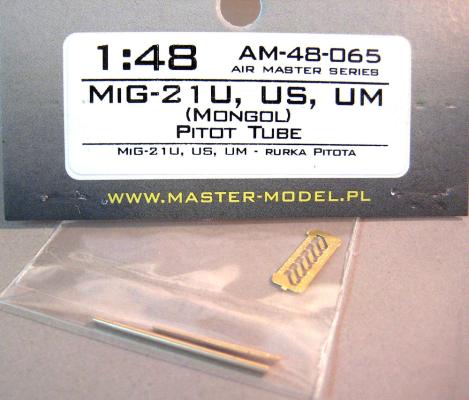
You get two finely done brass parts in a plastic envelope, which is inside another plastic envelope. Good plan – loose parts of this size would be a disaster, not to mention impossible to find. I liked the instruction sheet, it was simple, to the point, and uncluttered.
ASSEMBLY
I had some problems with this project. I had originally planned to replace the pitot on my Jaguar T.2 with this pitot. Wrong part, I had to build a Jaguar GR1. And then the paint job. I had run out of RAF Operation Granby Sand paint, and didn’t have any around. So I decided to mix my own. Been a while since I mixed paints, and I got it entirely too reddish the first try. Threw it out and retried. Much closer on the second try. I am proud and happy that the RAF decided to go single colour on their Jaguars.
The J2M5/6 Raiden interceptors were introduced into combat in small numbers by the Imperial Japanese Navy in the last year and a half of the war and proved to be good defense against American B-29 missions over the Japanese homeland. There were less than 50 operational J2M5s and only two J2M6s, and they served in units along with J2M3s (since there were only two J2M4 prototypes). Sword’s new kit offers a better way of reproducing these aircraft in 1/72 scale than modifying one of the older Hasegawa J2M3 kits. The J2M5 and J2M6 were similar in appearance, with the same style of bulged top canopy, but they differed in a significant way…the J2M5 had a mechanical driven supercharger that decreased power by approximately 30%. The J2M5 did have a smaller under-cowl air intake scoop than the J2M6 and Sword provides both air intake options, so either version can be built.
Recently, Eduard released photoetched detail sets for the 1/72 scale Hobby Boss F-14A, and these included both an interior as well as an exterior set. Upon opening this set, you will find a single, bare metal fret of photoetched parts along with a single sheet of directions. The items in this set, as one would assume from the title, are made to enhance the exterior of an F-14A Tomcat, and they do this most impressively by adding detail to the landing gear, gear doors, access covers, engine inlets and outlets, missile launch rails, and the missiles themselves.