The A-20 G of this kit was built by Douglas under the company designation DB-7. 7478 were built, with nearly a third of them going to the Soviets. It served in many theaters, operated by the English, French, Americans, and Soviets. It had a crew of three, with its first flight being January 23, 1939 and being retired by the Brazilian Air Force in the late 1950s. A P-70 night fighter variant was built as a stop-gap until the P-61 Black Widow became available. The A-20G had a top speed of 317mph, and a cruise speed of 280mph. It was powered by two Wright R-2600 engines with three-bladed Hamilton standard propellers and had a wing span a little over 61 feet with a length of almost 48 feet.
This product consists of two vacuformed canopies for FW-190 and TA-152 kits in 1l/72 scale. One canopy is the early flat variety, while the other is the “blown hood” type. The instructions state that they can be used for the Airfix, Frog, and Revell kits, but given the fact that there are numerous kits of FW-190 variants in 1/72 scale, these canopies should be useable for almost any of the available kits, although my experience shows that many of the available FW0-190 kits have totally accurate canopies, and do not require replacements. One use might be to use this type of canopy to display an open canopy to show cockpit detail, as they are very clearly molded.
Order several of these from Squadron and you’ll have one when you need it. Highly recommended. Thanks to Phil Peterson and Bill O’Malley for the review sample.
The F-117 was the world's 1st stealth fighter, and operated by the USAF from 1983 to 2008. The aircraft had a unique appearance, combining complex planar shapes and its surface was coated with radar-absorbent material. Powered by 2 F404-GE-F102 turbofan engines, its exhaust ports were positioned above the fuselage, and featured slots designed to dissipate heated air and eliminate radiant heat. The "Skunk Works", known for developing various experimental aircraft, was responsible for the design and engineering, creating excellent stealth capabilities. The aircraft's combat debut came in the 1989 Panama invasion. Later in the 1991 Gulf War, the aircraft achieved great success by leveraging its stealth capabilities in a night attack on Baghdad military facility.
Historical Background
Although the Heinkel HE-162A was manufactured in quantity for the Luftwaffe at the end of World War II, no HE-162A ever was credited with the destruction of an enemy aircraft due to its late arrival into the Luftwaffe inventory. The story of the He-162 has been published many times, and there are quite a few good accounts of its design and development. Designed to be a high performance jet fighter that was easy to produce, it was planned to use pilots with minimal training introduced into combat.
The Convair B-36 Peacemaker was an enormous bomber built in the early days of the Cold War as a deterrent to a Soviet attack. The largest piston-driven production aircraft, the 384 Peacemakers built were in service from 1948 to 1959.
Richard Marmo’s book is an excellent reference on the dismantling and preservation of B-36J III Serial Number 52-2827. This is the last Peacemaker built and is named “City of Fort Worth” in honor of where the factory was located. This is Volume 2 of a planned multi-volume series. Part 2 primarily involves removing the 6 massive piston engines, the ailerons, and the outer wing panels.
Detailers will also like this book as it has many hard-to-find images taken during the dismantling process, such as a good view of the Pratt & Whitney R4360 both installed in the nacelle and by itself. Also covered is the General Electric J-47 jet engines in the wing pods.
The Convair B-36 Peacemaker was an enormous bomber built in the early days of the Cold War as a deterrent to a Soviet attack. The largest piston-driven production aircraft, the 384 Peacemakers built were in service from 1948 to 1959.
Richard Marmo’s book is an excellent reference on the dismantling and preservation of B-36J III Serial Number 52-2827. This is the last Peacemaker built and is named “City of Fort Worth” in honor of where the factory was located. This is Volume 1 of a planned multi-volume series. Part 1 primarily involves disassembling and removing both wing jet pods.
Detailers will also like this book as it has many hard-to-find images taken during the dismantling process, such as a good view of the Pratt & Whitney R4360 both installed in the nacelle and by itself. Also covered is the General Electric J-47 jet engines in the wing pods.
A new 1/144th scale aircraft kit from Platz, however, the molded parts are from F-toys with markings for 2 aircraft and one of them is for a 2022 Ferris paint scheme.
In the Box
This is a two (2) airplane kit boxing. The parts are molded from another company, F-toys, and is noted on the website. Each jet is collected in its individual bag. Parts are molded in light gray with 3 sprues, an upper and lower fuselage-wing halves, and a bag with clear parts for the canopy and nose radome. The panel lines are recessed and considered wide and soft for 1/144th scale. There is flash on several parts so sanding will be necessary to remove the excess plastic.
On the underbelly of the fuselage there is a large rectangular slot with nothing in the instructions to fill this area. One can only assume it is a connecting point for a stand to be inserted and allow the plane to be displayed in flight. But no stand is provided.
Cross & Cockade International is a non-profit UK based group known as the First World War Aviation Historical Society that publishes their journal four times a year. Issues are available as printed as well as digital copies (or both). They also provide a free newsletter (sign up on their website) and occasionally publish WWI themed books like the Sopwith Dolphin monograph I reviewed earlier for IPMS USA. This Journal is the sister of the US Journal, Over The Front.
From the Phoenix Scale Publications website, “Phoenix Scale Publications is a partnership of four people who have worked in the modelling and aviation press for many years and have come together to produce two brand-new, high-quality modelling titles and a new book series – for modellers, by modellers – with each partner bringing their own unique talents.”
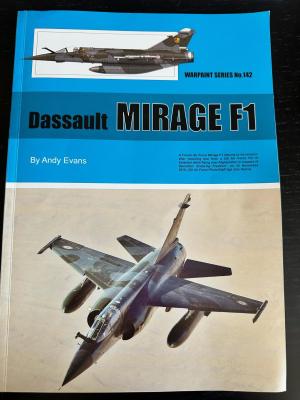
This Air Profile Book is authored by Andy Evans, who, during his 40-year career has been involved with five aviation and modelling magazines, as well as an author of numerous articles. His accomplishments include over 60 aviation and modelling books to his name.
Authors: Kari Stenman
Illustrators: Andrzej Olejniczak and Karolina Holda
One of the latest in Mushroom Model Publications’ White Series, Finnish Trainer Colours 1930-1945 follows up earlier volumes on Finnish aircraft: 2021’s Finnish & German Seaplane Colours 1939-1945; 2018’s Finnish Jet Colours; 2018’s Finnish Bomber Colours, 1939-1945; 2015’s Finnish Fighter Colours, 1939-1945, Volume 2; and 2014’s Finnish Fighter Colours, 1939-1945, Volume 1. MMP is calling this book part of their "Rainbow Series." I'm guessing that refers to their large format camouflage and markings set of books in their "White" series that have addressed Bulgaria, Finland, Hungary, Poland, Portugal, Romania, Russia, and Sweden. This series seems to share a commonality of discussing the specific topic of the evolution of a countries' evolution in markings. To that end, this book utilizes many previously un-published pictures and focuses in on individual aircraft to supplement with superb color illustrations.