Reviews of products for scale aircraft models.

Review Author
Dick Montgomery
Published on
Company
Scale Aircraft Conversions
Scale
1/24

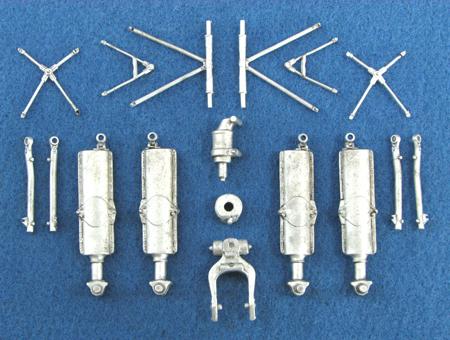
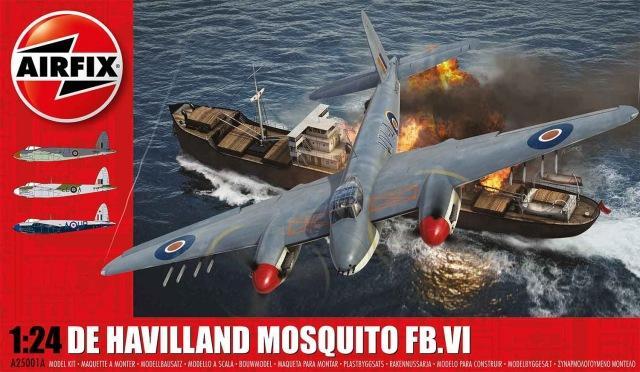
I purchased an Airfix Mosquito kit, (A25001) in 2010 while attending the IPMS National Convention in Phoenix. After waiting for over 5 years after the purchase I decided that it was “Mossie Time”. The short version of the story is that while the Airfix kit was a fun and enjoyable project, through impatience and clumsiness I managed to trash one of the main gear to the point that it would not support the weight of the model.

Having learned a valuable lesson, and having a timely opportunity to review the 2nd release of an Airfix Mossie in 24th scale, I decided that I would incorporate the SAC gear into the Mosquito review of the Airfix A25000A kit. (The primary difference between the two Airfix kits is that the 2nd release does not contain parts for the Nightfighter version and has a different set of decals.)
Review Author
Dick Montgomery
Published on
Company
Airfix
Scale
1/24
MSRP
$175.00

In this final installment of the review of this superb kit we will look at the engines and we will get the airframe assembled and get the decals applied.

The engines are really models unto themselves. I took my Mosquito to a club meeting and displayed it as a Work In Progress, and most of the comments and questions about the kit dealt with the engines and the plumbing for the engines.

There is a great deal of detail and plumbing, and the best part is that the cowls can be left open to show off your handiwork. As with other aspects of this kit, you are strongly advised to study the instructions, and to follow the sequence of construction laid out in the instructions. This is especially important when it comes to the tubes and pipes that are attached to the engines, and that run from the airframe into/onto the engines. Test-fit as much as you can before assembly.

Review Author
Bob LaBouy
Published on
Company
Academy Models
Scale
1/48
MSRP
$42.00

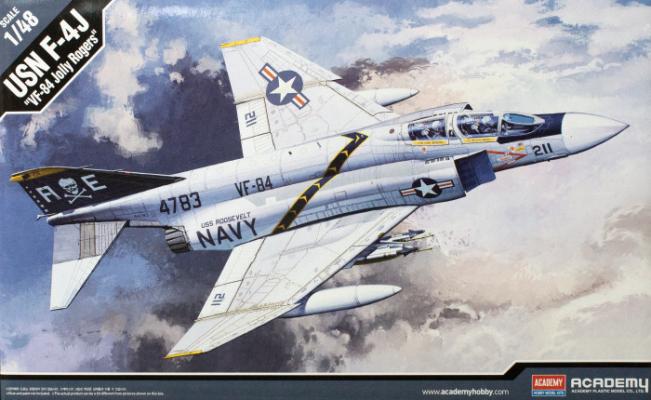
When initially opening the kit you are greeted with this note: ‘This product can be assembled without having to glue but usage of proper glue is recommended for detailed parts.’ I find these instructions intended to entice younger modelers bit comical—as this Phantom model clearly requires the aid of glues of several types. With that caveat, it is a very easy-to-assemble kit and enjoyable kit to build. In keeping with these basic instructions, I have assembled this kit using almost no filler, aside from a very small amount of Perfect Plastic Putty (applying it using a very fine tooth pick to apply the filler).

Book Author(s)
Paul F. Crickmore; Illustrator: Adam Tooby
Review Author
Frank Landrus
Published on
Company
Osprey Publishing
MSRP
$12.00

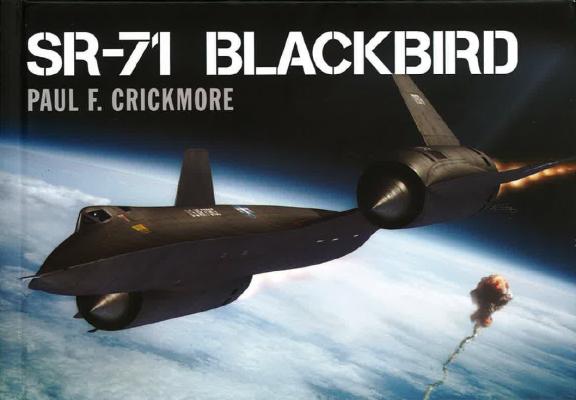
This is at least the second in this as yet un-named series from Osprey. The first that I’m aware of was Spitfire by Tony Holmes published in the same hardback format in August 2015. This appears to be a ‘handy’ size book that is possibly derived from earlier books by Paul Crickmore on the SR-71 Blackbird. Paul Crickmore has quite a history photographing and writing about the Lockheed Blackbirds leaning on his time as an Air Traffic Controller in London. Following the termination of the SR-71 program, Paul Crickmore produced a very detailed book, Lockheed SR-71: The Secret Missions Exposed that won praise from the aviation press, SR-71 crews, and the late president of the Skunk Works, Ben Rich.

Review Author
Jim Pearsall
Published on
Company
Eduard
Scale
1/144
MSRP
$29.95

The Aircraft

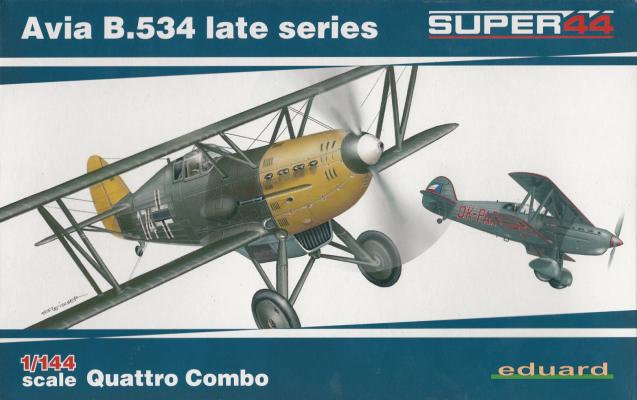
OK, this is not my first review of an Eduard 1/144 B.534. I reviewed the “early” version and now I get to review the “late” version. In the previous review I mentioned in the history that a B.534 flying with the Slovak uprising in October 1944 shot down a Hungarian Ju-52 transport. This was the last victory by a biplane ever. Well, this model is that airplane. The Avia B.534 began its career in 1934. At the time it was an advanced aircraft. By 1940 it was well into obsolescence. In August of 1943, Bulgarian B.534s were sent to intercept the B-24s on the Ploesti raid. They had neither the speed nor the altitude to reach the bombers. The decals for a Bulgarian B.534 are included in this kit.

Book Author(s)
Oleg Rastrenin
Review Author
Paul Mahoney
Published on
Company
Guideline Publications
MSRP
$20.00

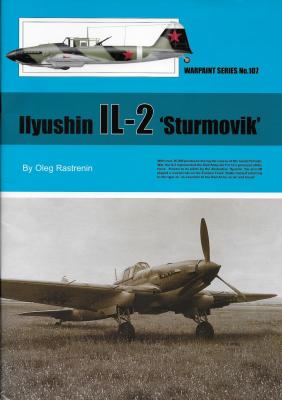
Guideline has just added the Ilyushin IL-2 to the list of titles in their “Warpaint” series.

The pages of this book are all printed on high-quality, glossy stock, and the covers are in stiffer card stock, also glossy. As with other titles in this series, the production quality is quite high.

There are not really any distinct “chapters” in the book, but each new section is labeled in bold type. The author dives right in on page one to explain the history behind the idea of the Il-2, and its subsequent creation. Having established that, he then discusses early production, modifications, and further production. The addition of a second crewman (rear gunner) is covered in depth, as this was a major change to the initial version of the aircraft. Some brief combat history is woven throughout the developmental history, as in large part it was the combat experience that resulted in the need for changes to the airframe.

Book Author(s)
Edward M. Young, Illustrators: Jim Laurier, Gareth Hector
Review Author
Frank Landrus
Published on
Company
Osprey Publishing
MSRP
$20.00

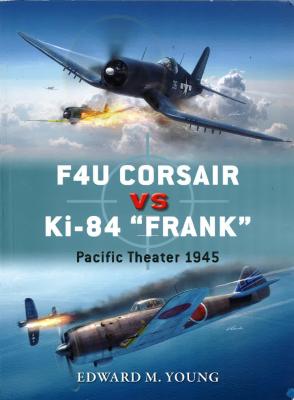
The newest in Osprey’s Duel series is authored by Edward Young, a retired financial executive. He has written a number of books and numerous articles on aviation and military history, including: Osprey Campaign Series 136: Meiktila: The Liberation of Burma, Warrior Series 141: Merrill's Marauders, Osprey Combat Aircraft Series 87: B-24 Liberator Units of the CBI, Duel Series 41: B-24 Liberator vs. Ki-43 ‘Oscar' and Osprey Aircraft of the Aces 109 - American Aces Against the Kamikaze. Illustrator Jim Laurier, a native of New England, provides the color profiles. Jim has been drawing since he could hold a pencil and throughout his life he has worked in many mediums creating artwork on a variety of subjects. He has worked on the Osprey Aviation list since 2000, and has been featured in hundreds of aviation books. Gareth Hector is a digital artist of international standing as well as an aviation history enthusiast. Gareth Hector the cover artwork along with a two-page spread of Lt.

Review Author
Keith Gervasi
Published on
Company
Academy Models
Scale
1/48
MSRP
$28.00

History

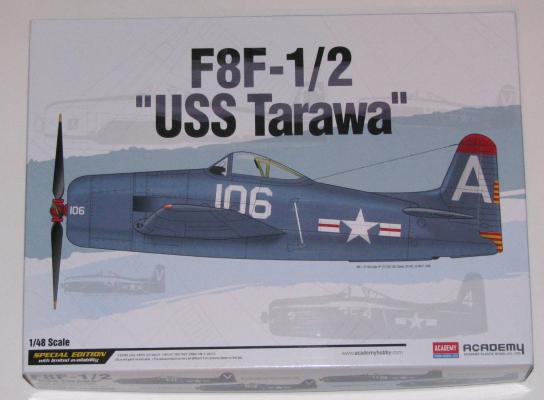
Ordered in 1943, the first F8F flew in 1944. The XF8F-1 had a speed of 424 mph was armed with four .50 caliber guns in the wings and could carry two 1000lb bombs. Deliveries of the F8F-1 began in May 1945 but due to the end of the war the order was cut to 770 from 2900. Later Grumman received a contract for 126 F8F-1Bs which had four 20mm cannons instead of the .50 guns. The F8F-2 was introduced in 1948 and 293 of the -2 Bearcats were built by Grumman with the biggest differences being a taller fin & rudder and a revised cowling. Besides the U.S. Navy & Marine Corps F8Fs were used by Thailand, South Vietnam and France.

Book Author(s)
Paolo Varriale
Review Author
Frank Landrus
Published on
Company
Albatros Productions, Ltd.
MSRP
$18.00

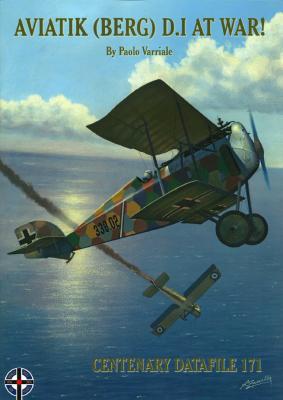
Italian historian Paolo Varriale has taken a new look at the Aviatik’s (Berg) D.I service in WWI.

A single seat fighter designed by Julius von Berg, the Aviatik D.I first flew October 16, 1916, unfortunately killing the test pilot. Approximately 677 airframes were built, and that constituted nearly 43% of the fighters accepted by the Austro-Hungarian Army Air Service. The Aviatik (Berg) D.I was light and fast, but suffered from poor manufacturing quality leading to an adverse reputation for shedding wings.

Review Author
Eric Christianson
Published on
Company
Hasegawa
MSRP
$32.99

Summary

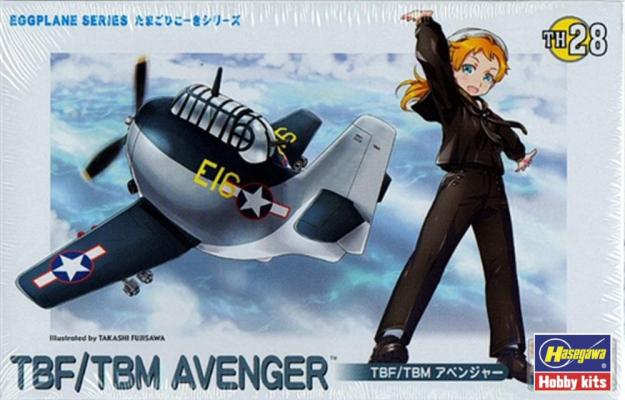
Hasagawa has re-released their previously out-of-production Tamago Plane Series Egg Plane caricature of the venerable TBF/TBM Avenger, this issue sporting two sets of new markings, including the popular set for USS Mission Bay (Code E16).
The small, sturdy box contains two sprues of relatively hard, blue plastic, a clear plastic canopy packaged separately, one medium sheet of decals which are thin and in perfect register, and one instruction sheet totaling 6 pages with 2 steps, printed in black and white.

The markings in the kit cover two schemes: TBF-1C: U.S. Navy USS Mission Bay Code: E16 and TBM-1C: U.S. Navy VC-42 Code 21.