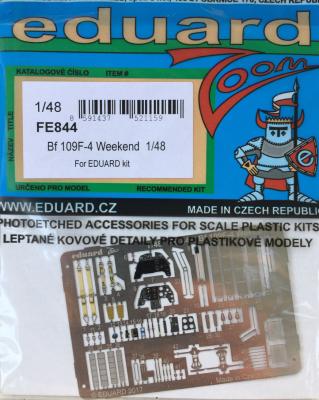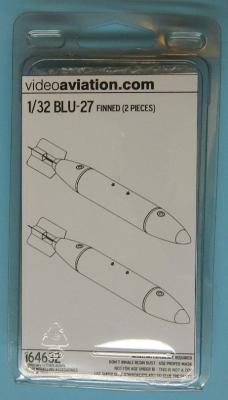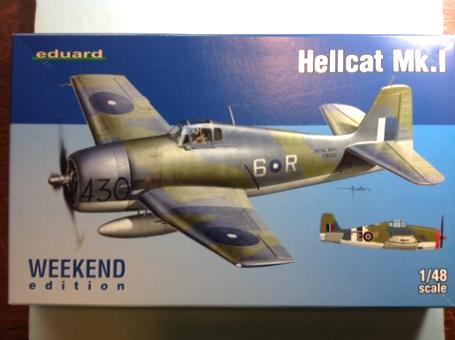
Most modern model kits, although well detailed, could use some aftermarket parts to give the kit that extra “pop” of reality. Eduard has done such an accessory with their “Big Ed” kit for the 1/48 Great Wall Hobby T-33 kit. The “Big Ed” kit actually contains four items: a painted photoetched T-33 interior and exterior detail kit; painted photoetched steel seatbelts for the ejection seats; a photoetched set of landing flaps; and finally, a die-cut mask for the kit.
Convair’s F-102A originated as a response to a requirement for a Mach 1+ interceptor fighter. Based upon the XF-92 research fighter, the F-102 became the U.S’. first delta-winged fighter. The triangular wing was named after the Greek letter D (delta), which it resembled in shape.
The kit comes molded in light grey plastic with a total of 97 parts with very little flash. The detail on the parts is quite good, with panel lines being represented by raised lines.
On the exhaust parts in Step 1, the afterburner and parts 86 and 87 should be sanded smooth before assembling the fuselage, as this area becomes almost impossible to work after assembly. There are ejector pin marks on the insides of both intake halves just inside of the air intake lips. As these will be seen from outside by looking down both intakes, I recommend sanding them smooth, along with painting the area silver or zinc chromate green.
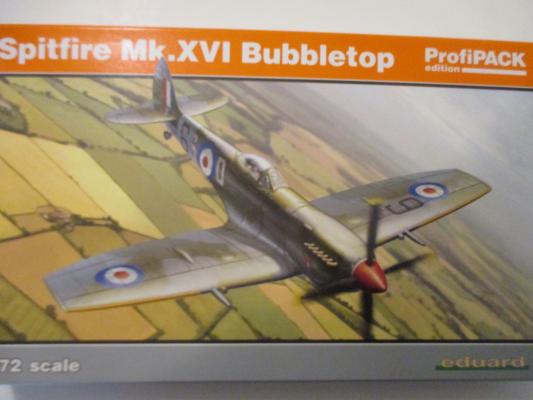
If you are not familiar with Eduard kits then you might be confused by the differences between the five different types of kits that Eduard produces. (Content paraphrases content on the Eduard Website)
Overtree kits are very basic in content, with no reduction in the quality of molding or fit. There are no instructions, no decals, and no photoetch or resin. For a rather low price one gets the parts trees and that’s it. We are talking a price in the range of $15.00 for some excellent parts sufficient to produce one model of high quality, but you will need to supply the instructions and decals from other sources. Overtree kits are not necessarily “easy” or “easier” to build than other Eduard editions of a particular subject, they simply contain the parts for one model and nothing else.
SAM Publications series of Modelers Datafiles cover a lot of ground in a single book. This one is on the Vought A-7 Corsair II, and it gives plenty of information in a single book that most modelers need when researching and building a model.
The A-7 was the replacement for the Douglas A-4 Skyhawk. Even a casual observer can see that what Vought did was take their successful F-8 Crusader and shorten it. They also put a non-afterburning turbofan engine in there, improving range and fuel economy. And with the advances in electronics and weapons in the 1960s, the A-7 was a very accurate bomb-dropper, and it could carry a pretty good load of various weapons.
The book consists of the following sections
Hobbico and Italeri USA once again earn appreciation from IPMS USA for providing a sample of a long-awaited product, the Italeri 1/32 F-35 Lightning II. Of course, the usual bow and thanks go to IPMS USA leadership for sending me this kit!
This kit is a medium sized box containing Italeri’s standard medium gray plastic, yellow-tinted clear canopy and other parts, a photoetch fret for some details, a small sheet of masking for only some/part of the Low-observable (LO) panels, and an excellenft Cartograf decal sheet with markings for US, Israeli, British, Australian, and Netherlands users.
Initial impression is good; the weapons bay will be the hard part, and this was proven out in construction. The detail is there and if you are not in a hurry will reward you with an excellent focus point for your efforts.
The normal thanks to Ross at SAC and his working crew for developing and producing an excellent metal set to replace the kit items, and IPMS USA for providing it to me to use!
Once again the jackpot is hit with another SAC gear replacement set. For the unaware, the Italeri 1/32 F-35A is a rather weighty model, and the kit gear is provided in multiple parts, all plastic. SAC does a few modifications such as incorporating the kit side braces into the main gear and nose gear, and molding them in one part each. With 13 total metal parts, including drag braces and extensions, shimmy damper and steering pump, this set makes a simple kit addition. This, when installed and combined with the trunnions and drag braces, makes a sturdy arrangement.
Rick Morgan graduated from the University of Missouri in 1978 and joined the US Navy. His US Navy career included over 2,400 flight hours in the EA-6B Prowler and other naval aircraft with 41 combat missions in Operation Desert Storm. His website claims he achieved 447 and ½ carrier landings. I’m afraid to ask about the ½ carrier landing…. Rick contributed articles to the “The Hook” prolifically, twice being awarded “Contributor of the Year”. He has a deep interest in aviation and trains. Rick has been published by Schiffer and Osprey Publishing. He currently works in the aviation industry somewhere in the Midwest (I’m guessing Missouri). Check out his web page at rickmorganbooks.com
Developed by the McDonnell Douglas Company, the F-4 Phantom II is a tandem two seat, all-weather, supersonic fighter-bomber. It is one of the most famous aircraft in military aviation history. The F-4 entered service in 1960 with the U.S. Navy but was also adopted by the USMC and USAF. The F-4 stayed in the service of the U.S. military until 1996, but other countries have kept it in use up to 2017 (Japan). The F-4E version, specifically developed for the USAF, adopted a M61 Vulcan cannon in the nose, and it could be armed with AIM-9 sidewinder and AIM-7 Sparrow air to air missiles to perform air-superiority missions. With two GE J-79 engines, the F-4E could reach the top speed of 1,240 knots (1426 mph). Speed, thrust, and reliability were the Phantom II strengths able to successfully counterbalance its reduced maneuverability due to its size.
I’ve always liked modern Russian/Soviet aircraft and have several in the works (Su-27, MiG-31, MiG-21). Seeing the opportunity to review this pilot figure sounded like a prime chance to add a little spice to one of them (whenever I get them finished!). Though this particular figure is listed as a Su-27 pilot, my research showed that the uniform and gear is applicable to pilots of most other modern Russian fighter and attack aircraft.
When I first inquired about reviewing “Shadow Over the Atlantic”, I assumed it would be of a similar format many of Osprey’s “Combat Aircraft” or “Aircraft of the Aces” softcover series of books. It turned out this is a hardback book, and is a much more in-depth volume than those from the standard Osprey series. I am a huge fan of those softcover books, but they always leave me wanting more!
“Shadow Over the Atlantic” is a detailed history of Fernaufklärungsgruppe (FAGr) 5, which operated Ju290 aircraft on long-range reconnaissance missions over the Atlantic