Rick Morgan graduated from the University of Missouri in 1978 and joined the US Navy. His US Navy career included over 2,400 flight hours in the EA-6B Prowler and other naval aircraft with 41 combat missions in Operation Desert Storm. His website claims he achieved 447 and ½ carrier landings. I’m afraid to ask about the ½ carrier landing…. Rick contributed articles to the “The Hook” prolifically, twice being awarded “Contributor of the Year”. He has a deep interest in aviation and trains. Rick has been published by Schiffer and Osprey Publishing. He currently works in the aviation industry somewhere in the Midwest (I’m guessing Missouri). Check out his web page at rickmorganbooks.com
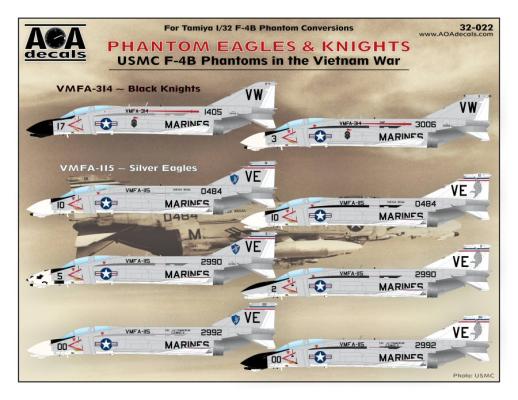
Developed by the McDonnell Douglas Company, the F-4 Phantom II is a tandem two seat, all-weather, supersonic fighter-bomber. It is one of the most famous aircraft in military aviation history. The F-4 entered service in 1960 with the U.S. Navy but was also adopted by the USMC and USAF. The F-4 stayed in the service of the U.S. military until 1996, but other countries have kept it in use up to 2017 (Japan). The F-4E version, specifically developed for the USAF, adopted a M61 Vulcan cannon in the nose, and it could be armed with AIM-9 sidewinder and AIM-7 Sparrow air to air missiles to perform air-superiority missions. With two GE J-79 engines, the F-4E could reach the top speed of 1,240 knots (1426 mph). Speed, thrust, and reliability were the Phantom II strengths able to successfully counterbalance its reduced maneuverability due to its size.
I’ve always liked modern Russian/Soviet aircraft and have several in the works (Su-27, MiG-31, MiG-21). Seeing the opportunity to review this pilot figure sounded like a prime chance to add a little spice to one of them (whenever I get them finished!). Though this particular figure is listed as a Su-27 pilot, my research showed that the uniform and gear is applicable to pilots of most other modern Russian fighter and attack aircraft.
When I first inquired about reviewing “Shadow Over the Atlantic”, I assumed it would be of a similar format many of Osprey’s “Combat Aircraft” or “Aircraft of the Aces” softcover series of books. It turned out this is a hardback book, and is a much more in-depth volume than those from the standard Osprey series. I am a huge fan of those softcover books, but they always leave me wanting more!
“Shadow Over the Atlantic” is a detailed history of Fernaufklärungsgruppe (FAGr) 5, which operated Ju290 aircraft on long-range reconnaissance missions over the Atlantic
David Doyle’s latest book is one of the initial entries into a new series called ‘Legends of Warfare’ with entries in Ground, Naval, and Aviation. The first Ground book is focused on the Panzerkampfwagen IV, the first Naval book is on the USS Yorktown (CV-5), and the first two Aviation books are on the Curtiss P-40 Warhawk (#4) and Douglas TBD Devastator (#3). The first and second in the series (Wayne Mutza’s Bell 47/H-13 Sioux Helicopter is #1 and David Doyle’s Grumman F4F Wildcat at #2) are scheduled to release later this year.
Yet another rebox of a familiar kit from Hasegawa. This time we're treated to two P-38s with limited edition "European Theater” decals representing the early H model "Texas Ranger" flown by Lt. Col Jack Jenkins and a J model "Jenne" flown by Capt. Roy Scrutchfield. The later regalia is very familiar to those of us who built the Monogram kit from years ago.
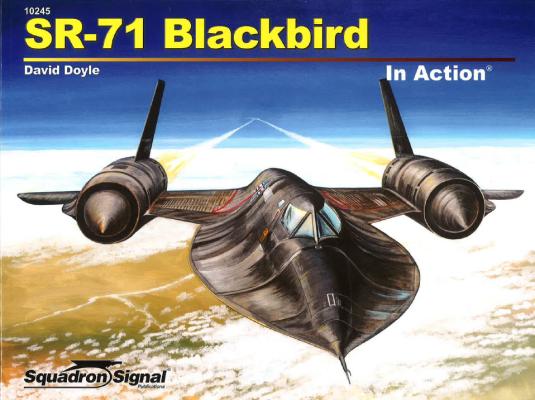
David Doyle’s latest book continues to expand on Squadron Signal’s long standing In Action series that initiated back in 1971.This is a completely updated and expanded edition over Squadron’s earlier Aircraft In Action number 25, a 50-pager on the Lightning by Gene B. Stafford that was published in 1976. That first release was followed by Squadron’s In Action number 109, a 58-pager on the Lightning by Larry Davis that was published in 1990. A third release came in 2011 from David Doyle with 72 pages as Squadron In Action number 1222. This 2017 release adds an additional eight pages and includes many new photographs.
Sincere appreciation from IPMS USA goes to Eduard for their having once again provided a sample copy of a long-awaited product, the Multiple Ejector Rack, and the usual wave of thanks to the IPMS USA leadership for ensuring I received it!
First off: when someone develops a B-52F/D for a Vietnam diorama, I’ll be ordering an extra two of these sets… because the external weapon pylons on some B-52’s used four of these!
The MER was developed along with TER’s to increase the number of weapons carried by A-4, F-4, A-6 and others… it uses many common parts with the TER to increase carry from three to six weapons.
This set contains 75 parts for three MER’s; the resin bodies and beams in two parts, Sway braces with ejector pins, Two types (early and late) MER hanging lugs and braces to put them on the aircraft carrying beams, and PE Switch plates to put in the hollow end of the MER itself. To finish, you are also provided with a small decal sheet.
Robert Pęczkowski is part of the Wydawnictwo Stratus publishing group as a co-owner, publisher, and author. Robert attended Politechnika Rzeszowska from 1983 to 1988. Robert has written a number of books including the major work in English on the Polish air Force of WW2. He is married with two children.