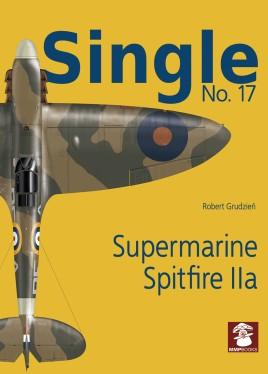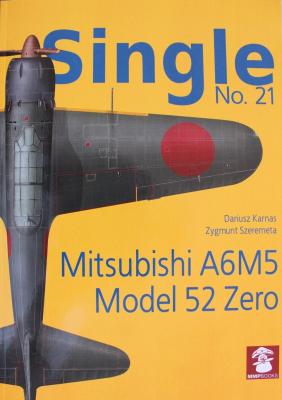

One of the latest in MMP’s “Single” series covers the P-38G-15-LO, and with the relatively new Tamiya 1/48 kit of the P-38 F/G the timing of this release is perfect. The idea behind this series of books (more like booklets) seems to be to get right to the point and show scale plan views, photos, profiles, etc.
Hot on the heels of Zoukei-Mura’s new Ki-45 Late comes the Ki-45 Early edition. Giving you two choices of the Early type of heavy fighter the Ki-45 Toryu Kai Ko or Kai Hei. As with all ZM kits this one has a full interior and you have your choice of clear fuselage (to show off all the interior details) or gray plastic fuselage. The box is jammed full of both gray and clear sprues and it comes with a 59-page instruction book.
First up for the build is choosing which variant you want to build. I chose to go with the Ko version, in the instructions this would be option A. I chose this version for two reasons. The alligator type paint scheme and the two machine guns in the nose as apposed to the one cannon.
Scale Aviation Modeller is one of several magazines I used to subscribe to over the years, but have pared back that list and it was refreshing to once again see the content of this magazine.
The quality of the magazine is just as I had remembered – Nice, glossy stiff covers and equally glossy, but thinner, content pages. Excellent quality photos and detailed articles are consistent throughout this issue.
Contents of this issue include at least 6 build articles, several pages of color profiles, an article on the 2019 Telford model show, and another several pages devoted to news of new kits, books and decals.
IPMS/USA appreciates the opportunity to review this periodical and report on the content!
OK, I am one of “those guys” who really enjoys reading periodicals/magazines. They provide a method to weed out the potential poorly manufactured models out there (a rare occurrence these days with modern molding techniques) and highlight the benefit of a given kit. A win for me as I therefore know of and don’t buy poorly executed plastic. And if I do, it’s because it saves me a lot of scratch building. Plus, I learn a lot of technique and history from modeling. What is not to like?
Scale Aircraft Conversions specializes in white metal replacement parts. Its line of replacement landing gear has been expanded to include a set for the Freedom Model F-CK 1/C/D.
The set is very comprehensive, including 12 parts covering the main landing gear, the nose landing gear and even the nose wheel well. These parts are drop-in replacements for the plastic parts. In addition to the actual landing gear, you get an nose landing gear wheel well. That should help with mitigating the chance of a tail sitter.
You can see from the pictures the parts are very cleanly molded and formed, without any visible molding lines (typical of plastic parts).
Recommended to modelers of all skill levels.
I would like to thank Scale Aircraft Conversions and IPMS/USA for the review sample.
Scale Aircraft Conversions specializes in white metal replacement parts. Its line of replacement landing gear has been expanded to include a set for the Trumpeter 1/48 Sea Vixen.
The set is including 7 parts covering the main landing gear struts and fork. These parts are drop-in replacements for the plastic parts. Considering the size of the Sea Vixen, investing on a sturdy landing gear is likely to be a good idea.
You can see from the pictures the parts are very cleanly molded and formed, without any visible molding lines (typical of plastic parts).
In addition to the listed advantages, when using white metal landing gear you can always ‘tweak’ the landing gear strut for an improved alignment of the parts, which again in a large model airplane is an extra advantage.
Recommended to modelers of all skill levels.
I would like to thank Scale Aircraft Conversions and IPMS/USA for the review sample.
The Su-27 family was originally designed as a heavy interceptor to counter US fighter designs such as the F-14 Tomcat & F-15 Eagle. It originally entered service as a long-range interceptor against American heavy bombers such as the B-52 and the B-1B. The design has been refined and has resulted in several variants such as the SU-30 multi-role fighter, the Su-34 bomber and the Su-33 shipboard fighter.
This book is the seventh book in Ginter’s Naval Fighters series and looks at the 23 Marine Corps units that flew the A-4C/L Skyhawk. The book opens with a brief discussion of the development of the A-4C as an all-weather version of the Skyhawk and some of the structural changes that were made to accomplish this. While the A-4C was intended as an interim design, 638 aircraft constructed.
With the recent release of yet another Battle of Midway film, it seems appropriate for Academy to release this version of the venerable Douglas Dauntless in Marine colors. This package starts off with Accurate Miniatures excellent kit of the Dauntless. In addition, we get a photoetch fret of seat belts and pre-cut masks for the extensive canopy framing. The marking options include a USMC SBD-1 based in Hawaii on December 7, 1941 and another Marine SBD-1 based at MCAS Quantico, Virginia around the same time.
I’ve always been a fan of the Accurate Miniatures line and this kit is no exception. Fantastic surface and interior details are hallmarks of the brand. The cockpit is packed with detail but I used some online reference photos to make sure I was putting parts in the right locations. The instrument panel is cast in clear plastic but the dial faces have raised detail on them so I used the decal provided and settled it in with some Solvaset.
Overview from the Publisher
Su-24 (Fencer) is a Soviet jet bomber with variable-geometry wings. The aircraft was supposed to be a response to the American F-111, and therefore it's structurally similar. Su-24 can operate in any weather conditions, also at night. It was designed to carry tactical nuclear as well as tactical weapons.
In the 1960s, the military command of the Soviet Union set requirements for a new attack aircraft that would be able to operate despite strong anti-aircraft defense of NATO troops. The aircraft was expected to fly at low altitude at a high speed. Initially, it was based on Su-7 and Su-15 airframes, but due to the decision to use a variable-geometry wing, it was necessary to build a completely new structure. Variable geometry allowed to achieve high speeds while maintaining good takeoff and landing characteristics. This is how Su-24 was born.