

Ron Verburg
Reviews By Author
Monthly Model Art 2016 January issuePublished:
Model Art Issue 932 is typical of other Model Art magazines in that it is written entirely in Japanese, with occasional English words, usually in article titles or in captions. This issue covers:
|
|
|
Mitsubishi T-2Published:
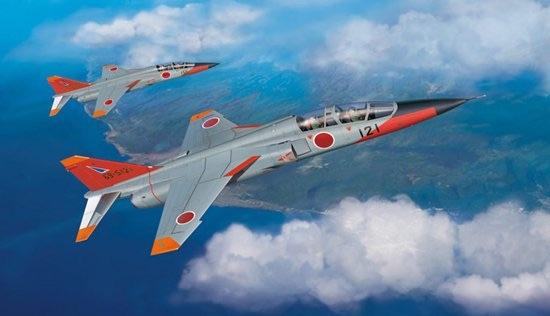
HistoryThe Mitsubishi T-2 was a jet trainer aircraft used by the Japan Air Self-Defense Force. In 1967, Japanese aviation firms Fuji, Kawasaki, and Mitsubishi, each submitted proposals, and in September 1967, under lead designer Dr. Kenji Ikeda, Mitsubishi's design was selected. The official contract was issued for the development of the XT-2 was placed on 30 March 1968, with Mitsubishi as prime contractor and Fuji as Prime sub-contractor. Several other subcontracts with aerospace firms and other minor aviation manufacturers were also established. By March 1969, the design had been finalized, and the XT-2 prototype was rolled out on 28 April 1971, and performed its maiden flight… more |
|
Civil Aircraft Markings 2015Published:
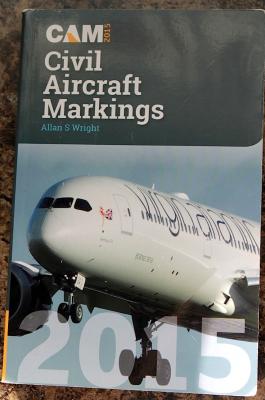
From the Outside CoverFirst published in 1950, Civil Aircraft Markings quickly became the aviation equivalent of Wisden, an indispensable annual publication found on the bookshelves of generations of aviation enthusiast and historians. At the heart of CAM is the most complete listing of all aircraft currently on the UK Register of Civil Aircraft, over 21,000 entries ranging from historic biplanes through to the latest airliners. CAM also covers light aircraft, micro lights, helicopters, balloons and gliders of every type. For each entry the registration marks, exact aircraft type and owner or operator is given. In addition to the British register the civil aircraft registers of Ireland, the Channel Islands and the Isle of Man are listed as well as sections from… more |
|
Satisfaction of Captain Henry MorganPublished:
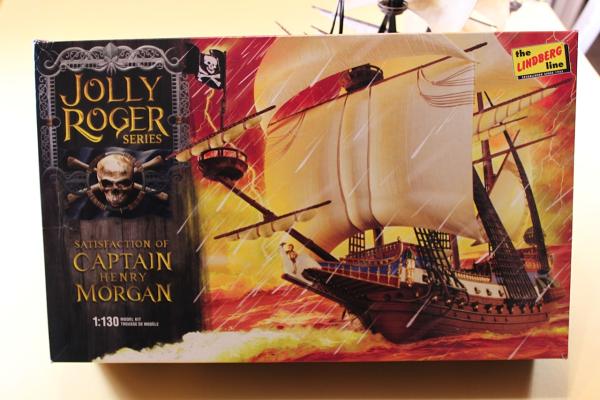
HistorySir Harry Morgan was a British privateer, buccaneer, and admiral of the Royal Navy. He made himself famous during activities in the Caribbean, primarily raiding Spanish settlements, and was considered a pirate only to the Spanish, whom he was lawfully attacking. He earned a reputation as one of the most notorious and successful privateers in history, and one of the most ruthless among those active along the Spanish Main. In 1670 Captain Henry Morgan amassed the largest fleet ever seen in the Caribbean and set his sights on Panama City, then the richest city in the Western hemisphere. En route, his flagship, Satisfaction, and four other ships ran aground on the Lajas Reef at the base of Fort San Lorenzo, guarding the mouth of the Chagres River, the sole… more |
|
Avro ManchesterPublished:
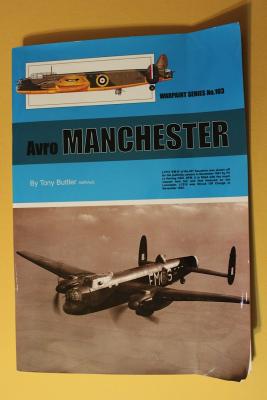
From the Inside CoverThe Avro Type 679 Manchester is considered to be one of the failures of British military aviation history and certainly the period of time it spent in service with Bomber Command was not particularly happy. I found the service career of this aircraft to be particularly interesting. The Manchester was designed in 1936 as a heavy bomber capable of carrying 8000lbs of either bombs or torpedoes using 2 Rolls Royce Vulture II liquid cooled engines with two-speed superchargers. It was designed around the same time as the Stirling and Halifax heavy bombers. The Stirling had a short operational career but the Halifax remained in service throughout WW2. The Manchester suffered from poor engine performance due to troubles with the Rolls Royce Vulture II.… more |
|
Avia B.534 Weekend EditionPublished:
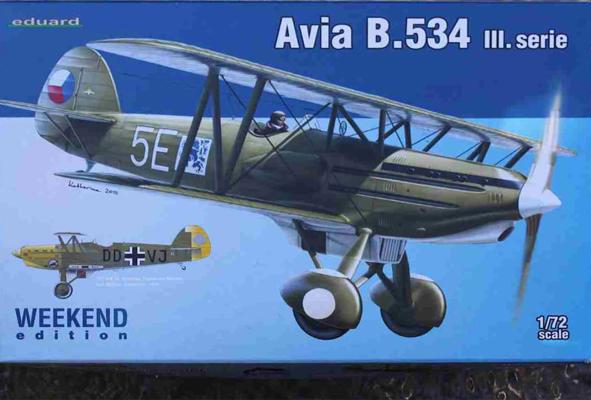
HistoryThe Avia B.534 was developed in 1934 as an extension of the B.34 fighter. This version was produced in small numbers for the Czechoslovak Air Force with several engine/airframe modifications. The aircraft was used in various roles by the Czech in WW2 and the Germans found them formidable enough that they kept production going into 1941. But rapid advancements in aircraft design meant that the Avia B.534 was obsolete by 1942. The Bulgarians used the Avia B.534 in combat against the B24 Liberators operations against Ploesti. KitThe kit is produced by Eduard, a well-known model company who bring us high quality model kits and accessories. The box artwork shows an Avia B.534 in flight in a quarter view. The kit consists of 57 parts and comes on… more |
|
Bf 110C Destroyer Weekend EditionPublished:
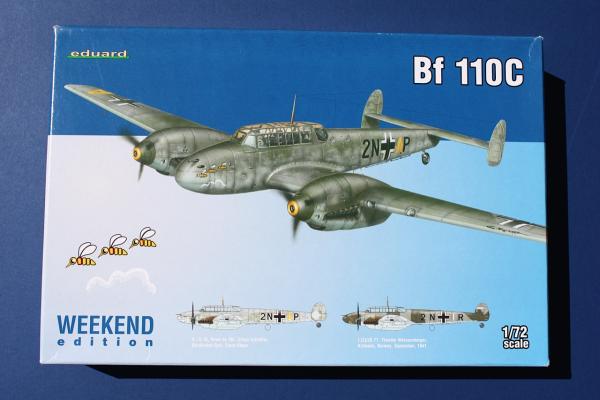
The Messerschmitt Bf 110, often (erroneously) called Me 110,[2] was a twin-engine heavy fighter (Zerstörer—German for "Destroyer") and fighter-bomber (Jagdbomber or Jabo) developed in Nazi Germany in the 1930s and used by the Luftwaffe and others during World War II. Hermann Göring was a proponent of the Bf 110. It was armed with two MG FF 20 mm cannons, four 7.92 mm (.312 in) MG 17 machine guns, and one 7.92 mm (.312 in) MG 15 machine gun or twin-barrel MG 81Z for defense. Development work on an improved type to replace the Bf 110, the Messerschmitt Me 210 began before the war started, but its teething troubles from its aerodynamics resulted in the Bf 110 soldiering on until the end of the war in various roles, alongside its replacements, the Me 210 and the significantly improved Me… more |
|
1941 Plymouth Four Passenger CoupePublished:
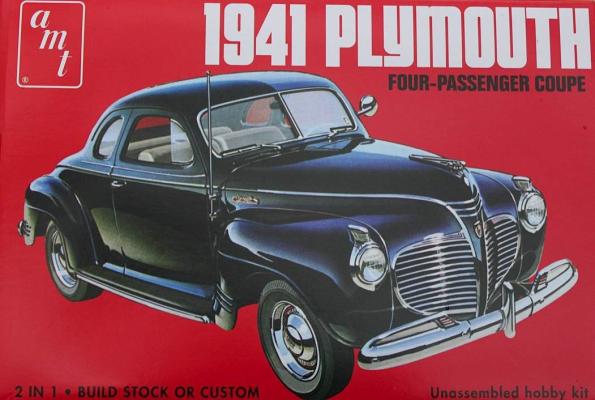
HistoryBilled as the low priced car that's most like the high priced cars…the 1941 Plymouth offered Big 3 buyers an attractive, soundly engineered and thoroughly modern automobile. The Special Deluxe Four Passenger Coupe is a prime example of Chrysler Corporations emphasis on low priced luxury. Priced at $925 it featured a longer wheelbase that its competitors for a big car ride; front stabilizer bar; safety rim wheels; oil bath air cleaners, aircraft type shock absorbers; and a smooth running 201.3 cubic inch L head six cylinder engine with Chryslers famous Floating Power mountings. Introduced in 1928, Plymouth built a solid reputation for comfort and value, playing down performance until the horsepower race of the 1050s. With growing collector interest in prewar Chrysler… more |
|
Beechcraft G17S StaggerwingPublished:
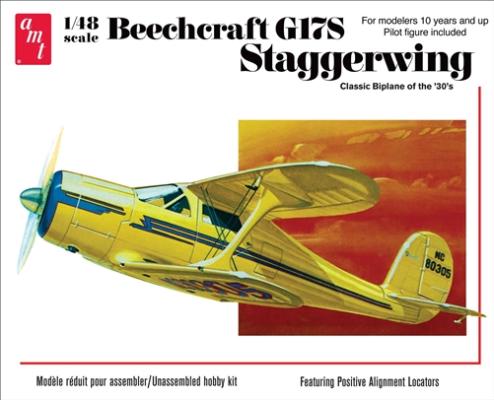
HistoryAt the height of the Great Depression, aircraft executive Walter H. Beech and airplane designer T. A. "Ted" Wells joined forces to collaborate on a project to produce a large, powerful, and fast cabin biplane built specifically for the business executive. The Beechcraft Model 17, popularly known as the "Staggerwing" was first flown on November 4, 1932. During its heyday it was used as an executive aircraft, much as the private jet is now, and its primary competition were the Waco Custom Cabin and Waco Standard Cabin series of biplanes. The Model 17's unusual negative stagger wing configuration (the upper wing staggered behind the lower) and unique shape maximized pilot visibility while negligibly reducing interference between the wings.[1] The fabric-covered… more |
|
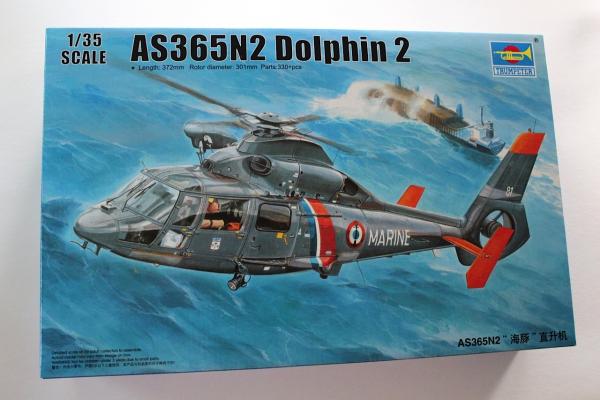
SA365N2 Dauphin 2 (Dolphin) French Marine HelicopterPublished:
HistoryThe Eurocopter SA 365/AS365 Dauphin 2 (Dolphin) is a medium-weight multipurpose twin-engine helicopter currently produced by Airbus Helicopters. It was originally developed and manufactured by French firm Aérospatiale, which was merged into the multinational Eurocopter company during the 1990s. Since entering production in 1975, the type has been in continuous production for more than 40 years. The intended successor to the Dauphin is the Airbus Helicopters H160, which is yet to enter operational service as of March 2015.[2] The Dauphin 2 shares many similarities with the Aérospatiale SA 360, a commercially unsuccessful single-engine helicopter; however the twin-engine Dauphin 2 did meet with customer demands and has been operated by a wide variety of civil… more |