

Hub Plott
Reviews By Author
|
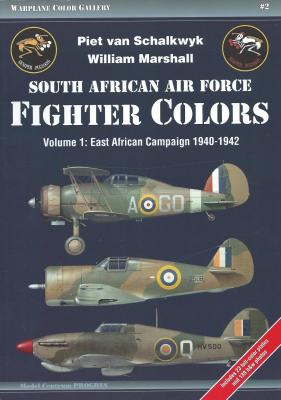
South African Air Force Fighter Colors Vol.1 East Africa Campaign 1940-1942Published:
This is volume one in a three volume set to cover the SAAF in WWII. This volume covers the East African Campaign with the following two volumes to cover North Africa and Malta as well as Sicily, Italy and the Balkans! The SAAF was sent to protect the Sudan and Kenya early on in the war from the Italians and their 200,000 troops and some 400 aircraft. The SAAF 1, 2 and 3 squadrons were equipped with mostly obsolete bi-plane aircraft such as the Gauntlet, Gladiator and Fury with which to counter any Italian attack. These were augmented by a few fabric winged and wooden propeller equipped Hurricane Mk Is. Later on these units joined by 4 Squadron that brought its Curtiss Mohawk fighters and Gladiators. The book is broken down into 10 sections. First is a brief introduction then… more |
|
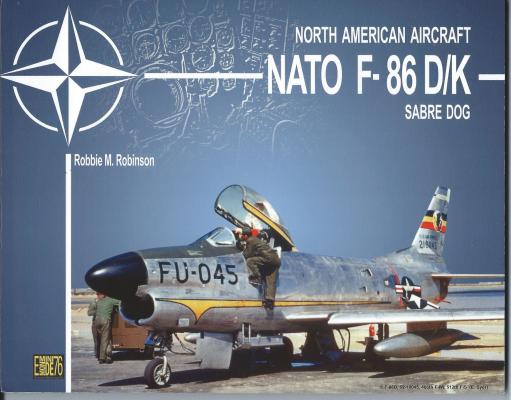
North American Aircraft NATO F-86D/KPublished:
Born from the great North American F-86A, the F-86D/K all weather interceptor had a long and widespread career. It served the USA both home and abroad and as this book covers with 7 NATO air forces as well as US forces in Europe. The F-86D/K served NATO until the final ones were retired from the Italian Air Force in 1973. The book has 5 total sections with the first section a brief overview of its development and production. Section Two covers the USAF in Europe. Section 3 is the largest section comprising 50 pages with coverage of the type’s service in Royal Danish, French, West German, Royal Hellenic, Italian, Royal Netherland and Royal Norwegian Air Force. Section Four has a look inside with manual pages and detail pictures reproduced throughout. The book ends with the… more |
|
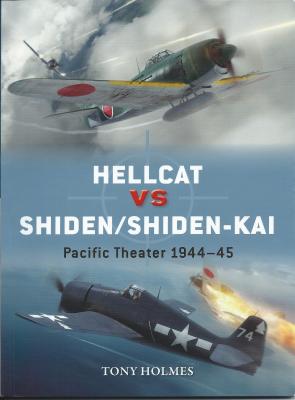
Hellcat Vs Shiden/Shiden-Kai Pacific Theater 1944-45Published:
The opponent vs opponent series is one of Osprey’s most enjoyable, this volume does not disappoint. The Hellcat was a later war USN fighter of which 12,275 were built. It was fast, maneuverable and very rugged (there is good reason Grumman was called “The Iron Works”. The Hellcat became the premier fighter of the USN. The Kawanishi Shiden and Shiden-Kai of which a total of approximately 1400 were built, was developed from a floatplane and departed from customary Japanese design philosophy in that it was heavily armed and both maneuverable and ruggedly constructed. The book is broken down into 10 sections beginning with two short introduction and design chronology sections totaling 4 pages. Next there comes the Design and Development section. The hellcat is discussed… more |
|
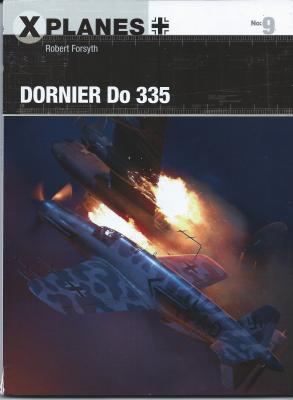
X Planes Dornier Do 335Published:
Ask any WWII aficionado what was one of the most interesting designs and you will undoubtedly get many that would answer the Do-335. This large push/pull configured fighter has long fueled the imagination. Dornier had originally ceded further development of its unique design to Junkers due to their many production commitments, but Dornier reclaimed the work as the Junkers facility moved too slowly with the D0-335’s development. The book is broken down in six chapters and is number 9 in the series. Chapter One is an introduction to the design and the politics and war situations that influenced it. Chapter Two covers the origins of the Dornier Company, its many designs and the work with the Goppingen Go-9 push-pull testbed. Chapter Three is the longest in the book at 23… more |
|
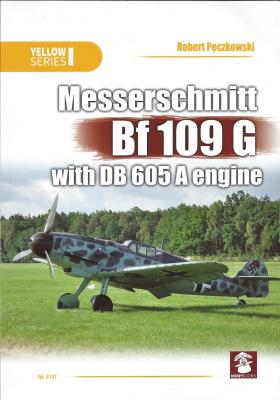
Messerschmitt Bf-109G with DB605A EnginePublished:
This is volume one in the Yellow Series from MMP. The DB-605A engine powered the majority of Bf-109G variants from the dash 1 through the dash 8 and including the dash 14 and two seat trainer variant converted from earlier G models, the dash 12. Many modifications were made over the G series production after its introduction in 1942. The Bf-109G served in Romania, Finland, Italy, Bulgaria, Switzerland and Hungary besides Germany during WWII. The book is laid out into 19 sections with coverage for each main production variants, tropical conversions, factory and filed modifications, reconnaissance versions and those assembled in Romania. A brief three page technical description and flight performance follows the main text body. The G models maximum speed at altitude varied from… more |
|
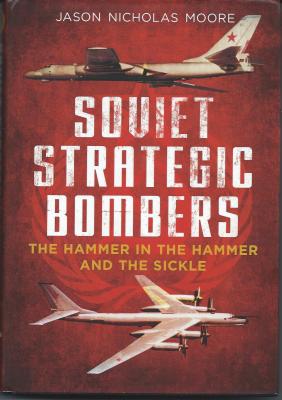
Soviet Strategic Bombers: The Hammer in The Hammer and SicklePublished:
This book details Soviet strategic bombers development, use history and experimental bombers as well. Beginning with The Tu-4 “Bull” an aircraft reverse engineered from interred B-29s during WWII on until modern day. The book is broken down into 15 chapters, beginning with post war development of strategic bombers. The next seven are devoted to the main bomber types in service with the USSR. These include the aforementioned Tu-4 as well as the Tu-95 Bear, M-4 Bison, Tu-16 Badger, Tu-22 Blinder, Tu-22M Backfire and the Tu-160 Blackjack. Each aircraft is given in-depth coverage of service of both active and retired aircraft and those that were used by client states outside of the USSR. You will find each of these chapters to be very interesting and packed with information. … more |
|
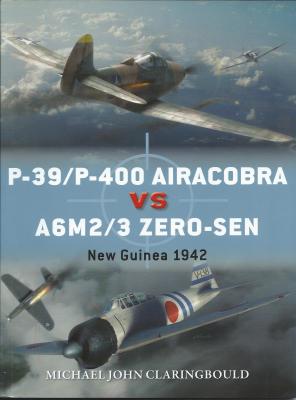
P-39/P-400 Airacobra vs A6M2/3 Zero-SenPublished:
This book details combat between the P-39/P-400 Airacobra and A6M2/3 Zero in New Guinea in 1942. This book follows the usual pattern/layout for this series with a history and specifications of aircraft, the training and operations of the servicemen of both nations, and then combat operations. The book is broken down into 11 sections. The introduction discusses in brief the lead up to both designs and provides a chronology from inception until the end of the war. Next the design and development of both types are covered. The P-39/P-400 is covered first then the A6m2/3 Zero. Chapter Three has the technical specifications of each model. B-29 coverage begins with the P-39D and continues with the P-39F, P-39K and P-400.The same treatment is given to the A6M, covering… more |
|
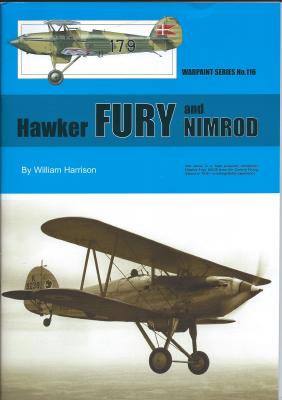
Hawker Fury and Nimrod Warpaint series #116Published:
This book covers the RAF Hawker Fury and RN Nimrod. Number 116 in the very familiar Warpaint series by Guideline, this book follows their tried and true format. Beginning with the discussion of the prototype the book then moves into production models and service. All variants are covered. Begun as a private venture, the sleek inline engine Fury was the first main RAF fighter to reach speeds in excess of 200MPH. Besides the RAF the Fury also served with what are now Iran, Portugal, South Africa, Yugoslavia, Spain as well as one Panther radial engine model with Norway for trials. The naval version of the fury, the Nimrod, served well with the Royal Navy as well as with Denmark. Japan and Portugal trialed the Nimrod but no orders were forthcoming! The bulk of the book (… more |
|
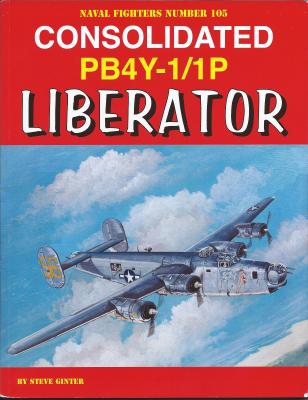
Consolidated PB4Y-1/1P LiberatorPublished:
This book covers the PB4Y-1/1P Liberator in US Naval service. Armed with the success of land based bombers used by the USAAC anti-submarine command in the Atlantic along with RAF Coastal Command on the other side of the Atlantic, the Navy went to the AAC to ask for a share of the B-24 production. This was granted in return for the Navy canceling orders for the Boeing PBB Sea Ranger thus freeing up that production capacity for B-29s. Ginter books are well known in both the modeling and aviation community for their in-depth photo coverage and history of the title subject. This book on the PB4Y-1 , number 105 in the Naval Fighters series, lives up to the sterling reputation established by all of the previous volumes. It is a great companion volume to the one on the PB4Y-2! … more |
|
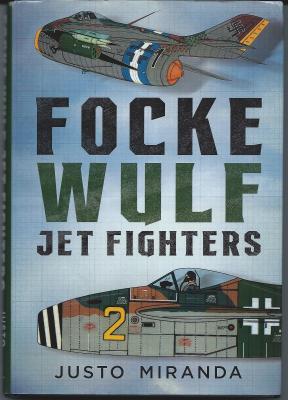
Focke Wulf Jet FightersPublished:
Justo Miranda is well known for his books on Luftwaffe paper projects and designs, having published many soft cover and hard cover books on these subjects. His background as a tech drawer and advisor to the Spanish Air Force Museum have aided in the quality of his books. This book covers the jet fighter designs of Kurt Tank and Focke-Wulf. It is divided into 29 chapters covering the jet designs that were proposed in WWII and beyond by the company and Mr. Tank. Focke Wulf, producers of the superb Fw-190 and its derivatives were probably “saved” by their decision to go with a radial engine design thus not being in direct competition with the favored Messerschmitt Company for inline engines since by winning the 1936 fighter competition meant it had first priority for… more |