

Hub Plott
Reviews By Author
|
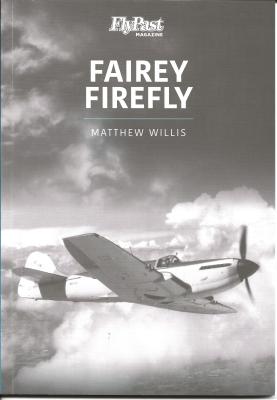
Fairey FireflyPublished:
The Fairey Firefly was one of the most successful two-seat fighter/strike/attack aircraft used in WWII and beyond. While the type did have some teething problems at the beginning it proved its value across multiple theatres and two wars. The first action for the type was in Europe against the German battleship Tirpitz and then onto the Pacific against the Japanese, Later marks provided valuable service in the Korean War. The book is divided into eight chapters, the first dealing with the use of the Firefly in WWII. Though the production Mk. I was over 40MPH slower than Fairey had promised it did prove valuable in the reconnaissance and attack roles, Chapter two covers the post war Fireflies. When WWII ended the British had many American aircraft due to Lend-Lease.… more |
|
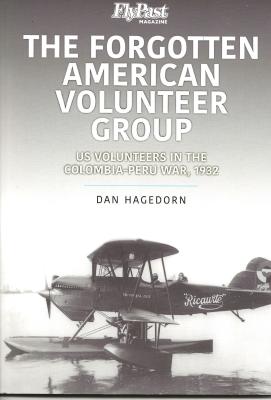
The Forgotten American Volunteer GroupPublished:
Everyone has heard of the AVG also know as the Flying Tigers and their exploits in WWII, but did you know that there was another AVG that served in Colombia in 1932? This book is their story. In the early 1930s there was a border skirmish between Colombia and Peru when the latter invaded a very remote section of Columbia. So remote in fact that it was only accessible by floatplane or boats and thus there was a delay in the Colombian government finding out the Peru had invaded. Due to the remoteness of this area airpower was going to be the primary force to contest Peru. Colombia’s air force was largely under the control of the German Airline that operated in the nation as little had been done by Germany to train locals in and on the aircraft. Also, the aircraft in use… more |
|
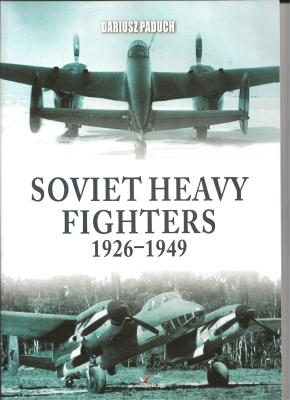
Soviet Heavy fighters 1926-1949Published:
This book comprises twenty-two segments each covering a different aircraft design. The heavy fighter concept was one that was tried out by many different nations. In theory these aircraft were to perform a variety of missions such as ground attack, bomber protection/escort as well as reconnaissance without the aid of single engine fighters. More often than not it was found that the heavy fighters needed their own single engine fighter escort for protection on missions. Many of the aircraft covered in this book are by lesser-known designers and thus the aircraft themselves are lesser known as well. Many of these designers struggled within Stalin’s government where failure was almost certainly to catch the ire of the communists in charge. The communist government and Stalin’s… more |
|
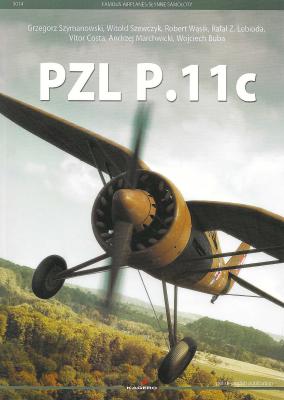
PZL P.11cPublished:
This book covers the Polish PZL P.11c and is laid out in seven chapters. The book has text laid out in two columns per page, one on English and one in Polish. The first chapter covers the development and history of the first Allied aircraft to down a German plane in WWII. Included in this section are several color profiles as well as information about the various fighter squadrons and each of the aircraft depicted in the profiles. Chapter two is forty-seven pages of color walkaround and detail photos of the one surviving PZL P. 11c at the Polish Aviation Museum in Krakow. These photos omit no angle or detail and are worth the price of the book alone. The next five chapters are build reviews of most of the kits of the PZL P.11c available. A chapter each is devoted to the 1/72… more |
|
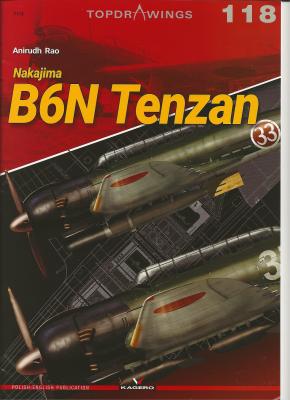
Topdrawings #118 Nakajima B6N TenzanPublished:
This is volume 118 in the Topdrawing series. This is a thin book with brief text in both English and Polish. The book contains very nice 1/72, 1/48 and 1/32 scale drawings. There are also ten color profiles of various B6Ns. The drawings contain useful information on the various ordinance carried and its layout as well as engine and propeller information. This is the first of this series I have had the pleasure to look through. It is a nice inexpensive book showing details, drawings, and painting information. It is a suitable alternative to the more expensive and harder to find Aero Details series and provides the modeler with sufficient information to build a nice, detailed model. It will give you the basics you need on the aircraft covered without going into the minute… more |
|
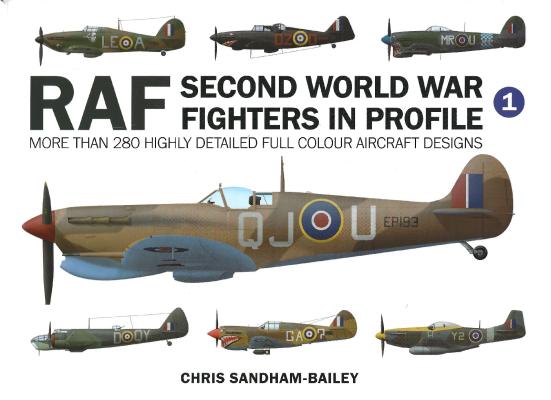
RAF Second World War Fighters in Profile #1Published:
This is a large volume with good basic historical and use information about each design covered with multiple color profiles. Some of the profiles are rendered in 3-view. Also, the readers are provided by the author with 4-view scaled drawings with cross sections. Some drawings are in 1/72 and some are in 1/48. Fifteen different aircraft are covered in the book. These being: Gloster Gladiator, Bristol Blenheim, Hawker Hurricane, Merlin powered Spitfires, griffon powered Spitfires, BP Defiant, Bell Airacobra, Westland Whirlwind, Curtiss Tomahawk and Kittyhawk, Bristol Beaufighter, Hawker Typhoon, NA Mustang, De Havilland Mosquito and Hawker Tempest. With “Profile” in the name it is readily apparent what the focus of the book will be, and the author does not disappoint! There are… more |
|
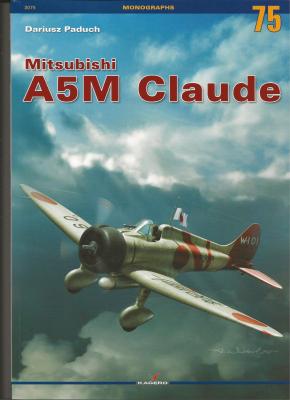
Mitsubishi A5M ClaudePublished:
This is volume 75 in the monograph series. The book follows the usual monograph format. Included along with 1/48 drawings bound into the volume is a separate 2-sided page of 1/32 drawings. The first 16 pages of the book discuss the A5M’s predecessors such as the Nakajima A1N2, Mitsubishi 1MF10 and its immediate predecessor; the Ka-14. The bulk of the book is dedicated to production and combat usage of the A5M, most of which was in China. Assigned the Allied code name “Claude” with “Sandy” reserved for the inverted gull wing version that never went into production. At the time of Pearl Harbor 193 A5Ms were in service. Most of these in rear units. The Claude stayed in service with operational units until April of 1942 with some air defense units using them until near the end of… more |
|
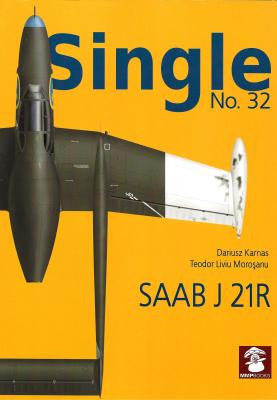
SAAB J 21RPublished:
This is volume thirty-two in the Single series. This is a thin book with no text other than photo captions. The book contains very nice 1/72 and 1/48 scale drawings, B&W photos of various details and pages from the manuals showing different systems. There are also two color photos of cockpit details. This book covers the jet version of the SAAB J 21A. Sweden took the piston powered J21A and modified it to take the De Havilland Goblin engine. The J21R was one of one two aircraft successfully converted from a piston engine to Jet power. Sixty-four were built and served with the Swedish AF. The biggest drawback was the limited range on internal tanks of 280 miles. This is a… more |
|
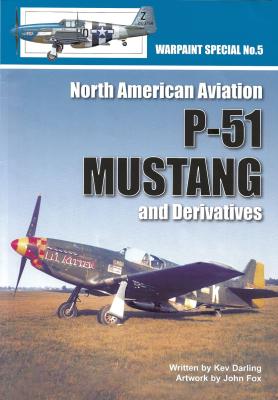
NAA P-51 Mustang and DerivativesPublished:
This is volume five in the special series. Warpaint books are well known to the modeler and historian alike and this book follows the same pattern as others in the series. The book is divided into 15 different chapters. Beginning with design and a look under the skin the first two chapters cover the development of the Mustang from prototype to P-51H as well as a look at structure and various difference between the models such as engine, armament, and other components. The next nine chapters cover the Mustang in WWII, from its beginnings with the RAF and its use in North Africa through all major Army Air Force use. The US Air forces covered are the 8th (longest chapter at 16 pages. Followed by the 12th,15th,7th,5th,10th… more |
|
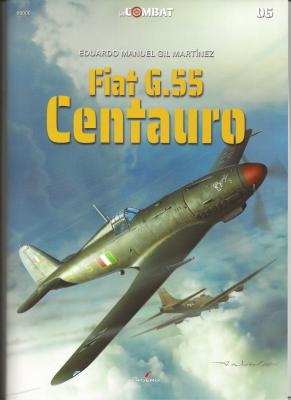
Fiat G.55 CentauroPublished:
This book covers the Fiat G.55 from WWII to its post war service. At first glance the book is reminiscent of the Ali d’Italia series being roughly the same size and length but with the entire printed portion in English. The first 62 pages of this book covers the development and use in combat of the G.55 by both the regia Aeronautica, ANR and the Luftwaffe. An interesting story of the one G.55 to appear in British markings is also covered. This aircraft was flown by a defector who also was transporting an escaping OSS agent out. One of the best sections in my opinion covers the post war use of the G.55. The post war Italian AF as well as those of Syria, Egypt and Argentina all used the G.55 and this is the first English language volume I have seen that has detailed this… more |