
Dave Morrissette
Reviews By Author
|
BOAC Mosquito PR IV G-AGFV (DZ411) DecalsPublished:
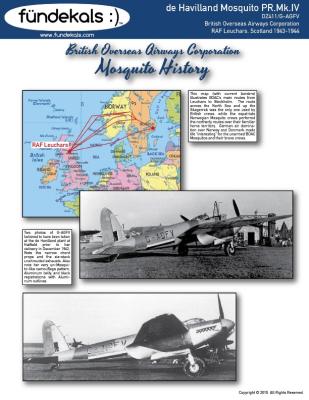
Fundekals is a newer company but the people behind them have been around the modeling scene for years. And they have a new business model. They are aware of the cost of decals and the current trend to have dozens of markings. They have decided on (mostly) one set of markings per sheet and a onetime printing and generally will not include things like national markings. And they do not include the instructions sheets which are downloadable from their web site in PDF form. And, that’s a good thing which you will see in a minute. The subject of this sheet is the Mosquito PR.IV which had regular flights between Scotland and Stockholm between 1943 and 1945. This was a dangerous flight as it went over occupied Norway. The British Overseas Airways Corporation (BOAC) started running… more |
|||||||||||||||
|
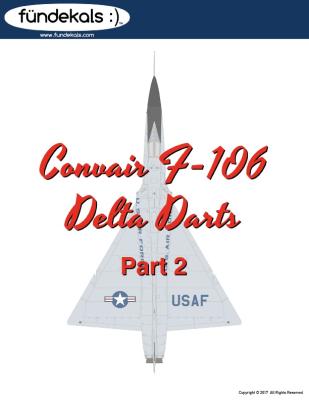
Convair F-106 Delta Dart Part 2 DecalsPublished:
Fundekals is a newer company but the people behind them have been around the modeling scene for years. And they have a new business model. They are aware of the cost of decals and the current trend to have dozens of markings. They have decided on (mostly) one set of markings per sheet and a one-time printing and generally will not include things like national markings. And they do not include the instructions sheets which are downloadable from their web site in PDF form. And, that’s a good thing which you will see in a minute. This sheet actually covers five sets of markings. Due to the size of the sheet, it makes sense to include five markings especially with no national markings on the sheet, just the markings specific to that plane. The five planes covered are:
|
|||||||||||||||
|
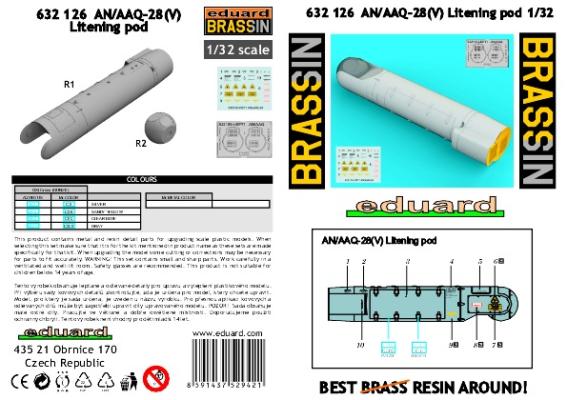
AN/ AAQ-28(V) Litening PodPublished:
Per Wikipedia, the AN/AAQ-28(V) LITENING targeting pod is an advanced precision targeting pod system currently operational with a wide variety of aircraft worldwide. The targeting pod contains a high-resolution, forward-looking infrared (FLIR) sensor that displays an infrared image of the target to the aircrew. It has a wide field of view search capability and a narrow field of view acquisition/targeting capability of battlefield-sized targets. The pod also contains a CCD camera used to obtain target imagery in… more |
|||||||||||||||
|
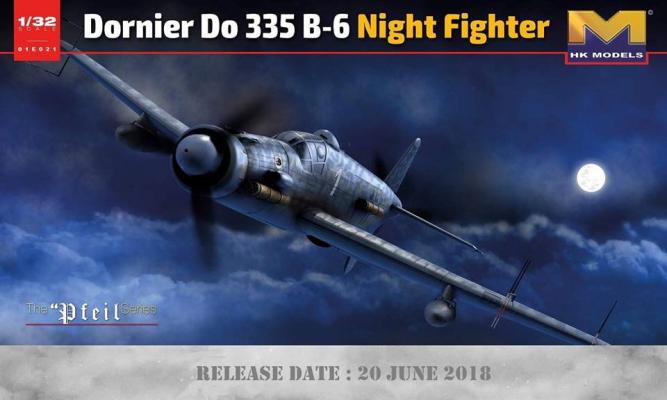
Dornier D0-335 B-6 Pfeil Night FighterPublished:
HK Models has released a 1/32nd scale D0-335 A and B single seat versions of the Pfeil and continues their 1/32nd scale DO-335 releases with this variant, the B-6 Night Fighter. The B-6 was a two-seat version and included radar for use in night fighting American bombers. This was a proposed variant and never built. HK has taken their initial kit and added a second cockpit and the needed radar antennas along with all the existing detail. Assembly starts with the interior. I would say cockpit but that is not all you get with this kit. You get everything from the front engine, cockpit, fuel tanks, radar operators cockpit and the rear engine. This includes the bomb bay and the front wheel well. Color call outs are included everywhere. The molding of the kit is first class- slide… more |
|||||||||||||||
|
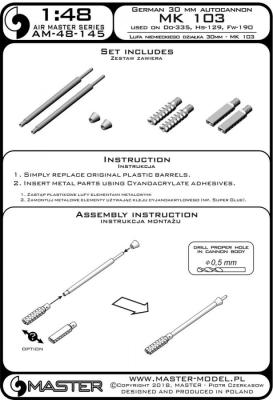
Mk. 103 German 30mm Cannon Detail SetsPublished:
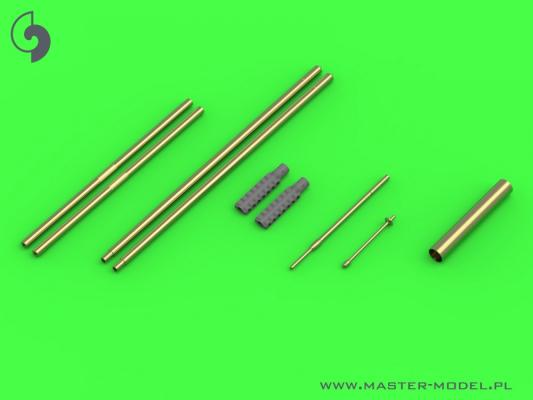
Master Models has released another great set, this I a barrel and muzzle set for the German Mk. 103 30mm cannon used in WWII. It was used primarily for “tank-busting” but could be used in air to air situation also. It was used on the following planes:
The Henschel HS-129 was the primary user and already having the great Hasegawa kit, I jumped at the chance to review the set. In the package, you receive… more |
|||||||||||||||
|
Do335 A & B-2 Detail SetsPublished:
Master Models of Poland has issued two sets of upgrade sets for the two currently released 1/32 scale D0-335 kits from HK Models. Set 32107 is specifically made for the D0-335A and includes the blast tube for the nose cannon, top mounted MG151 machine gun barrels, pitot tube and the IFF FuG 25A antennae which is not included in the kit. Set 32108 is for the B-2 heavy armament version and includes all of the 32107 set plus two barrels and muzzles for the wing mounted cannons.
|