

Chris Smith
Reviews By Author
|
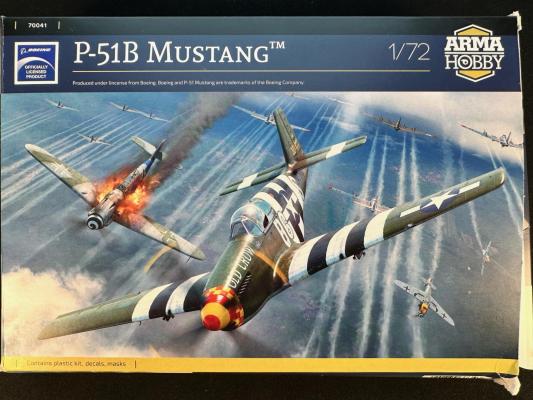
P-51B MustangPublished:
I know what you’re thinking, does the world need another P-51 Mustang model? In the case of the ARMA P-51B kit the answer is YES! If you love the Mustang like I do, you must build one of these kits. ARMA has created detail fidelity in this scale that I’ve not seen in scales much larger. The cockpit is a model in itself and includes decals for all the placards. Capping it are standard canopy and Malcom hoods that allow open or closed positions and the rails for Malcolm hood are included, a feature no P-51B model I'm aware of has ever done. Decals options are provided for four aircraft including “Old Crow” one of Clarence “Bud” Andersons early Mustangs. One additional scheme is provided in the instructions for Captain John Pugh's “Geronimo”, with a checked nose that was later… more |
|
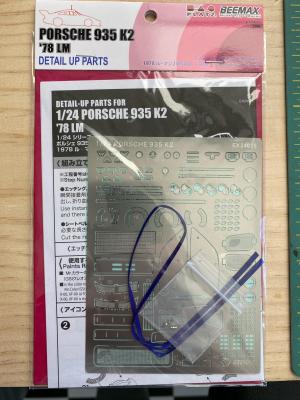
Detail Up Parts for Beemax Porsche 935 K2 ’78 Le MansPublished:
This set provides upgrades to the Porsche 935 K2 78 LM kit # BX24025 from Beemax. It includes a steel fret of metal parts including screens, wing and air deflectors, window straps and clips, seat belt hardware, brake rotor faces, fuel and oil flaps, windshield wiper and panel hold down pins. A strip of fabric for seat harnesses and turned metal ferules for jack connector and antenna, complete with antenna wire, round out the package. Instructions show you where these parts add to or replace kit parts. The metal parts do not have connection points to clean up but be… more |
|
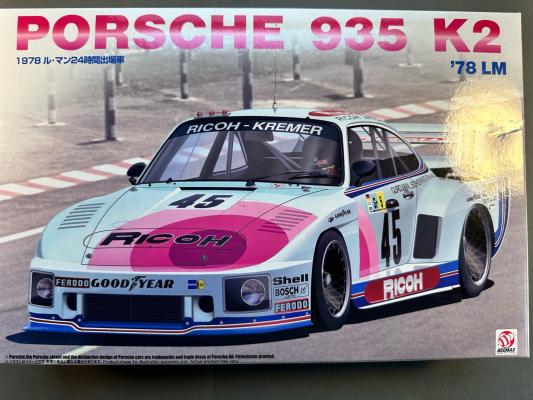
Porsche 935 K2 ’78 Le MansPublished:
A presence on the racing scene from 1976 to 1981 when FIA rules changes finished their run, the Porsche 935 series of race cars won about a third of the all the races they entered. This car, a 935 K2 series fielded by the Porsche-Kremer racing team ran the 1978 Le Mans race finishing 25th. Kremer would go on to win Le Mans in 1979 with a 935 K3. These cars were powered by flat six 3 to 3.3 liter twin turbo charged engines producing over 700 hp. Based on the 911 body, numerous aerodynamic improvements made these cars serious contenders. The Beemax kit is a reissue of a Platz kit. The parts are molded in black, white, clear and chrome. Masks are provided for the glass as are rubber tires and mesh for the rear wing vents. Two styles of wheels are provided as are the brake vent… more |
|
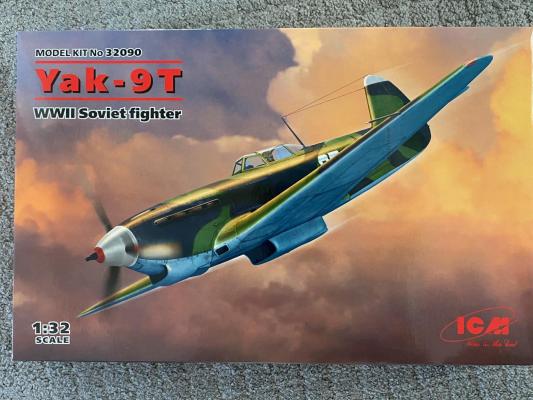
Yak 9T WWII Soviet FighterPublished:
The Yakovlev series are considered by many the best of the Soviet fighters of WWII. It was the equal of its opponents and generally carried a mixed cannon/machine gun armament. Yakovlev believed he could fit the recently developed NS 37 cannon to make the YAK 9 a tank killer. Designated the Yak9T for tyazhelowoonuzhenny or “heavily armed”, fitting of this weapon required some changes to the standard Yak 9. The cockpit was moved back about a foot and structural integrity was increased. Surprisingly, these changes didn’t reduce the aircrafts performance. This cannon was supplemented by a single 12.7mm machine gun. Both guns were housed in the engine cowling. Introduced during the battle of Kursk in 1943, the Yak9T became a favorite with the pilots who flew it. It was found that higher… more |
|
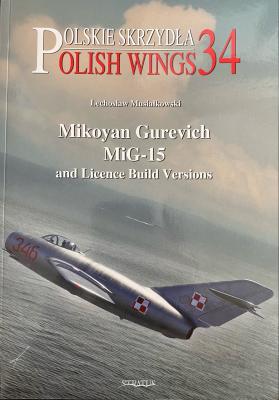
Polish Wings #34, Mikoyan Gurevich Mig-15 and License Build VersionsPublished:
it’s a good time for fans of reference books. Since the collapse of the Iron Curtain, many former Soviet Pact countries are flooding the market with detailed new sources aimed right at the modeling community. This volume focuses on the Mig 15 in service with the Polish Air Force. Each of the seven variants, which are defined by foreign or domestic manufacture, are covered. The first two sections cover the Soviet manufactured Migs, the Mig 15 and Mig 15bis (improved). In between the end of the Soviet built examples and the Polish built series were the S102s manufactured in Czechoslovakia. The Migs built in Poland were part of the Lim series which translated meant “License Fighter”. In all, four Lim series were built. Each section follows the same format of a description of the… more |
|
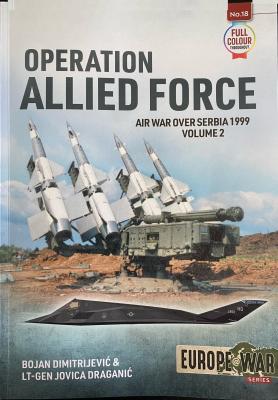
Operation Allied Force, Air War over Serbia 1999 Volume 2Published:
In the spring of 1999, NATO intervened in a conflict in Serbia. This effort called Operation Allied Force (OAF) was undertaken to stop what the NATO nations said was systemic ethnic cleaning by Serbian forces of the Albanian population in Kosovo directed by Serbian President, Slobodan Milosevic. Several books have been written about this intervention, but they tend to favor the NATO side of the story. This volume is an attempt to tell both sides of the story. It written by two Serbians, one a historian with high level government experience and the other commanded a missile defense unit for Serbia during OAF. Make no mistake, OAF was a remarkable military achievement. Fought solely from the air, NATO air forces with the United States in the lead, forced the eventually surrender of… more |
|
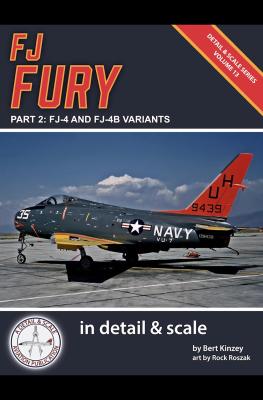
FJ Fury Part 2:FJ-4 and FJ-4B VariantsPublished:
After a near decade long hiatus, the Detail and Scale series is back up and producing modeler focused references for some of our favorite aircraft subjects. In this volume, number 13 in the new series, the authors follow up volume 12 by completing their examination of the FJ Fury series of Naval fighter aircraft. The book opens with an introduction to Burt Kinzey and Richard “Rock” Roszak. I found these bios helpful since I missed collecting the original series having taken a modeling hiatus of my own. A recap of volume one backfills what the reader missed if they don’t have volume 12. The focus of this volume is primarily the FJ-4 and FJ-4B with brief coverage of the FJ-4F. A history of development and employment of each type follows. Color profiles done by Mr. Roszak highlight colors… more |
|
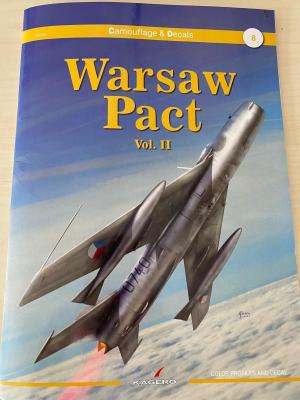
Camouflage & Decals #8, Warsaw Pact Vol IIPublished:
For the visually inspired, this is the perfect format. This volume is 40 pages of color renderings of six different Mig fighter versions, 15,17,19,21,23 and 29. Each type has one four-view layout to assist with camo patterns where applicable. The renderings are very well done with a slightly worn appearance to them. As the series title indicates, a small decal sheet is included with national markings for Polish, East German or Czechoslovakian Mig 15 or 17s in 1/72 or 1/48 scales. These have a very glossy appearance I’ve encountered with decals from Eastern European manufacturers before, so I tested them on a scrap part. You'll have to be very careful where you use these. Even with aggressive decal solvents, they didn’t want to settle into panel lines. They worked on a smooth surface… more |
|
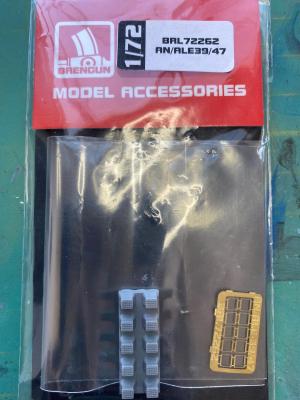
AN/ALE 39/47 Chaff/Flare DispensersPublished:
Bregun has provided a better option for the flare dispensers that are either blanked off or poorly represented on most kits in this scale. The AN/ALE 39/47 dispenser system is used on the F-16, F-18 as well as some helicopters and transports. The real system can accommodate mixed decoys in the same pack. These are programable, to release in predetermined or automatic order. Brengun duplicates the canister boxes in resin and the frame of the mounting boxes in PE. The canisters are molded fully loaded with 30 decoys. Installation consists of opening a 4x9mm hole for the resin parts. The PE frames fit precisely over the canisters. The resin is typical of Brengun meaning it's easy to work with. The cut outs need to be very precise since the PE frames won’t cover any overcut. While not an… more |
|
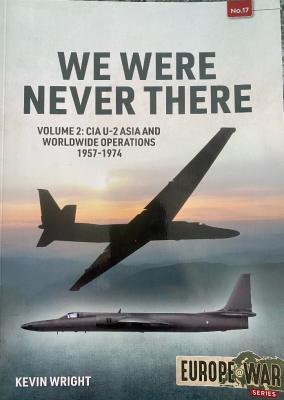
We Were Never There, Volume 2: CIA U-2 Asia and Worldwide Operations 1957-1974Published:
In this volume, Kevin Wright picks up where we left off in Volume one (CIA U-2 Operations over Europe, the USSR and the Middle East, 1956-1960). You can read that review on this website. After the shootdown and public humiliation of the United States, western European allies became reluctant to continue supporting U-2 operations. In response the CIA turned its attention to the other emerging super power, China. Much like they had enlisted and trained British pilots the CIA now began a campaign to prepare Taiwanese aircrew to operate the U-2. The initial operations focused on determining if the Chinese were staging military forces to invade their Island. Once it was determined that the threat wasn’t immediate, deeper overflights with a strategic purpose of tracking Chinas nuclear… more |