

Chris Smith
Reviews By Author
|
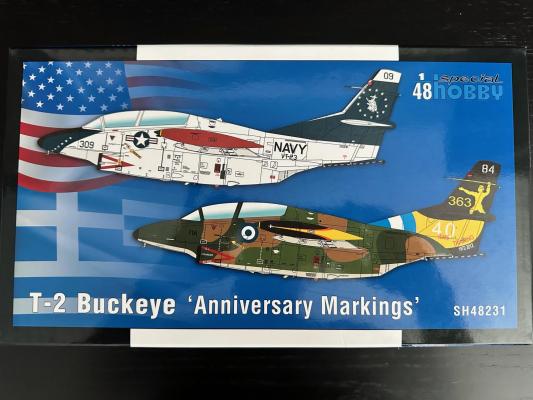
T-2 Buckeye "Anniversary Markings"Published:
This is a re-boxing of the Two Bobs kit first released in 2009. Special Hobby has since issued three versions. In this the “Anniversary Markings”, version we get a US Navy bird celebrating the American Bicentennial and a Greek AF, T-2 marked to commemorate 40 years of service with that organization. The T-2 first flew in 1958 and was the backbone of the Navies jet training syllabus till its replacement in 2008. The Hellenic or Greek AF received a total of 40 T-2Es and is just now in the process of phasing the last out of service. Venezuela also used this venerable trainer. In total 609 were built giving thousands of military aviators their first experience of jet flight. In this boxing comes a combination of injected plastic (including canopy), cast resin, color photoetch, canopy… more |
|
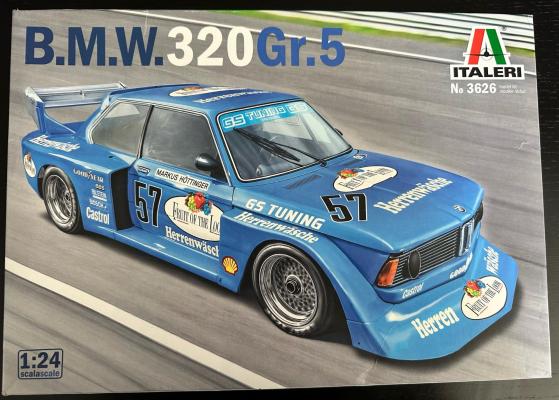
B.M.W. 320 Group 5Published:
Italeri offers us a reissue of a kit first released in 1977 by ESCI. The B.M.W. 320 ran in a new group 5 class introduced in 1976. Regarded by driving enthusiasts as one of the best cars ever made, the three series was a natural for conversion to racing. Group five rules allowed wider body width which in turn allowed wider tires. This car ran a two-liter turbo charged engine making 300 horsepower. In this boxing you get the number 57 car driven by Markus Hottinger at the Deutsche Rennsport Meisterschaft (DRM) Norisring circuit, Nuremberg in 1978. Molded in nearly the correct color are 44 parts for the body and chassis. A chrome sprue includes the wheels and grille center. Clear parts represent the glass all in one piece and the tail-lights. Four racing slicks and a nice decal… more |
|
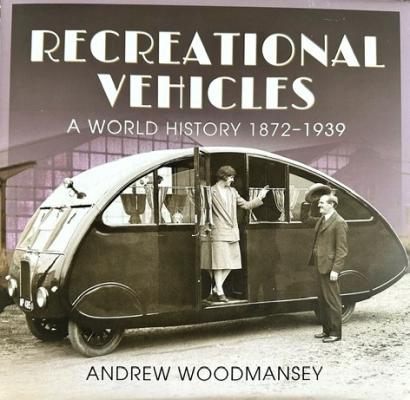
Recreational Vehicles, A World History 1872-1939Published:
A good book takes you to places you’ve never been and opens your perspective in ways you might never have considered. This book does just that with an object so ubiquitous that we don’t really notice them, the recreational vehicle or RV. Andrew Woodmansey has written a book that takes us on a worldwide historical journey tracing the origin and development of these vehicles. A Recreational Vehicle is defined in this book as “a road vehicle that contains sleeping facilities and is used for leisure”. As the author points out, human beings are at our core wanderers. The industrial revolution tied people to living close to their work, but it also eventually provided the leisure time and money to venture away from home. While that consisted of pitching a tent at first, the desire to… more |
|
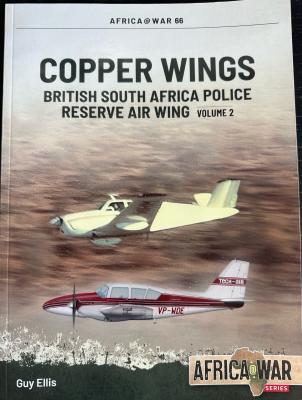
Copper Wings, British South Africa Police Reserve Air Wing, Volume 2Published:
In volume one we followed the exploits of the Police Reserve Air Wings (PRAW) operating in Rhodesia from 1967 to the last 1970s. These units supported the Rhodesian police by providing air support in countering resistance units that were attempting to force independence from British control. Although that goal was achieved in 1980, PRAW operated until the early 2000s. This volume covers PRAW operations from the mid 1970s till they ceased operations. Like the first volume, the story is told in words and pictures that included excerpts from “The Outpost Magazine”, a journal published by PRAW. As the fighting grew more intense, so did the level of weaponry carried by PRAW aircraft. This escalation is advertised on the cover photo showing a Beech Bonanza with gun pods, and inside Cessna… more |
|
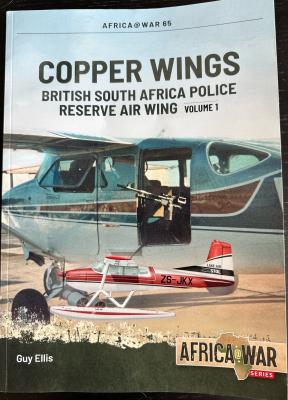
Copper Wings, British South Africa Police Reserve Air Wing, Volume 1Published:
I was attracted to this volume because I'm a private pilot and have flown several of the aircraft types in this book. The story is set in Colonial South Africa, Rhodesia (now Botswana), to be exact. Like many of the British Colonial territories after WWII, the native populations began to demand independence from the Commonwealth. The methods employed to achieve this goal created conflict that was deadly at times. The Rhodesian Police couldn’t operate over the vast area it covered without air support. Lacking the money to purchase aircraft and maintain a cadre of pilots, they turned to the local population recruiting local pilots and their privately owned aircraft. From 1967 to 2000 these units called the Police Air Reserve Wings or PRAW preformed that mission. The fleet of… more |
|
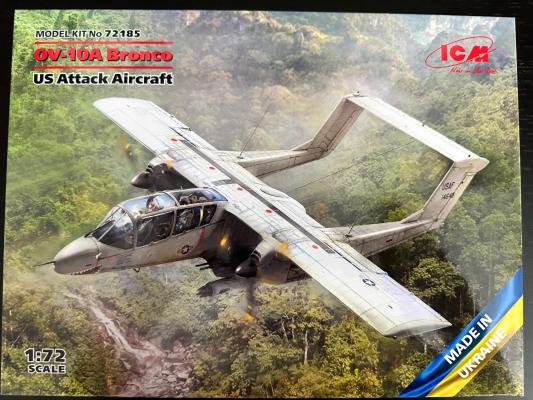
OV-10A BroncoPublished:
Originating from a USMC requirement for a close support aircraft, The OV10-A, a North American Aviation design, won a production contract in 1964. Performance highlights included short takeoff using a high-lift wing configuration and trailing beam landing gear to allow rough field operations. The central boom could hold paratroopers while sponsons carried 4 machine guns and hard points for weapons and a fuel tank. The operational version had 10 feet added to the wingspan. The cockpit canopy featured bulged side panels to allow downward vision to the pilot and observer. These aircraft were used in the Forward Air Control (FAC) role in Southeast Asia all the way through the war in Iraq. In 1995 the last Broncos were retired by the USMC. This kit is a new tool in 1/72 scale. It's… more |
|
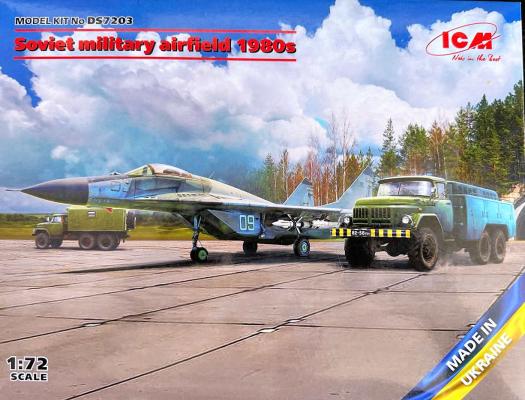
Soviet Military Airfield 1980sPublished:
It's not hard (at least not for me), to remember when anything related to Soviet military equipment and operations was a mystery in the west. Not until the cold war Soviet Union fell apart in the 1980s did, we get a good look at what the Soviets had been up to. This set from ICM give us the basics needed to portray what we might have seen behind the “Iron Curtain”. This kit includes two ZiL-131 utility trucks, a Mig 29 9-13 variant and 32 PAG-14 prefab airfield paving plates to create a base. Everything is packed in ICMs typical rigid cardboard box with a full color sleeve. Inside are four separate bags of parts all molded in the soft grey plastic ICM seems to use on all their products. The instructions come in a glossy color folder but two of the three are small black and… more |
|
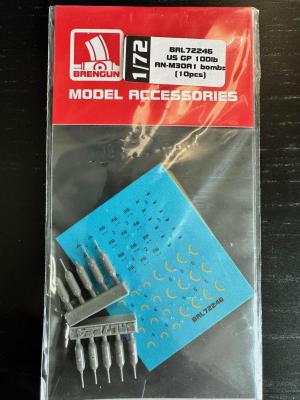
US GP 100lb AN-M30A1 Bombs (10pcs)Published:
This set from Brengun provides parts to build ten 100lb bombs. Each bomb consists of a resin main body and four photoetched parts to represent the fins and the fuse arming prop on the nose. Separating the bombs from the pour gates is quickly done as they have a pouring extension on the front and are attached to a runner of five at the back. Attaching the fin assemblies requires removing three parts from the photoetch fret. These parts are done in brass and are not only thin, but easy to cut off and clean up. The fin assembly requires the builder to cut a cross hatched slot on the back of each resin bomb. The instructions suggest using a knife, but I found it easier to use a very thin saw blade. Interlocking fin legs are inserted into the slot and a fin “box” is formed by folding the PE… more |
|
US WWII 110 Gallon Fuel TankPublished:
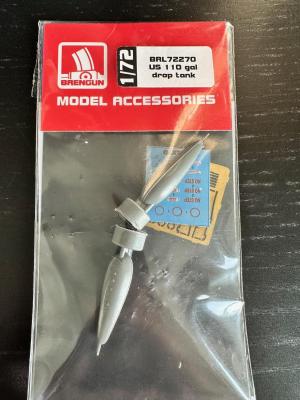
As the US Army Air Forces P-51 escorts ventured farther over Japan they required more fuel. Enter the 110 gallon drop tank. Similar in design to the 96-gallon tanks formed from stamped aluminum halves pinch joined at the seams, these larger tanks now held 660 lbs. of fuel. The sway braces used on the standard pylons were not up to the task. Fixing this problem took the form of plywood braces cross tied over the tank to each other. To keep the tanks hanging in the direction of gravity, the height of each was cut to account for dihedral of the aircraft’s wings. Brengun has duplicated this system in this kit. Resin cast tanks are detailed with photoetch parts and decals are provided for the stencils. Assembly starts with separating the resin pour stubs from the tanks. This will… more |
|
Vickers 1911-77Published:
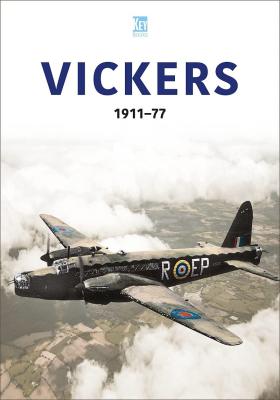
Anyone familiar with the Vickers name knows how critical their contribution to British industry has been. Starting in 1828 as a steel producer, the company diversified into arms, ships, railroad stock and aircraft. The aviation arm of the company got its start by building rigid airships and blimps. This experience not only gave them experience in building these types of structure, it also brought them Barnes Wallis as one of their designers. At the same time, they introduced the R.E.P. Type monoplane. This single seater had a steel tube frame and was used as the base trainer for a flying school Vickers opened. During the first World War, the “Gun Bus” series of pusher powered fighters were designed and built as well as the first multiengine military aircraft in the world, the E.F.B. 7… more |