

Andy Taylor
Reviews By Author
|
F-104G J-79 Exhaust NozzlesPublished:
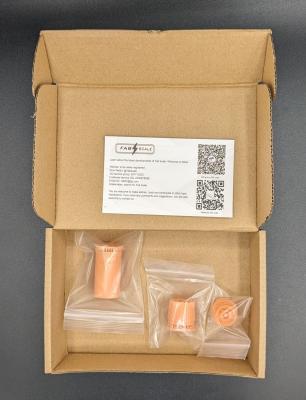
These J-79 Exhaust Nozzles (for the Kinetic Kit No. 48083 primarily, and K48090 and K48093, and most likely any F-104 Starfighter that utilized the J-79 General Electric axial-flow turbojet engine) are a recent release by Chinese manufacturer Fab Scale. Fab Scale’s online presence is hard to find with the provided QR codes stating that the site can’t be reached). The same is for the supplier, Warspite Model Company. It is a shame as this three-piece exhaust nozzle set is exquisite! The sturdy box protects the three pieces, each in their own protective Ziplock pouch. The instructions are the box art which shows the arrangement of the three parts. Removal of the 3D supports with a razor saw is easy and, after a quick wash, ready for assembly. The photos show the amazing… more |
|
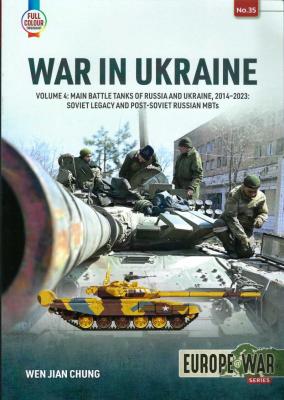
War in Ukraine, Volume 4: Main Battle Tanks of Russia and Ukraine, 2014-2023 — Soviet Legacy and Post-Soviet Russian MBTsPublished:
This is the fourth book in the War in Ukraine series (currently at five volumes). The first two volumes were reviewed by Orlando Reyes of the IPMS/USA Review Corps:
|

|
Into the Endless Mist Volume 1: The Aleutian Campaign, June-August 1942Published:
“In far Alaska’s icy spray, I stand beside my binnacle |

|
Carnation Revolution Volume 1: The Road to the Coup that Changed Portugal, 1974Published:
This is the second book about Portuguese forces that I have read, authored by José Augusto Matos (he co-authored Sanctuary Lost, Portugal’s Air War for Guinea 1961-1974, Volume 1, with Matthew M. Hurley). Having read both books, I now better understand the author’s style and attention to detail. This is Zelia Oliveira’s first book in the series. As the title states, this book is the road to the Portuguese Coup of 1974 and covers primarily the period from 1961 to 12 March 1974 in amazing detail (there are… more |
|
German Tank ToolsPublished:
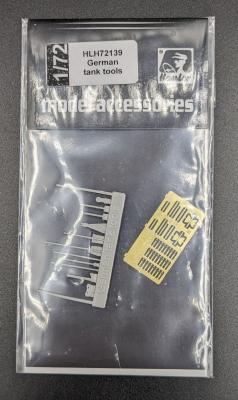
Tools are ubiquitous with armored vehicles, especially tanks. For those braille scale modelers who wish to have separate tools and brackets, this is the set for you for to replace the molded-on tools that come on a majority of the German armor models. The tools are very tiny and well detailed.The instructions are simple, which is great as this set is an eye exam and will test your patience as you assemble the PE. Fortunately, Hauler recognizes the very real carpet monster and provides extra PE parts.Once assembled, the following PE parts become spares:
|
|
Liberation of Nazi Concentration CampsPublished:
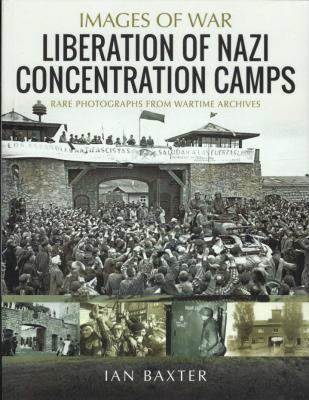
Ian Baxter has done it again. Not only is he an amazing, captivating author, he once more approached a very difficult topic, and did it well, presenting the horrifying facts in a manner that honors the dead, but doesn’t sugar coat it. This book follows the familiar Images of War format with brief introductions for each chapter followed by a lot of photographs to complement his topics. Between the covers of this (9.6”x7.4”) paperback book are 144 pages, with over 250 black and white photographs, and two very detailed appendices, is the story of the Liberation of Nazi Concentration Camps during 1944 and 1945. It is composed of the following:
|
|
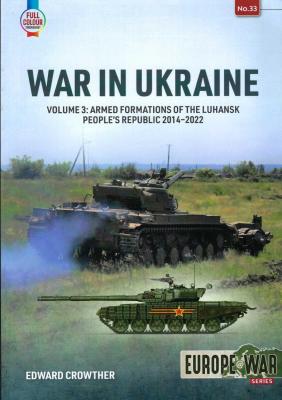
War in Ukraine, Volume 3: Armed formations of the Luhansk People’s Republic 2014–2022Published:
This is the third book in the War in Ukraine series (currently at five volumes). The previous two volumes were reviewed by Orlando Reyes of the IPMS/USA Review Corps: |
|
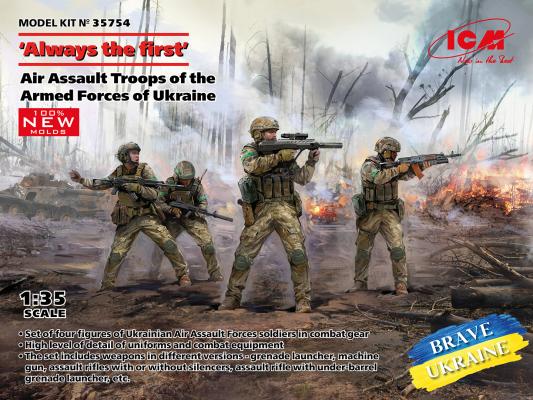
"Always the First" - Air Assault Troops of the Armed Forces of UkrainePublished:
Reference from the ICM website:
|

|
The Soviet Infantryman on the Eastern FrontPublished:
Having just reviewed the previous book in the Casemate Illustrated Series (No. 37 – The German Infantryman on the Eastern Front), I expected this book to follow the same format. While the outline of the book and its chapters are the same, the content differs vastly, and in a good way, especially for modelers. This book has a lot more focus on the Soviet Infantryman through re-enactor photographs focusing on uniforms and weapons, and more personal Soviet infantrymen accounts. From the book’s conclusion,
|

|
The German Infantryman on the Eastern FrontPublished:
From the book’s conclusion,
|