

Andy Taylor
Reviews By Author
|
Real WeatheringPublished:
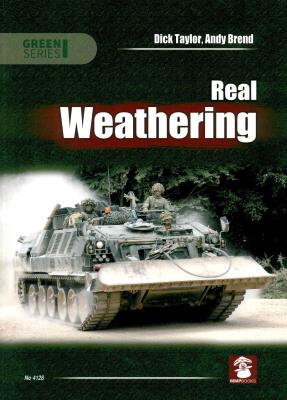
Do modelers really need another book on weathering models? The authors defend their position in the opening paragraph of the book, “This is a book about weathering and designed with one audience in mind – the military modeler. To be sure, there are many books concerned with weathering military models available, but they all concentrate on weathering techniques – pre-shading, washes, pin-washes, dry-brushing, hairspray, you name it, it has a name and technique. This book is different; it does not tell the modeler how to achieve a particular finish. Rather, it is a reference book showing a range of real military vehicles and their components in real military environments.” The authors go on to explain their methodology why the book focuses primarily on modern… more |
|
Chasing the Soft Underbelly - Turkey and the Second World WarPublished:
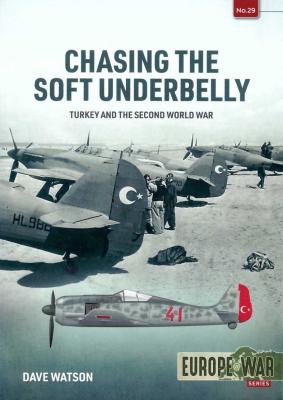
Chasing the Soft Underbelly - Turkey and the Second World War is an amazing, detailed and concise (for the breadth of history covered) book on Turkey’s involvement in World War II, its involvement in the Balkans, its neighboring countries, and the aftermath of World War I that saw the dissolution of the Ottoman Empire. While this is not an easy book to digest if you don’t have any background with Turkey, the Balkans, or the principal players (especially the non- historically relatable Turkish leaders), it is well worth the time and money invested. It will fill in a lot of previously known factors of Turkey and its neighbors in the critical 20th Century. Turkey (officially the Republic of Türkiye) is a transcontinental country of strategic importance located mainly on the… more |
|
Sappers of the Armed Forces of UkrainePublished:
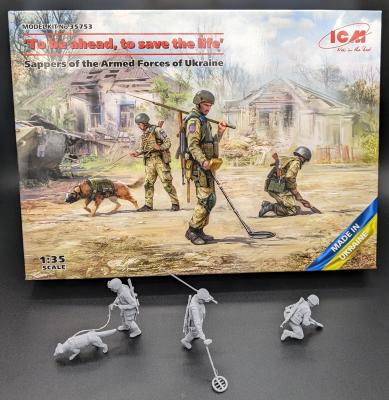
ICM continues to announce new models despite the ongoing Russian initiated war in Ukraine. While most subjects released by ICM are welcome, the current conflict subjects are even more relevant and welcome. When anything military engineer-related hits the market, I am intrigued; this kit is a double hit for me. Unexploded munitions, Improvised Explosive Devices (IEDs), booby traps and mines are hallmarks of modern warfare. Breaching obstacles and cleaning up battlefields often fall to sappers and combat engineers. This fantastic ICM kit begs to be opened upon arrival. Upon opening the colorful lid and cover of the typical sturdy ICM box, there is a reinforced white inner box that does a good job of protecting the single sprue containing the three Sapper figures and dog, along… more |

|
Revolución Libertadora, Volume 2 - The 1955 Coup that Overthrew President PerónPublished:
Revolución Libertadora, Volume 2 - The 1955 Coup that Overthrew President Perón picks up where the previous book, Revolución Libertadora, Volume 1: The 1955 Coup D’état in Argentina, abruptly left off (see the previous review here for details). Author Antonio Luis Sapienza writes in the Introduction -
|
|
WWII German 5 Litre Oil Cans (6pcs)Published:
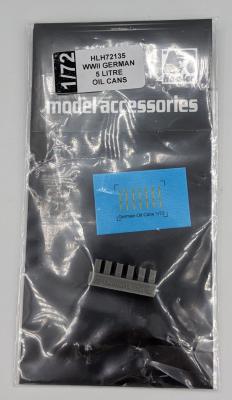
POL (Petroleum, Oil, and Lubricant) containers are ubiquitous on military vehicles in the field. Now braille scale German WW II ground vehicle models can have 5 liter oil cans in their scale. This is a new release by Hauler that joins their 1/35 and 1/48 scale brethren. These are tiny but very well-detailed. Manufactured by Jan Sobotka, this package comes with one pour block (1” long), this outstanding set comes with six oil cans beautifully cast in resin and six decals, one for each can. This oil can set will bring your German vehicle to the next level. As you can see from the photos, the accessory set is well-detailed and should take very little cleanup to prepare the parts for your model. There is a simple instruction sheet included, that notes the color of the can… more |
|
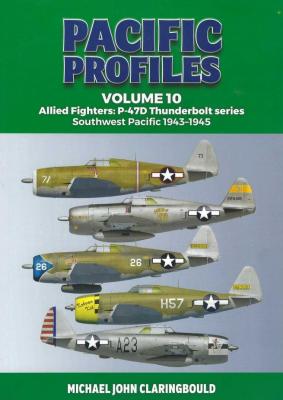
P-47D Thunderbolt Series Southwest Pacific 1943-1945Published:
This is a quote from 248th Sentai commander, Major Muraoka Shinichi after aerial combat when eight Ki-43-II Hayabusa fought against 16 P-47Ds from the 36th Fighter Squadron on 26 December 1943; two P-47Ds were shot down with no loss to the Japanese. Author Michael Claringbould writes an… more |
|
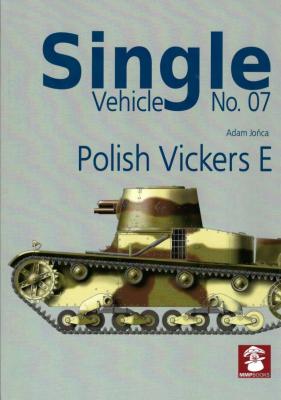
Polish Vickers E – Single Vehicle No. 07Published:
This is the seventh book in the MMP Books Single Vehicle Series (as it is a Polish company, it isn’t surprising that three books are dedicated to Polish vehicles, 7TP single and twin-turret and Vickers E), two vehicles operated by Polish forces (SU-76M and T-72M1), and Type 5 Ha- Gō). The Single Vehicle series are short books, between 24 and 28 pages, and focus on that vehicle. This is not a book for someone wanting to read about the operational history, employment, etc. as the writing is limited to well detailed captions. Poland was one country that purchased the Vickers 6-ton tank, also known as the Vickers Mark E, British light tank. While the tank was not adopted by the British army, it found use in a handful of countries in the interwar and early WWII period. In the Polish… more |
|
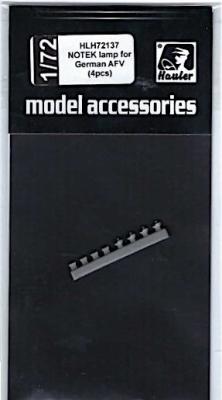
NOTEK Lamp for German AFVPublished:
Notek lights were blackout drive lights used by German military vehicles in WWII. They were named after the Munich-based company that produced them, Nova-Technik GmbH. The unit consisted of a 35-watt bulb under the hooded housing that shined backward against a mirror. The reflected light illuminated the ground ahead of the vehicle from under the helmet-like hood. The Notek light illuminated the road to about 100 to 130 feet ahead of the vehicle in a roughly 80-foot swath and had three settings: dim (invisible from the air above 2,000ft), medium, and full (invisible from the air above 6,400ft). Thanks to Hauler, modelers now have a beautifully detailed aftermarket resin casting for their braille scale German WWII vehicles. This outstanding set comes with four lamps,… more |
|
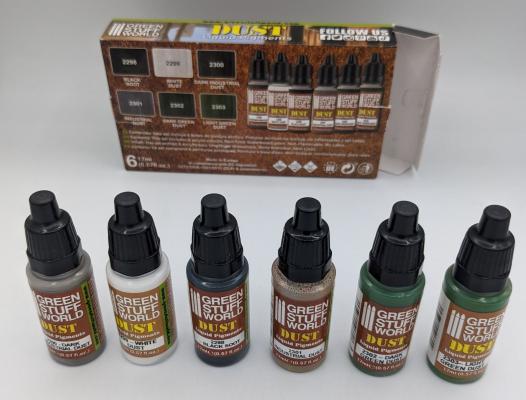
World Dust Liquid Pigments SetPublished:
Green Stuff World is a Spanish company that supplies paints, weathering products, and scenery effects. They are among the newest hobby companies to provide IPMS/USA review samples. As such, I was eager to use and review this new product. According to the Green Stuff World website, the liquid pigment sets (Earth, Rust and Dust) were “especially designed to create weathering effects similar to those achieved through powdered pigments, but have the benefit of not needing a pigment fixer to bind them.” Instructions to use the liquid pigments are on their webpage and YouTube. These pigments can be used both by brush and airbrush, are fast drying in a matt finish, are advertised as non-toxic water-… more |
|
Rotational Paint ShakerPublished:
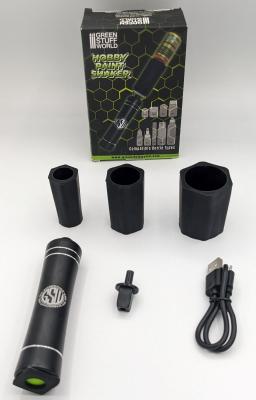
Green Stuff World is a Spanish company that supplies paints, weathering products, and scenery effects. They are among the newest hobby companies to provide IPMS/USA review samples. As I recently visited their webpage and looked at a few items, including their rotational paint shaker that I placed in my shopping cart, when the opportunity came along to review it, I jumped on it and the wonderful Bill O’Malley had it in the mail quickly. According to Green Stuff World’s website,
|