

Andy Taylor
Reviews By Author
|
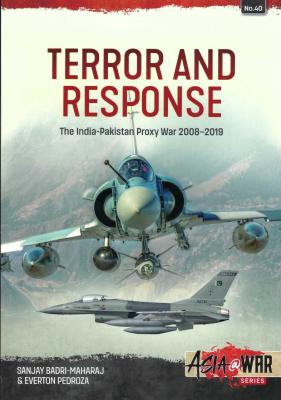
Terror and Response - The India-Pakistan Proxy War 2008-2019Published:
“To call the relationship between India and Pakistan of the early 21st Century “fraught” would be an understatement. Much of this was attributed to religious differences – India being 78-80 percent Hindu and Pakistan being well over 95 percent Muslim – and to differences over the ‘ownership’ of the Kashmir region. However, this was not only simplistic: it was almost entirely wrong; indeed, insulting to the huge Indian-Muslim population, which has been steadfastly loyal to the Indian Republic and its secular Constitution (despite occasional concerns over the attitude of ruling political parties), and thus, an integral part of India’s society.” The author continues, “The issue of Kashmir was always more complex. It was certainly the purported cause as espoused by the… more |
|
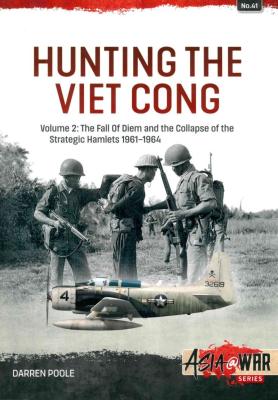
Hunting the Viet Cong, Volume 2: The Fall of Diem and the Collapse of the Strategic Hamlets 1961-1964Published:
This is the second of a two-book series on the American counterinsurgency against the Viet Cong. Here is the review for Hunting the Viet Cong - The Counterinsurgency Campaign in South Vietnam, 1961-1963, Vol 1-The Strategic Hamlet Programme. The second volume examines why the strategy ultimately failed when the Strategic Hamlet Program “seriously hurt and ‘cut up’ the VC”. Dr Darren Poole teaches military… more |
|
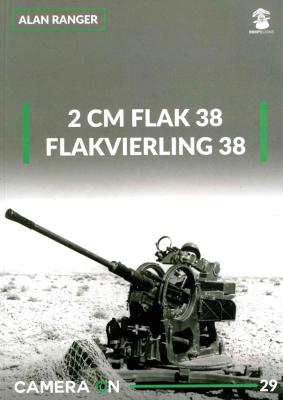
2 cm Flak 38 and Flakvierling 38Published:
Alan Ranger is a former British Royal Engineer, collector of World War II militaria and original period photographs, and prolific author. Alan started his publishing days with Model Art of Japan, this is his 29th book in the Camera On series (he already has another three in production), typically focusing on weapon systems and vehicles. The beauty of this book is the photos were taken by German soldiers during their wartime service, not typically posed and polished propaganda shots. Camera On Number 29 focuses on the World War II German 2cm Flak (short for Flugzeugabwehrkanone) Flak 38 and Flakvierling 38. The Flak 38 20mm anti-aircraft (AA) gun was an improvement on the Flak 28 and 30 (… more |

|
The Armour of Hitler's Allies in Action, 1943–1945Published:
Ian Baxter is a prolific author and has an impressive collection of photographs, many previously unpublished. The book follows the familiar Images of War format with brief introductions for each chapter followed by a lot of photographs to tell the story. While a plethora of books have been written about German armor, Ian’s latest book focuses on Germany’s allies Hungary, Romania and Bulgaria, their armor, and German armor in their formations. The Armour of Hitler's Allies in Action, 1943–1945, is composed of an introduction, four chapters and two appendixes:
|
|
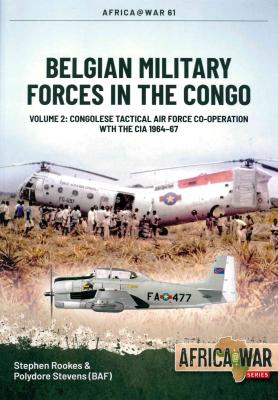
Belgian Military Forces in the Congo, Volume 2 – Congolese Tactical Air Force Co-Operation with the CIA 1964-67Published:
This is the second volume of the Belgian Military Forces in Belgium. The first book, “Belgian Military Forces in the Congo, Volume 1: The Force Publique, 1885-1960”, covered the events of Belgium’s 75 years in their Congo colony, leading to the official withdrawal of Belgian forces. Volume 2 picks up in 1964 after the newly independent Republic of the Congo-Kinshasa’s (later renamed Democratic Republic of the Congo-DRC) brief, bright future was overcome with internal factions, and the independence movement spreading through Africa (with several backed by Marxist forces). While Belgium wanted to remain hands-off, it quickly became apparent that they needed to step in to protect Belgian and Congolese interests. The FATAC (La FATAC Force Tactique – the Congolese Tactical Air Force… more |
|
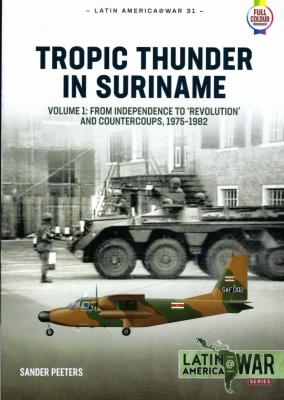
Tropic Thunder in Suriname, Volume 1 - From Independence to 'Revolution' and Countercoups, 1975-1982Published:
The country of Suriname is located on the northeast coast of South America, bordered by Guyana in the west, Brazil to the south, Guyana in the east and Atlantic Ocean to the north, located slightly north of the equator. Suriname is a country of rich natural resources, and the south is sparsely populated with dense rainforests and savannah. The highest peak is 1,280 meters above sea level. Its history dates to the first Arawaks in 7,000-8,000 BC. The Caribs, another Amerindian tribe, invaded in 1,100 AD and drove the Arawaks from their settlements. The war was still ongoing when the first European settlers arrived with the Dutch in 1613. The British and Dutch fought two wars, the result of which was the Treat of Breda in 1667 was the Dutch got to keep Suriname, and the British kept the… more |
|
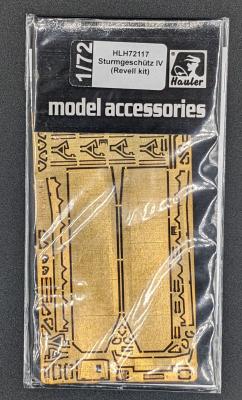
Sturmgeschütz IV PhotoetchPublished:
While the Sturmgeschütz III was Germany's most-produced fully tracked armoured fighting vehicle during World War II, the Sturmgeschütz IV was its very closely related brother in the later part of the war. The Sturmgeschütz IV was the result of Krupp’s effort to meet the requirement for another assault gun variant. For those modelers wishing to add more detail to their braille scale Stug IVs, Czech photo etch (PE) manufacturer Hauler produces an outstanding set for the popular Revell Sturmgeschütz IV kit. Manufactured by Jan Sobotka, this package comes with one fret (4 1/8” x 2 3/16”) that will bring your Sturmgeschütz IV to the next level. As you can see from the photos, the PE set is well etched and should take very little clean up and bending to prepare the parts for… more |
|
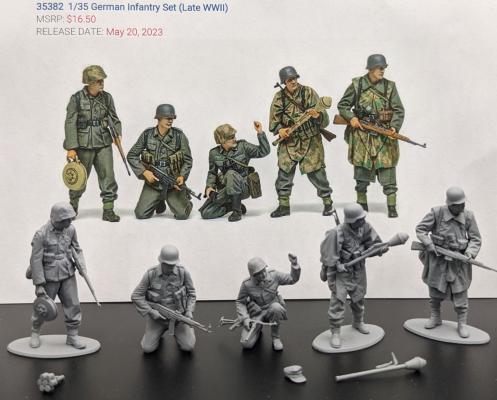
German Infantry Set (Late WWII)Published:
These are not the Tamiya figures of the past! The out of scale, chunky plastic bobs have been replaced with well detailed figures that look the part. I was surprised at the time it took to construct the figures as the bodies are multi-part affairs, with separate heads and headgear, weapons, and gear, to make it easier to paint and detail. A bonus is the decal sheet for the uniforms and Panzerfausts (in both the carry and ready to fire position). To say I am impressed would be an understatement – especially at the price for five figures. Upon opening the usual sturdy Tamiya box, you are greeted with three sprues, decal sheet, instructions, and a Tech Tips flyer. The details are well molded and crisp. The uniforms have indentations for the gear and weapons, so they are not just… more |
|
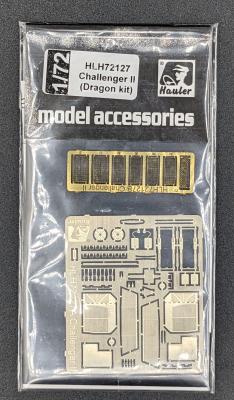
Challenger II (Dragon Kit)Published:
For those modelers wishing to add more detail to their braille scale armor, Czech photo etch (PE) manufacturer Hauler produces an outstanding set for the popular Dragon Challenger 2 kit. Manufactured by Jan Sobotka, this package comes with two frets (9/16”x1 7/8” and 2 ¼”x2”) and will bring your Challenger 2 (FV4034, also abbreviated as the CR2) to the next level. Set HLH72127 has additional detail for the turret, machine gun (seven parts), prominent fuel barrel straps, exhaust covers, excruciatingly small grab handles, and other miscellaneous parts not adequately captured in plastic. If you like extra detail in small scale, this eye and finger dexterity test fits the bill. The PE is closer to scale size than its plastic brethren and will make the model stand out. As… more |

|
Fangs of the Lone Wolf Chechen Tactics in the Russian-Chechen Wars 1994-2009 (Revised Edition)Published:
The Foreword written by Les Grau sums up this book quite well, “’Fangs of the Lone Wolf’ is a unique book. It is not so much a history as an exploration into numerous fights, large and small. There are no epic heroes of impeccable virtue, unsurpassed intellect and athletic invincibility. These are ordinary men who are fighting outnumbered and outgunned against a modern army. They are fighting for their land, family, neighbors, or just out of plain cussedness. This book is their story. It is not about right or wrong and has no political points to make. The war was what it was and this is the story of combatants in that war.” In 1991, Russian President Boris Yeltsin encouraged Soviet people to “grab as much freedom as they can.” As Author Dodge Billingsley wrote, … more |