

Andy Taylor
Reviews By Author
|
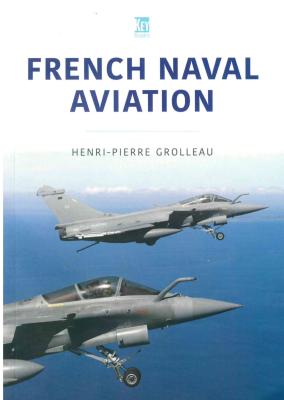
French Naval AviationPublished:
Admiral Eric Janicot, Commander of Aéronautique Navale (French Naval Aviation), summarizes and opens the first chapter of this book with, “France has the second largest maritime domain in the world, after the US, and the country devotes a large amount of resources to ensure that its sovereignty over that domain is fully respected. As part of this policy, France is committed to operating a large naval force from naval bases in continental France and in French overseas territories. In an era of great power competition, tensions have appeared in a number of regions, including the South China Sea, The Persian Gulf, the Eastern Mediterranean Sea and the Gulf of Guinea. All these areas of tensions have one thing in common, the sea. To protect its interests, France routinely… more |
|
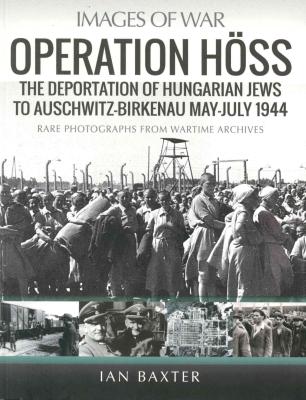
Operation Höss -The Deportation of Hungarian Jews to Auschwitz, May–July 1944Published:
Ian Baxter is a prolific author and has an impressive collection of photographs, many unpublished previously. The book follows the familiar Images of War format with brief introductions for each chapter followed by a lot of photographs to tell the story. After reading Ian’s book on Heinrich Himmler, the Architect of the Holocaust, I wanted to read, and learn more, about the mass deportation of some 438,000 Hungarian Jews. Ian Baxter did not disappoint. He illustrated how the Nazi final solution had become even more efficient and brutal in 1944 after the Hungarian change in government at the behest of the Germans. The Hungarian Jews, who until that time, were temporarily protected, were now open to joining their Jewish neighbors throughout Europe. Operation Höss was named after Rudolph… more |
|
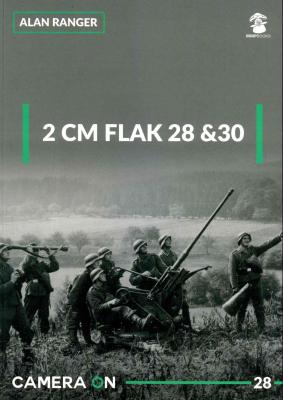
2cm Flak Gun 28 & 30Published:
Alan Ranger is a former British Royal Engineer, engineer, collector of World War II militaria and original period photographs, and prolific author. Alan started his publishing days with Model Art of Japan this is his 28th book in the Camera On series (he already has another four in production), typically focusing on weapon systems and vehicles. The beauty of this book is the photos were taken by German soldiers during their wartime service, not typically posed and polished propaganda shots. Camera On Number 28 focuses on the World War II German 2cm Flak (short for Flugzeugabwehrkanone) 28 & 30. The Flak 28 20mm anti-aircraft (AA) guns was developed just after World War I for the Kriegsmarine and became the primary shipborne light AA weapon. Rheinmetall adapted the gun for… more |
|
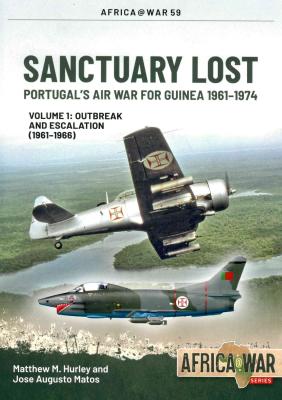
Sanctuary Lost, Portugal's Air War for Guinea 1961-1974, Volume 1Published:
Reviewer’s Comments: “- I also want to go fishing, Uncle Aliu! You cannot, Abdulai, because it’s dangerous. Uncle, I’m not afraid of the crocodiles! You know, now there aren’t just crocodiles, There are also the colonialists who drop bombs on the canoes, [but] I cannot fear the crocodiles or the bombs. This is my mission, as a militant of our Party.” Thus opens the introduction of book, in the aptly named Introduction: Crocodiles and Bombs. Each chapter opens with a great quote that ties in with the chapter name – kudos to the authors for this additional nice touch. This book, while it covers Portugal’s war in Guinea (now Guinea Bissau, and not to be confused… more |
|
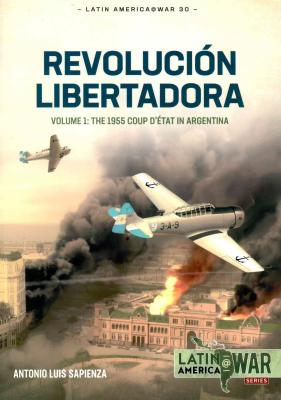
Revolución Libertadora, Volume 1: The 1955 Coup D’état in ArgentinaPublished:
“On Thursday, 15 June 1955, thousands of people as usual were on the streets of downtown Buenos Aires. Some curious citizens had heard something about an air parade, and they were in the Plaza de Mayo looking up at the sky. At around 12:40 p.m., some Naval Aviation North American AT-6, PBY-5A Catalina and Beechcraft AT-11 planes appeared on the horizon, But they were not there for a parade; they were there to simply bomb Government House in an attempted coup against Juan Domingo Perón. This raid left behind more than 300 dead, 600 wounded and dead everywhere. The Army units that should have been mobilized to support the uprising never did. The coup attempt was aborted within a few hours. But unlike the bombing of the city of Guernica in 1937, the planes that bombed and the pilots who… more |
|
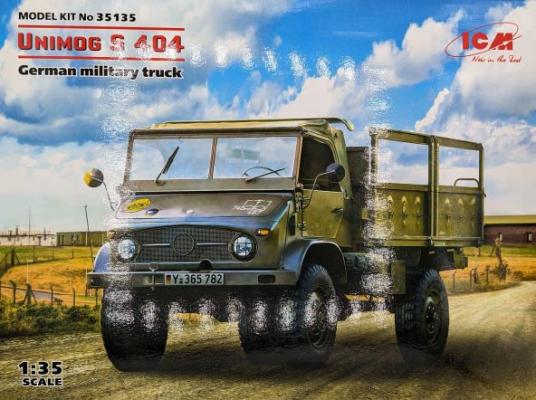
Unimog S 404 German Military TruckPublished:
The Unimog 404, also called the Unimog S and Unimog 404S, was developed by Mercedes Benz from 1955 to 1980. Unimog (taken from UNIversal Motor Gerät, or universal power unit) is a small, capable, 1.5 ton offroad truck that reached a production number of 36,000 for the German military during the Cold War. The Unimog 404 could be driven in either 2x4 or 4x4 mode, being at home in the outdoors or cruising up to 60 km/hr on paved surfaces. The Unimog has a folding canvas roof with a frame and canvas cover for the cargo area. Despite its German origins, the first Unimog 404s were produced for the French Army who wanted the spare wheel moved from the cargo bed to an undercarriage location on a newly designed down swept frame to provide more space for troops and cargo. ICM is the… more |
|
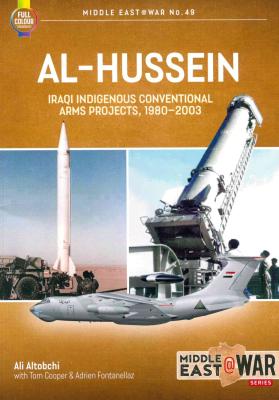
Al-Hussein, Iraqi Indigenous Conventional Arms Projects, 1980-2003Published:
The history of Iraq is largely a history of civilization and Iraq today largely corresponds with the territory of ancient Mesopotamia. Skipping ahead several millennia and modern-day Iraq largely corresponds with the Ottoman Wilayets (administrative divisions of the Ottoman Empire) of the Mosul, Baghdad, and Basra Provinces. The British influence dates after World War I and held sway, particularly with weapons and doctrine through the Tammuz Revolution of 1958. The Ba’ath Party came to power in 1969 with Saddam Hussein as the Vice-Chairman of the Revolutionary Command Council, second only to Major General Ahmed Hassan al-Bakr. Iraq decided to not be dependent on any one country for its weapons programs and created the State Organization for Technical Industries (SOTI) in 1970.… more |
|
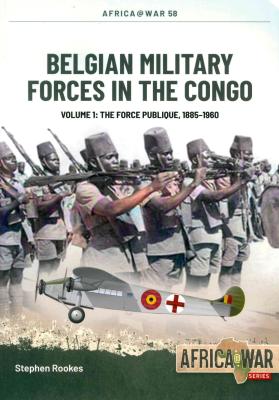
Belgian Military Forces in the Congo, Volume 1 – The Force Publique, 1885-1960Published:
The area known as the Congo was first discovered by Prince Henry the Navigator around 1482 as he sailed along the western coast of Africa. Continuing the discovery was Portuguese Navigator Diego Cão who is credited as the first European to see the mouth of the Congo River. Had he sailed up the Congo, he would have seen a diverse and extraordinary landscape described by Author Stephen Rookes, “Ranging from snow-topped mountains and volcanoes such as the Blue Mountains in the northeast of the Congo, the Eastern Rift Mountains in the Great Lakes region to luxuriant savannas, mosquito-infested swamps and dense rainforests that covered much of the land, Cão would have also discovered up to 15 cultural regions and over 250 different ethnic groups living side-by-side.” … more |
|
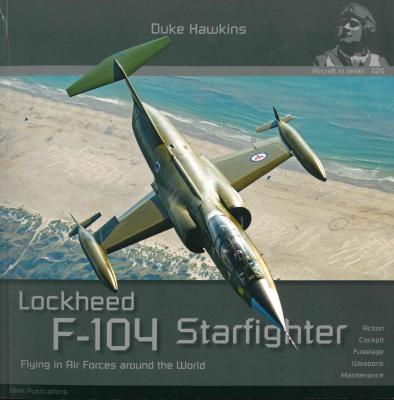
Lockheed F-104 Starfighter – Flying in Air Forces Around the WorldPublished:
Duke Hawkins is a series of aerospace books (plus the Occupation of Brussels) with amazing photographic detail in a walk-around format. HMH Publications describes the Duke Hawkins series, “So, there I was, looking for a book that could show me the Jaguar in every detail. I didn’t find it. I found a couple of photos online, but I wasn’t really extatic (sic) about that… That’s when I decided to make a book for myself. I showed it to a friend and he said: “We should publish it! And make other books too!” And here we are.” And we are all the better for the Duke Hawkins decision to produce, high quality, detailed photographic reference books. I knew about the F-104 Starfighter, its place among the Century Series, and being nicknamed “The missile with a man in it”. The F-104… more |
|
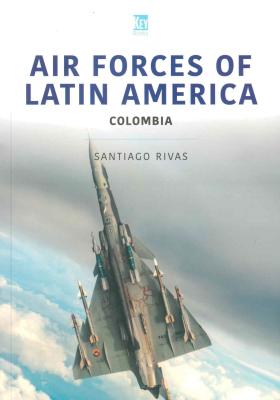
Air Forces of Latin America - ColumbiaPublished:
The Columbian Ministerio de Defensa Nacional (Ministry of Defence) oversees the Fuerzas Militares de Columbia (Military Forces of Colombia) air forces among the most powerful in Latin America, comprising of four branches: the Fuerza Aérea Colombiana (FAC -Colombian Air Force), Armada Nacional de la República de Colombia (ARC - Colombian National Navy), Ejército Nacional de Colombia (EJC - Colombian National Army) and Policía Nacional de Colombia (PNC - National Police of Colombia). Combined, the air divisions are all very powerful, and contribute to the biggest combined aviation force in the world. Columbian air power traces its roots back over a century. Air Forces of Latin America – Columbia is the fifth volume in this series and does a great job highlighting this impressive air… more |