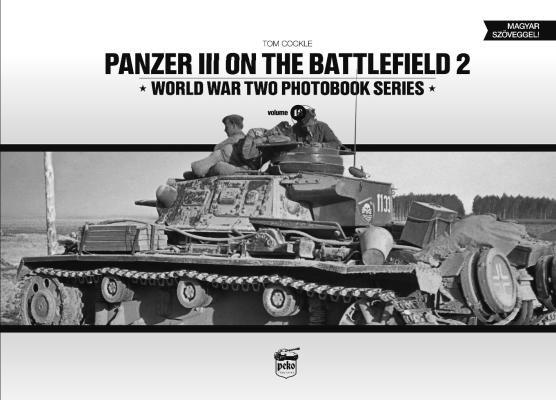
If you are a student of WW2 German armored vehicles, or enjoy modeling subjects such as the German Panzer III and Panzer IV, then the name Tom Cockle should be very familiar to you. Mr. Cockle is a prolific author on such subjects, and has written or co-written books for Osprey Publishing, Concord Publications, Squadron Signal Publications as well as European publisher Peko Publishing. Mr. Cockle is also a frequent commentator on such matters on military vehicle model websites such as Missing-lynx.com. The book under discussion today is the 18thvolume in this wonderful series by Peko Publishing. I have 8 of the titles in the series so far, and plan on picking up others as my reference budget allows.
What's New
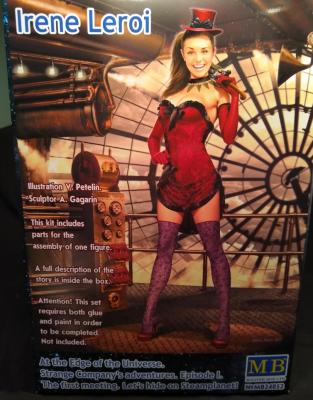
I’ve always been a huge fan of Master Box figures-- using them in vignettes and dioramas whenever I can. So when I got the email offering up one in 1/24 scale, I jumped at the chance not knowing anything about this new line. I figured I could use it with a car or truck like some of their previous lines featured. So while I was waiting for the shipment to arrive, I started doing some research.
This particular figure is part of a new series called “At the Edge of the Universe” set in a world called Steamplanet. Being a huge Firefly fan where the sci-fi steampunk meets the old West, this looked right up my alley. The back of the box provides a bit of an idea of the setting. The whole thing has me wanting either a book series or movie based on the story ideas presented in this line of figures - with additional kits featuring space security forces, ruffians, ladies, and robots.
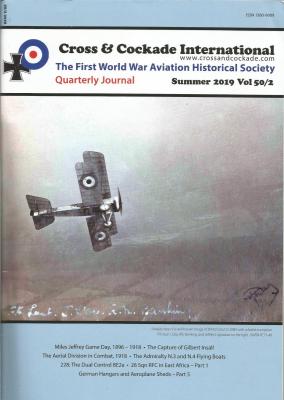
Cross & Cockade International is a non-profit UK based group known as the First World War Aviation Historical Society that publishes their journal four times a year. They also provide a free newsletter. Those interested in the newsletter can subscribe by visiting the C&CI website.
The "lead" article, "Miles Jeffrey Game Day 1896-1918?" by Ian Burns, traces the too-short life of Jeffrey Day. Day was a pilot known for his ability to handle aircraft which had rather skittish flight characteristics. Day was also a talented poet, and this article features some text penned by Day. Day was involved in a rather risky project involving a seaplane and a Bristol Scout, the Scout piggybacking on the upper wing of the Porte Baby. The article is supported with some stunning photographs of the aircraft, ships, and other personnel that played a part in Day’s experiences.
Hauler-Brengun is well known as a supplier of high-quality aftermarket detail parts for aircraft, as well as other subjects. Many of these aftermarket items are resin, P.E., or a combination of the two mediums.
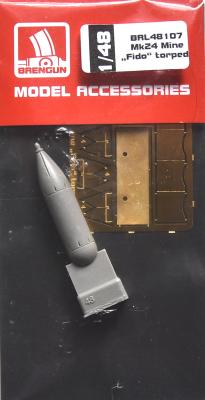
Marketed under the “Brengun” label, this review looks at the Brengun BR48107 Mark 24 Mine “Fido” Torpedo. The name is a little confusing. Is it a mine or a torpedo? A little history is appropriate at this point.
Googling Mk.24 Mine “Fido” Torpedo received a number of hits. I chose the Wikipedia site and the explanation for the name, as well as a description of the “Fido” and its operational history. The following paraphrases the introductory paragraph found on the Wiki site.
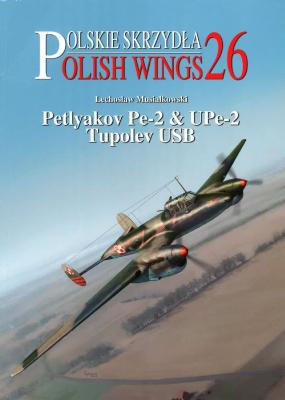
Lechoslaw Musialkowski author the latest in Mushroom Model Publications' series of aircraft used in the Polish Air Force. This volume's focus is on the Petlyakov Pe-2 / Upe-2 and the Tupolev USB. This volume represents Lechoslaw Musialkowski’s fourth book for MMPBooks. MMP was founded in 1996 by Roger Wallsgrove, to publish "Mushroom Model Magazine". This quarterly modeling magazine was developed from "Mushroom Monthly”, a club newsletter which ran from 1985 to 1995, achieving a worldwide reputation for quality articles, fearless and honest reviews, and a great sense of humor. From 1997 the magazine was produced in collaboration with Robert Peczkowski and Artur Juszczak (Stratus), which meant a big leap in print quality and design. MMP expanded into book publication in 1999, and since then we have built up a list of books on aircraft and aviation, naval, military vehicles, and military history.
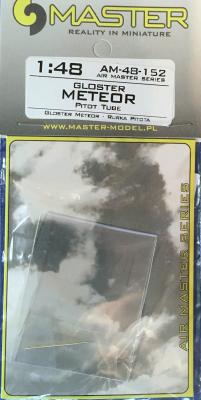
The Gloster Meteor was one of the iconic, pioneering jet fighters to become available during the final year of World War Two.
Master Models is a Polish company that produces some of the finest aftermarket brass accessories to enhance just about any scale model. I have used their offerings before, and love the final look and relative ease of using them.
Airfix has released a couple of Meteor kits over the last few years, and I recently snapped one up from my local hobby shop.
The kit pitot is represented as a straight plastic tube with no relief whereas, I believe, it should taper in towards the end. I clumsily broke the plastic tube when removing it from the sprue and super glued it back together for the pictures here.
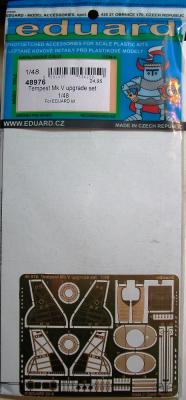
Eduard has released a photoetch upgrade set for its new tooled Tempest Mk.V which in its self is a great kit. This upgrade set is a single large Photo etch sheet.
In the box is:
- 1 photoetch detail set
- 1 instruction sheet
Construction
The first area of the upgrade is for is the engine intake, the set provides the mesh for all four surfaces of the Intake and make a big difference with the look once complete.
Next are parts for the two main landing gear bays, in four stages. The first stage is simple. On stage to you have to remove the location pins of part E68 and E69 from the original kit to allow then to fit. Also at stage two it refers to part E39 which should actually be part E32. I would also suggest that the parts 19, 20, 21 and 22 are installed before the kit parts E71 and E73. This will make it a lot easier to install them.
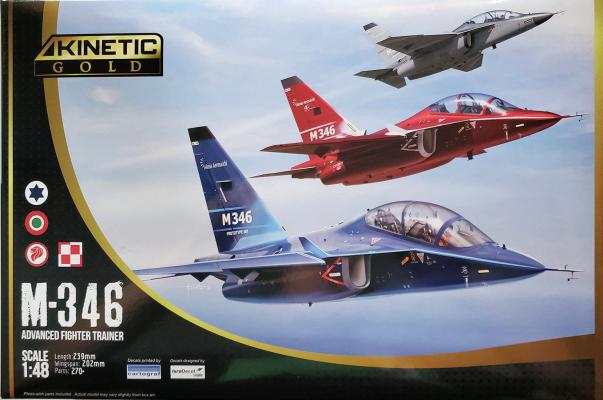
This is the first injection-molded 1/48 kit of the M346 Advanced Fighter Trainer, which first flew in 2004. It is currently used by the air forces of Italy, Israel, Poland and Singapore. It was originally a joint venture between Aermacchi and Yakovlev, and you can definitely see the similarity to the Yak-130 Russian trainer.
The kit is molded in a medium gray plastic and contains just over 270 parts. The molding is truly top notch, which is one of the hallmarks of the new Gold range of kits from Kinetic. This was the first kit produced in their new manufacturing facility. There is a small photo etch (PE) fret that contains seatbelts, the HUD frames, rearview mirrors for the inside of the canopy, various vents on the fuselage, and the small winglets. The clear parts are very nicely done with two different options for the canopy: one with the explosive cord molded into it and the other without. And happily the canopies do not have a seam running down the middle! Hooray!
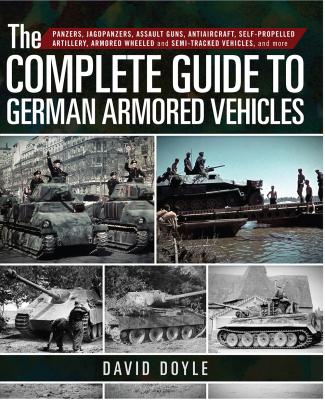
Given the massive interest surrounding the Nazi armed forces during World War 2, it isn’t surprising that publishers want to produce books that cover the entirety of the military vehicles used by the Germans, in one volume, at an affordable price. And for a reader interested in this topic, it might be very useful to have a handy guide to said vehicles all in one volume. Over the years, there have been a number of such tomes published. I myself have one from 1969 titled “German Tanks of World War II: The Complete Illustrated History of German Armored Fighting Vehicles 1926-1945” edited by Peter Chamberlain and Chris Ellis. However, to do it right, is surely a daunting challenge to any author? And what, exactly, is “doing it right”?
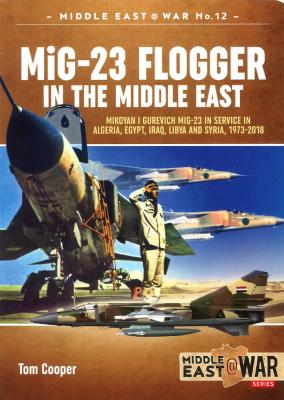
Tom Cooper, born in Vienna, Austria, in 1970 is a military aviation historian that has focused on Post-WWII Middle Eastern air forces. Tom traveled extensively though his military service and subsequently in his transportation business. Through his travels, Tom Cooper has established contacts and identified sources that have permitted him to bring a unique look to Asian and African military aviation. Mr. Cooper has written more than 400 articles and has authored (or co-authored) over 25 books, including the excellent six-volume Arab MiGs series published by Harpia and distributed by Casemate. Aiming to deliver a complete picture, Tom is also an accomplished illustrator and color profiles are included in his books and articles. To find out more, check his Linked In page.