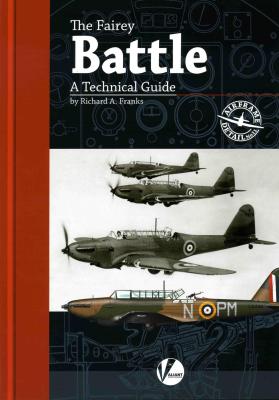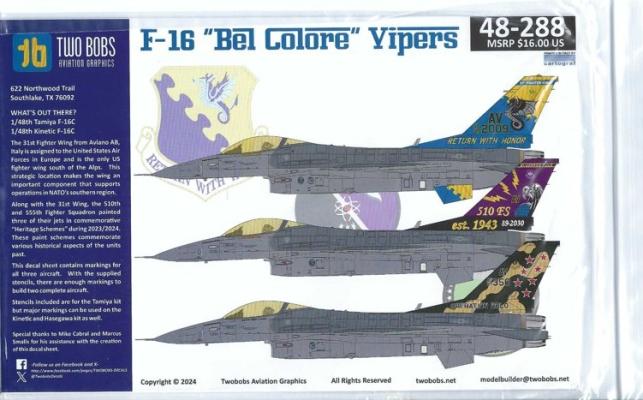
The non-profit UK based group known as the Great War Aviation Society publishes A new magazine, Contact!, is now available in both print and digital download. The first two issues of Contact! are available for a free digital download on their website. Their journal, Cross & Cockade International, is also published four times a year. Issues are available in English as printed [Softbound, A4 (8.27” x 11.69”), 72 pages [Including Covers] as well as digital copies (or both). The Society also provides a free newsletter (sign up on their website) and occasionally publish WWI themed books like the Sopwith Dolphin monograph I reviewed earlier for IPMS USA. This Journal is the sister of the US Journal, Over The Front. The Great War Aviation Society also hosts a lecture series available through Zoom. If interested, you will need to register early as the call is limited in attendance.
What's New
The PE Step Roller Tool from RPToolz is 195 mm long and constructed of Eloxed Aluminum (dyed blue) for use in rolling Photoetch (PE) brass, copper, aluminum and other malleable metal sheet, wire, and some shapes. The Eloxed (electrochemically oxidized) process creates a hardened anodized surface to resist scratches and wear.
The steps in the roller tool correspond to diameters of 4, 6, 8, 10, 12, 15 and 20 mm.
I found the tool capable of repeatedly making consistent-sized rings in wire and barrels in sheet.
Sylvain Hautier started Syhart Decals in 2005. Syhart Decals being derived from SY (Sylvain) HA (Hautier), ART (design), Decal (Decals.).
Although I had heard of Syhart Decals, this was the first time I had seen these in person, and I was very impressed with the presentation, the instruction sheet/manual and the high quality of the decals themselves.
The are several manufacturers of the 1/72 scale Rafale and represent various versions, whether Air Force, Marine or two-seater. These decal sets do not seem to be specific to any one manufacturer.
The decals were presented on bright blue paper that looked very similar to the paper used by ICM and Kits World Decals. Each decal on the sheet was sharp and in register, with minimal excess clear film. The printed part of each decal had more of a satin finish, while the excess film was glossy.
Fresh from the Review Corps gathering at the 2025 IPMS-USA Nationals comes this 1/72 scale wiper blade set for the AH-64 Apache from the folks at Quickboost. The wipers are intended for use with the Academy kit and will replace parts A6 and B51. For this review, I used my Hasegawa kit (product E6, AH-64 Apache Longbow) to show that they can also be used to upgrade a kit without wipers included. These parts are highly recommended for improving the detail on your 1/72 scale AH-64 Apache.
Quickboost has been around for several years producing detail parts and replacement parts for various models. While researching the set for this review, it appeared that at the time of my writing, this set was yet to be released. The price provided is my best guess based on similar products from the company, but this may vary slightly when released.
Fresh from the Review Corps gathering at the 2025 IPMS-USA Nationals comes this wheel bay plug set from O-Mask for the Tamiya 1/48 scale Dornier Do-335. I have been using foam earplugs trimmed to size as needed for several years when masking openings during painting, but these precision-cut plugs can simply be used with no additional work required. I highly recommend this set of plugs to any modeler that airbrushes or sprays their models and is building a Do-335.
According to information provided by O-Mask, these laser-cut foam plugs are designed to cover wheel wells, air brake bays, intakes, exhausts, cowlings, or other areas of your model. Made of soft, colored foam, these plugs are relatively chemical-resistant and therefore, reusable.
X Scale's latest release in their Airliner range is the classic B707-124. Included in the kit:
- Seven grey Sprues
- One Clear Sprue
- One Decal sheet
- One Mask set
- One Instruction guide
The sprue quality is great with this kit as it’s a new tool, with crisp and detailed molding.
The assembly is quick and easy.
I will not write about each stage. Instead, here are just a few points and comments for when you build this great kit
The cockpit is the first assembly. The only points I had here were. 1- a decal for the instrument panel would have been nice. 2. There are two holes in the cockpit floor for the control columns but done were included in the kit (I scratch built mine)
Mold parting seams are a fact of life for modelers. It matters not if you have the latest new tool styrene kit, a cast resin kit, or a “vintage” kit from the bottom of the stash, you have mold-parting seams to deal with. Most of us use a trusty number 11 hobby blade to scrape off the offending seam line. We have all used our expanded vocabulary when our hobby blade has gouged the part. There is a better way.
Yahu Models has provided the IPMS reviewer corps with a 1/32nd scale instrument panel for the D3A1 Val (late) that will fit the Infinity Models kit (INF 3206).
In the Package
The instrument panel detail set is enclosed in a plastic bag with two photoetched frets. Some of the instrument panels are already assembled. The parts come packaged in an individual Ziploc bag and cardboard backing, which has instructions printed on it.
Conclusions
Overall, this is a very nice detail set to upgrade your D3A1 Val instrument panel. The close-up picture shows off the minute detail printed on the PE parts, and the fidelity at such a small size is amazing.
To install this set will require an adhesive like Superglue (CA) or 2-part epoxy (or similar). Therefore, I would recommend this to folks who are comfortable with handling this type of bonding agent.
Introductory and Historical Background
ICM’s Notes
DShKM with support/tripod
Summary
ICM continues their run of “dioramas in a box,” this time by kitting the kits as one; the He‑111H-3 WWII German Bomber (Kit 48261). Luftwaffe airfield equipment (Kit 48409), and German Luftwaffe ground personnel (1939-1945) (Kit 48229).
Background
The He-111 was initially designed as a fast airliner. But the secret Luftwaffe wanted an aircraft that could also be converted to a bomber with minimal adaptation. The first He-111 flew in February 1935. The first incarnations of the He-111 looked nothing like what became an infamous bomber of the Blitz. The He-111A through 111F all had a normal nose and cockpit configuration. Not until the introduction in 1938 of the He-111P did the full glass nose appear.