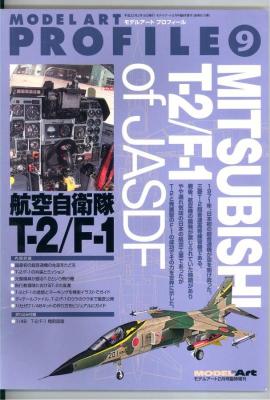
OK guys, a show of hands; how many of you don’t like Hasegawa kit decals? You’ve had bad experiences with them and hate ‘em to the point that you won’t build or even buy a given Hasegawa kit unless you can get aftermarket decals for it? Not a problem for those F-Teen kits where you easily have many more aftermarket decal choices than kits. However, when it came to cool looking, non-gray jets, like the Mitsubishi F-2, you were stuck….until now.
Reviews
Once upon a time there was a guy named Rob Ferreira and he was a TreadHead. Unfortunately, unlike most TreadHeads, Rob just didn’t enjoy building a military vehicle and weathering it. Nope that was too easy. What Rob liked to do was take a military vehicle to it’s final resting place. Be it as a monument on display in the open, an old forgotten wreck sitting in some wooded area all but forgotten about, a vehicle destroyed by some catastrophe, or a vehicle sitting in a vehicle track park in Afghanistan.
This last scenario is what actually got the engine compartment started. Rob wanted to create more than one vehicle with this empty engine bay. He chummed up to his friend Steve Reid of Celticwerks and after much back door shenanigans and blacks ops dealings there was some magical agreement that got Rob to do the masters and Steve to create the molds for the rest of us lowly TreadHeads to benefit from this teaming.
Subject
In the late 1970s, Porsche was dominant in GT and sports racing. For the 1978 race season, Porsche designed the 935/79 Turbo with the goal of claiming the Le Mans 24 hours title. The new longer, ground-hugging body of the car pushed the limits on the silhouette regulation. Due to the 935/78's unique body design, the vehicle earned the nickname "Moby Dick". The vehicle featured a 3.2 liter, air-cooled twin-turbo engine with four valves per cylinder and Porsche's first liquid-cooled cylinder heads, which produced 850hp. The race team entered the 935/78 Turbo in the World Championships for Makes Round 4, as a test for the Le Mans race, and in an impressive debut won. At the 1978 Le Mans 24 Hours, the 935/78 qualified 3rd, but fell to an overall 8th place finish as a result of mechanical problems.
The line of Supermarine racers, designed to attack and eventually acquire the Schneider Trophy for Seaplanes, actually began with the S.4, a mid-wing cantilever monoplane with amazing aerodynamic form for its time, 1925. This floatplane racer was sent to the United States for the eighth Schneider Cup races at Baltimore, where it suffered a number of mishaps before it finally was wrecked when the pilot lost control, fortunately with no injuries. The race was won by Lt. Jimmy Doolittle, with the backup Gloster III placing second.
Allow me to start by thanking Pavla Models for their most generous contribution of numerous models for review by IPMS/USA.
Background
The "Lizzie" is one of my favorite aircraft for some quirky reason, and one on a very short list of those I wish I had the opportunity to fly myself. There were three versions - unsurprisingly the Mk.I, II, and III. There were a 189 Mk.I, 517 Mk.II, and 964 Mk.III, including license built. The Mk.I and Mk.III pretty much look alike - the Mk.II is recognizable by the smooth, slightly tapered engine cowl. As the Mk.I were quickly shunted off to the Middle East, the Mk.II is most prevalent in the early war years in Europe.
Every so often as a reviewer, you end up with a product that wasn’t quite what you thought it was. Thus was the start of this, where I had volunteered to review this new set from Aires covering A-7 landing gear bays in 1/48. However I thought they were for the Hasegawa kit, but alas, they are for the Hobbyboss kit! Knowing this occasionally happens to us as modelers, where we walk out of store with the latest aftermarket treasure only to find it’s for the other manufacturer’s kit, I set about to see how this set would fit in the Hasegawa 1/48 A-7E.
As a devotee of SciFi and the related genres, I was always a fan of Stanley Kubrick’s 1964 movie Dr. Strangelove. It had a great cast with George C. Scott, James Earl Jones, Peter Sellers and many more including the subject of this diorama, Slim Pickens as Major “King” Kong who most notably rides a nuclear bomb out of the bottom of a B-52 to detonate in Russia. I could go one more but you really need to watch is to appreciate the subtle and extensive humor thrown around.
Wow, just looking at this piece has given me a re-found respect for you Braille-scale builders! I don’t see how you can do it. I have enough troubles bending and gluing photo-etched parts. I will learn to start soldering them soon. Can’t even imagine trying to do it 1/72 scale. That is an issue anyone that buys this kit will need to overcome.
Mini World appears to be a relatively new company or at least a new off shoot from a company in the Ukraine. There were many companies that carried their line (all overseas) but only Hannants had this particular item listed on their website. Mini World does not have a website of its own. Their items are pretty impressive. They currently have 18 different machine guns on the market. Most are for WWI aircraft but I did also notice two different DShK kits available as well.
I have heard some ask “Why pay for landing gear that’s already in a kit?” The simple reason to use SAC gear comes down to basic physics: Metal gear makes for a robust structure that doesn’t fail under the weight of a model. Resin models are where metal gear is required (but sometimes not provided); on large plastic models, this requirement is particularly noticeable on aircraft with offset main gear such as the Hawkeye, weight distribution is outside of the gear centerline, and the wheel/tire assemblies tend to splay out over time, or outright break off.
Most Dragon models today are a collection of old sprues and new sprues added to create a new kit variant. In this case, Dragon has done so and in this case, redid the areas that had zimmerit applied. This being said, you have many options that need to be reviewed and decided on before you start this kit.
Steps 1, 2, & 3 - Lower Hull
As with most armor kits, the first step is the running gear. Remember those choices I mentioned in the paragraph above, well, here is the first one. You have a choice of two slightly different drive sprockets. The second choice is between the end caps over the bogie springs, and the third is the choice of mufflers.
The instructions give you two sets of muffler and you will need to drill out some locating holes depending on which muffler type you have chosen.