
Super Model International, No.2
Introduction
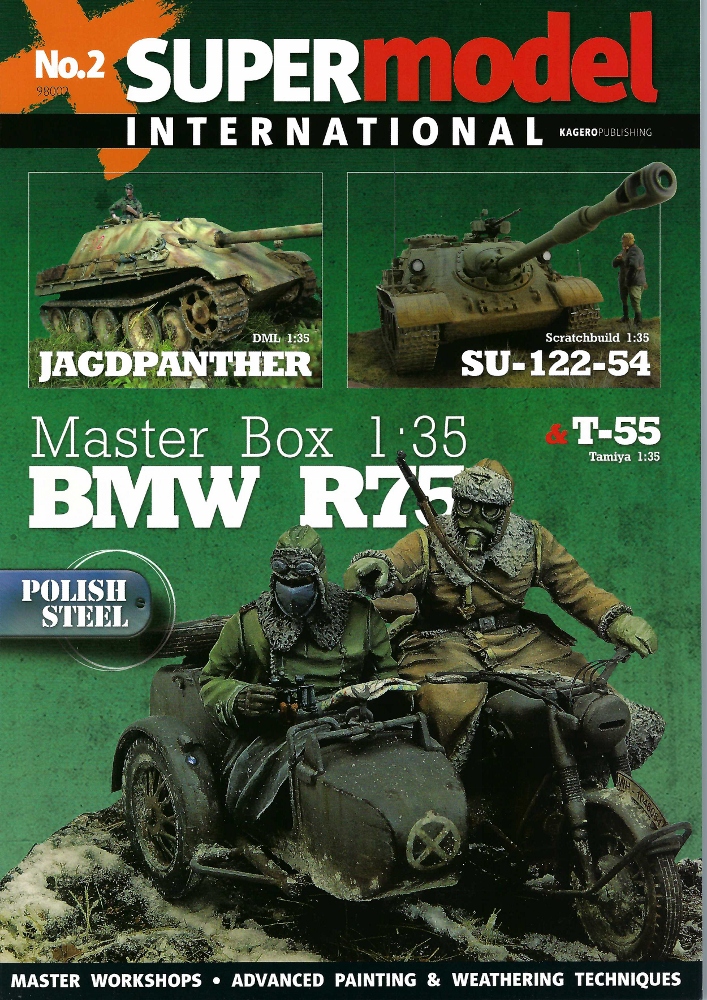
I chose to review Super Model International, No. 2, because of one feature in particular—the BMW R75 build. Having previously built Revell’s 1/9-scale BMW R75 with sidecar, seeing a BMW R75 featured in this issue piqued my interest.
Magazine Features
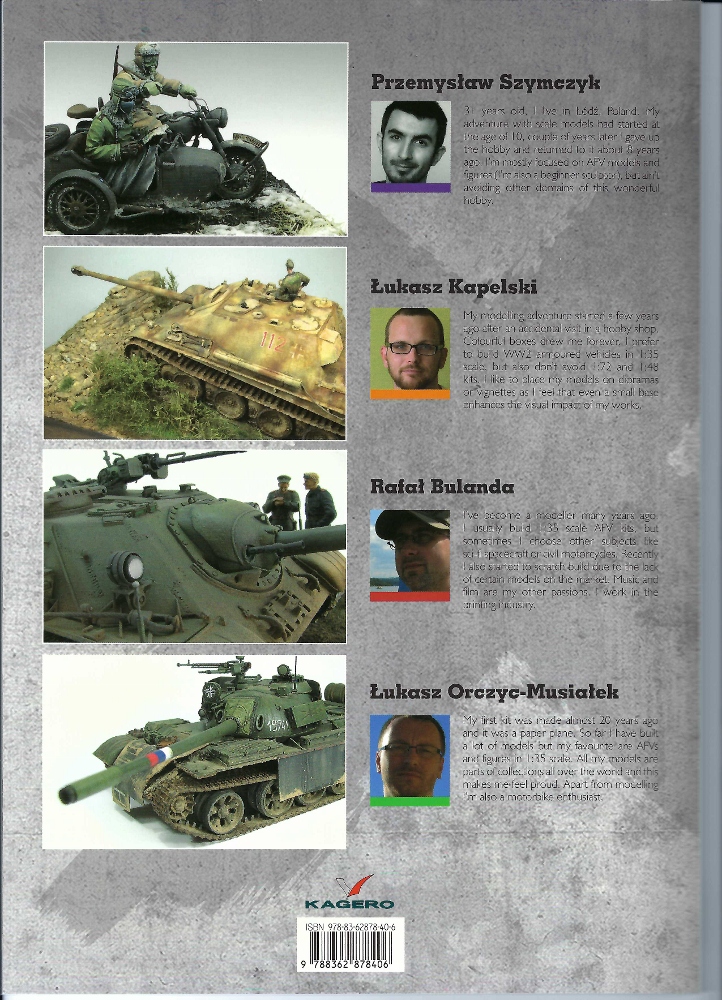
Super Model International No. 2 from Kagero Publications is printed in A4 portrait format, on glossy, heavy paper stock, with sharp, clear photos throughout. This issue focuses on armor, showcasing advanced techniques, detailed sequences, and excellent build photos, all in color. Four authors contribute four armor projects, providing the reader with a valuable resource for techniques and finishing.
Contents
This issue features four in-depth armor subjects.
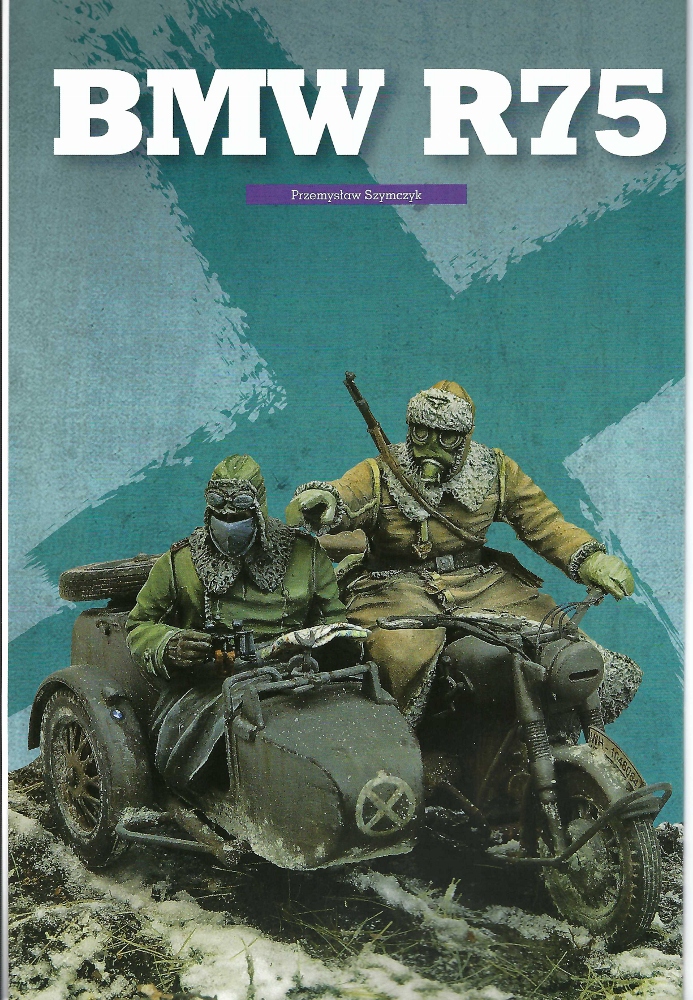
BMW R75 Masterbox 1:35 scale
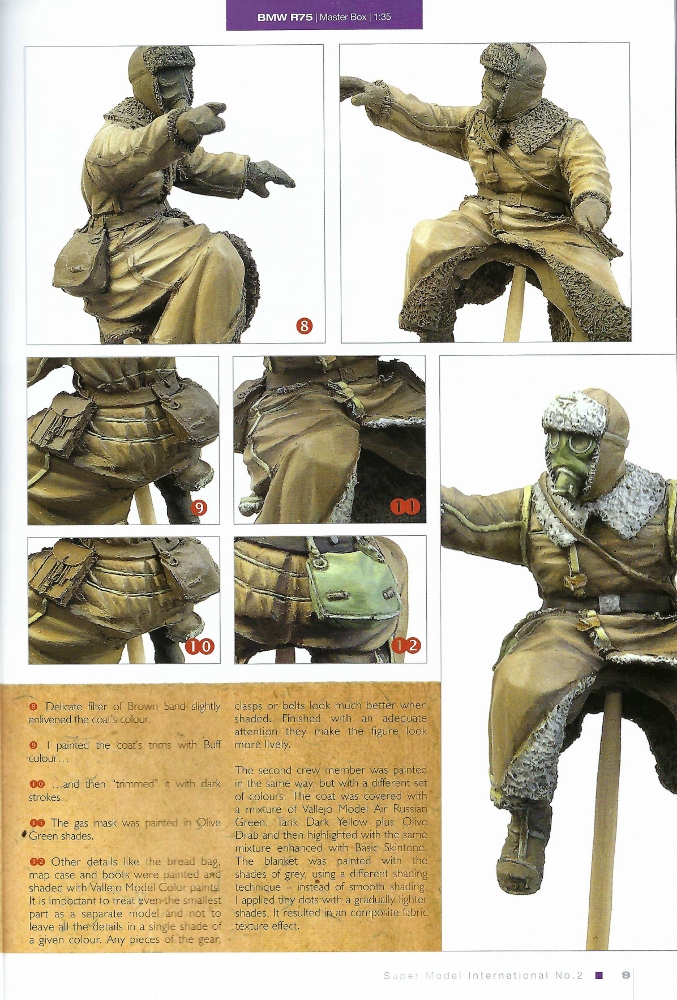
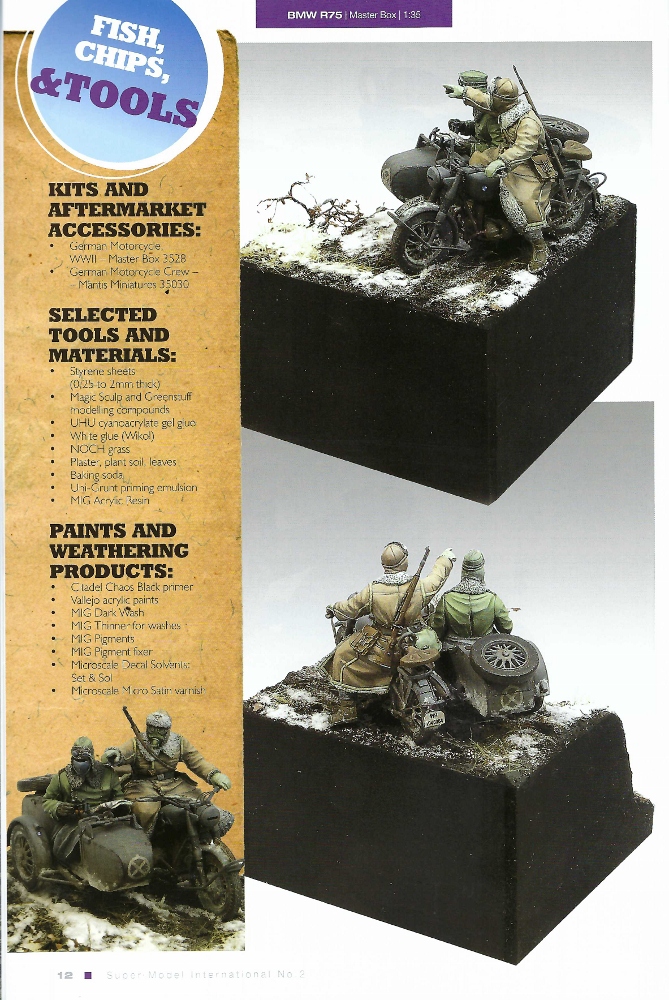
This article by Przemyslaw Szymczyk starts by describing the kit itself, then adds his thoughts and impressions on its pros and cons. He then describes the figures he used with resources and painting. I found his presentation of the paint brands he used helpful, especially for the build and adding the figures. He describes the vehicle painting, the figure painting on page 9, preparing a base he used, and a particularly interesting section on page 12 he titled “Fish, Chips, & Tools,” where he provides the kits and aftermarket accessories he used, selected tools and materials, and paints and weathering products.
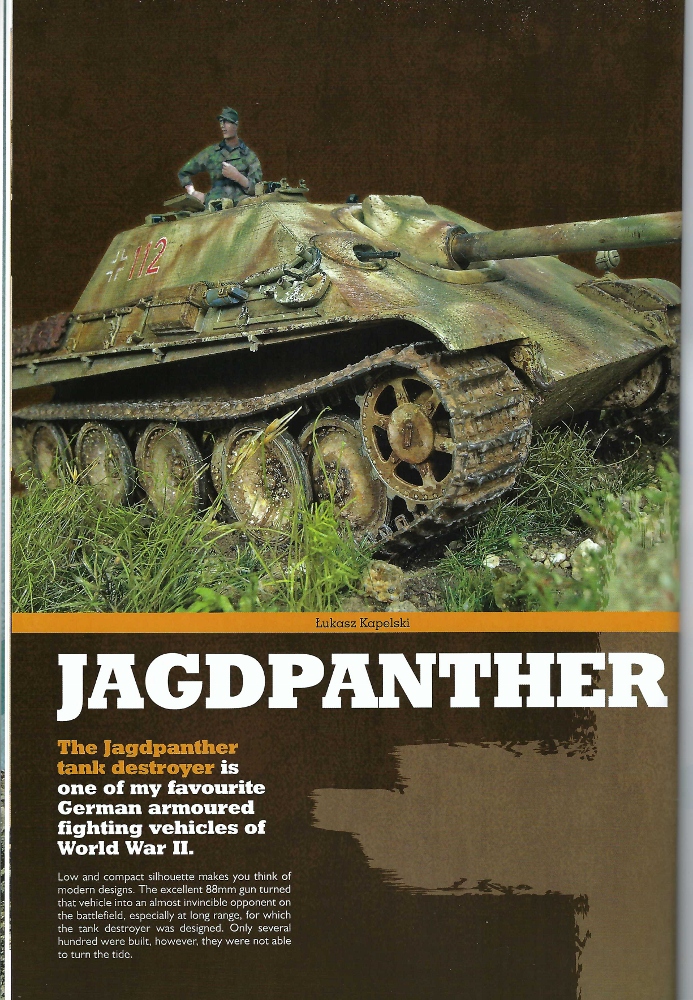
Jagdpanther DML 1:35 scale
The next feature in this issue is DML’s 1/35 Jagdpanther, shown completed on page 16 with a nicely done terrain base by builder Lukasz Kapelski. He opens with a short overview of the Jagdpanther and explains why he selected the DML kit, then walks through the construction highlights, including how he corrected the Zimmerit. From there, he outlines his painting process, listing the specific colors and brands he used, all supported by sharp, glossy photos alongside the text.
After the base colors and shading, he moves into his weathering steps, which are covered over the next six pages. He then follows up by showing how he created the terrain the model sits on. To wrap things up, he includes a one-page “Fish, Chips & Tools” section just like the other authors, showing the kit, aftermarket parts, paints, and weathering products used.
Even though he uses certain brands, the techniques are easy to adapt to any build. I found this section especially useful, thanks to the excellent close-up photos that really show each stage of the process.
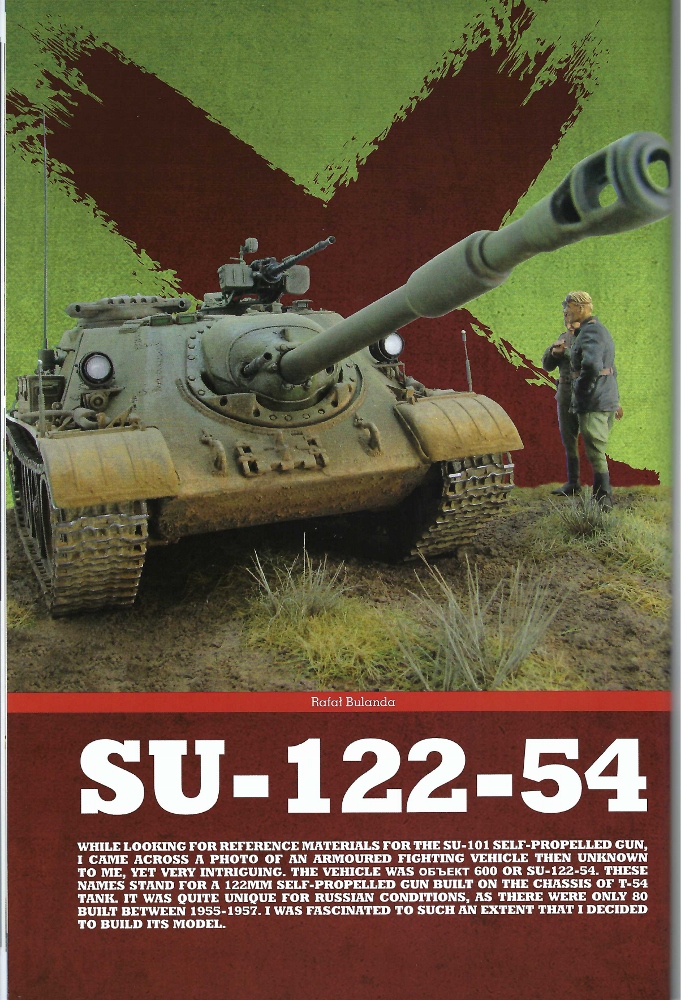
SU-122-54, Scratchbuild 1:35 scale
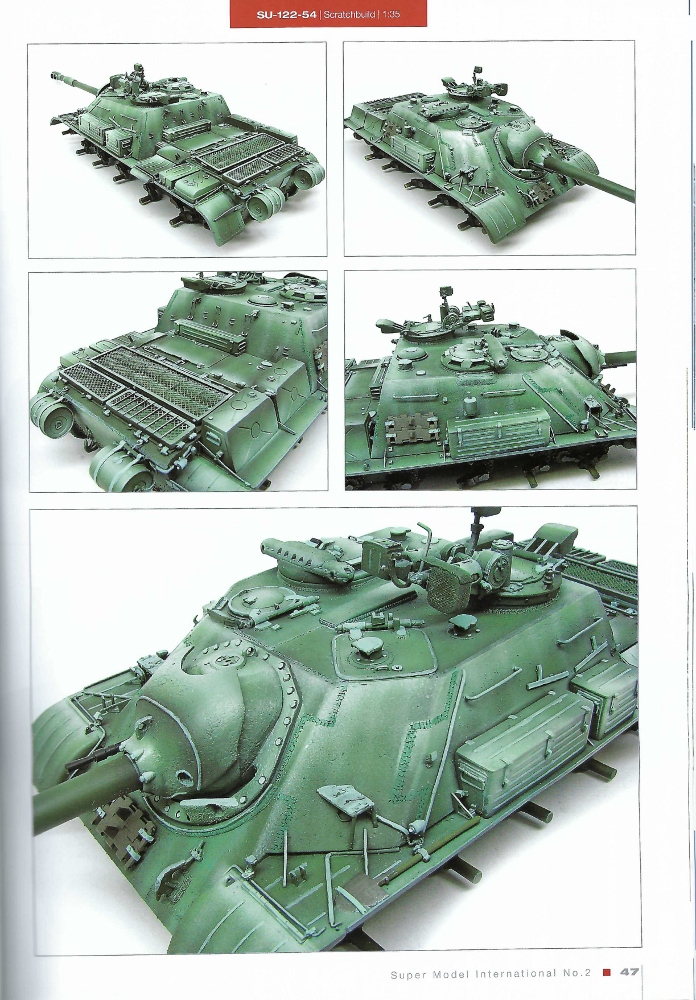
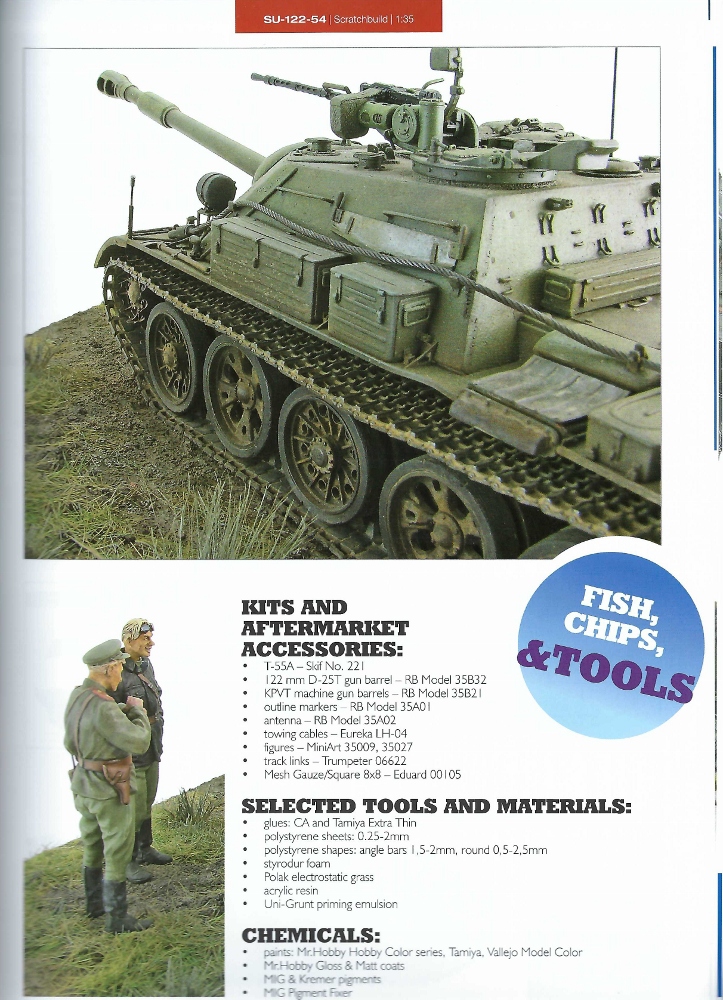
The next article in this magazine covers an SU-122-54 built by Rafal Bulanda, another highly skilled Polish modeler. He starts with a T-55A kit from the Ukrainian company Skif and then completely rebuilds the engine deck and upper structure. From there, he scratch builds the machine-gun mount, fuel tanks, stowage boxes, and smoke dischargers, showing step-by-step photos of how each piece was constructed along the way.
After all the scratch building was complete, the author proceeded to the painting process, describing the paints and the techniques used, including the painting technique, “Modulation” as seen on page 47. Following the painting, he describes the finishing with the application of the chipping process, weathering, and pigments. All of these could be used in any application that the modeler could use for his own builds. Truly an excellent resource in words and images.
As the other modelers have included in their articles, this author does include a “Fish, Chips, & Tools” section.
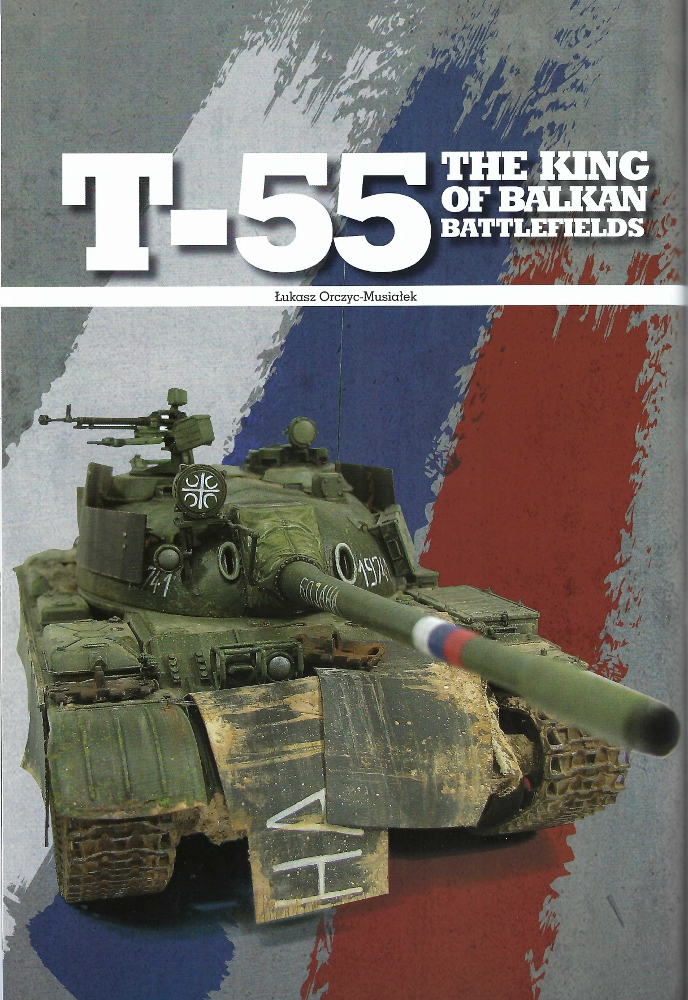
T-55, Tamiya 1:35 scale
The issue finishes with Lukasz Orczyc-Musialek’s Tamiya T-55 build. He gives a quick history of the tank, explains why he chose kit #35257, and shows how his research helped him pick the version he modeled, similar to the way most of us approach a project. In this section, he walks through how he handled the painting and weathering, explaining each step in a way that is easy to follow. He also mentions the specific brands and products he relies on, which is really helpful for anyone trying to get similar results or looking to try out new materials. It is the kind of info that makes the article more useful than just a set of photos.
Additionally, he adds a nice little sidebar that sums up the extra work he did to improve the kit. Like the other builders, he includes a 3½-page photo spread of the finished model, which is great to look through. And of course, he ends with the handy “Fish, Chips & Tools” section that wraps things up.
Conclusion
Supermodel International No. 2 delivers a lot of useful techniques, superb photography, and clear step-by-step guidance you can easily apply to your own builds. The “Fish, Chips & Tools” sections are a nice bonus, tying each project together with the products used. With subjects ranging from a motorcycle to a tank destroyer to a full scratchbuild, there is something here for just about any armor modeler.
Overall, it is a great addition to the workbench. The layout is clean, the tips are practical, and the articles get straight to the point. I would recommend it to armor builders in any scale, and I will be picking up future issues myself.
Thanks to IPMS/USA and Kagero for allowing me to review this magazine.
Reviewer Bio
Phillip Cavender

Phil Cavender, IPMS/USA #50085, is a retired pharmacist from the Veterans Administration, having retired in 2011. While he explored model car building as a child, it wasn’t until 2015 that he rediscovered plastic scale modeling. His renewed interest emerged while researching his father’s military history, which led him to a local hobby shop. There, he met a former UK military tanker who reignited his passion for the hobby. After relocating to Myrtle Beach, Phil teamed up with six skilled modelers to co-found the Grand Strand Scale Modelers chapter of IPMS/USA. He now focuses on building armor models in scales from 1/35th to 1/16th.
Comments
Add new comment
This site is protected by reCAPTCHA and the Google Privacy Policy and Terms of Service apply.
Similar Reviews