
Studebaker US6-U3 in German Service
Background and Historical Notes
Manufacturer’s Product Description
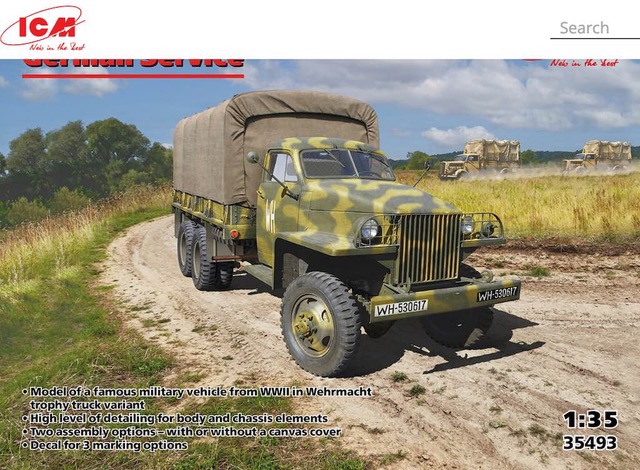
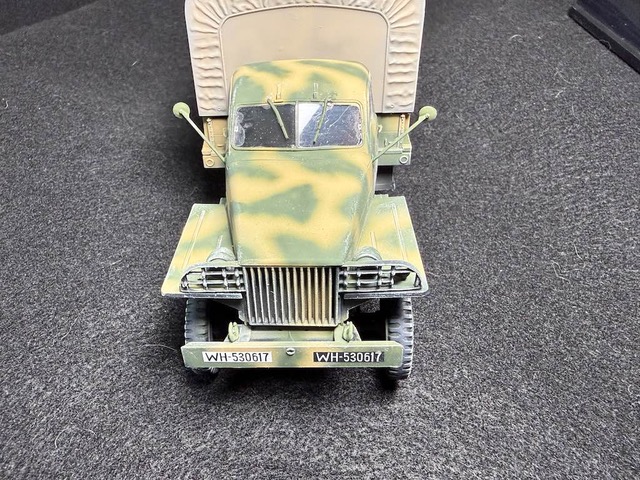
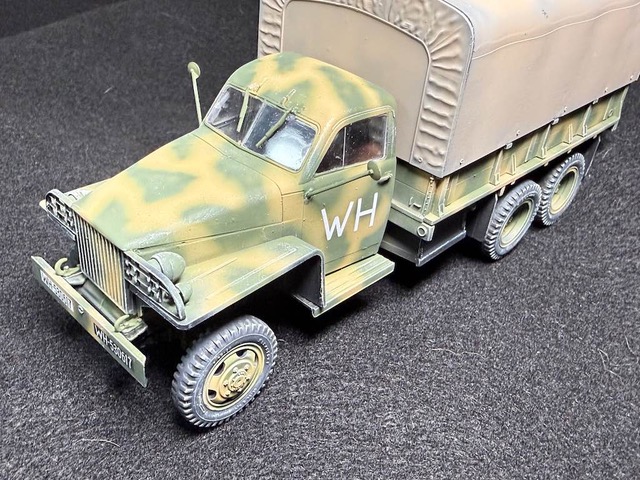
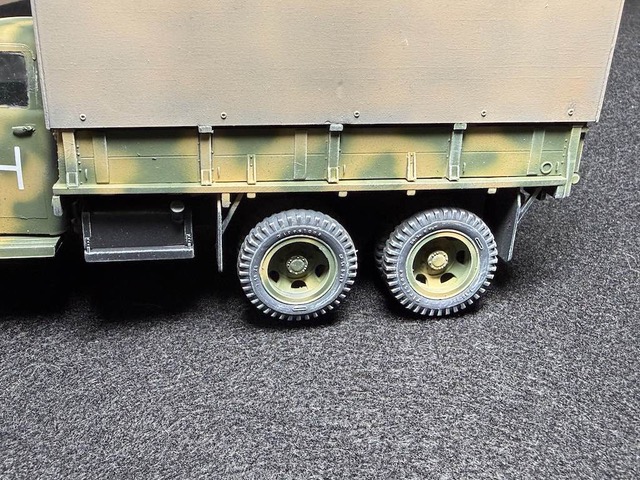
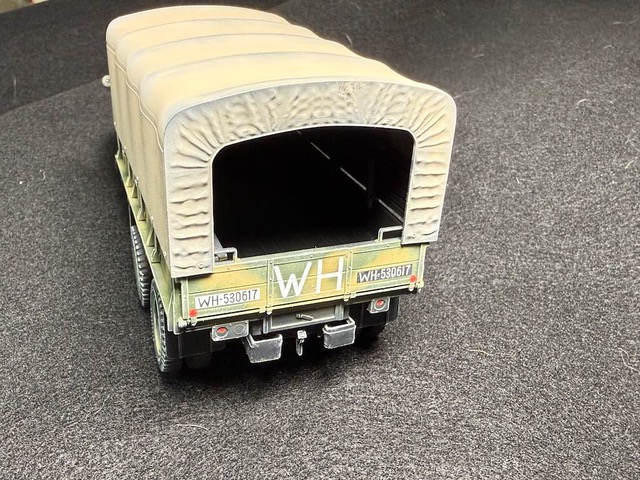
Studebaker US6-U3 in German Service
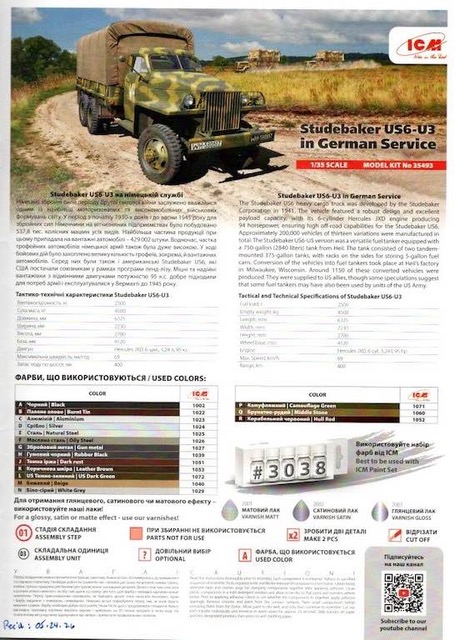
The Studebaker US6 heavy cargo truck was developed by the Studebaker Corporation in 1941. The vehicle featured a robust design and excellent payload capacity, with its 6-cylinder Hercules JXD engine producing 94 horsepower, ensuring high off-road capabilities for the Studebaker US6. Approximately 200,000 vehicles of thirteen variations were manufactured in total. The Studebaker US6-U5 version was a versatile fuel tanker equipped with a 750-gallon (2840 liters) tank from Heil. The tank consisted of two tandem-mounted 375-gallon tanks, with racks on the sides for storing 5-gallon fuel cans. Conversion of the vehicles into fuel tankers took place at Heil’s factory in Milwaukee, Wisconsin. Around 1150 of these converted vehicles were produced. They were supplied to US allies, though some speculations suggest that some fuel tankers may have also been used by units of the US Army.
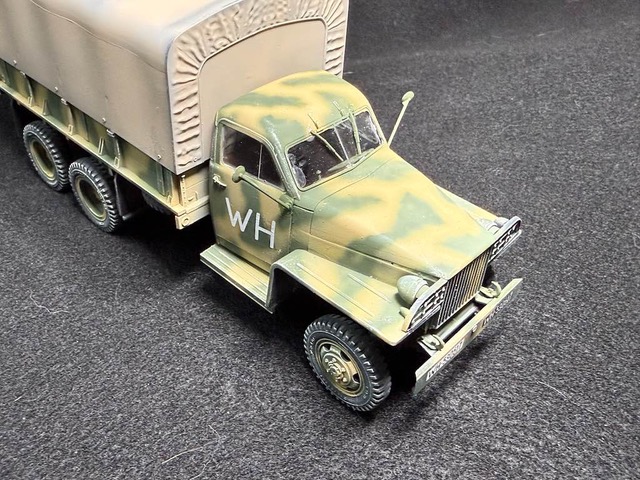
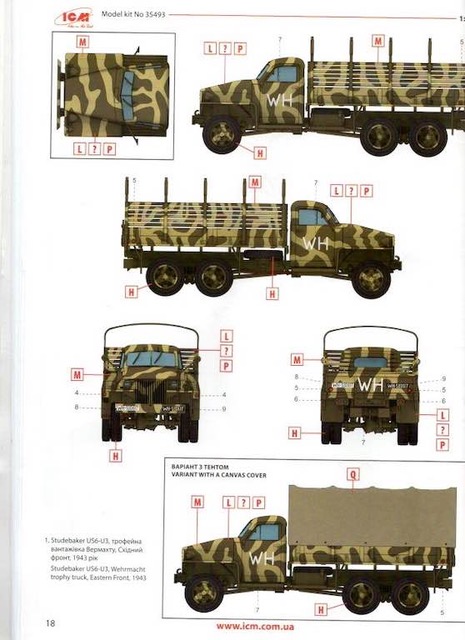
I was disappointed to not be able to locate any information related to the use by what I was hoping to learn about using these trucks by the German army. From nothing more than the box art, I am assuming this was captured vehicle? I wish there was at least some suggested guidance on this issue.
There are currently at least seven models of the basic Studebaker trucks offered by ICM.
Initial Impressions the Studebaker US6 Kit
I am initially quite impressed with this kit’s appearance. The surface detail which contains a lot of surface rivets appears to be accurate in the proper scale. These are especially evident in the undercarriage details and structure.
As I got into, I discovered that original impressions were not always quite what expected from ICM crew.
Two examples: (1) One small issue is that while the individual part numbers are identified in the instruction booklet, they are omitted on the sprue trees themselves. I found this to be hurdle in relating the construction step and I found myself having to almost constantly moving back and forth (though with some of the larger parts you will be able quickly spot the called out parts visually). This could and should easily be corrected.
(2) Again, a typical ‘fit’ issue: take construction step 21. Parts A73, A74, and A75 (as well as the two parts in step 20) should each easily slip into their respective locations. Wrong, I found a very small file and a good deal of sanding was required to make these three little parts to fit. This level of poor fit was symptomatic and characteristic of what I found across this kit. It’s especially disappointing with the individual containing an obvious high level quality in the moldings. It’s like the engineering team didn’t talk to or even know on another.
(3) Masks should have been included (ideally for both the interior and exterior window glass pieces. This is yet another item that could have been included as is in most newer kits today.
(4) When putting the grill assembly (steps 55 and 56) I could not get the hood #B18 to sit down as it should and was forced to use more plastic putty to fill the void left along the bottom of the hood.
(5) While the entry statement from ICM mentions a dual 750-gallon tank arrangement there is only one such tank included for the kit.
Studebaker US6 Kit Fit and Finish
This kit’s fit overall is good. There were a few exceptions, as noted both above and below:
I suggest that you carefully note and mark (I use small paper labels) which sprue trees are which; the kits parts are or were for me a bit difficult to see. Then you will need to determine the individual part numbers, which are not shown on the sprue trees themselves. My suggestion is to copy the individual part pages (pages 2 to 4) which will hopefully save a lot of looking for the individual parts identified.
I found there was a good deal of dry fitting and sanding was needed.
In step #37, I found one of the most challenging I had ever encountered. I wound up filing and sanding the dashboard part #B11 a lot. Plus figuring out what and where parts B8 were located should be, was a similar question. What I think is that these two parts represent the inside window arms used to raise the front window up to allow more air flow through the front window opening.
Paints Used
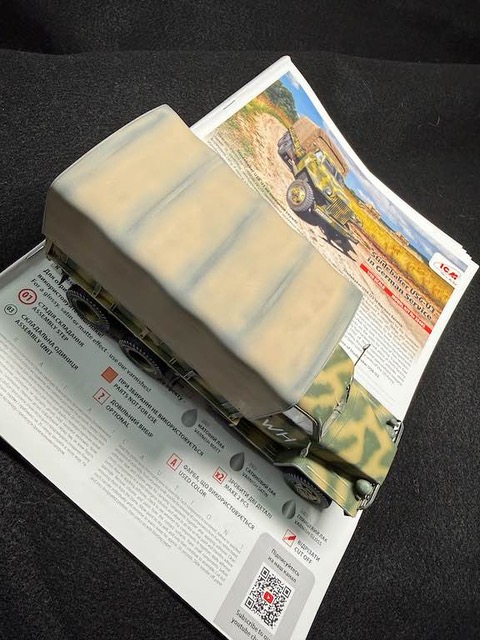
Again, I looked for a retailer selling the ICM acrylic paints, and sadly as these are the only ‘official’ paint colors shown for this kit without a cross-references to other paint brands. I also find that the ICM color conversion chart somewhat challenging, which first requires using the ‘used colors’ listing (on the first page of the instructions). Listing the ICM water based acrylic paints (example ICM # 1071, using color reference ‘P’ for Camouflage Green or ICM # 1072 for US Dark Green color call out ‘L’ and Beige ‘M.’ The system works, though I find it a bit tedious and demanding. In one of my prior reviews I did however find these ICM acrylic paints worked well from an airbrush as well as with a brush and produced a hard fast drying finish.
ICM Suggested Paint Colors
- 1060 Middle Stone
- 1071 Camouflage Green
- 1072 US Dark Green
- 1040 Beige
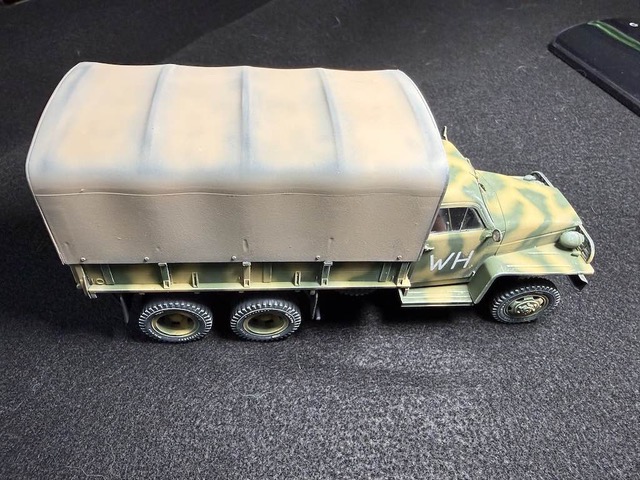
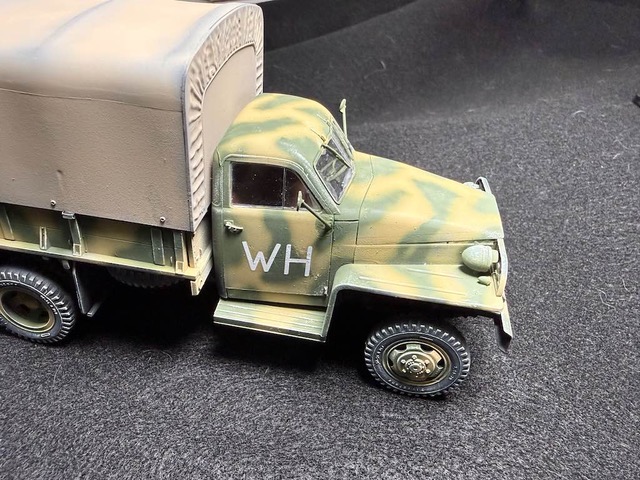
Back to the Real Color paints I used:
- RC 047 Olivgrün RAL 6003
- RC 056 Dunkelgelb RAL 7028
- RC 815 Buff canvas tarp
Mission Models Colors
- MMP-105 Worn Black Grey Tires
Other
- Mr. Surfacer 500 Surface preparation
Followed by an overcoat sprayed coat of Alclad II Lacquer’s Aqua Gloss Clear (#ALC 600). This is my personal favorite which produces a great clear finish (though in the bottle it appears cloudy, it dries crystal clear).
My painting included a small amount of pin washes, using 502 Abteilung Brown Wash #ABT080. I completed my dry brushings, using my old standby Winsor & Newton’s Artist Oil color Naples Yellow Light, No. 426.
While there are just a few decals, I used a small amounts of Microscales Micro Set #MI-1 and Walters Solvaset #904-470, which allows the decals to snuggle down and fit tighter when dry.
And I sprayed my overall final finish using Testors Dullcoat Lacquer (#1160).
Recommendations
I am fascinated with numerous service vehicles from ICM, and this Studebaker truck is no exception. While I ran into a few small issues (which as usual were the result of the builder—me), the amount of detail, especially the frame, undercarriage and engine bay were real gems in my opinion. I highly recommend this military Studebaker truck model.
Link to product on company site: https://icm.com.ua/technique/studebaker-us6-u3-in-german-service/
I also want to acknowledge and thank the brave folks at ICM for the opportunity to review this kit and thank IPMS/USA for this contribution.
Comments
Add new comment
This site is protected by reCAPTCHA and the Google Privacy Policy and Terms of Service apply.
Similar Reviews