all 2013

Review Author
Jim Coatney
Published on
Company
Cyber-Hobby
Scale
1/72
MSRP
$24.95

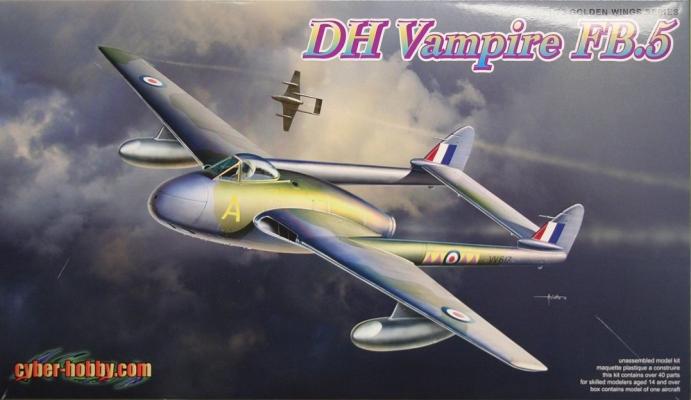
Although too late for World War 2, the de Havilland Vampire served in front-line RAF squadrons until 1953 and in training squadrons until 1966. The Vampire was the RAF’s second jet-powered aircraft, after the Gloster Meteor. Over 3200 copies were manufactured in numerous variants. The FB.5 was a single-seat fighter-bomber, of which over 1000 were built. It was powered by a de Havilland Goblin II turbojet, and it could reach a maximum speed of 550 mph.

Cyber Hobby’s new Vampire comes shortly after their Meteor, Sea Venom, and Sea Vixen, as they continue to build on their line of post-war aircraft. As a new tooling, the kit makes extensive use of slide-molding. The kit comes in the standard Dragon/Cyber Hobby top-opening box, with images on both the box top and bottom. Forty-five parts are included on three sprues, including one in clear, and are molded in light gray. The sprues are individually sealed in clear cellophane.

Review Author
Dave Morrissette
Published on
Company
Master Model
Scale
1/48
MSRP
$6.00

Master Model of Poland continues their great run of products with a set of two pitot tubes and an AOA sensor for the Hasegawa 1/48 Draken. If you have never used one of Master's products, you are in for treat. They make machined metal parts for ships and planes. Ship parts are mostly gun barrels, while the planes’ parts are gun barrels, pitot tubes, and various sensors, all of which are in metal, either brass or aluminum.

Review Author
Dave Morrissette
Published on
Company
Quickboost
Scale
1/48
MSRP
$6.50

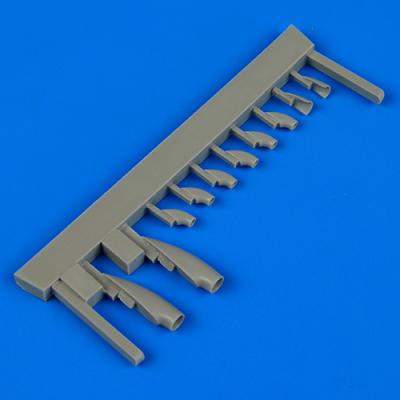
Quickboost makes another addition to its sets for the Kinetic 1/48th EA-6B Prowler with a replacement set of air scoops. There are 10 different scoops cast perfectly in the expected gray resin.

There are three different varieties of scoops:

  • Part 1 replaces kit parts (two scoops) C15+C17/C17+C18
  • Part 2 replaces kit part C11 in six scoops
  • Part 3 replaces kit part C21 in two scoops

Using the set is simple – cut from the casting block, make sure the bottom edge is good, and glue in place and paint. The Quickboost parts have good depth to the openings, which is not the case with all the kit parts. Also, the kit’s two large scoops have to be glued together and sanded, which is not done with the Quickboost set.

Overall, a good upgrade for the kit parts. Simple and easy to execute, reasonably priced, and also an improvement in accuracy. Recommended to all fans of the Prowler and those wanting that extra detail.

Review Author
Dave Morrissette
Published on
Company
Quickboost
Scale
1/48
MSRP
$6.50

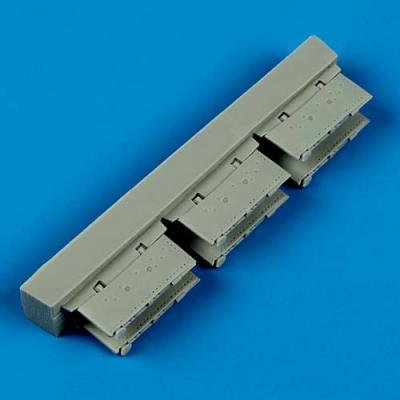
The last S-2F set I have for review from Quickboost is a replacement set of wing pylons for the plane. There were six underwing hard points for rocket pods and conventional depth charges, or up to four additional torpedoes. This set is six direct replacement pylons. Trim them from their well-molded sprue and glue to the plane. I test-fitted three and they snap into place. The molded detail is somewhat finer than the kit parts. The kit includes three rocket pods for each wings.

There is some improvement in accuracy and detail, as the Quickboost parts have better rivet definition and detail. This is especially true on the bottom of the pylons if they are left empty. Kinetic completely missed the prominent pad on the front of the pylons.

This is a very simple replacement. It is easy to use and fits well. For $6.50, this set will definitely improve the look of the pylons. Recommended. My thanks to Quickboost and IPMS/USA for the set and chance to review it.

Review Author
Bryan Krueger
Published on
Company
Dragon Models
Scale
1/35
MSRP
$54.95

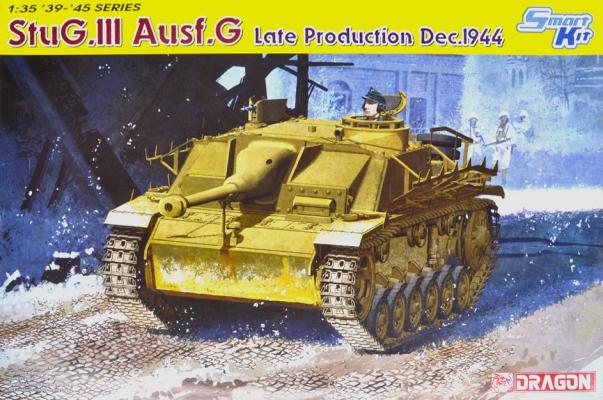
Dragon's latest Stug III release is marketed as a December ‘44 production time frame version. If you follow the instructions, you won't build a vehicle from the Dec 44 production run, but a somewhat jumbled mix with early, mid, and late production features. Fortunately, if you know what you are looking for, the kit includes the parts to build what is commonly accepted as a late ‘44/early 45 vehicle. With some exceptions.

The parts are molded in light gray styrene with crisp details and no noticeable flash. There are some very fine details like the fender tread pattern, hull weld beads, and rough texture on the cast mantle (Topfblende). This release is a bit of a mix-and-match from their earlier StuG III releases (notably the CH May ‘44 Mid-Late Production) with a few additional sprues from their StuG IV kits. A good portion of these parts won't be used and are blued out on the front instruction sheet. But don't be too hasty, you'll need some of those pieces.

Book Author(s)
Dénes Bernád & György Punka
Review Author
Hub Plott
Published on
Company
Mushroom Model Publications - MMP Books
MSRP
$46.95

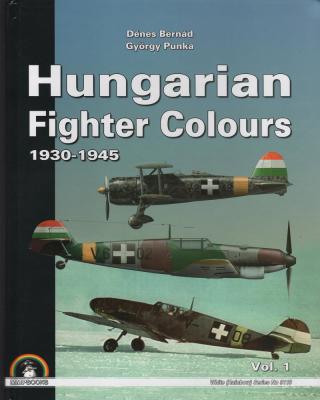
This book takes a look at colors and markings of fighter aircraft of the Hungarian Air Force from 1930-1945. This is the first of two volumes. The following aircraft are covered in Volume One: Fokker D.XVI; Fiat CR. 20 and CR. 20B; Avis I-IV; Fiat CR.30, CR. 30B, and CR. 32bis; Fiat CR. 42 and CR. 42CN;, and Messerschmitt Bf 109D-1, E-3, E-4, E-7, F-2, and F-4. There are many black and white photos used to illustrate these planes, as well as beautifully drawn color profiles. Most of these are side views, but some also include top views. The authors also include quite a few wartime color photographs as well as color photos of aircraft parts and relics that have survived into modern times.

Review Author
Jim Pearsall
Published on
Company
Scale Aircraft Conversions
Scale
1/144
MSRP
$12.99

The Aircraft

The B-52 has been flying longer than a lot of IPMS members have been building. It entered USAF service in 1955, and 85 of them are still in active inventory, with 9 in reserve. The combat-ready B-52Hs left are at Minot AFB in North Dakota and Barksdale AFB, Louisiana.

The Scale Aircraft Conversions set

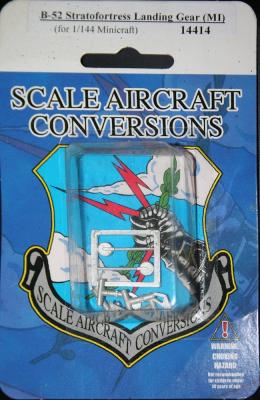
The SAC set for the B-52 consists of 4 identical main gear sets and two outrigger wheels and struts for the wings, all in white metal. The outriggers are cast with a protective sprue, which is a great idea since they’d be a little fragile.

The main gear uses the kit wheels.

Painting

This was pretty simple. The main gear and the outriggers are painted white. I used Floquil Reefer White, which goes on nicely from the airbrush and sticks wonderfully to the metal parts. I then brush-painted the wheels on the outriggers with Floquil Grimy Black.

Book Author(s)
Charles Kliment
Review Author
Pablo Bauleo
Published on
Company
Squadron Signal Publications
MSRP
$28.95

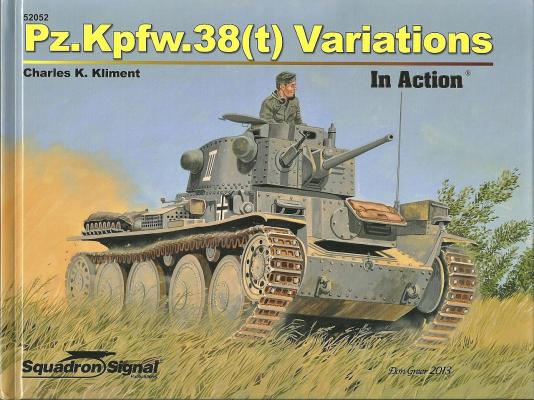
The Panzer 38 was probably one of the best designs for light tanks at the outbreak of World War II. It was originally designed by a Czech team, and the Germans took over production after the occupation of Czechoslovakia and pressed the tank into German service. They also extensively modified the basic chassis into many other armored fighting vehicles.

The book is profusely illustrated with b&w photos, plus a few color profiles. It covers the light tank versions A to G, plus other variants like the PanzerJager series (tank-hunters – the Sd.Kfz 138/M, 139, Grille H/M, and Marder), the Flakpanzer Sd.Kfz.140, several reconnaissance versions, an ammunition carrier version, a recovery vehicle, and even late war tank hunters like the Hetzer. There are brief sections describing the camouflage and markings and combat service of the different variants.

Review Author
Greg Wise
Published on
Company
Moebius Models
Scale
1/32
MSRP
$44.99

History Brief

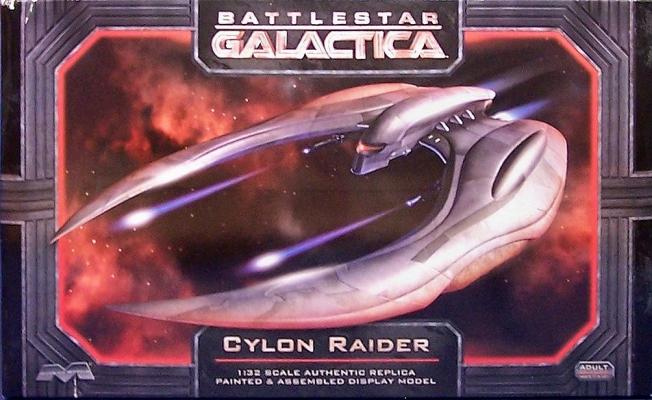
The Cylon Raider is a space superiority fighter. This modern Raider is the CGI version designed by Eric Chu used in the re-imagined television series. Called Sparrow by the Colonial pilots, these were first encountered 40 years after the first Cylon War. This thing is a living biomechanical being, spacecraft and pilot rolled into one; truly a strange nemesis.

The Product

It’s a prebuilt and fully finished kit ready to display. It’s packaged in a colorful box that’s representative of space flight. The model is accurate, nicely done, and looks pretty decent for a pre-built. It has a very nice old-school 2-piece display stand that needs assembly. However, I found this type of display stand to be unbalanced and wobbly for this application.

The Bottom Line

My wife, who is a huge BSG fan, loves this thing. Two thumbs up. Thanks to Moebius and IPMS/USA for the review opportunity.

Review Author
Greg Wise
Published on
Company
Moebius Models
Scale
1/32
MSRP
$54.99

History Brief

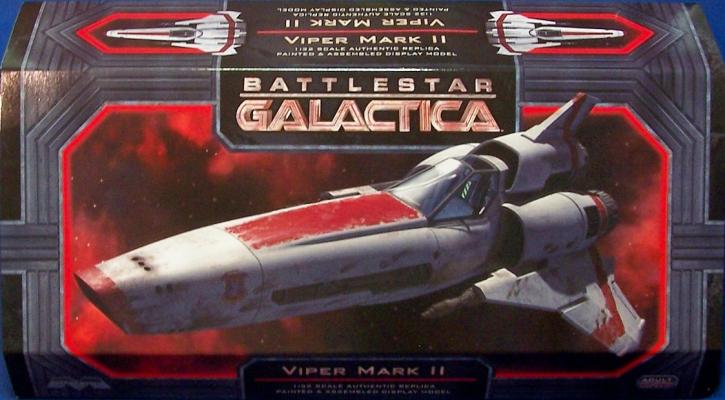
From the re-imagined television series, the Mk II Viper was a space superiority fighter/attack craft of the Colonial Fleet during the first Cylon War. It was then called back into service 40 years later onboard the aging Battle Star “Galactica” to defend against the more advanced Cylon fighter during the exodus from the holocaust of the 12 colonies.

The Product

It’s a prebuilt and fully finished kit ready to display. It’s packaged in a custom box that’s representative of the launch/flight tube. The model is accurate, nicely done, and looks pretty decent for a pre-built. It has a very nice old-school 2-piece display stand that needs assembly. “Husker,” the pilot figure, looks great and seems to be comfortable…check six! According to Moebius, Apollo and Hot Dog will be also represented, which is good to know if you are a collector.

Review Author
Greg Wise
Published on
Company
Moebius Models
Scale
1/4105
MSRP
$64.99

History Brief

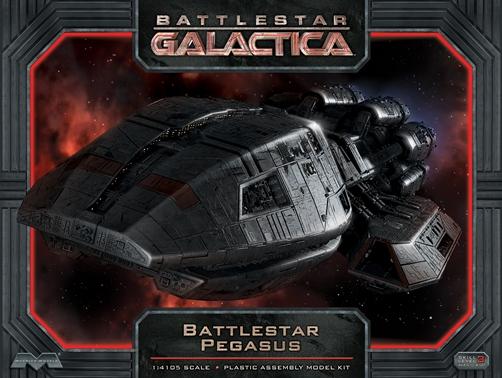
The Pegasus is either a Mercury class Battlestar or a Pegasus class Battlestar, depending on where you source your information; she is newer, larger, and more powerful than Galactica. In the re-imagined series, the Beast, as she known by her crew, is a survivor unexpectedly found by Galactica in the 10th episode of the 2nd season. She’s almost twice the size of Galactica but only needs about half the support crew, relying on more advanced automation systems. Utilizing these automation systems, the Pegasus could manufacture her own Vipers and Raptors, plus replenish stocks for the Galactica.

Her Captain, Admiral Helena Cain, and her crew were battle-tested and wanted payback after escaping the Cylon invasion. They were entirely motivated by bloodthirsty revenge and didn’t want to be tied up aiding the Colonial survivors, and, yes, this made great television entertainment. Sadly, the Pegasus was destroyed a few episodes later… or was she?

Review Author
Roger Rasor
Published on
Company
Iliad Design
Scale
1/72
MSRP
$12.00

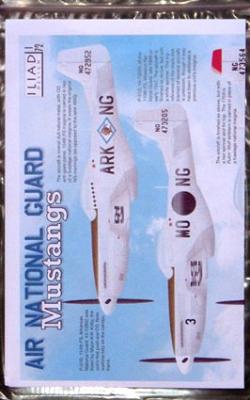
1/72 scale builders should be happy to hear that Iliad Design has reduced their 1/48 ANG Mustang decal sheet to 1/72 scale...and added one more option! ANG Mustangs are interesting subjects that, in my opinion, have not been covered very well by domestic decal companies. There are five subjects on the sheet provided in this set. These options provide builders a choice of National Guard Mustangs in a somewhat dulled natural metal finish with Olive Drab anti-glare panels, colorful unit emblems, and prominent code numbers and serials. The aircraft served in units in five Midwestern and Western states in the four years following WWII. Some may have gone on to serve in the Korean War.

The five options are:

Review Author
Mike Hinderliter
Published on
Company
Scale Aircraft Conversions
Scale
1/72
MSRP
$13.95

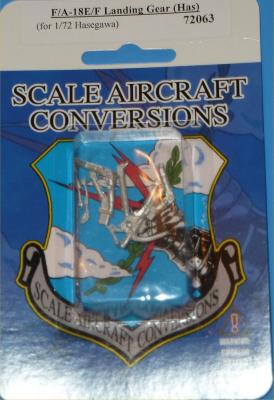
Scale Aircraft Conversions makes various landing gear sets from lead-free white metal. Some come with the wheels attached, if needed. Others might have the wheel bay included to help with added weight, but most only come with the new landing gear struts.

The detail of the metal parts is much crisper and looks flawless. The advantage to these parts is their strength, and that they won’t warp under the kit’s weight over time. They will also hold up well while you work with them – no accidentally snapping them apart. To attach the new landing gear, you will need to use CA glue. On SAC’s website, they recommend a gap-filling CA glue so the gear can be positioned the way you want it, and then using an accelerator to bond the parts instantly.

Review Author
Paul Mahoney
Published on
Company
Eduard
Scale
1/48
MSRP
$7.95

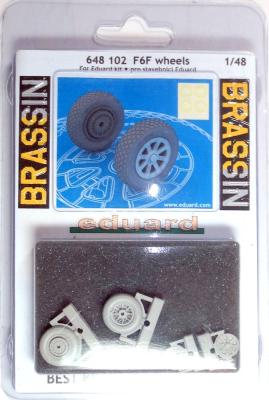
One of the only complaints I have seen regarding the superlative 1/48 F6F Hellcat released by Eduard a few years ago was with respect to the wheels provided in the kit. The kit parts are considered to be too thin, most likely representing the wheels/tires fitted to the prototype and very early Hellcats.

Ironically, Eduard themselves have now release a Brassin wheel set for the F6F that fixes this problem with their own kit. This resin accessory comes with a pair of crisply molded wheels/tires, with a separate pair of hubs and a set of Eduard kabuki masks to ease with painting. The tires have a diamond tread pattern (as opposed to the smooth tires of the kit-provided pieces), and the detail is extremely crisp.

Review Author
Roger Rasor
Published on
Company
Quickboost
Scale
1/32
MSRP
$8.50

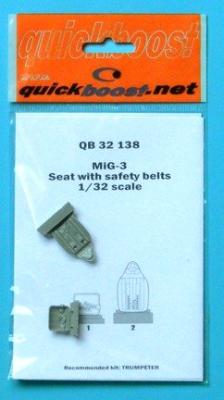
Trumpeter’s 1/32 scale MiG-3 kit is quite nice and needs only a few changes to improve it. Some kit reviews have pointed out that number one on the list is enhancing cockpit details, and the seat is the most conspicuous item noted. Quickboost has now addressed that issue by offering a two-piece resin replacement that includes a high level of detail and nicely molded safety belts (the photos below show the level of detail on the front and back of each part). The two-piece seat is designed to fit in place of the kit’s three-piece seat parts. In the comparison photo below, the Quickboost seat (on the right) exhibits superior detail and avoids the ejector pin repair issue found in the kit’s seat back (on the left).

Review Author
Rod Lees
Published on
Company
Avionix
Scale
1/32
MSRP
$39.99

Squadron is one of the mainstay companies in the United States for our hobby, and they have been making great strides in providing customers great items at reasonable prices. In this case, their release of the Avionix-range of resin accessories is proving quite valuable. We cannot thank Squadron enough for their support of the hobby, and IPMS USA in particular by providing us new releases. On to the subject of this review: The Avionix front cockpit for Hobby Boss’ 1/32 P-61!

I’m a bit tardy on this review; I received the Avionix review item a month or so ago, but the reason is I needed to purchase a kit to use it on, (I thought the backorder would arrive before the review item) and they keep selling out! Once I had it, I could use it to review the upgrade while meeting the reviewer corps requirement of “Use the set if you can…” I thought it would be an easy to find one, but no… I finally got one about two weeks ago, and here we are.

Review Author
Roger Rasor
Published on
Company
Quickboost
Scale
1/48
MSRP
$8.50

Quickboost now offers a resin 1/48 scale three-piece resin ejection seat to replace the injection molded seat found in the various F-86F kits marketed by Hasegawa (also should fit Academy kits). The Quickboost seat offers a more correctly proportioned seat with superior detail than provided in the kits, plus it includes nicely molded safety belts (the photos below show the level of delicate detail molded into the parts). See the comparison photo below to determine the difference in the Quickboost seat (on the right) to the Hasegawa kit’s rather basic seat part (on the left).

Book Author(s)
M. J. Murawaski and Marek Ryś
Review Author
Rob Benson
Published on
Company
Kagero Publishing
MSRP
$25.00

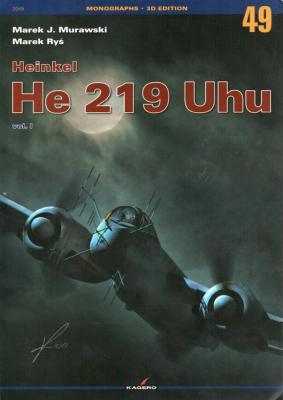
Thank you to the wonderful folks at Casemate Publishers and to the IPMS Reviewer Corps for allowing me to review these two very timely detailed volumes describing the He-219. The Heinkel 219 Uhu was a highly effective but under-utilized Luftwaffe night fighter, with a variety of innovations including obliquely firing guns and the first operational ejection seats. The two Kagero monographs described here provide an excellent resource for any modeler constructing and replicating this extraordinary aircraft.

Book Author(s)
John Weal
Review Author
Perry Downen
Published on
Company
Osprey Publishing
MSRP
$22.95

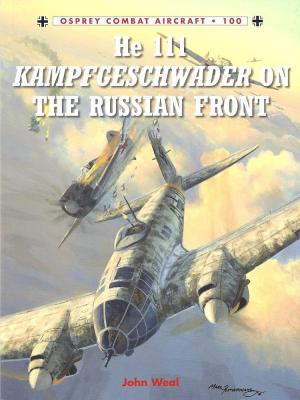
Although the He-111 was designed supposedly as a civil transport prototype capable of carrying 10 passengers and mail, its main purpose was of a military nature. It first flew in 1935. Several modifications were made to improve performance. A major change was replacing the two 660-hp BMW engines with the 1,000 hp Daimler Benz DB 600A engines, which significantly improved performance. The He-111 cut its fighting teeth in the Spanish Civil War, serving with the Condor Legion where it was very successful. That success continued in the early days of World War II. Germany overran several countries with its Blitzkrieg tactics, staring the Ju-87 and the He-111. Its success faded with the onset of the Battle of Britain when the lightly armed He 111 encountered the fast Spitfires and Hurricanes. By the time Hitler lost this battle, he was already planning Operation Barbarossa, the invasion of the Soviet Union. The He 111 again found success on the Russian Front.

Review Author
Roger Rasor
Published on
Company
Quickboost
Scale
1/48
MSRP
$8.50

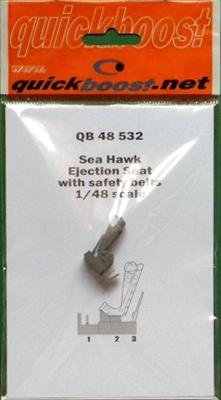
Quickboost now offers a 1/48 scale three-piece resin ejection seat to replace the nine-part injection-molded seat found in the Trumpeter Sea Hawk kit, or the resin one found in the Classic Airframes kit. The multi-part ejection seat found on the sprues in Trumpeter’s kit builds into a nice, but somewhat unconvincing, replica of what you would see in the prototype. The resin seat in the Classic Airframes kit is much nicer, but requires the modeler to add PE belts to the seat, and the kit is now out of production. The Quickboost seat offers superior detail than what’s provided in either detail set, plus it includes nicely molded safety belts (the photos below show the level of delicate detail molded into the parts). The Quickboost seat also appears to be better proportioned. In the comparison photo below, the Quickboost seat (on the right) exhibits superior detail over that found in the Trumpeter kit’s seat (on the left).

Book Author(s)
Thomas Anderson
Review Author
Pablo Bauleo
Published on
Company
Osprey Publishing
MSRP
$29.95

Osprey Publishing has a series known as “General Military” which has one-off books on different topics. This one is dedicated to the Tiger tank, although reading the book also provides a good insight on armored vehicle operations, as it includes descriptions of how the Tiger tanks worked together with Panzer III and half-track armored carrier personnel.

The book is divided into nine chapters. The first three chapters (Development, Organization, Mobility) basically evaluate the tank’s performance as a vehicle and how it was used in combination with other AFV. The following three chapters (Firepower, Armor, Combat), cover the combat experience of the tank, with specifics sections for combat in each front (Western, Eastern, and Africa), while the final three (Maintenance, Under Fire, Conclusions) cover different aspects from the recovery of those vehicles to how they performed in the last years of the war, facing upgraded allied armor vehicles.

Review Author
Christopher Martens
Published on
Company
Trumpeter
Scale
1/350
MSRP
$79.99

History Brief

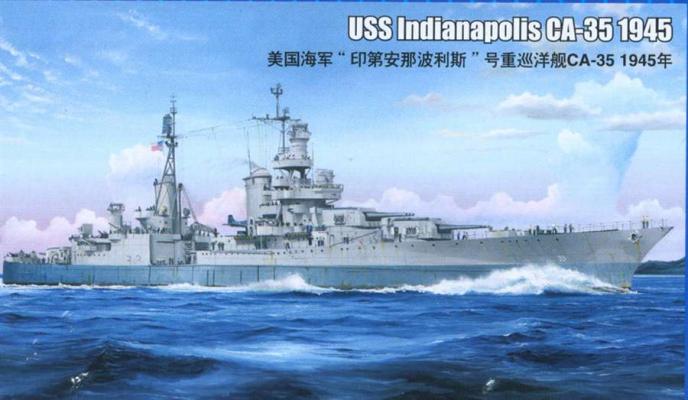
The USS Indianapolis is a ship potentially more famous for her loss than her life. On July 30, 1945, after delivering components for the first atomic bomb, the Indianapolis was hit by two torpedoes from the HIJMS I-58. Her loss was not discovered before August 2nd, after many of her survivors met grisly ends at the hands of the elements and constant shark attacks.

The Portland-class cruiser was launched in 1931 in the post-Washington Naval Treaty world. Envisioned as an improvement on the Northampton class, the Portlands featured a lower tripod forward mast and improved protection. The Indianapolis had a busy wartime career, earning ten battle stars for her service. She also saw extensive modification through her life, losing much of her upper works to the torch to make room for additional AA guns.

Book Author(s)
Mikhail Putnikov
Review Author
Perry Downen
Published on
Company
Squadron Signal Publications
MSRP
$28.95

The Saab 37 Viggen was designed to a Swedish air force requirement for an integrated weapon system with high performance, great versatility, and STOL capability. It was intended to replace the Saab 32 Lansen attack plane and the Saab 35 Draken fighter. To meet the requirements of a multi-roll aircraft, Saab came up with a radical configuration for the day. The design used a conventional low-set delta wing extending from mid-fuselage to tail pipe, with small clipped canard wings mounted forward of the main wings and above the intakes. This single-seat aircraft was powered by a single license-built version of the Pratt & Whitney JT8D engine equipped with a thrust-reverser. This innovative design package created a plane capable of Mach 2 at high altitude and Mach 1 at low altitude while maintaining short-field takeoff and landing capabilities. A total of 329 Viggens were built, and from 1970 to 1990 they were the backbone of Sweden's air defense.

Review Author
Pablo Bauleo
Published on
Company
UMM-USA
MSRP
$22.00

Once, I heard that a “modeler can only be as good as his tools”. While I think some modelers can be better than their tools, I know that in my case my tools are the best I can get, which is why I try to get the best tools I can.

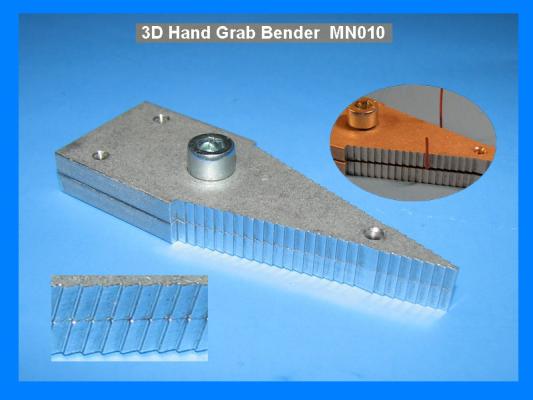
This arrow-head shaped tool is extremely handy to create “hand grabs” (for an armor vehicle, an aircraft canopy, or maybe a ship ladder) which will all have the same size and dimension. This tool might find uses in trains and maybe for hydraulic lines in an aircraft, or for internal wiring inside an AFV or a car.

The tool has 28 pre-set lengths, or notches, so you only need to choose which one to use and then simply bend the piece of wire or photo etch to the length you need.

Simply brilliant design. Every single handle will have the same size.

I would recommend this tool for modelers who work with photo etch or scratchbuild parts.

I want to thank UMM-USA and IPMS/USA for the review sample.

Review Author
Brian R. Baker
Published on
Company
Airfix
Scale
1/72
MSRP
$7.49

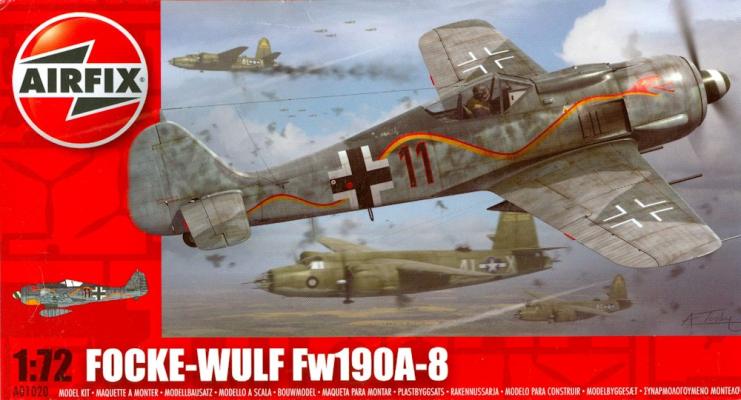
History

So much has already been written about the Focke Wulf Fw-190 that I needn’t add much to the history of the type. The BMW-powered Fw-190A series was produced in numbers approaching 20,000, and served as the backbone of the Luftwaffe’s fighter and ground attack forces during World War II. Easier to fly than the Bf-109, the wide track undercarriage of the Fw-190 resulted in fewer accidents, and the heavier armament variations were used for special purposes, such as anti-bomber operations and close support.