In November, 1950, “volunteer” forces of the Chinese Army crossed the Yalu River and swept the advancing UN forces out of North Korea and back below the 38th Parallel. By the following February, Allied forces had halted the Chinese and stabilized the front, pushing them back into North Korea with limited counterattacks. By April, with an infusion of fresh divisions, the Chinese were once again on the offensive, pressing the UN line in another attempt to capture the South Korean capital, Seoul.
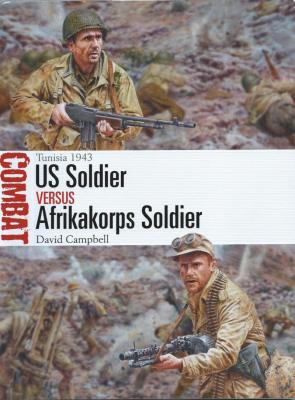
This is an excellent, well-written, beautifully illustrated book that provides a comprehensive overview of the WWII conflict at both a global and personal level. The hardcover book includes both color and B&W photos, and color illustrations that give a concise, but thorough, understanding of the strategies and decisions of the combatant nations.
Osprey’s Press release describes The Second World War as telling the stories of the men and women who lived and died during the second world war, from “politicians to factory workers, and from high command to the conscripted man on the front lines”. The experience of war is brought to life through a wealth of contemporary documentation, writings, and historical research while the political, military, and historical significance of the warriors are examined. The Second World War provides readers with a comprehensive, and yet very concise, history of the devastating events.
Introduction
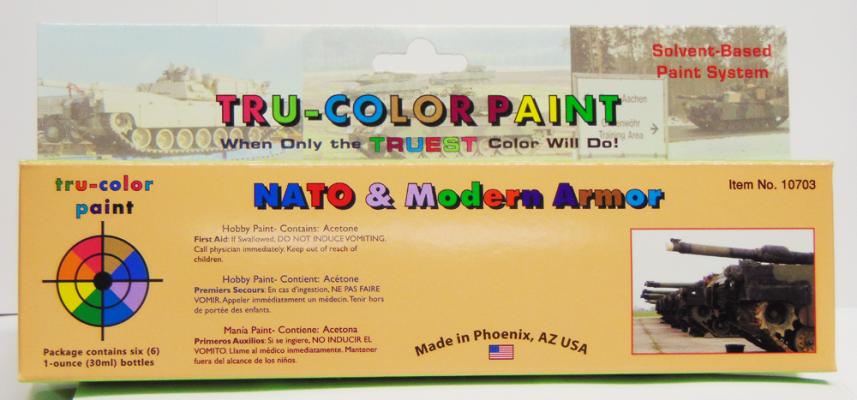
These Matte acrylic solvent-based sprayable paints are designed to be sprayed right from the bottle without the need for thinning. When researching the chemistry of Tru-Color Paints, I found on their website the following description:
Tru-Color Paint is a solvent based paint with an acrylic polymer used as the binding agent which adheres very well to plastic or metal models, when those models are properly prepared. The pigments and/or dyes used to produce the correct colors are very finely ground so that they do not clog air-brushes.
Tru-Color Paint was formed in 2008 by Rick Galazzo and Scott Cohen, both of whom come from extensive backgrounds in formulating paint on the commercial scale. They set out on their own to develop this paint line of solvent based paint by reformulating the old Accupaint formulation to flow better and give a more glossy appearance after drying. They currently offer over 600 colors offered with more to follow. Sets and single bottles are available and include lines for railroad, automotive, and military aircraft and armament lines.
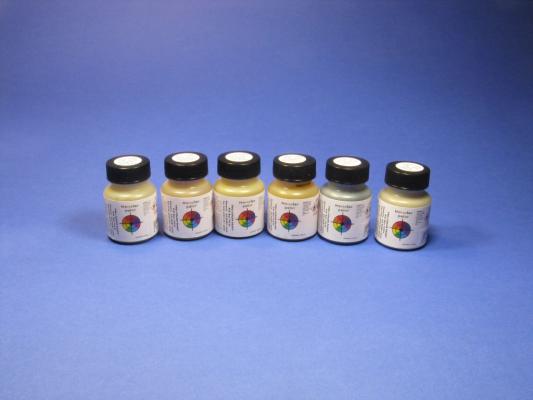
The specific set I tested was specifically for weathering and include a sample of their masking frisket papers as well as the following colors in 1 oz. bottles:
Neil Grant studied archaeology at Reading University, graduating in 1990. He worked as an auditor at the UK National Audit Office until 1996 when he joined Key Equipment Finance as an accountant. 2004 say Neil working at NSK Europe as an accountant until 2009 when he left to join English Heritage where he currently is the Head of Corporate Finance and Performance. He joined the Board of Trustees in 2018 for the Royal Armouries Museum in Leeds. His interests in firearms, medieval edged weapons, and classical and medieval horsemanship has led him to author at least seven titles, including: The Bren Gun (2013), The Lewis Gun (2014), Mauser Military Rifles (2015), and Rhodesian Light Infantryman 1961-80 (2015), SAR80 Assault Rifles (2016), British Tank Crewman 1939-45 (2017).
In his organization of this book, Mr. Michel provides a logical approach to this ‘air campaign.’ The Table of Contents provides for the basic outline:
- Introduction
- Chronology
- Attackers’ Capabilities
- Defenders’ Capabilities
- Campaign Objectives
- The Campaign
- Aftermath and Analysis
- Select Bibliography
- Index
During his introduction, I was surprised to read the author’s comments about an earlier book I had read and prior to this point considered to be the basic groundwork for this air war over Vietnam; Linebacker II: A View From the Rock. He calls this early recounting of the Linebacker II operations “an inaccurate and self-aggrandizing memoir.”
In this book, the author clearly lays out the 11 nights of the Linebacker II, and often ill-conceived organization, planning, and operations of these strategic and tactical missions. He does so in a very convincing manner.
Osprey Publishing continues to add titles to its long running Campaigns series, this time tackling the struggle to liberate the remaining islands in the Solomon’s Island chain in the months after the successful conclusion of the Guadalcanal campaign. Using their tried and true format, the volume looks at the opposing commanders, forces, and plans before diving into the narrative on the campaign. Using contemporary photographs, superb maps, and full color illustrations, this volume does an excellent job in summarizing the strengths and weaknesses of both sides. Since these volumes are meant as an overview, they do not go into great detail into the campaigns, but provide enough information to give the reader a grounding in the campaign.
Tru-Color Paint was formed in 2008 by Rick Galazzo and Scott Cohen, both of whom come from extensive backgrounds in formulating paint on the commercial scale. They set out on their own to develop this paint line of solvent based paint by reformulating the old Accupaint formulation to flow better and give a more glossy appearance after drying. They currently offer over 600 colors offered with more to follow. Sets and single bottles are available and include lines for railroad, automotive, and military aircraft and armament lines.
The specific set I tested was specifically for armored subjects painted olive drab from the years 1939-1956 and include the following colors in 1 oz. bottles:
This part 2 of a three-part review of Mission Models paints.The Clear Coats
Shortly after releasing their second round of paint colors Mission Models released three clear coat products to protect the paint once it has been applied to a model. The Clear coatings are Flat Clear, Semi-Gloss Clear and Gloss Clear.
All clear coats are mixed with the Mission Models thinner and depending what you use the clears coats for, the thinner proportions mix is varied, I found 30% thinner to the clear worked best for me. The Polyurethane may be used with the clear coat as it is with the paint products. Let the clear coats dry for minimum 3 hours and they are ready for applications of any masking material.
Spraying the clears are done by setting your airbrush air pressure to 10 to 15 psi and applying the clear coats in light multiple coats.
The clear coats are compatible with all the decal settings solutions that you would normally use on your projects.
This will be the third of a three-part review of Mission Models paints.
The Metallics
Mission Models has four new metallic paints, White Aluminum, Dark Aluminum, Duraluminum and Silver.
For this paint test I sprayed Mission White Primer after cleaning and degreasing the test surface. If you use gray or black primer you can get a variance of tonal quality for each of the metallic paints making them very versatile.
I decided to paint the White Aluminum and Dark Aluminum for this review. As you can see in the accompanying pictures the paints are very durable. Once laid down they will not pull up with masking tape and have a nice metallic sheen.