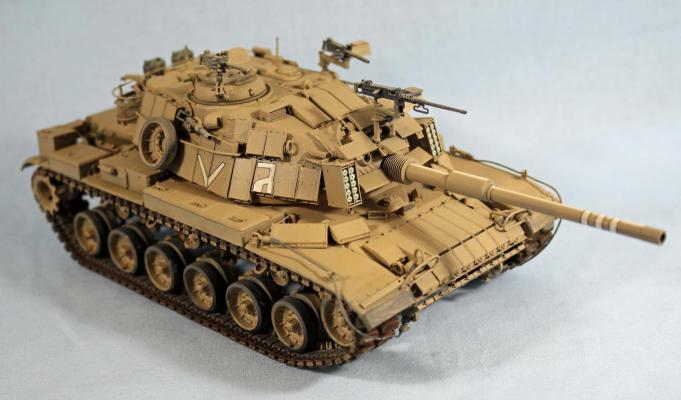
The 10.5 cm LeFH - 18/4 auf Geschutzwagen Lr.S.(f) was a German Army (Heer) self-propelled artillery piece from 1944. The German used captured French Lorraine 37L tractors to mount their 10.5cm howitzer on. Alkett made 24 and Becker made 12. All were lost in combat between D-Day, June 6, and the end of August 1944. This model is of the Becker produced conversion.
Bottom Line Up Front: Even though Tamiya’s “new tool” release of the venerable Panzerkampfwagen IV does not disappoint with nice detail, clever engineering, and three figures that are well rendered in unique and interesting poses. Even though this kit uses the hull and suspension from the 1994 Panzer IV releases, the vast majority of the kit is brand new and up to modern standards. This is not merely a reboxing of an old obsolete kit.
History
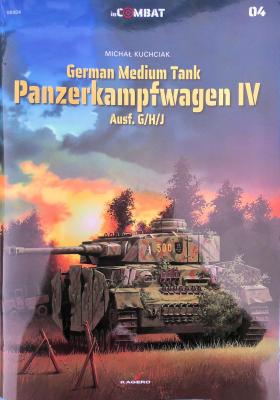
The Pz.Kpfw.IV began manufacture in 1936 with the Ausf. A, and went through a number of specifications before what was perhaps the definitive short barreled infantry support variant started production in 1941: the Ausf. F. It had reinforced armor and updated hull designs, as well as an L/24 75mm gun. About 460 rolled off of the production lines, mostly serving on the Eastern front but also in North Africa, Italy, and France.
Bottom Line Up Front: This set brings Tamiya’s 1/48 Panzer V ausf. D kit to the next level. It’s not for the faint of heart though. Like many 1/48 scale PE sets, it contains several sub-assemblies that will make you squint and reach for the Optivisors and the finest set of tweezers you have.
Hauler has one of the most extensive line of aftermarket photo etch for 1/48 scale armor. Their sets add exquisite detail to the already excellent lines of quarter scale AFVs from the likes of Tamiya and Hobby Boss.
This set contains two PE brass frets with upwards of 70 parts covering engine intake mesh, tool brackets, exhaust mounts, etc. The set comes in the standard Hauler clear plastic bag, stiff cardstock backing, instruction sheet and stapled header card.
History
The BM-13-16 was the most numerous example of rocket artillery in the Red Army’s arsenal during WWII. The system included 8 rail guides holding 16 RS-132 rockets. It was a formidable weapon that struck terror in the hearts of anyone on the receiving end. The system was often installed on the chassis of trucks delivered to the USSR under Lend-Lease. In this ICM release, the chassis belongs to the British Fordson W.O.T. 8 4x4.
The Kit
Inside the durable cardboard box are twelve dark green styrene runners, one clear runner, one PE fret, and five vinyl tires. There are no decals included in the kit, which is a shame as it would have been nice to at least have some for the instrument panel dials. There is only one scheme offered in the kit for a Russia 1942 Olive Green sample.
There are numerous accounts of the various armoured campaigns that defined the major fronts of WWII from the perspectives of all sides involved. Some are exhaustive accounts filled with places, dates, and names that can be excruciating at times to read with the extensive details. Books by Anthony Tucker-Jones usually are a bit easier to decipher and can be enjoyable without getting too much into the minutiae. This book is a good example of this- to the point of being a bit watered down perhaps. The book looks at the entirety of the war from the Allied view-- with the book covering American, British and Commonwealth, and French armor forces and that is no small feat.
The book covers the Tanks that played a key role in the battlefields of World War II and how they were used and utilized. The book goes into great detail of the tank’s role in all the major campaigns of the war, how the tank was used, the way its role evolved over the war, the different locations it was used in. It goes into great details on unit use and tactics which help you understand how it was used. The unit strengths and makeup are very interesting.
This book increased my own knowledge of tank warfare a lot and helped me understand more its role in battle and tactics of all sides in the conflict. The information shows the speed of progress made with tank design and use during this important war.
The images in the book are excellent and inspire diorama ideas for modelers.
I highly recommend this book to everyone with an interest in WWII especially in armor and tank warfare.
Bottom Line Up Front
A surprising swing and a miss for Tamiya on this kit. Technically this kit is very well done, but it’s rather boring and uninspiring. The kit is well engineered with many "modeler-friendly" features that make it a simple, quick build. The kit is molded in dark green plastic with hull weights, link-and-length tracks, poly caps, braided copper wire for the tow cables. Decals depict two vehicles from the Battle of Berlin in 1945. This is a "new tool" kit that does not use any parts from Tamiya’s earlier T-34/76 kit with the die-cast hull.
Introduction
The company website states:
“This set includes the base colors and products essential for imitating the accumulation and weathering effects produced by mud”.
“With this set, you will be able to replicate different types of effects including dry mud, wet mud, and mud splashes. These sets are the perfect solution for casual modelers and those experienced enthusiasts looking for the most realistic painting options in one convenient box.
This is a reissue of the earlier MaxxPro kit issued two years ago, with the addition of Spark II mine roller parts. The ‘User Manual’ is twenty pages containing a map of the kit’s parts outlining 22 steps, a color four-view for one vehicle and no color suggestions or paint chart, though the four-view indicates that Gunze Sanyo Mr. Color were used in constructing the model.
This kit contains approximately 522 molded parts on 12 sprue trees, a sheet of 41 photo etched parts, four tires and a decal sheet. An example is that there are 3 sprue trees each marked a “B” indicator and each is a separate group of individual items—confusing to say the least.
One of Kagero’s latest installments in their TOPDRAWING series is booklet # 98 which covers the M4 Sherman – namely the M4, M4A1 and M4A4 Firefly variants. Like the other TOPDRAWING series booklets, #98 describes the differences in the external arrangements of the major variants, through text, line drawings (in the more common modeling scales) and a few color profiles. These booklets are a great reference for scale modelers of any experience level. I would like to thank Casemate Publishers for providing a copy for this review.
As described in the introduction on page 1, the M4 Sherman was the most popular American tank of World War II. There were over 49,000 M4 tanks produced in over a dozen variants between early 1942 and mid-1945. As for the M4 variants covered in this booklet, the major different external features were: