Helion is a UK-based company that produces books on many aspects of Military History from the Late Medieval period through to the present day. Helion was established in 1996 by University of Warwick graduate Duncan Rogers. Since then, they have published over 1,200 books, with 100 or more new titles coming out every year, for readers around the world. Casemate markets Helion books in the United States.
Double Xcellent Model, DXM, from Tawain has provided the IPMS/USA reviewer corps with a set of painting stencils (weathering/rusted) to give a splotchy/mottle look to your kits. These are made from a soft silicone material and can conform over complex surfaces. These should be used in conjunction with an airbrush to get the best results.
In the Package
DXM provided four different stencils each individually packaged.
- Type 1 is a random jagged edge stencil.
- Type 2 is similar to Type 1 but with smaller holes.
- Type 3 has more rounded holes of varying sizes.
- Type 4 is a smaller version of Type 1 & 3 and on one sheet.
Types 1, 2, & 3 are titled as “Dual Effects” since on side has a flush surface to allow for a more solid demarcation line when place on the surface. The other side has a space or bilevel edge to create a softer demarcation line.
Zoukei-Mura has graciously provided the IPMS Reviewer Corps with a first look at their brand new 1/32nd scale Kawasaki Ki-100-I Otsu Type 5 Fighter. Full release and distribution will be later in August 2026.
Prior to this release, the only way to get a 1/32nd scale Ki-100 was to purchase a Hasegawa Ki-61 and an Alley Cat conversion set. This new kit will fill a void for WWII Japanese fighters.
First Impression: It Looks Fabulous!
History (from Zoukei-Mura website)
The Ki‑100 Type 5 Army Fighter was a Japanese Army aircraft of World War II, developed as a derivative of the Ki‑61 Hien. By installing the Ha‑112 radial air‑cooled engine and modifying the fuselage, the Ki‑100 arose as an emergency conversion aircraft. Despite its improvised origins, it demonstrated outstanding performance, providing the Japanese Army with an unexpectedly capable fighter.
In 2020, the JASDF celebrated the final year of service for the RF-4E, which had entered service in 1961, with a specially marked airframe, serial 57-6907.
Taiwanese modeling company, DXM Models, has released a set of 1/48 decals for this airframe and has kindly sent IPMS/USA a sample. This set included two sheets of decals, one for the stenciling and standard markings, while the second is devoted exclusively to the special markings applied to the airframe.
A full colour instruction leaflet includes comprehensive decal placement and painting guides for top, bottom and both sides. Colour callouts are in Mr. Color, Humbrol and FS standard where applicable.
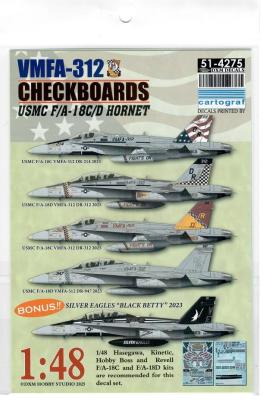
The decals are printed for DXM by Cartograf, which ensures quality. The colours are strong, even the tiniest of stencils is readable under magnification and the colours are perfectly aligned. I expect them to behave properly with appropriate solutions, as with all Cartograf’s offerings.
The JASDF operated a special unit for Phantom testing from it’s earliest service days in 1971. The F-4EJ ADTW (Air Development and Test Wing) was the first and last operator of the F-4EJ in Japan until it's disbanding in 2021. Based at Gifu AB, the ADTW tested new technologies and weapon systems for the JASDF. Throughout the Phantom's service, the ADTW evaluated F-4EJ variants including the improved Kai version.
Taiwanese modelling company, DXM Decals, has released a set of 1/48 decals for three airframes, including two F-4Ejs and one F-4EJ Kai. The single standard-sized decal sheet is packed with images, including all the decals required for the three options that include a farewell scheme, and a full set of stencils.
A full colour instruction leaflet includes comprehensive decal placement and painting guides for top, bottom and both sides. Colour callouts are in FS standards so you can make your own choice of paint brand.
I like small air forces so whenever a book comes out covering planes flown by them I am interested, especially if it shows schemes used by those smaller air forces.
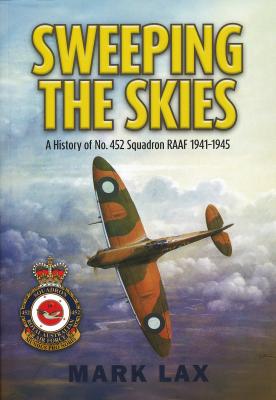
The Bazzocchi Connection is focused on two designs by Engineer Ermanno Bazzocchi who joined Machi during WW2. The Introduction covers early designs leading up to the MB.326 in 1961 after the firm became Aermacchi. This plane later evolved into the MB.339 and these two aircraft make up the bulk of the narrative and pictures.
The book moves through the development history of the MB.326 before moving into operational use. One interesting aspect is tables listing all operational aircraft by serial numbers under the air forces they flew with and with a notes column listing each planes outcome.
Each country is listed in alphabetical order (after Italy) and the history is discussed including any combat these trainers entered into. The cover art shows a South African MB.326 downing an Angolan Hind-24.
In September 2022, in a surprise move, the Japanese Air Self Defense Force (JASDF) revealed a new special markings scheme for one of its aggressor F-15J Eagles of the 306 Hikotai based at Komatsu AB. In conjunction with Paramount Pictures as publicity for the then-new Top Gun: Maverick movie, the service had painted up one of their Eagles as Top Gun instructor ‘Maverick’ Mitchell’s personal F/A-18E, specially for a forthcoming Air Festival at the airbase. A bit of a non-sequitur, but it looks good!
Taiwanese modeling company, DXM Decals, has released a set of 1/48 decals for this airframe and has kindly sent IPMS/USA a sample. The single standard-sized decal sheet is packed to the gills with images, including all the decals required for the special scheme and a full set of stencils, including all the individual fuselage panel numbers that festoon the F-15’s airframe. There must be in excess of 400 decals on this sheet – many hours of modeling fun!
This book contains 84 pages, 150 b/w photos, 3 color photos, 12 color profiles, 2 B/W maps, and 5 tables. It covers the war between Hungary and Slovakia in 1939.
Like WWII, which would begin 162 days later, the origins of this conflict could also trace its beginnings back to WWI and the Treaty of Versailles and specifically the Treaty of Trianon.
Hungary wanted to recover territory it had to give up as per the treaty, especially that in Sub-Carpathia. With Germany having seized Czechoslovakia and created the new nation of Slovakia, this seemed the right time to Hungarian officials. The war lasted approximately 12 days which in the end saw Slovakia cede roughly 655 square miles of territory back to Hungary.
The author has done heavy research to uncover much of the history of this short conflict and as he says in his author’s notes “was little known in the countries involved.”
This is the first in what is promised to be a new series of aircraft modeling guides, and the chosen subject is the incomparable Avro Vulcan, the best known of Britain’s Cold War “V-Bombers.” Designed for nuclear deterrence but made famous at the end of its career for the “Black Buck” missions against the Argentine invaders in the Falklands War.
Author Geoff Coughlin is well known in British aviation modeling circles and is the founder of the scalemodellingnow.com website. A well-established author and aviation historian, he starts the book with a good but necessarily brief history of the type’s development and service, I think that this would have benefited from being longer, but size restrictions clearly came into play.
A new vendor, DXM Decals from Taiwan, has provided the IPMS/USA reviewer corps with a wonderful waterslide decal set commemorating the JASDF 8th Squadron 60th Anniversary Special Painting of an F-2A “Panther Spots” in 2020.
The Anniversary markings are for the following aircraft:
- F-16C Block 50P, No. 13-8558 (SN 1058) – 8th Tactical Fighter Squadron, Tsuiki Air Base, Japan.
Contents
There is one folded color sheet, printed on both sides (8 X 11.5 inches) that shows decal placement. There are three decal sheets which come with a complete set of stencils and the special camouflage scheme. Painting references are for five colors: FS35109, FS36320, Black, Radome Gray, and a Black+5% White mixture.
The decals are made by Cartograf, who are known for their quality work. They are in perfect register with vibrant colors and barely any clear decal film edging. The print quality is excellent for this particular set.