Reviews of scale model kits.

Review Author
Keith Pieper
Published on
Company
Bronco Models
Scale
1/35
MSRP
$59.95

The Beast

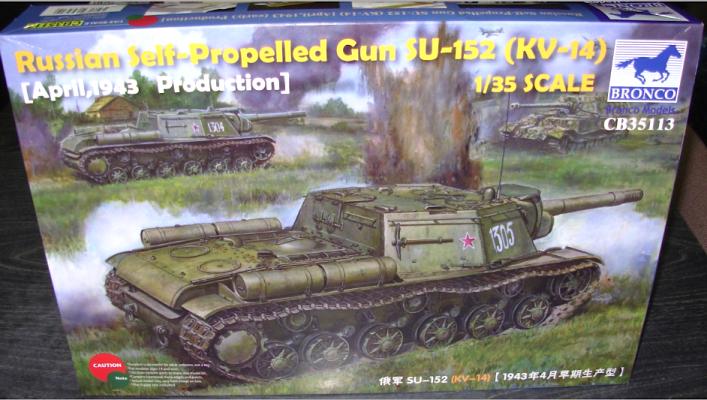
As the SU-152 is known as one of the stops on evolutionary scale for the KV-1 chasis before it was overshadowed by JS-Series.

As a newbie to Bronco kits, I was pleasantly surprised to open the box to slide molded sprues, 3 bags of individual linked track sprues and a sprue of clear modular interior & exterior periscopes.

Upon inspection of the instructions, there are multiple sprues of similar looking parts. Watch for the grayed out “Do not use parts” listed as similar looking parts on the same sprue can lead to using the incorrect parts, confusion, and loss of functionality.

Scanning the instructions further reveal Bronco’s engineering of a working articulating torsion bar, suspension, a full gun carriage, semi complete driver station, partial interior, and an partial upper engine box.
Review Author
Dave Morrissette
Published on
Company
Aerobonus
Scale
1/48
MSRP
$8.00

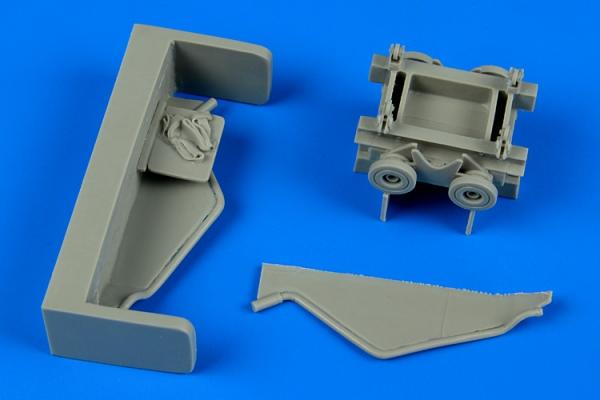
Aerobonus continues their excellent diorama releases with a US Navy Torpedo loading cart. I searched the Internet and found out it was also used to load bombs. The kits is molded in four parts of Aires dark gray resin. There is the main body which is molded in one piece. There is a sizable pour stub to remove but it is all on the bottom and easy to remove. There is one sprue which contains both handles and a insert for the center with molded in straps. The handles are very thin and fine and they need very slow careful removal to make sure they don't break. The resin is good to work with and with some patience, I removed them slowly and sanded the parts off. The insert goes into the center easily. The handles are left and right so make sure they spread enough to get a weapon between them. I glued them in and called the build finished.

Review Author
Clarence Wentzel
Published on
Company
Roden
Scale
1/72
MSRP
$19.99

Background

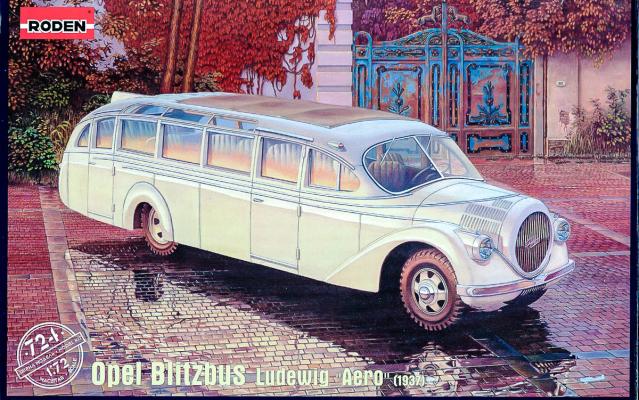
Prior to World War II, Adam Opel AG was the largest automobile and truck manufacturer in Germany. Their 3.5 ton truck, known as the Blitz, was well respected, and its chassis was used by many body builders to produce special vehicles. The subject of this kit is the streamlined “Aero” bus produced by the Ludewig Brothers. These medium size busses were used to transport people from city to city along the autobahns. This design had seating for twelve passengers in the front, setting at an angle in individual seats, plus a separate “cabin” area at the rear where eight more passengers could sit facing each other. It is an interesting design. During my research for this write-up, I found several interesting web sites related to the Opel Blitz. One is http://www.pietvanhees.nl/blitzbus/index.htm, which has lots of good photos and background material.

Review Author
Charles Landrum
Published on
Company
Skunk Models Workshop
Scale
1/48
MSRP
$13.99

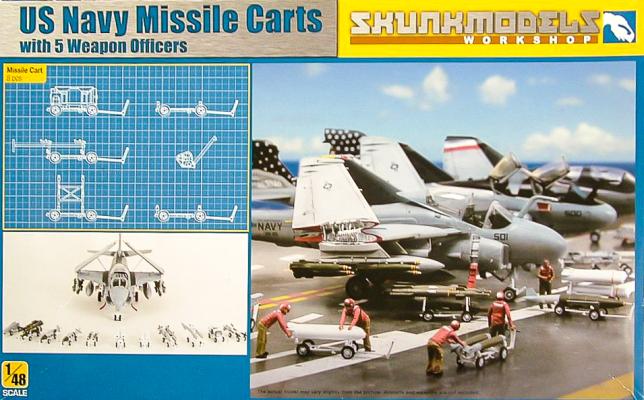
Any modern flightline, including the deck of a carrier, has a collection of specialized vehicles and carts used for the movement and servicing of the aircraft. Skunk Models Workshop has been offering a steady stream of accessories for the modern jet-age modeler who may want to create a diorama or pose a few items of equipment around the aircraft for visual interest. This latest offering by Skunk Models Workshop is a collection of weapons carts used by the US Navy in the arming of aircraft prior to a mission or the de-arming of aircraft post mission. Called yellow gear due to its historical color, all of the flightline equipment is now white.

Review Author
Bart Cusumano
Published on
Company
Roden
Scale
1/72
MSRP
$19.99

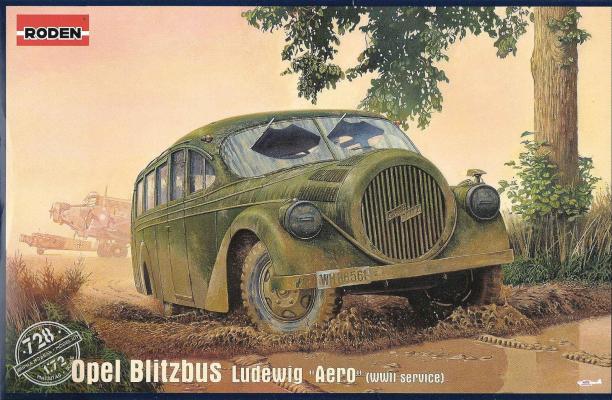
According to the blurb on the side of the kit box, the Opel Blitzbus Ludewig “Aero” was built during the mid 1930’s. The vehicle was made on the chassis of the Opel Blitz 3-ton truck in the workshop of the Ludewig brothers. The actual vehicle’s swoopy futuristic exterior lines were paired to a luxury interior and was not only used for transportation purposes but as a propaganda tool as well. Not many were produced due to the (even then) high cost of production. This particular kit represents the militarized version used for the transport of high ranking Wehrmacht officers on the Eastern Front during WWII.

The Box

The 6’” by 10” box features the dreaded end flaps, rather than a separate top. The box top features a cool painting of an olive green colored Aero ripping down a muddy road. Painting and marking instructions appear on the bottom of the box.

Review Author
Steve Collins
Published on
Company
Dragon Models
Scale
1/72
MSRP
$20.00

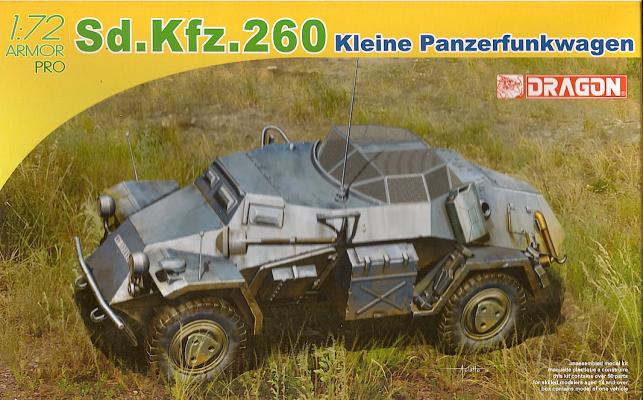
The Sd.Kfz.260 Kleine Panzerfunkwagen is a four-wheeled light armored car used to transport and protect signal units. It had a four-man crew protected by relatively thin armor and a mesh grenade screen, and was unarmed except for the crew’s personal weapons. Approximately 500 of the 260 and the similar 261 were built and used from 1940 till the end of the war. The really significant difference in the two vehicles was in antenna and radio fit. The 260 used a dipole antenna for medium range communications and the 261 used a frame type antenna for long range radio.

Review Author
Roger Rasor
Published on
Company
Wingnut Wings, Ltd
Scale
1/32
MSRP
$79.00

The Aircraft

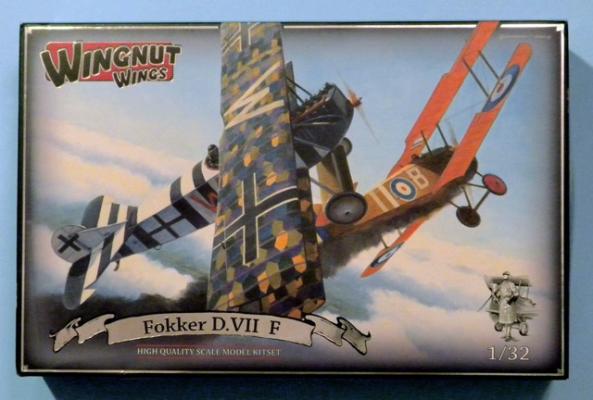
What hasn’t been said or printed about the Fokker D.VII? The legendary fighter is widely considered to be the best German fighter aircraft to emerge from the Great War and it was certainly the most numerous type engaged in the conflict. Nearly 3,300 Fokker D.VIIs were built by three manufacturers, (Fokker, Albatros & OAW) in the summer and autumn of 1918, and many of them were the reason a number of German pilots achieved ‘Ace’ status in the last year of the war.

From its introduction into service in May 1918, the Fokker D.VII quickly proved its vastly superior performance over most, if not all, existing Allied fighters. With a high rate of climb, higher service ceiling and outstanding handling characteristics, German pilots scored 565 victories during the month of August alone. Because of its impact, it was the only aircraft listed in the armistice terms that Germany was required to surrender to the Allies.

Review Author
Bill O'Malley
Published on
Company
Plusmodel
Scale
1/35
MSRP
$17.90

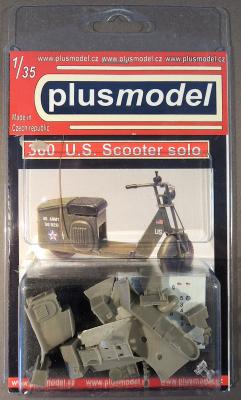
This is another in the Scooter series of models recently released by Plus Model. The kit is a 30-series Cushman Autoglide and includes Army & Navy markings.

Kit

The Plus Model kit comes in a blister pack containing 12 resin parts, 1 clear plastic part, 4 photoetch parts, brass wire, and decal sheet. The photoetch parts are very small but add nice detail to the scooter.

Assembly

All of the parts have flash and casting blocks that must be removed. The front fork, part #2, is very fragile and I removed the flash before removing the fork from the casting block. None of the parts were deformed or broken. There is not much detail to the engine, but then it is enclosed in the shroud and not very visible.

Finishing

I washed & primed the kit, painted it with Lifecolor Olive Drab Faded, and followed with a MIG Brown Wash. The kit goes together well despite its tiny size and without any fit issues.

Review Author
Jim Stepanek
Published on
Company
Round 2 Models
Scale
1/25
MSRP
$22.99

Engine

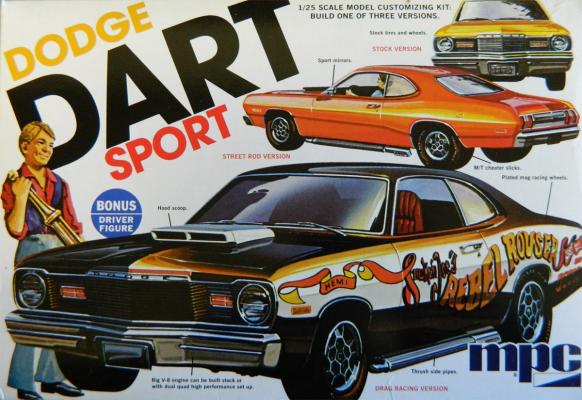
The kit gives you a couple of engine options. One being a Hemi and the other a 340 or 360. Both fit together pretty well once you get past the flash. I used the Hemi in my build.

Chassis

The chassis is a weird setup. Part of the exhaust is molded into the chassis and the back half is molded to the springs & differential. It also looks to be extremely out of scale. Front suspension – there is none.

Interior

The interior tub is a one piece unit with poor engraving.

Body

The kit supplies a 2 piece hood scoop. The front portion of the scoop was difficult to get positioned properly.

Round2 has been supplying some very sought after kits lately. It’s a pity that they’re reissues of old molds that have seen better days. Thank you to Round2Models and IPMS/USA for the opportunity to build and review a marvelous kit.

Review Author
Steve Collins
Published on
Company
UM Models
MSRP
$12.70

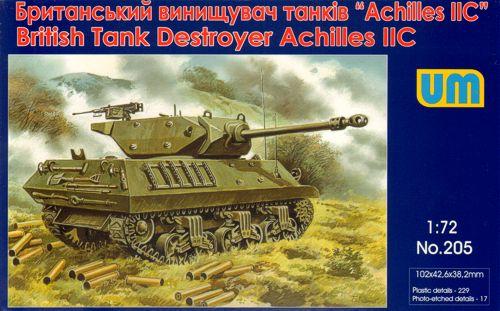
The Achilles IIC is the British version of the M10 tank destroyer (TD). It was based on the M4 Sherman chassis and mounted the 17 pounder anti-tank gun.

The kit is molded in a medium green styrene with some minor flash and a few sink marks, though nothing that isn’t easily removed or fixed. If I counted correctly, the kit contains 339 parts. Yes, 339. In 1/72 scale. The good news is that a lot of the parts are for the tracks, not all parts are used, and there are some useful parts left over to detail other kits. The attachment points are a bit larger than some other manufactures, but can be cleaned up with a bit of work. The tracks are link-and-length. I did a bit of research and found that some earlier UM Sherman kits had incorrect road wheels (six spokes instead of five) and the track was too narrow. It seems they fixed the road wheels, but apparently didn’t fix the track. I don’t think it’s too narrow by very much, though.