

Hub Plott
Reviews By Author
|
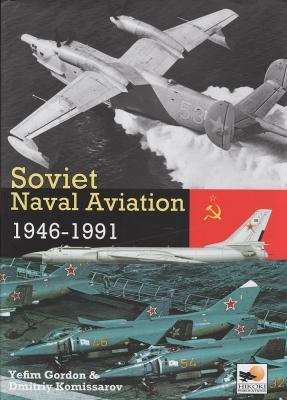
Soviet Naval Aviation 1946-1991Published:
This is a massive tome that covers Soviet Naval Aviation from immediately post-WWII through the breakup of the USSR. The book is profusely illustrated with hundreds of color and black and white photos, many of which may be new to Western readers. In addition, there are dozens of color profiles throughout the pages. The book begins with a discussion of Soviet naval aviation in the years following WWII. At first, they were still using leftover indigenous designs as well as US lend/lease aircraft that survived combat. Realizing the need for a long-range navy, they began to modernize and prepare for the struggle with the US and other Western powers. This chapter discusses the organization of naval aviation forces and their work with other elements of the Soviet navy and other armed… more |
|
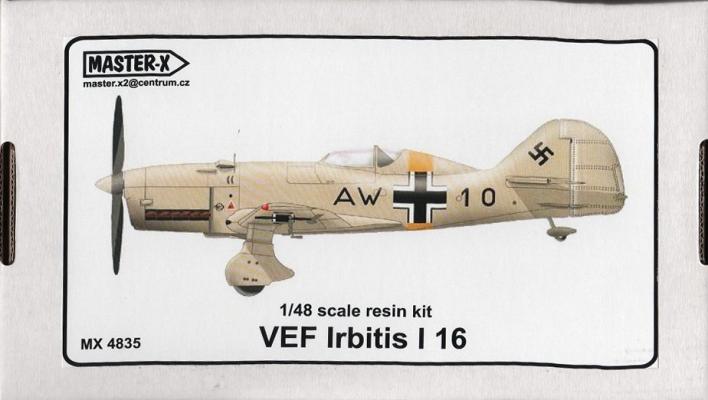
VEF Irbitis I-16Published:
Upon opening the box, one is greeted with a simple resin kit of an aircraft so obscure that even though I pride myself on my knowledge of WWII aircraft and have built over 100 resin kits of many obscure aircraft, I even had to look this one up! The Irbitis I-16 was an indigenous fighter design from Latvia. The aircraft was small, approximately 24 feet in length with a wingspan of 26 feet 11 inches and a height of 8 feet 2 ¼ inches. Maximum speed was estimated at 298mph. It was to be armed with two Browning machine guns in the fuselage and two in the wings. The aircraft was test flown in Latvia during the spring of 1940. Shortly thereafter, in the summer of 1940 the Soviets occupied Latvia and further development was stopped until early 1941. Then, in the summer of 1941, the… more |
|
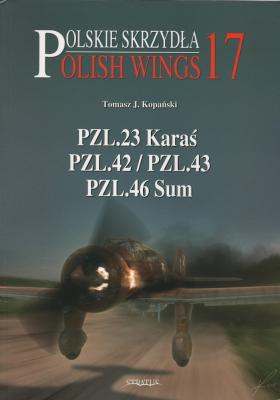
Polish Wings 17Published:
This book takes a look at the most famous of the Polish bomber type in WWII and its developments. The PZL 23 was known as the Karas (or Carp, according to Google translation) to the Polish Air Force and, along with its offshoot variants PZL 42, 43 and 46, did the lion’s share of bombardment work for Poland. The majority of the book (65 pages) gives us a brief history of the main variant, the PZL 23, and its service with both Poland and Romania. There are many previously unpublished black and white photos used to illustrate this aircraft, along with gorgeous color profiles. The Poles had some of the best group insignias I have ever seen. Who could resist doing a model of a Karas with a flying fire breathing dragon with a bomb clutched in his talons?! The next 22 pages… more |
|
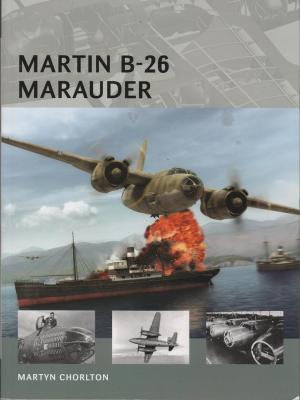
Martin B-26 MarauderPublished:
“Martin’s Mistake”, “Martin’s Murderer”, “The Flying Prostitute”, “The Baltimore Whore”, and “One a day in Tampa Bay” are all some of the derogatory nicknames and phrases used to describe the Martin B-26 Marauder. This outstanding aircraft was never able to get out from under the bad reputation it got early on. The early versions with the short-span wings and other ticks that come with a new design contributed to the type’s undeserved reputation. A really “hot ship”, it could be difficult for a newbie to handle, but once mastered it then demonstrated its full potential. And when the longer improved wing was installed on later variants, the crews felt that almost all of the ship’s vices disappeared. Books on the Martin B-26 are not all that common, so it is good to see one that… more |
|
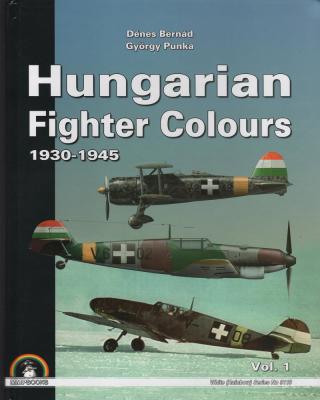
Hungarian Fighter Colours 1930-1945 Vol. 1Published:
This book takes a look at colors and markings of fighter aircraft of the Hungarian Air Force from 1930-1945. This is the first of two volumes. The following aircraft are covered in Volume One: Fokker D.XVI; Fiat CR. 20 and CR. 20B; Avis I-IV; Fiat CR.30, CR. 30B, and CR. 32bis; Fiat CR. 42 and CR. 42CN;, and Messerschmitt Bf 109D-1, E-3, E-4, E-7, F-2, and F-4. There are many black and white photos used to illustrate these planes, as well as beautifully drawn color profiles. Most of these are side views, but some also include top views. The authors also include quite a few wartime color photographs as well as color photos of aircraft parts and relics that have survived into modern times. Chapter One covers the markings and codes used on Hungarian aircraft from 1919-1945,… more |
|
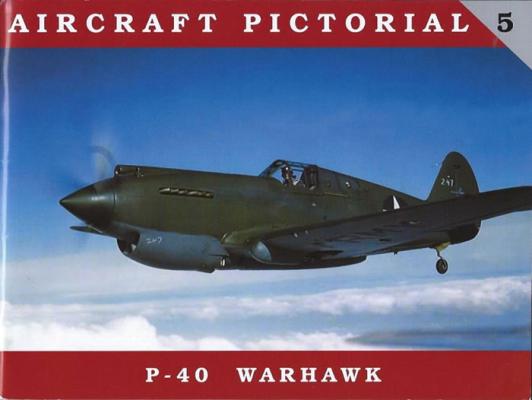
Aircraft Pictorial 5 – P-40 WarhawkPublished:
This book is number 5 in the Aircraft Pictorial series. The author is well known for his attention to detail and research methodology that brings rare photographs and little known details to light. This book does not disappoint. This particular volume deals with the early P-40s used by the US, often referred to a “long nosed” due to the look of the nose with the elongated gear box on the Allison engine. The British Tomahawks are not covered but do make a cameo appearance, in a way. How, is due to the fact that the original P-40-CUs had a frequent ground loop problem; 50 sets of Tomahawk wings were diverted from British orders to repair damaged USAAC P-40-CUs, thus creating the P-40G, a hybrid with a P-40-CU fuselage and four-gun British Tomahawk wings. The book begins… more |
|
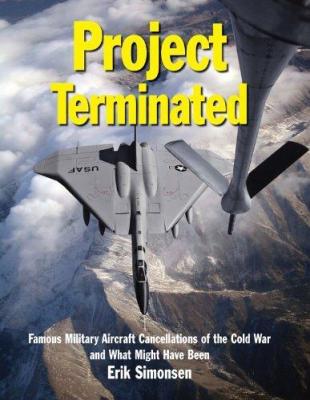
Project Terminated: Famous Military Aircraft Cancellations of the Cold War and What Might Have BeenPublished:
This book covers 11 different Cold War aircraft; many of which were built and flown but never went into production. All but one aircraft has its own chapter. The book has a striking cover with a very well done fake photo of a production F-108 Rapier approaching a tanker to refuel. This is only a hint of what is to come! Chapter one discusses the Northrop B-49A and RB-49A. It begins with the development of the flying wing by Northrop and the predecessor of the B-49, the propeller-powered B-35. This continues through development and testing and the reasons for canceling the B-49. The chapter is filled with many wonderful digital prints of B-49s as they would have looked in service. Three that show B-49Ds in Southeast Asia markings still serving beyond the 1960s and RAF examples… more |

|
USAF and VNAF A-1 Skyraider Units of the Vietnam WarPublished:
The Skyraider was a part of the war in Southeast Asia from the start and soldiered on until the war ended in 1975. This volume looks at Skyraiders operated by US pilots in Vietnamese markings, as well as those operated by both USAF and Vietnamese pilots. From the early days when the US was extremely secretive about it’s involvement until the end, the Skyraider was there. The book is broken down into four chapters. The first discusses the aircraft and its ordinance! Since all of the USAF and VNAF Skyraiders were ex-USN aircraft, a listing of all the modifications is shown on page eleven. A good discussion of the many problems with the Korean War-vintage 20mm wing guns and ammo is also given here. The older percussion-primed ammo led to jammed guns and exploding ammo, as well as… more |
|
Spiteful & Seafang Landing GearPublished:
Unlike my last review sample of SAC products, this time the USPS did not wreak havoc on the package and all but destroy the contents! They delivered an intact and fully usable set of landing gear. What you get in the package is a full gear replacement in white metal for both main gear legs and the tail wheel. As you can see from one of the photos, the SAC gear has simplified things by making the compression scissors one piece versus two pieces. Detail is crisper on the metal gear than on the kit’s plastic parts, as has come to be expected from SAC. The replacement parts are a drop fit with no issues whatsoever. They worked flawlessly and added considerably to the look of the finished model. At $15.95, one will again have to ask if the metal replacement gear for a… more |
|
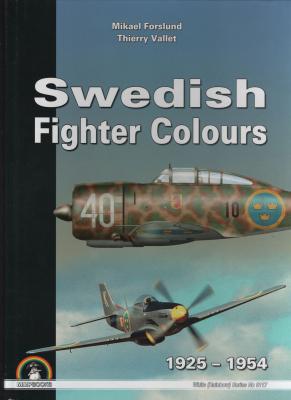
Swedish Fighter Colors 1925-1954Published:
This book looks at all of the piston engine fighter aircraft used by Sweden from 1925 to 1946 and their paint schemes. Each aircraft is covered with many period pictures, some even in color. There is a section on the operational history, a listing of production numbers, as well as a chart detailing the individual aircraft history of all aircraft of each type that served Sweden. Each aircraft section ends with color notes spelling out the colors used for each. While not in FS numbers, these callout will still prove useful to the modeler. The book is more of a history of these aircraft in Swedish service with color information included than it is an in-depth analysis of the colors used on these aircraft. I found each aircraft’s story to be interesting and, in some cases,… more |