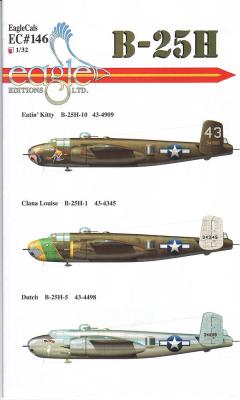
Eagle Editions’ newest decal release is three choices for the yet-to-be-released HK Models’ 1/32nd B-25H. This version of the B-25 will have a 75mm canon in the nose along with the remainder of the cheek guns, turret, and all the aft guns. The H version also required a cockpit design due to the shorter nose and length of the canon which made the designers relocate the topside gun turret more toward the nose. This accounted for the visual changes to the exterior. The plane was designed to strafe and hit targets with its forward facing guns and cannon. In practice, the slow fire rate of the cannon compared to the guns meant that the previous strafe versions ended up doing the same or more damage.
What's New
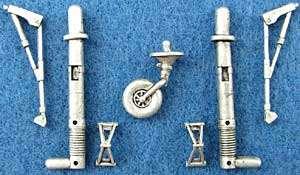
Scale Aircraft Conversions continues their prolific run at supplying modelers well cast metal gear with this latest offering for the Hasegawa Hs-129 kit which has been freshly released in a winter camouflage screen. The Hs-129 was the WWII Luftwaffe equivalent of the A-10 Warthog. The Hs-129 was small for a 2-engine attack plane with a wingspan of slightly over 46 feet. Consider that a P-51 had a wingspan of 37 feet for only one engine – this was a small plane!
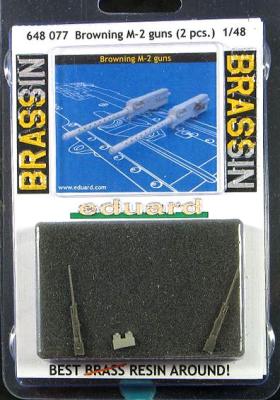
The Browning M2 heavy machine gun needs no introduction. Serving the US Military for over 70 years, it is only out-lived by another Browning design, the Colt 1911. Several generations of fighting men and women all over the world have used the simple and effective design in all climes of combat. Though there have been several medium machine gun designs that have come and gone, the M2 proves that “if it isn’t broke, don’t fix it” attitude, and has remained the main HMG in US inventory. It is hard to believe that the same gun mounted on Shermans during WWII also serves on the Stryker and Abrams today.
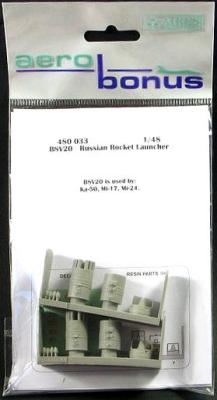
Guided rockets are nice when you need to place some hurt on a specific spot, but when the need is an overwhelming amount of firepower in a small area, nothing beats the classic unguided rocket. Most nations still have podded unguided rockets in their inventory, including the US and the former Eastern Bloc, as they are cheap and effective. The B8V20 is a podded launcher that holds 20 80mm S-8 Series rockets. They are commonly found on attack helicopters such as the Mi-25 Hind, Mi-28, and Ka-50 Hokum, but also have been fitted to the Mi-8 Hip and others. Other variants of the pod include more aerodynamic shaping with a cone on the front.
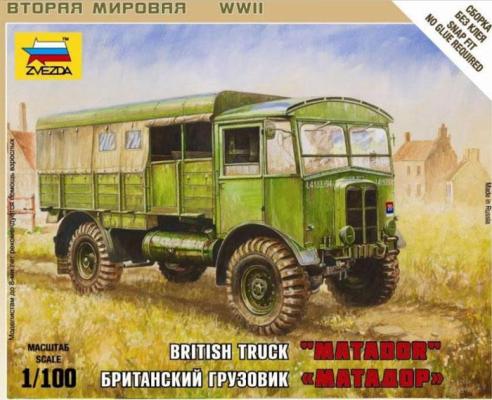
Zvezda is one of the myriad of injection molding companies that emerged in Eastern Europe after the Soviet block fell apart. At first, they used old, re-cycled molds from other companies such as Frog, etc, but now they are doing their own molding and, at least in this instance, doing it very well.
A couple of years ago, Italeri introduced a line of simplified 1/72 scale kits to be used in a war game that they designed. Now, included in this box is a sample card used in the game. While in Cyrillic and, at least to me, un-readable, it appears to show the unit's movement abilities and limitations. It would be interesting to see the entire game. The models for Zvezda's game are in 1/100 scale and are of the no-glue variety. They are not really snap fit, but rather pressure fit, as there are no locking mechanisms. However, their system works quite well.
The Product
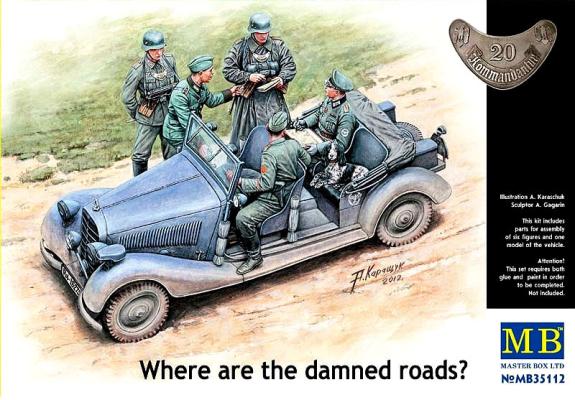
Packaged in an end-opening lightweight cardstock box, you will find one tan colored sprue, four light gray parts sprues, and one clear parts sprue, five vinyl tires, one decal sheet, and one large fold out instruction sheet. All the parts were well protected and packaged in clear poly-bags. The parts are well appointed, feature fine detailing and appropriate seat and boot canvas textures. I found only minor flashing. The clear parts are crystal clear and are not overly thick. The vinyl tires are beautify done and have only minor flashing. Some figures are custom-made for this car but could easily be adjusted to other models.
The Aircraft
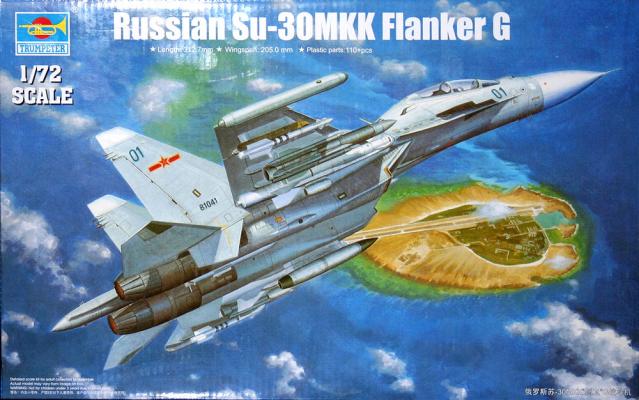
The Su-30 is a two-seat version of the Su-27. The mission is long-range all-weather strike fighter. Think F-15E vsx F-15C in the US inventory. The MKK is currently operated by the Peoples Republic of China, Indonesia, Vietnam, and Venezuela. There’s going to be a wonderful aftermarket decal sheet for this kit!
There’s also a newer version, the Su-30MK2, which has maritime strike capability added.
There’s also a suspiciously similar aircraft called the J-16. China claims this is all-Chinese technology, but the Russians aren’t so sure.
The Kit
When I opened the box, I was impressed with how well Trumpeter had packed the parts. The fuselage halves (top and bottom) had a rubber ring holding them together, a piece of foam protecting the rear “stinger,” and sprues around the wingtips to prevent damage during shipment. Also, several of the delicate parts were wrapped in the foam, including the clear parts.
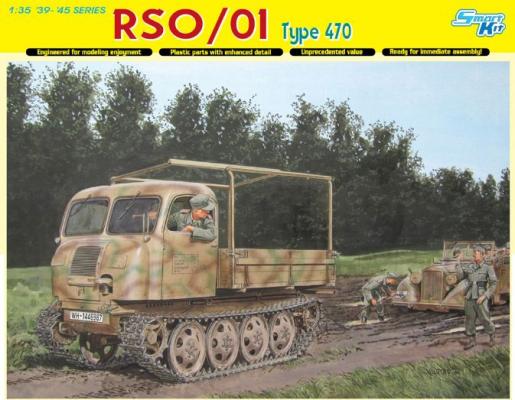
It has been 35 years since a Japanese firm named Peerless released their 1/35th scale kit of the Raupenschlepper Ost (RSO), a fully tracked vehicle designed to help deal with the thick mud of the Eastern Front’s “roads” which eventually turned to slippery, icy mud with the coming of winter. The Peerless kit (Peerless/Max in North America) molds eventually found their way to Italeri, where they soldier on to the present day. This kit of the RSO/01 is Dragon Models’ second release in a series of RSO vehicles, this kit being a standard cargo version. It is a state-of-the-art kit that surpasses the Peerless/Italeri kit in every category.
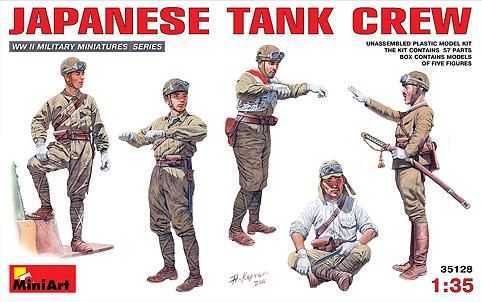
One of my 2012 New Year’s resolutions was to build and paint a figure to go with each of my 1/35th scale armor models, thus providing a scale reference with which the casual viewer could judge the actual size of the armor model. So, when IPMS/USA offered up this set of Japanese tank crewmen for review, I jumped at the opportunity to build my first plastic figures. However, I chickened out on actually trying to paint the figures, fearing that my very first painting job would do the figures a disservice. Instead I built the figures straight from the box, primed them in a light gray primer, and then gave them a wash of dark brown oil paint to pick out the details.
Bottom Line
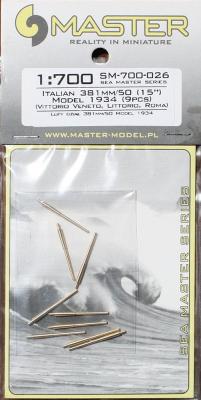
Perfect to-scale 15” (381mm) barrels for Littorio WW2 Italian warship class
The Italian 381mm/50 (15”) gun barrels, 1934 Model, were the largest produced in Italy, with 40 being manufactured. They were designed by Ansaldo in 1934 for the Littorio battleships, but most were made by OTO. They were mounted in triple turrets, three turrets per ship. These guns were considered as excellent as, and had better penetrating power than, similar guns from other countries. Rate of fire was 45 seconds and muzzle velocity was 850 m/s. Range was over 42,000 meters. Dispersion of shot was a chronic problem for the Italian Navy, and was due more to faulty ammunition than to gun performance.