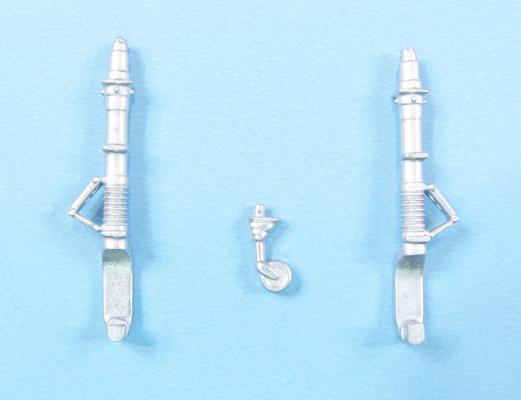
The DH.82A Tiger Moth biplane was developed by de Havilland in the mid-1930s. Produced in large quantities—over 8,000 units by the end of World War II—it served extensively as a training and liaison aircraft. The DH.82A Tiger Moth gained widespread adoption, with Norway, Portugal, and Sweden establishing their own licensed production facilities. The aircraft also saw service with pilots from Belgium, France, and the USA. Simple yet reliable, the DH.82A Tiger Moth earned genuine affection and respect from novice and experienced pilots alike. Some even quipped that the letters “DH” stood for “durable” and ” hefficient”—apt descriptors for this remarkable aircraft. The Tiger Moth continues to delight enthusiasts today, gracing both flying clubs and aviation shows with its presence.
Reviews
Casemate Publishers presents Seaforth's ShipCraft 23, Rodney and Nelson battleships by Les & Robert Brown. This book is an update of the original 2015 ShipCraft of Rodney and Nelson. Les Brown is a well-known and accomplished British warship aficionado and builder of beautiful models, with a long history of championing British warships, typically destroyers and smaller warships. He is also a luminary in the Small Warships Group of the IPMS. Canadian Robert Brown has also authored other craft books, including HMS Warspite and British Aircraft Carriers.
This heavily illustrated paperback is the ultimate single resource for building accurate models of both Rodney and Nelson, some of the oddest but successful battleships of the 20th century. The book has very little open space, crammed full of text, drawings and photos of models.
Publisher’s Notes
The markings on tanks of the United States Marine Corps during World War II are so varied that some have concluded they were meaningless, even anarchic. Official documents offer little insight, but a careful study of period photographs and film, cross-referenced with combat reports and veteran accounts, reveals the different systems of markings that combat units used to identify their vehicles. These markings varied between units, and from one campaign to the next, but were well-thought-out and designed to be practical and easy for tankers to interpret. In addition to tactical markings, most tankers were given names by their crews, and these were added to the tank’s markings. Personifying the tank often boosted crew morale and led to even more careful maintenance of the tank. Names were approved by tank commanders, and also followed systems that aided quick identification in combat.
From the Kagero Website – a new series of A-4 size volumes. Each consists of 16-24 pages and includes selected archive photos, colour painting schemes or 3D renders. Some books would contain scale drawings, too. One can find high-quality decal sheet with both 1/48th and 1/72nd scales of one specific painting scheme. If the illustration differs in details from the decal, we will present photos, which were used to develop sheet. Series for modellers as a supplement to other publications or compilation of already published materials.
The book “Gotha Go 242/244” from Kagero publishing delivers a wealth of information within its 57 pages. It provides a free poster displaying two Gotha gliders flying over a winter landscape during the transport of supplies to besieged German forces in Crimea in 1943/1944. The poster fits inside the book and shows the book’s cover image. The quality of the poster and the color profiles are great.
There are five chapters in the book:
Established in 1997, Crécy Publishing is one of Europe’s leading publishers of transport and military history titles. We have a strong emphasis on aviation titles and, since the acquisition of the Ian Allan Publishing list, we are also the world’s leading railway book publisher. Starting with the publication of a single book, our company has grown through a mixture of organic growth and the acquisition of quality publishing lists. Today, Crécy Publishing imprints include: ABC guides, Classic, Goodall, Hikoki Publications, OPC (Oxford Publishing Company) Pilot’s Notes. Imprints we have absorbed into our list include Air Data, Flight Recorder, Ian Allan, Noodle Books and Nostalgia Road.
The book “September 1939 over Poland Part II” from Kagero publishing offers 20 pages of side, top, and bottom profiles of aircraft in 29 color profiles, as well as 6 decal sheets for 1/48 and 1/72 scale subjects in 200mm x 180mm format. It also provides a free poster displaying a Polish light bomber PZL.23B Karaś in action. The poster fits inside the book and shows the booklet’s cover image without any inscriptions. The quality of the poster and the color profiles is great. The decal sheets provide a lot of options for both German and Polish aircraft from 1939.
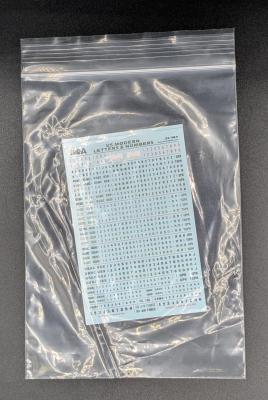
Continuing Kagero’s new series of books aimed at modelers is this volume focusing on the Dora version of the Bf-109. It is packaged in a self-sealing sleeve with a 8.5 x 11 booklet of 26 pages. Included is a small decal sheet.
The cover is heavy card stock and the pages are high quality gloss paper. The format is similar throughout the series. This one is slightly different, however. This volume sports single pages of high-quality images. These large images allow you to see the weathering and wear marks that modelers love.
There are five full color profiles, including the centerfold of a colorful Swiss Bf-109D-1 in red and white stripes. The decals for this machine are included in 1/72nd and 1/48th scale.
Also unique in this volume is the inclusion of full color 3D drawings which should prove useful for modelers. There are six pages of line drawings, including two pages that go from the Bf-109A to the 109D-1 (Late).
Safely packaged in a resealable sleeve is a beautiful 8.5 x 11 booklet and a small decal sheet. The booklet contains 25 pages of high-quality paper featuring clear photos. Most pages have two large photos which make details easy to see. A variety of variants are covered in this volume from the early E-1 to the E-3. This period of use for the Bf-109 was quite colorful with a variety of paint schemes. Kagero has shown most of the paint schemes. There are 16 pages of photos, four pages (not including the back cover) of wonderful color profiles. Six aircraft are included in the profile views. There are six pages of line drawings to show the differences and changes in the variants. The drawings are in 1/72nd and 1/48th scale.
Text is limited to the captions on the photos. That really isn’t the purpose of this book.
From the Preface,
The DPRK (Democratic People’s Republic of Korea). Shrouded in mysticism and secrecy, the nation represents an absolute unicum for the military analyst. No other country in the world manages to attract so much scrutiny to its controversial antics, yet divulge so little of material importance about its inner workings. This might be at the heart of why this country specifically has gripped our attention for so many years, and drawn us to write this series about its largely mysterious armed forces.