
Pacific Profiles Volume 19 - American Night Fighters Pacific Theatre 1943-45
Michael John Claringbould hit another home run (the pun works with both baseball and cricket) with this latest addition to the Pacific Profile series. Night fighters grew out of necessity and are rarely noted, much less written about. This book fills that void in great and interesting detail.
From the Introduction,
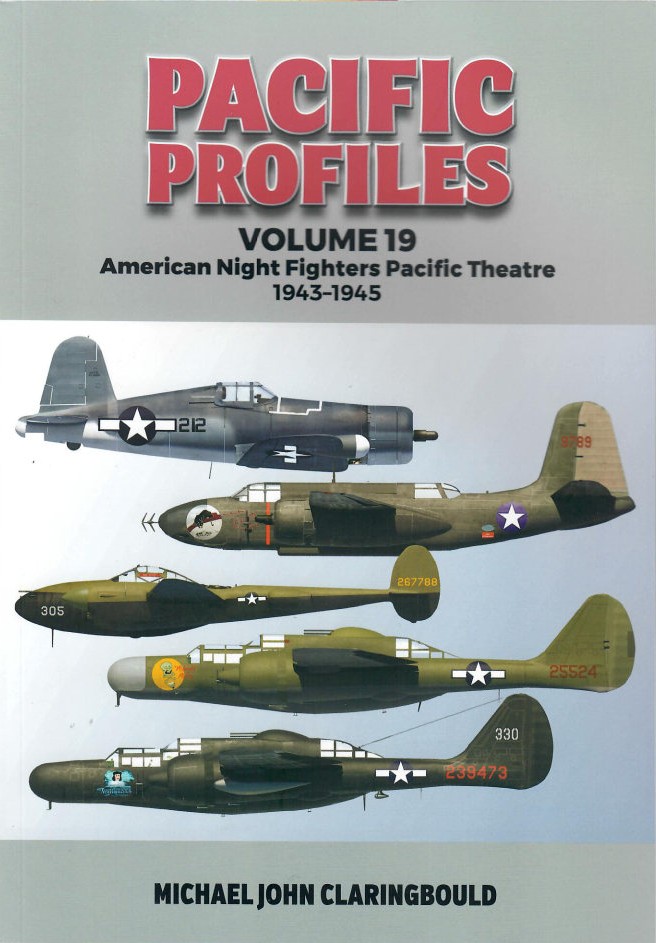
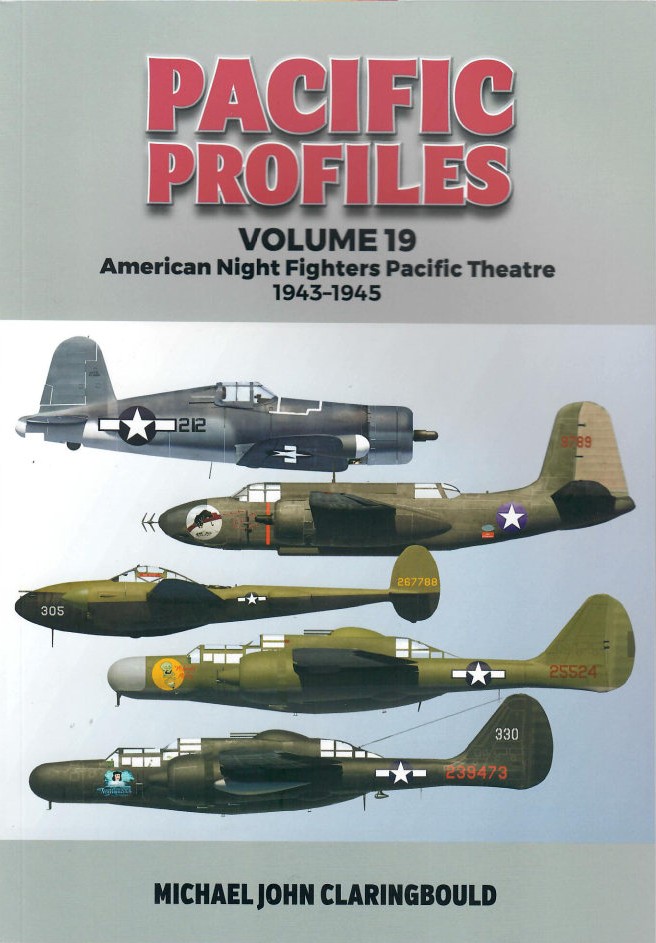
Welcome to the diverse world of Pacific War night fighters. This volume focuses on their markings and insignia, mostly under-represented to date with the exception of the P-61 Black Widow series. In addition to the P-61, other types illustrated include the P-70 series Nighthawk, the P-38 Lightning, the B-25 Mitchell, the F4U-2 Corsair and the Lockheed PV-1 Ventura. Three other miscellaneous types associated with the night fighter program are illustrated in the final chapter.
This book focuses primarily on the USAAF squadrons and covers two of the USN and one USMC F4U-2 Corsair night fighter squadrons (of the eight USN and two USMC squadrons deployed to the Pacific, most of the USN squadrons arrived too late to see combat, or were exclusively carrier based, and thus not covered in this book).
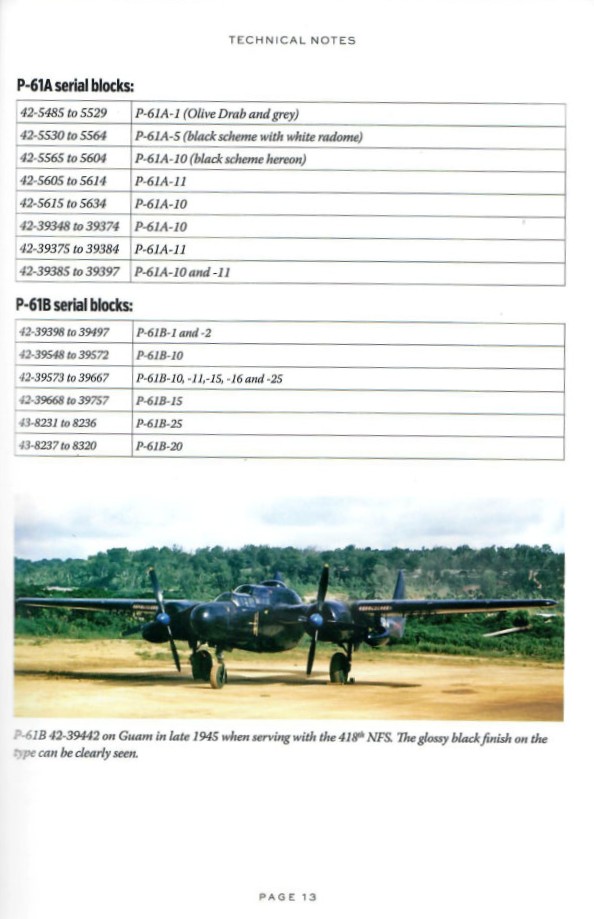
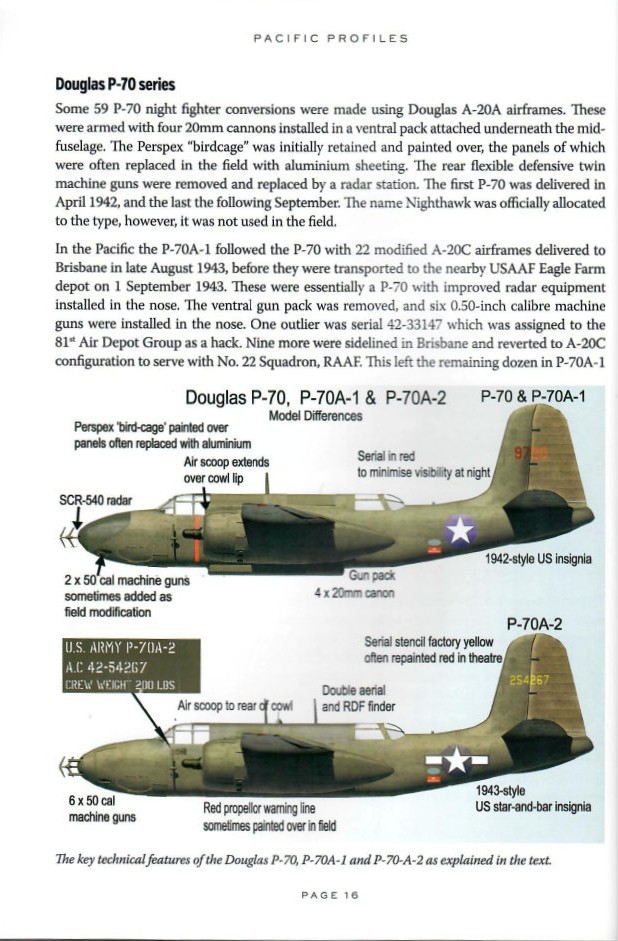
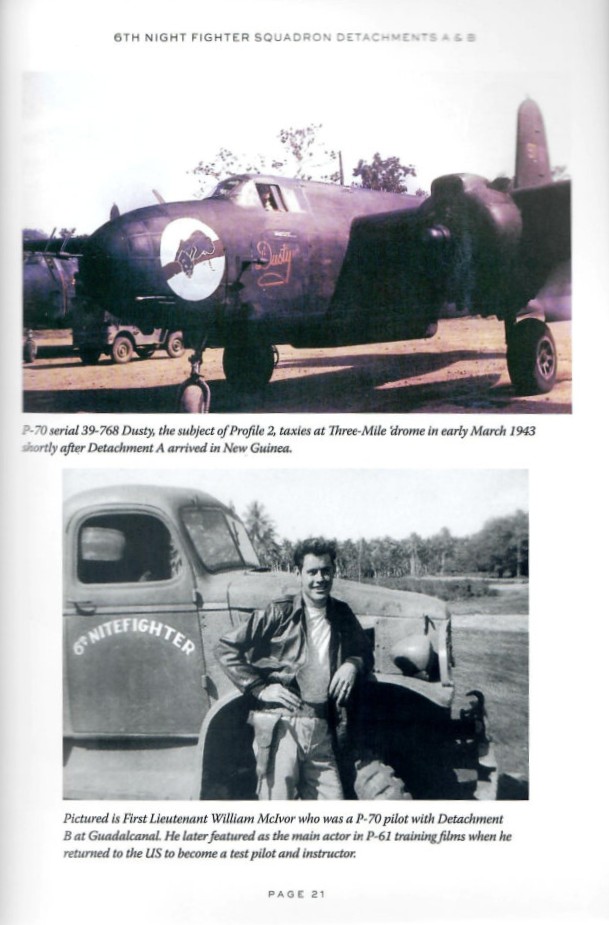
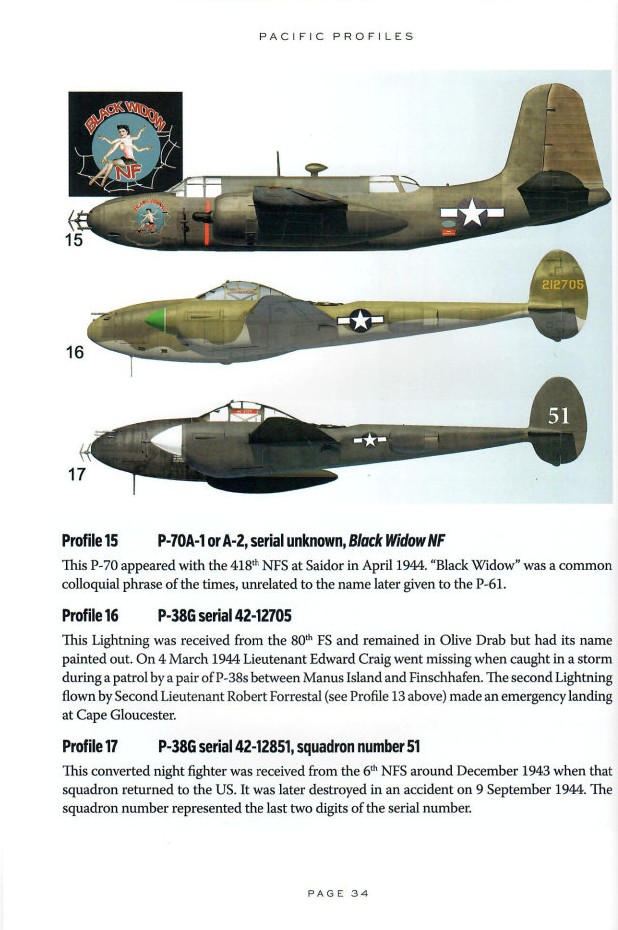
This paperback book is a fascinating and remarkable insight into American night fighters over its 96 pages with 47 black and white photographs, eight color photos, 96 color profiles, one map, one illustration, and one table composing the following chapters and appendices:
- About the Author
- Glossary and Abbreviations
- Map
- Introduction
- Chapter 1 – Technical Notes
- Chapter 2 – 6th Night Fighter Squadron Detachments A&B
- Chapter 3 – 6th NFS (Reformed)
- Chapter 4 – 418th Night Fighter Squadron
- Chapter 5 - 419th Night Fighter Squadron
- Chapter 6 – 421st Night Fighter Squadron
- Chapter 7 - 547th Night Fighter Squadron
- Chapter 8 - 548th Night Fighter Squadron
- Chapter 9 – 549th Night Fighter Squadron
- Chapter 10 – 550th Night Fighter Squadron
- Chapter 11 – VF(N)-75 & VF(N)-101
- Chapter 12 – VMF(N)-531
- Chapter 13 – VMF(N)-532
- Chapter 14 - Miscellaneous
- Sources & Acknowledgements
- Index of Names
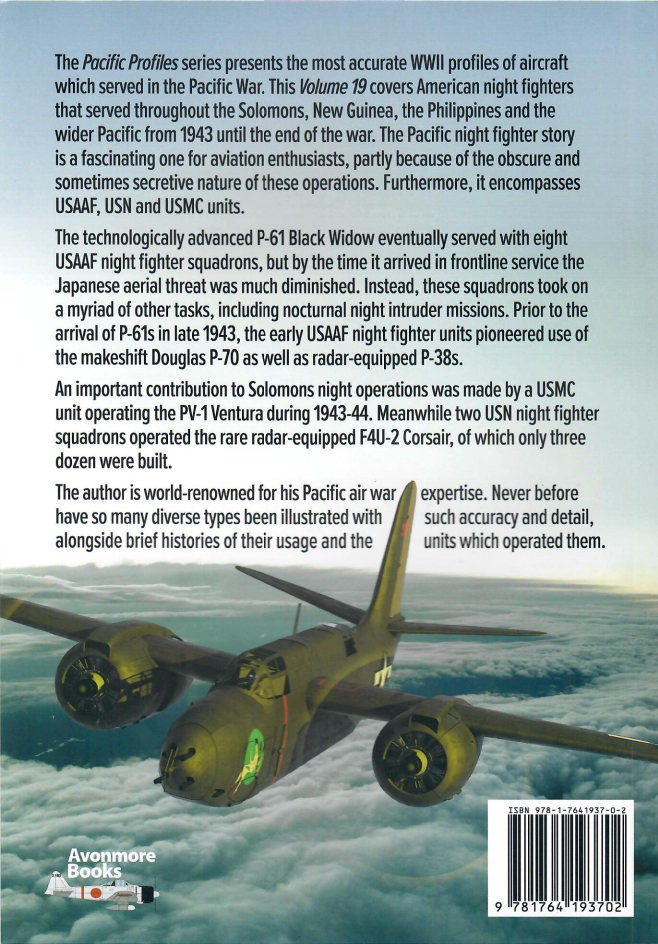
The first dedicated American night fighter was the Northrop P-61 Black Widow, which wasn’t completed until October 1943. With priority going to the European theater, the first P-61 arrived in the South Pacific on 3 May 1944. With a growing need in the Pacific, the first interim night fighter program began in April 1942 with the Douglas A-20 air frame, becoming the P-70 Nighthawk. While not optimal, the P-70s quickly developed tactics and procedures for radar-controlled night interceptions.
Units in theater grew impatient with the P-70s suboptimal performance and took the initiative to try different airframes including single seater aircraft, including the P-38 Lightning, that proved too hard for one pilot to fly at night and use a radar, to B-25 Mitchells. The Navy and Marine Corps experimented with F4U-2 Corsairs and PV-1 Neptunes.
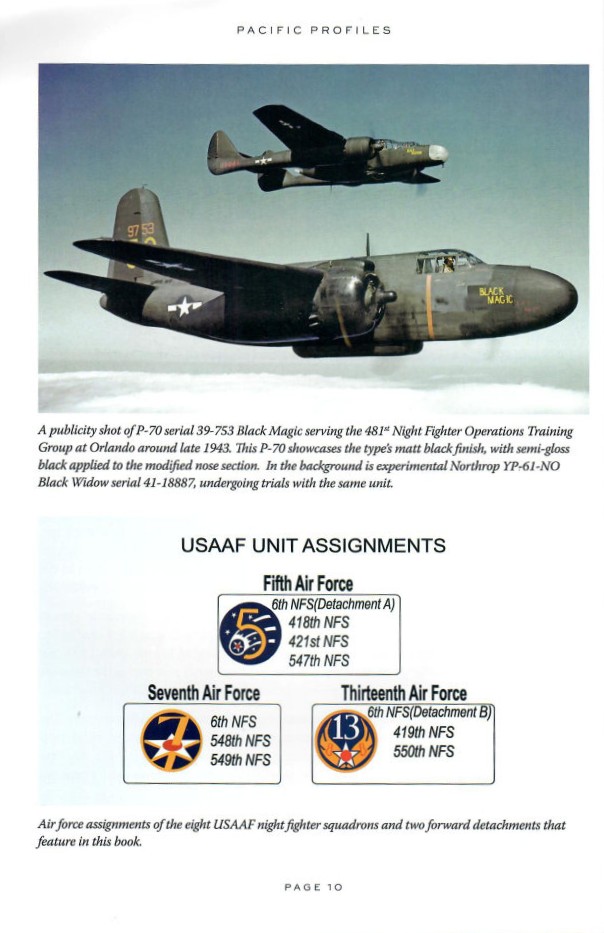
The arrival of the P-61s was welcomed and soon eight USAAF squadrons were formed, spread across the Fifth, Seventh and Thirteenth Air Forces. The Black Widow’s first official kill was made over Saipan on 30 June 1944.
The author notes,
The later night fighter conquests in the Pacific were decisive, however, herein lies an irony. The enemy threat in both New Guinea and the Solomons evaporated with the Japanese withdrawal of air power from Rabaul in early 1944, almost coinciding with the arrival of the P-61. The new type needed to move closer to the Japanese homeland before it could showcase its prowess which it did and impressively so.
The last two aerial victories claimed by the USAAF in World War II were by 548th Night Fighter Squadron P-61s flying out of Ie Shima. P-61s continued to serve after the war in Japan as the F-61. The last flyable P-61 crashed on 23 August 1963 while conducting fire-bombing in California. The pilot, Robert Savaria, was killed in the crash. First Lieutenant Robert Savaria flew the P-61B “Which Way’d He Go George”, a nod to the question he often posed to his radar operator Second Lieutenant George Freeman.
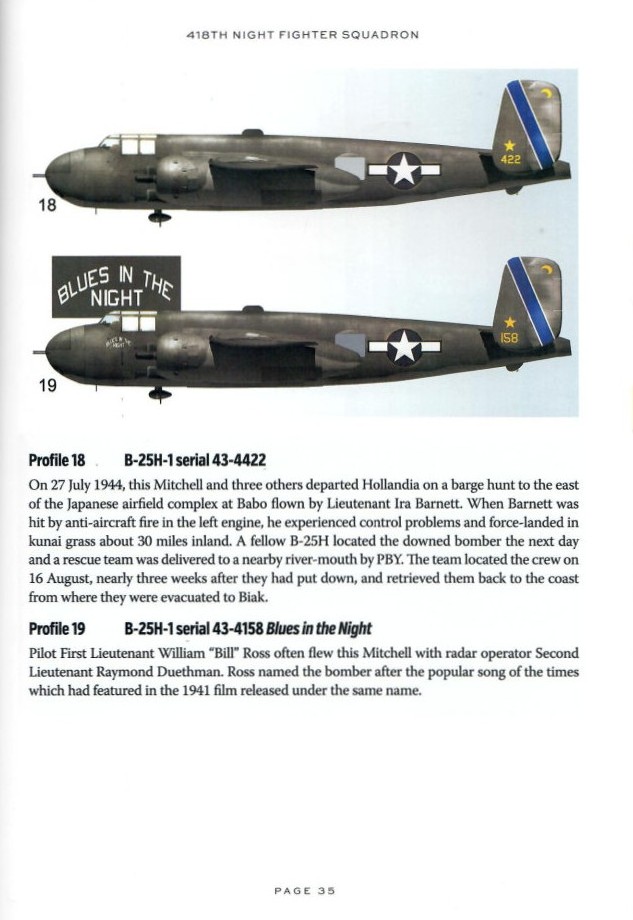
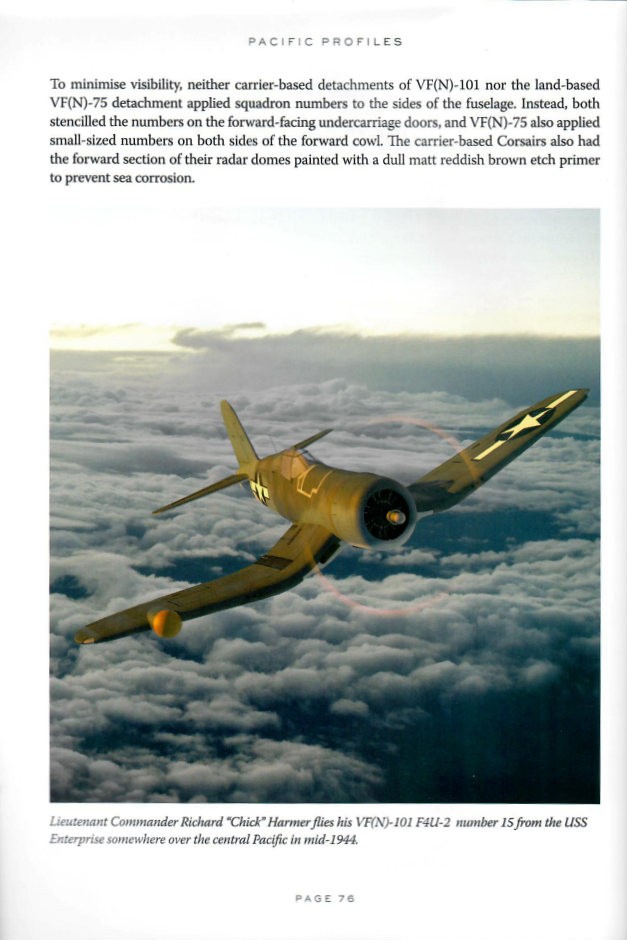
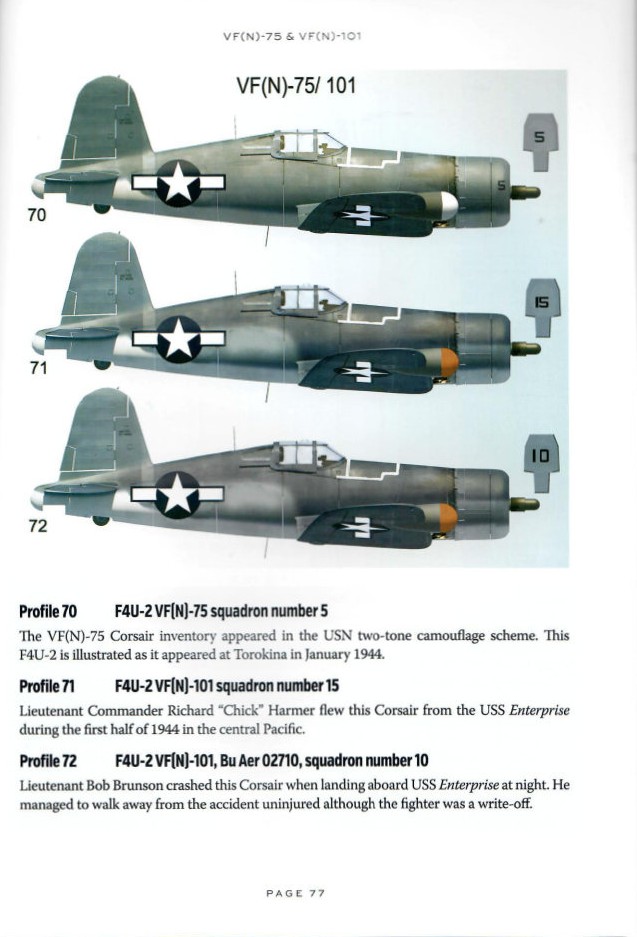
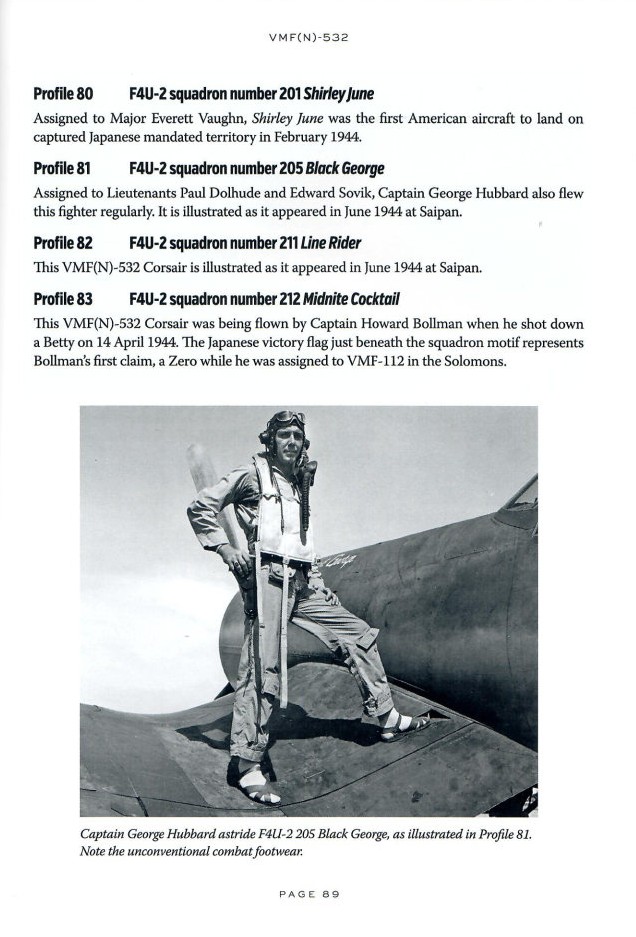
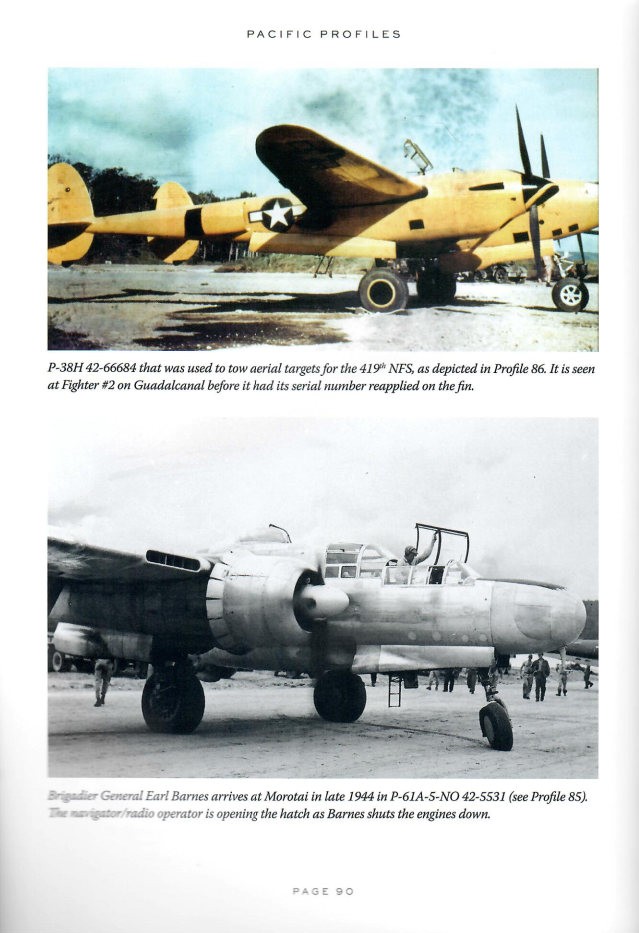
Historians and aircraft modelers will gain a lot from this book. The photos and color profiles are worth the price of the book alone. For modelers wanting to build rare versions of their famous counterparts, the Pacific War American night fighters showcase Northrop P-61A and B Black Widows, Vought F4U-2 Corairs, Douglas P-70 series Nighthawks, Lockheed PV-1 Venturas, , a yellow-painted P-38 target tug, a Bell P-39D Airacobra, Curtis P-40N Warhawk, and Beaufighter Mk 1c. The various camouflage paint schemes and markings are explained and shown in detail, particularly the evolution of night fighter paint schemes.
As also noted in The Introduction,
The F6F Hellcat also served as a dedicated night fighter, however, these were carrier-based and thus not represented in this volume. Neither are the TBM Avengers of VT(N)-90 or numerous PBY squadrons which often performed as night bombers.
Hopefully, this means another book in the Pacific Profiles series will cover these naval squadrons. If anyone can do this justice, it is Michael Claringbould.
The Pacific Profiles series continues to fill large gaps in the South Pacific air war knowledge and history. Modelers are well served with this series, and inspiration runs wild with both the black and white and color period photographs and modern color profiles.
Profuse thanks to Casemate and IPMS/USA for providing the review sample.
Comments
Add new comment
This site is protected by reCAPTCHA and the Google Privacy Policy and Terms of Service apply.
Similar Reviews