
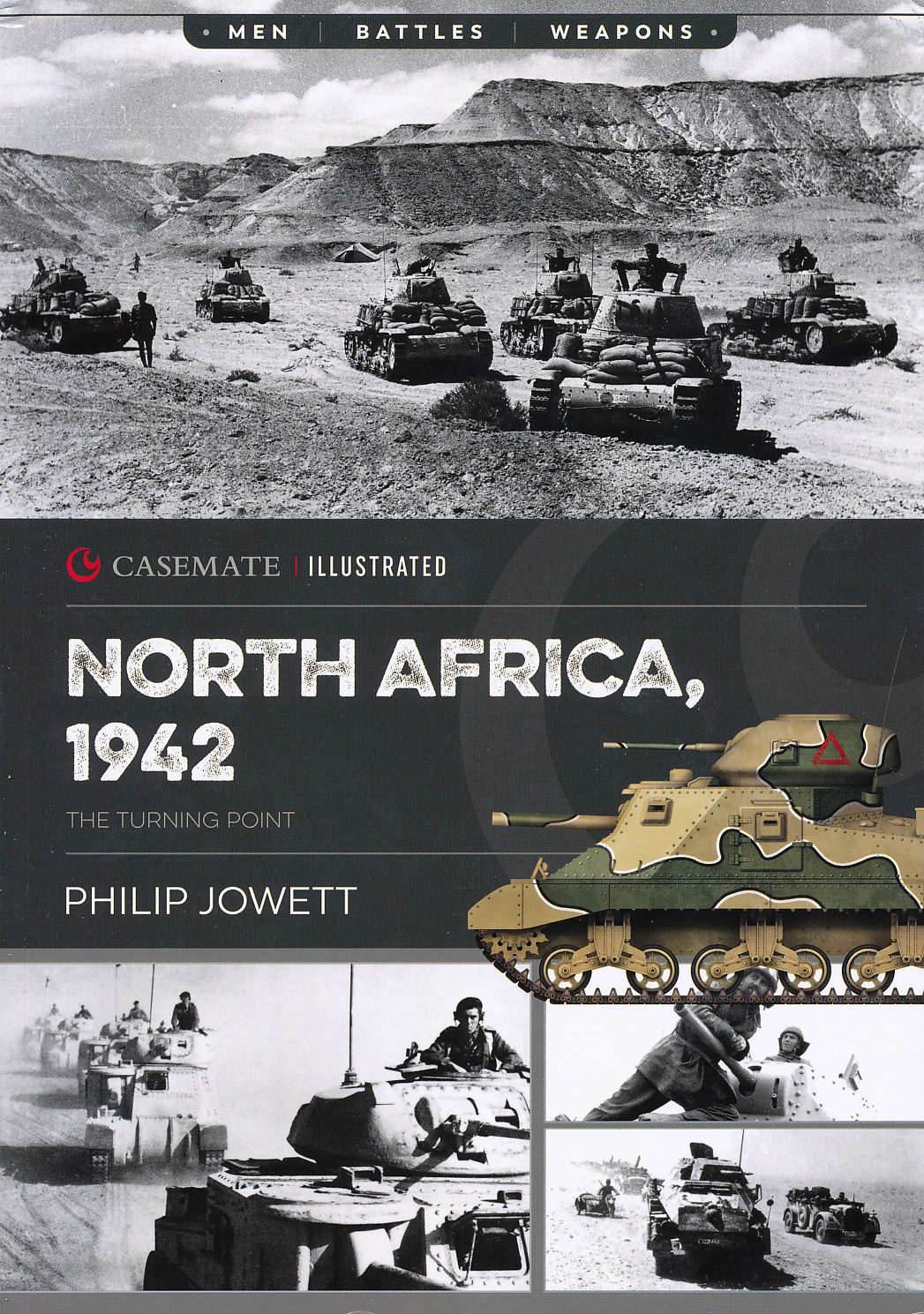
North Africa, 1942: The Turning Point
1942 was a pivotal year in WWII in North Africa. The year started with the British on the back foot and the Germans on the offensive, but ended with the positions being reversed as Montgomery’s Alamein Offensive in October ground it’s way towards final victory on the continent.
The back-and-forth war between the British on one side and the Germans and Italians on the other in 1940-1 had been exhausting for both sides. But boosted by fresh supplies and materials, Rommel launched an offensive in January 1942, which saw the Axis forces on the Libya–Egypt border. For the next few months, Rommel’s forces were in the ascendancy, and he was at the height of his military power. His military masterpiece at the battle of Gazala in late May and early June resulted in a major victory for the Axis, and led to the conquest of Rommel’s long-held objective—Tobruk.
During the summer of 1942, however, the pendulum swung in favor of the British and their new allies, the USA. As new tanks and aircraft began to arrive from the USA, along with reinforcements, the Axis war effort was suffering from a shortage of German and Italian tanks, artillery, and aircraft.
By late summer, an ill and worn-out Rommel faced a new and determined enemy commander—General Montgomery. New aircraft enabled the RAF to gain air superiority and helped them to push the Luftwaffe and Regia Aeronautica out of the North African skies. Battles at El Alamein in July and then October proved decisive, and other clashes at Alam Halfa wore down Axis resistance, paving the way for the Eighth Army to advance into Tunisia in 1943.
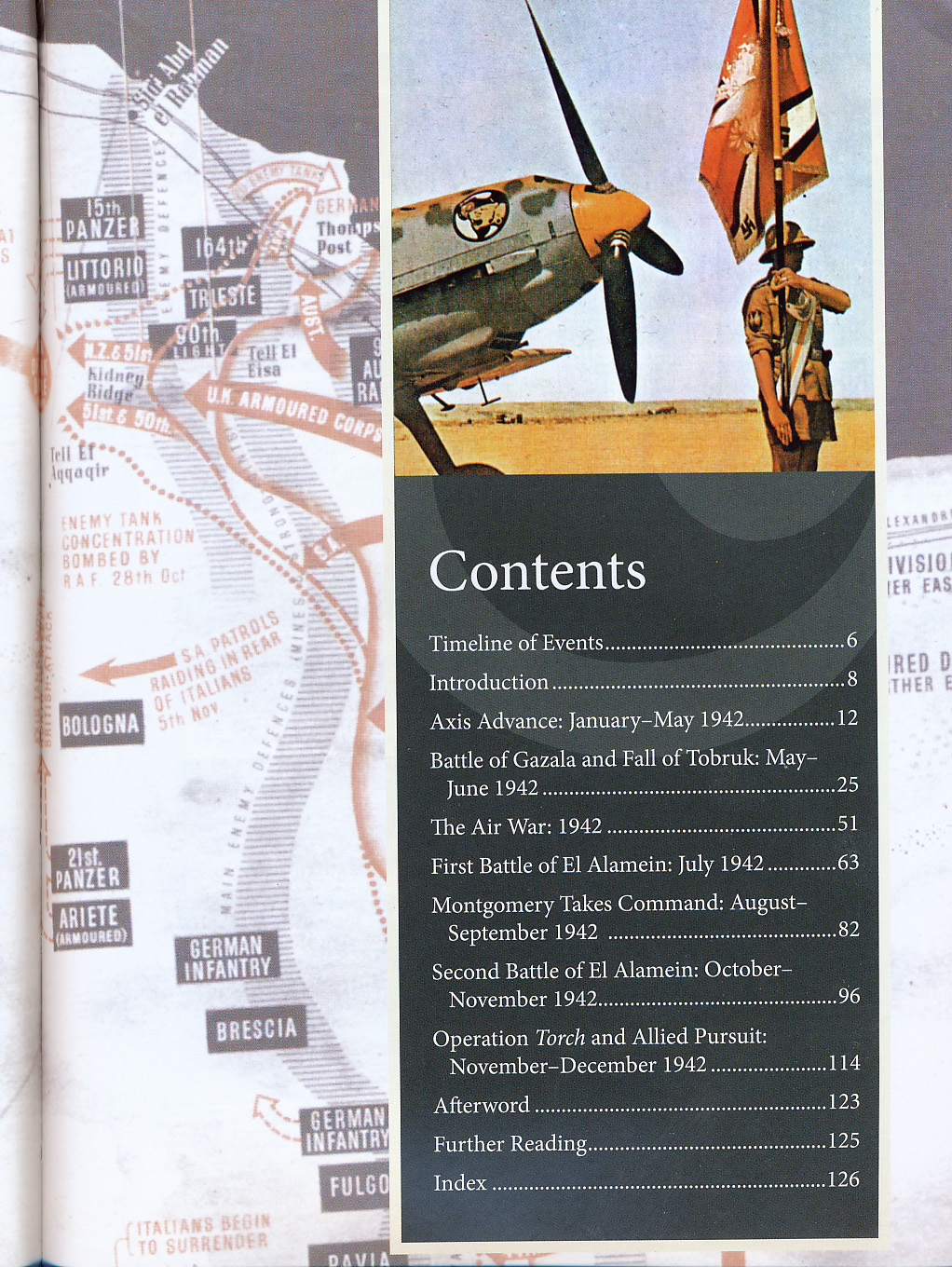
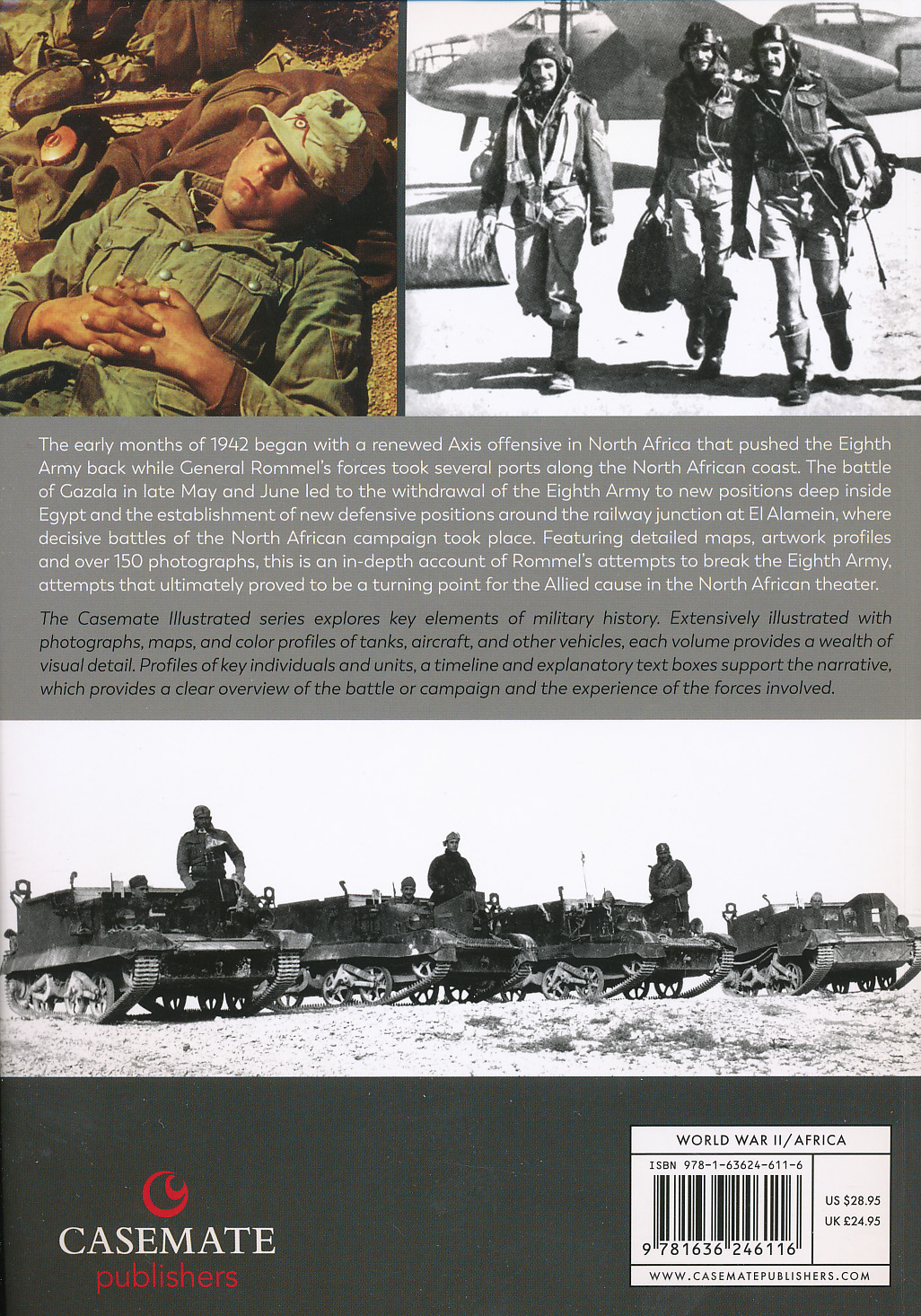
This volume is one of a series by Casemate covering the North African Conflict with a single year per volume. Written by noted military historian Philip Jowett, this is a concise but information-packed book, heavily illustrated with photos, maps and colour profiles of some of the ironmongery used in theatre.
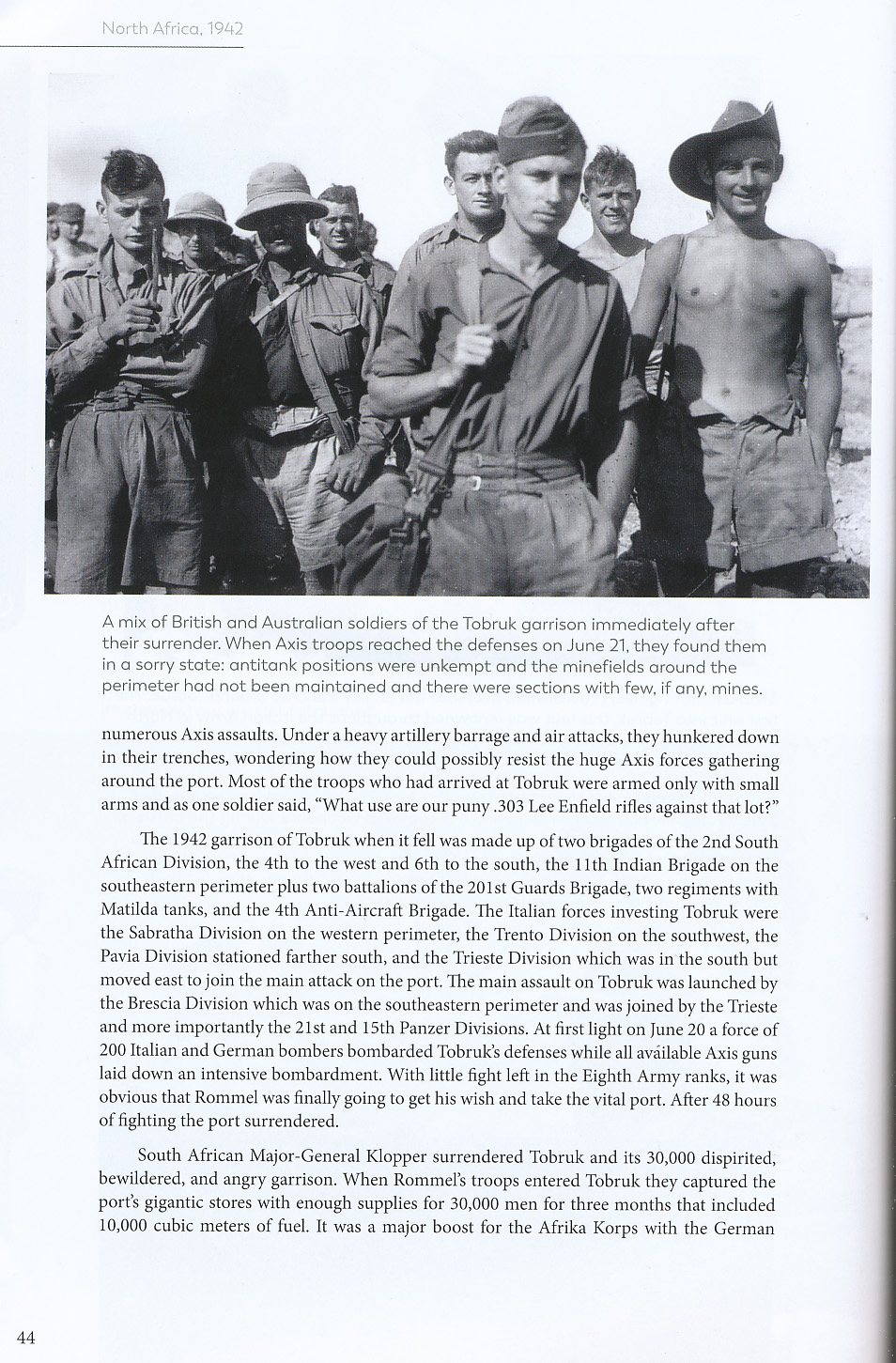
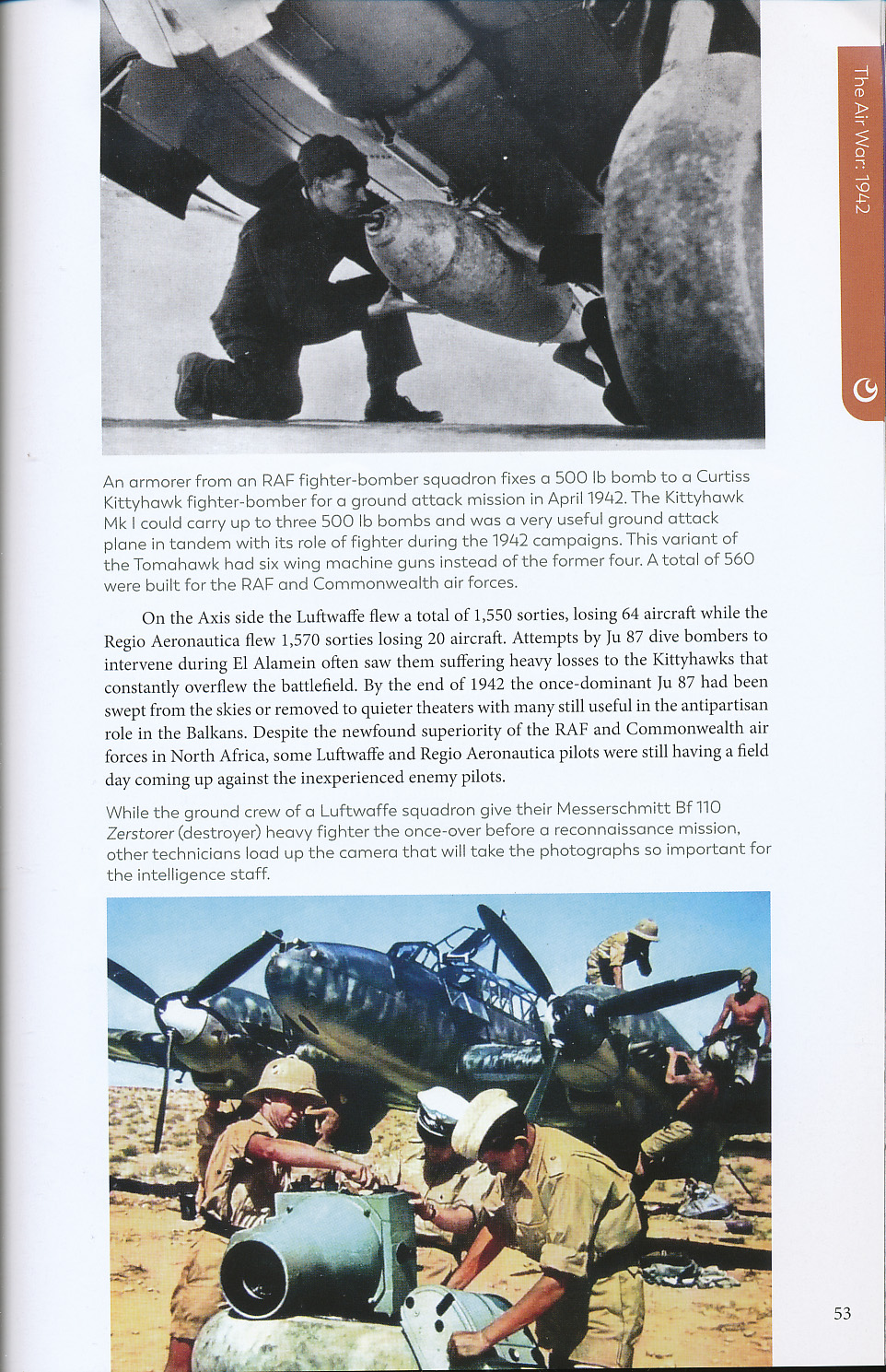
The photos used are often familiar, though quite a few were new to me. The captions are well-written, extensive and packed with useful information. Reproduction is generally very good, which is helped by the high-quality paper used.
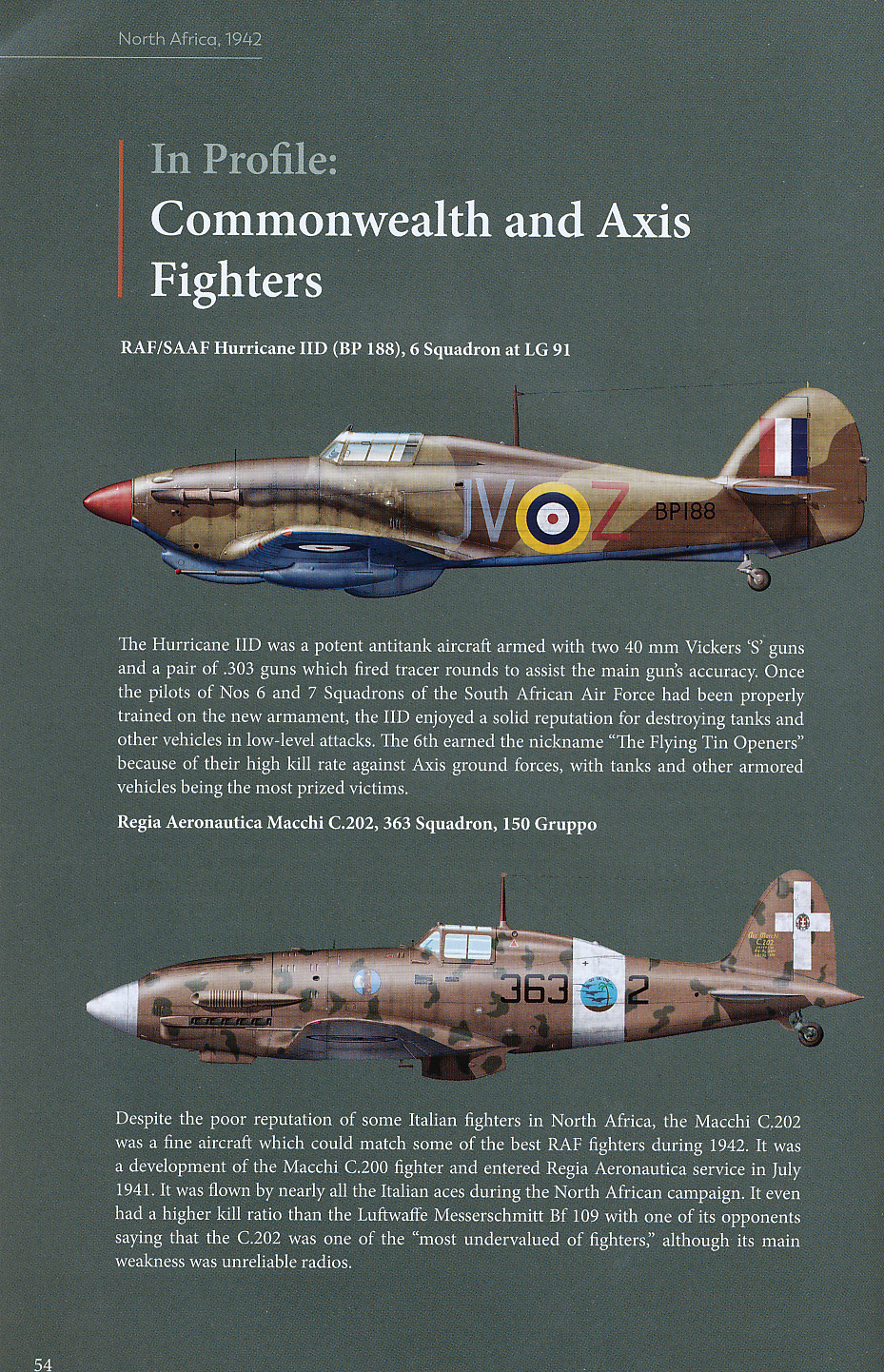
The colour profiles highlight some of the machines used during the year, including tanks and aircraft from both sides. While these are small, they do provide a useful starter for further research.
There are a number of useful sidebars, highlighting personalities or units that provide greater context and detail without cluttering up the main text – nice feature.
My only real issue with the book is the way the text is badly broken up by photos and their captions; sometimes, after turning a page, it takes a moment to distinguish where text stops and captions begin! Having photos and captions delineated by a surround or with coloured background, like the sidebars, would have been helpful here. A minor gripe is that there isn’t an overall map of the whole theatre at the start of the book – this would have been helpful in setting the scene and putting places into context.
All in all, a useful little primer on the subject for those who don’t need a large and highly detailed volume. Recommended. My thanks to Casemate for the review sample.
Comments
Add new comment
This site is protected by reCAPTCHA and the Google Privacy Policy and Terms of Service apply.
Similar Reviews