
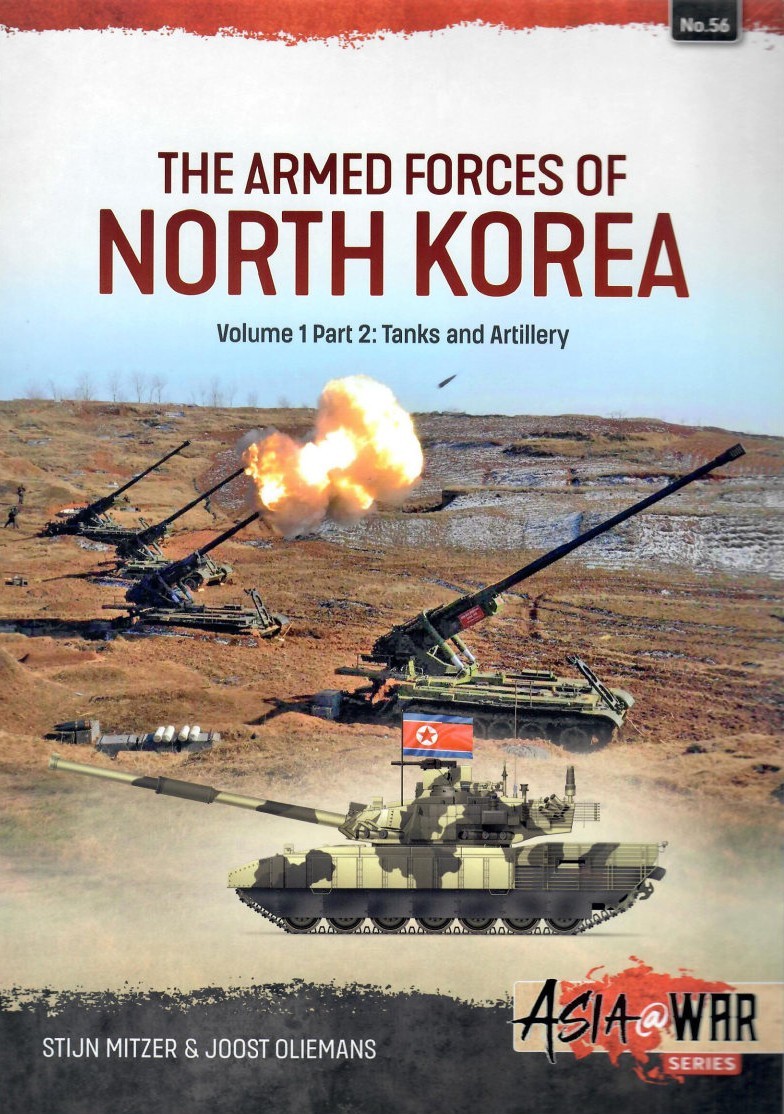
The Armed Forces of North Korea, Volume, Part 2: Tanks and Artillery
From the Introduction,
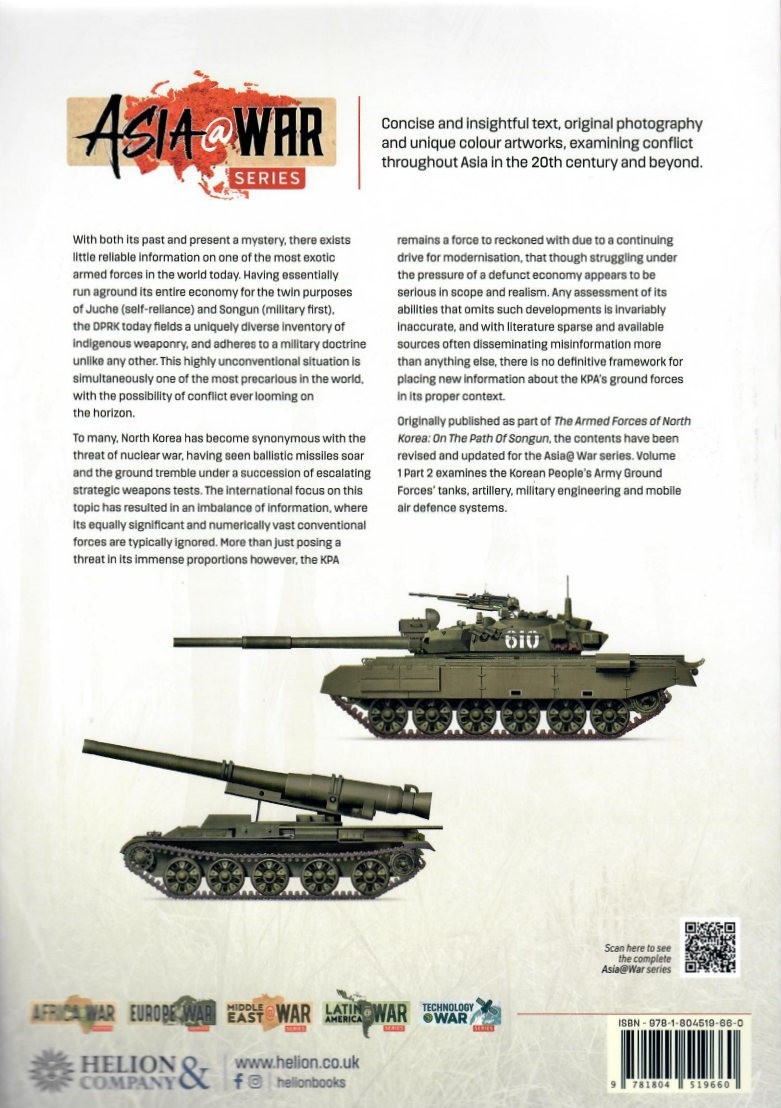
Infantry, and the tactics shaping their use, will play a central role in the any future conflict on the Korean Peninsula, alongside the APC’s and fire-support vehicles detailed in the previous volume. However, it is through overwhelming firepower of its armored formations and artillery, backed by engineering units and mobile air defences, that the KPA is expected to attempt a breakthrough. With most of its inventory of indigenous manufacture, the present book attempts a comprehensive study into the little-explored landscape of the Ground Forces’ armored vehicles.
This book picks up where the first volume on the (North) Korean People’s Army Ground Forces Organisation, Strategy and Infantry leaves off. This second volume is a continuation series, part of the larger book, The Armed Forces of North Korea – On the Path of Songun, a 240-page hardcover book (released in 2020 and no longer in print) into smaller volumes makes sense as it is easier to digest, and if a modeler or historian wants to focus on one aspect, this series makes it easier to do so. These separate volumes have been updated with recent information and photos dating to 2025.
This 64-page book is part of Helion & Company’s @War Series The Armed Forces of North Korea, Volume 1 Part 2: Tanks and Artillery (Helion No. HEL2112) is outlined in the familiar @War format with three black and white photographs, 102 color photographs, 14 color profiles (which are located in their appropriate chapters rather than a conglomeration in the middle of the book), and a color map. The book is composed of the following sections:
- Abbreviations and Acronyms
- Introduction
- Tanks
- Artillery
- Military Engineering
- Mobile Engineering
- Bibliography
- End Notes
- About the Author
Armored forces are essential to an offensive campaign against South Korea (Republic of Korea, RoK). The authors prove this point in the first paragraph of the book,
With its narrow corridors and high concentration of forces, the areas around the Demilitarized Zone (DMZ) are liable to become the scene of one of the largest tank battles in history should fighting erupt; the Korean People’s Army (KPA) fields some 4,300 tanks, facing off roughly 2,200 more of the Republic of Korea Army (ROKA). Nonetheless, much of the Korean Peninsula is relatively inhospitable to main battle tanks (MBTs), with engagement ranges marred by a plethora of mountain ranges covered in dense forest. The preciously rare flats are riddled with rivers that can become obstacles that are hard to overcome should their bridges be dismantled and having in the South often been seized by eager urbanization. To an invasive force then, highly mobile, lightweight and preferably amphibious, or at least fording-capable, tank designs that are optimized for short-range engagements are preferable. Although these requirements have been strictly adhered to in the KPA, with tanks usually weighing below 40 tonnes, as opposed to the 55 tonnes of South Korea’s K2, there is a huge qualitative difference on average between the North’s current tank composition and that of the South. Against the ROKA’s crème de la crème the KPA has little to offer in terms of MBTs, with only a few dozen of its most capable designs currently thought to be in service.
With an opening like that, the reader can expect great things, and we are not left disappointed. A lot of the information gathered is open source and is found in the KPA’s propaganda, particularly in its many parades in their capital, Pyongyang, on quinquennial or decennial anniversaries (every five or 10 years), and jubilee years (25th, 40th, 50th, 60th, 70th anniversaries) of key events: Military Foundation Day, Korean People’s Army, Foundation of the DPRK, etc.
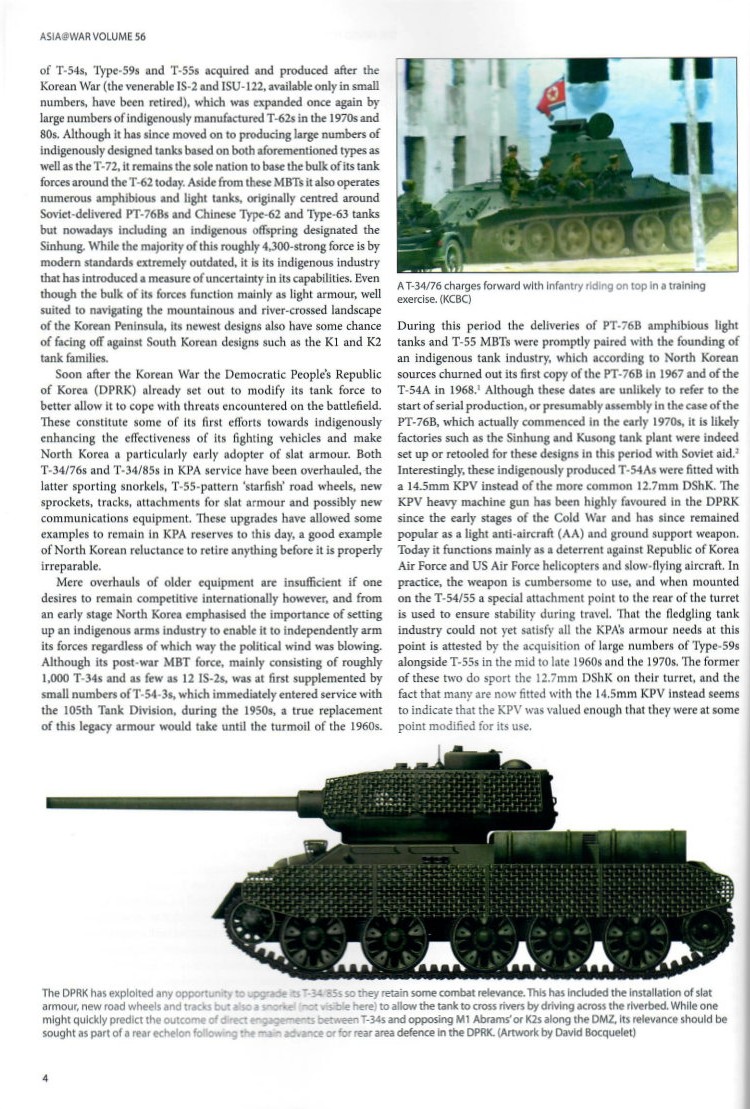
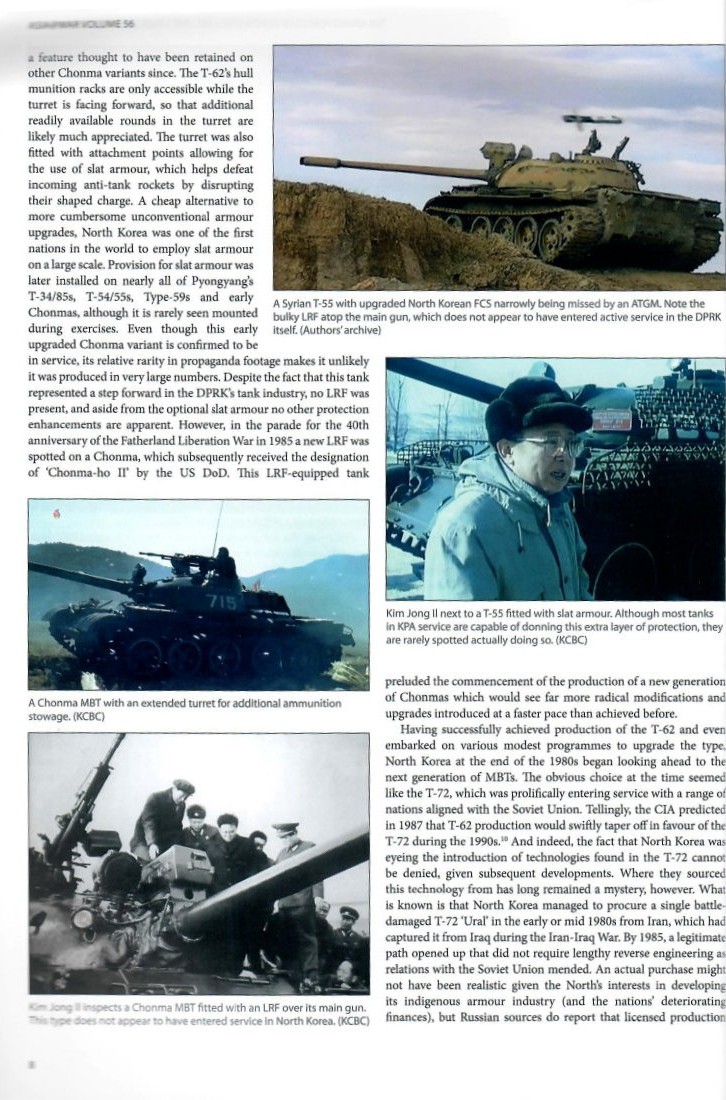
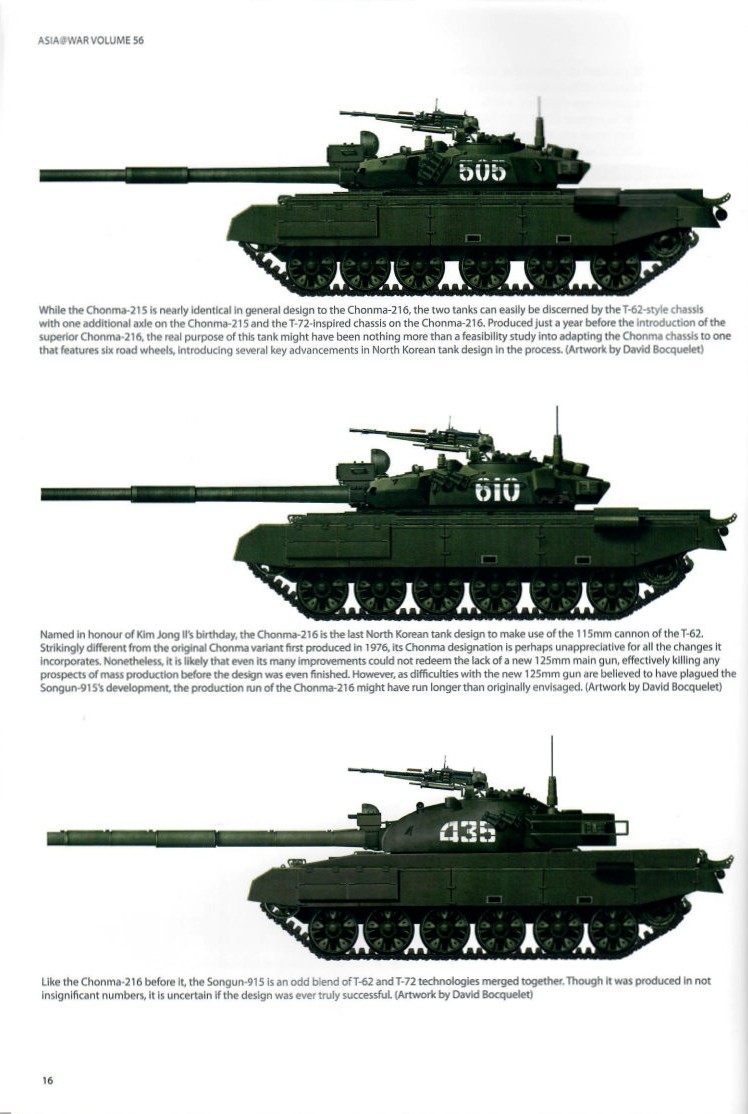
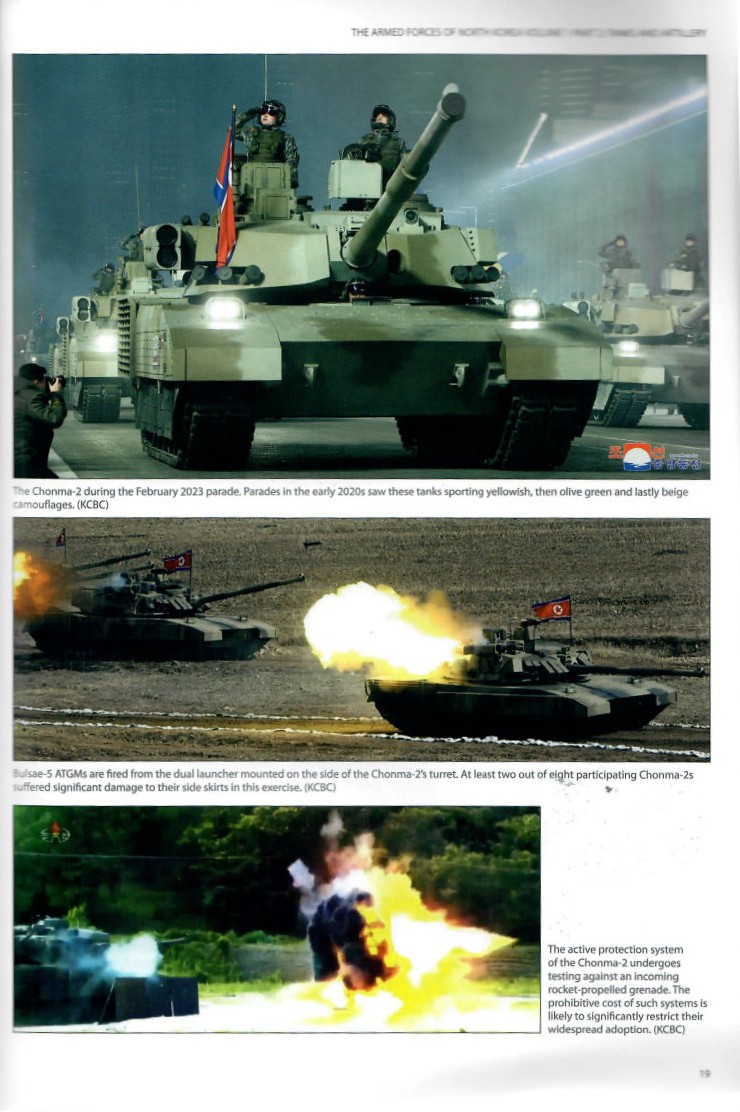
The KPA’s tank evolution is impressive, especially considering their initial limited industrial capacity. Their first tanks were Soviet World War II hand me downs, primarily 1,000 T-34s (both 76mm and 85mm) and as few as 12 IS-2s. The next major tanks were the Russian T-62s and their Chinese variants. This is where the KPA gets creative in various models of the T-62 that take on distinctive KPA traits and are sold to third world countries as the Chonma. The Chonma series evolves and adds laser range finders, an extra set of road wheels, slat armor, reactive armor. A uniquely KPA T-72 twist becomes the Songun. Both the Chonma and Songun have evolved into tanks unrecognizable to their lineage, to include all sorts of turret-mounted weapon systems to include automatic grenade launchers and SAM (Surface to Air Missile) launchers. The KPA has also developed a family of light amphibious tanks and AFVs based on the 323 chassis for support and follow-on roles.
The second chapter focuses on perhaps the KPA’s greatest battlefield advantage – artillery.
With some 8,800 artillery pieces larger than 76mm and 5,500 MRLs (Multiple Rocket Launchers) in active service, North Korea boasts the largest artillery forces in the world, surpassing even powers such as China, Russia and the USA. These unparalleled masses of equipment have been built up through well over half a century of arms acquisition and production, and its current composition still reflects every stage of that process. Second World War vintage artillery pieces serve alongside modern long-ranged precision-guided MRLs, presenting serious logistical challenges as well as creating a strange contrast between the equipment of some units versus others.
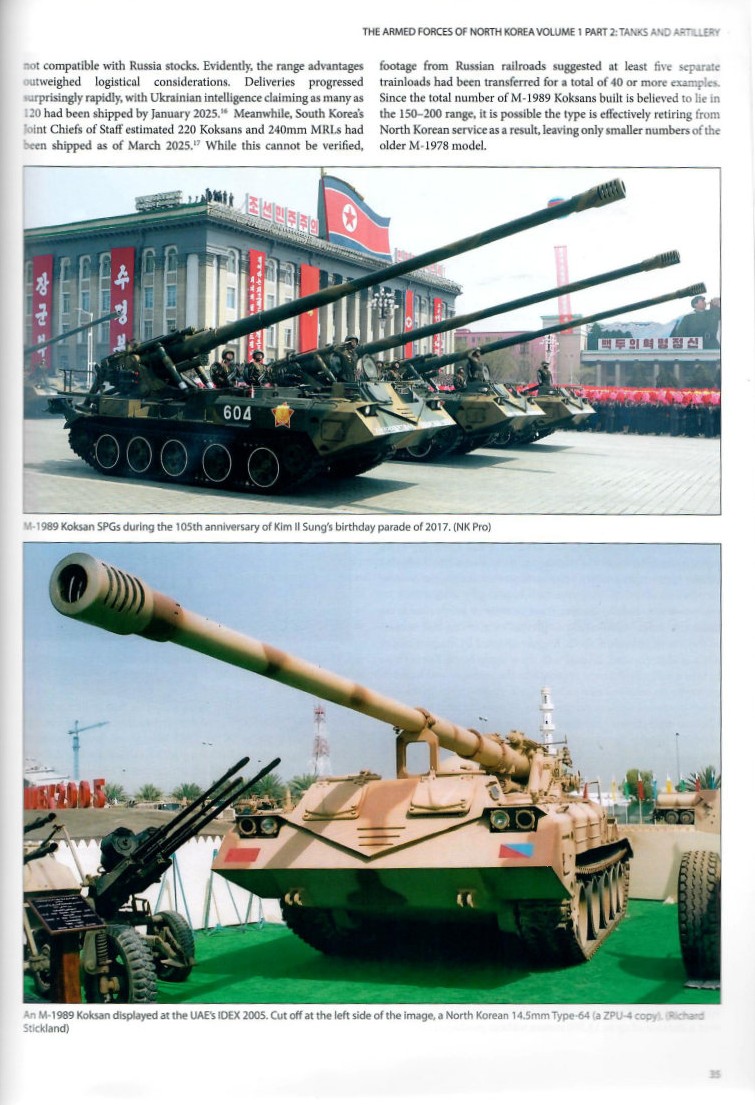
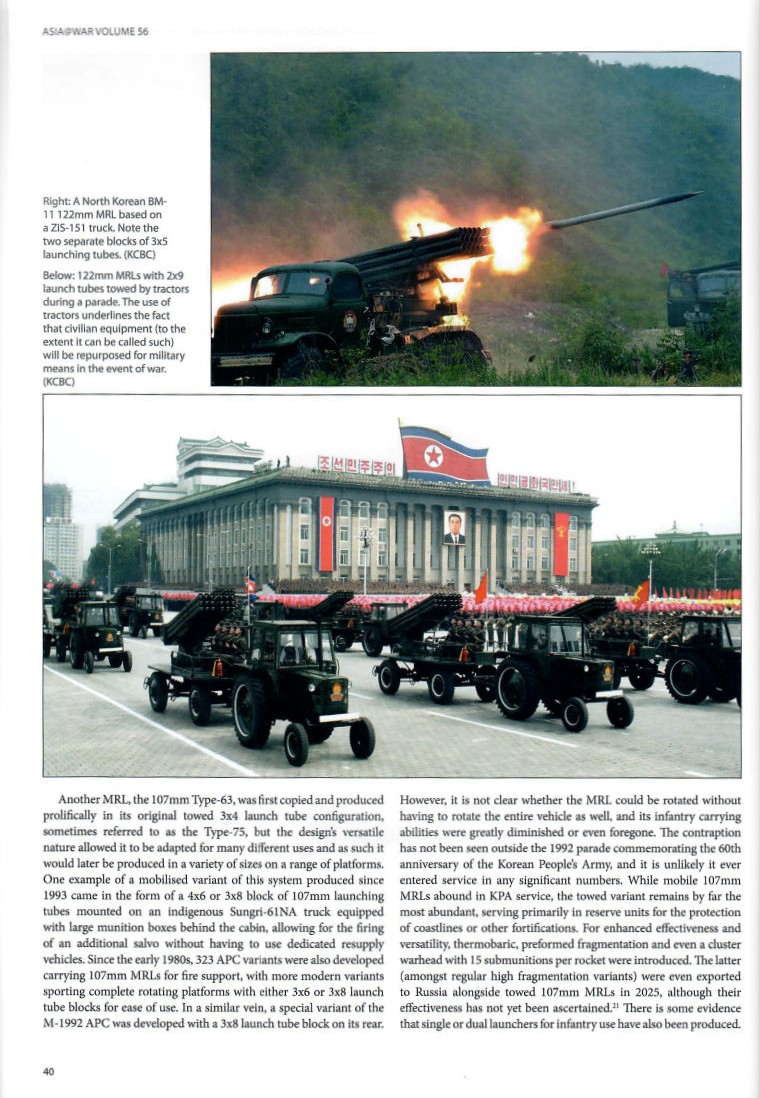
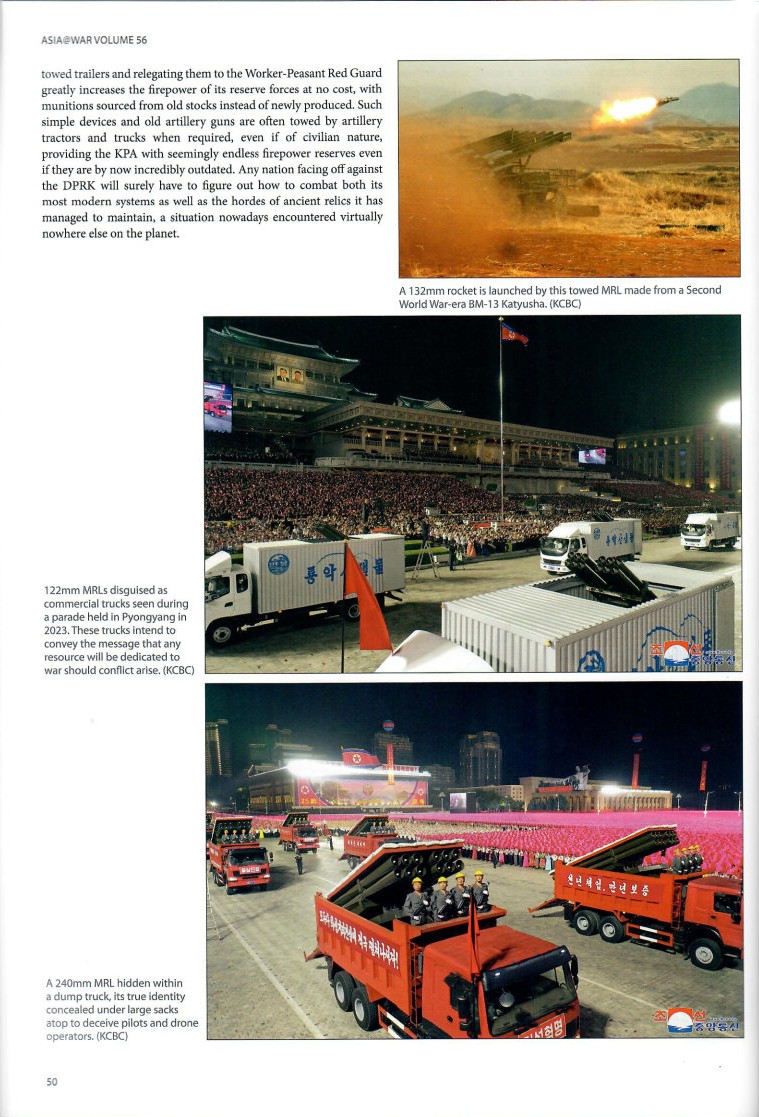
The chapter showcased SPG (self-propelled guns) in various calibers, including the unique massive 170mm M-1978 Koksan (some even seen used by Russian forces in Ukraine, despite not having their own 170mm ammunition production capability), unique large caliber three-barrel recoilless guns, to modern 155mm SPGs. The KPA also relies heavily on MRLs – towed, wheeled and tracked, in numerous calibers. From WWII era to modern MRLS reminiscent of American tracked MLRS (Multiple Launch Rocket System) and wheeled HIMARS (High Mobility Artillery Rocket System). Among the more usual MRLs are those that are camouflaged to look like commercial box trucks and dump trucks.
As a former combat engineer, the third chapter on Military Engineering was of particular interest to me, but like most books, it is too short, coming in at four and a half pages. But those pages are packed. As noted above, the KPA is focused on offensive operations and overcoming water obstacles quickly are key to this strategy.
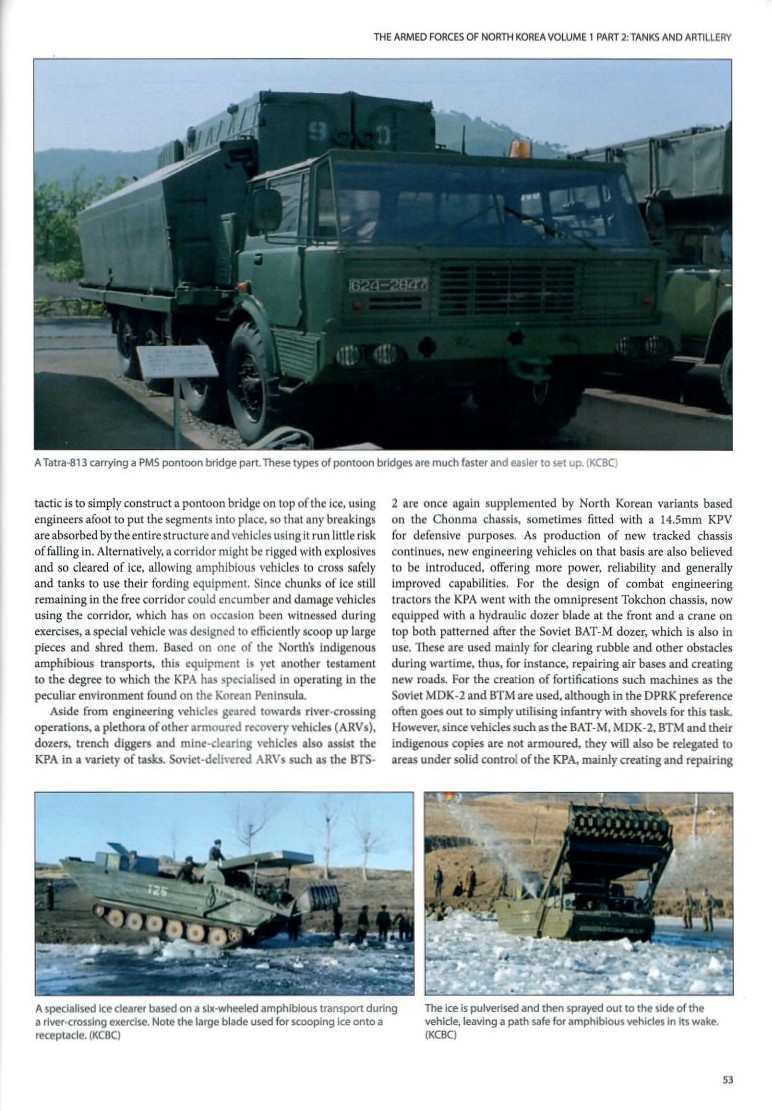
Despite the fact that this equipment is specialized for a wide variety of tasks, it is its river-crossing equipment that defines North Korean military engineering above anything else. Possessing close to 1,000 amphibious transports and well over 2,000 pontoon bridging sections, the amount of equipment for river crossing alone already surpasses the inventory of engineering branches of most armies in the world.
Most of the KPA military engineering equipment has evolved from indigenous manufacture. Besides tracked Chonma armored bridge layers, BTS-2 armored recovery vehicles, Tockchon-based combat engineer vehicles, the most unique KPA military engineering vehicle evolved from their doctrine for river crossing during freezes. KPA engineers have several options when encountering frozen rivers: cross over the ice, lay a pontoon bridge over the ice to distribute weight, explosively blow channels through the ice so amphibious vehicles can pass, or their uniquely designed special tracked vehicle that scoops up large pieces of ice and shreds them, clearing the way for other vehicles, preventing them from damage from ice chunks.
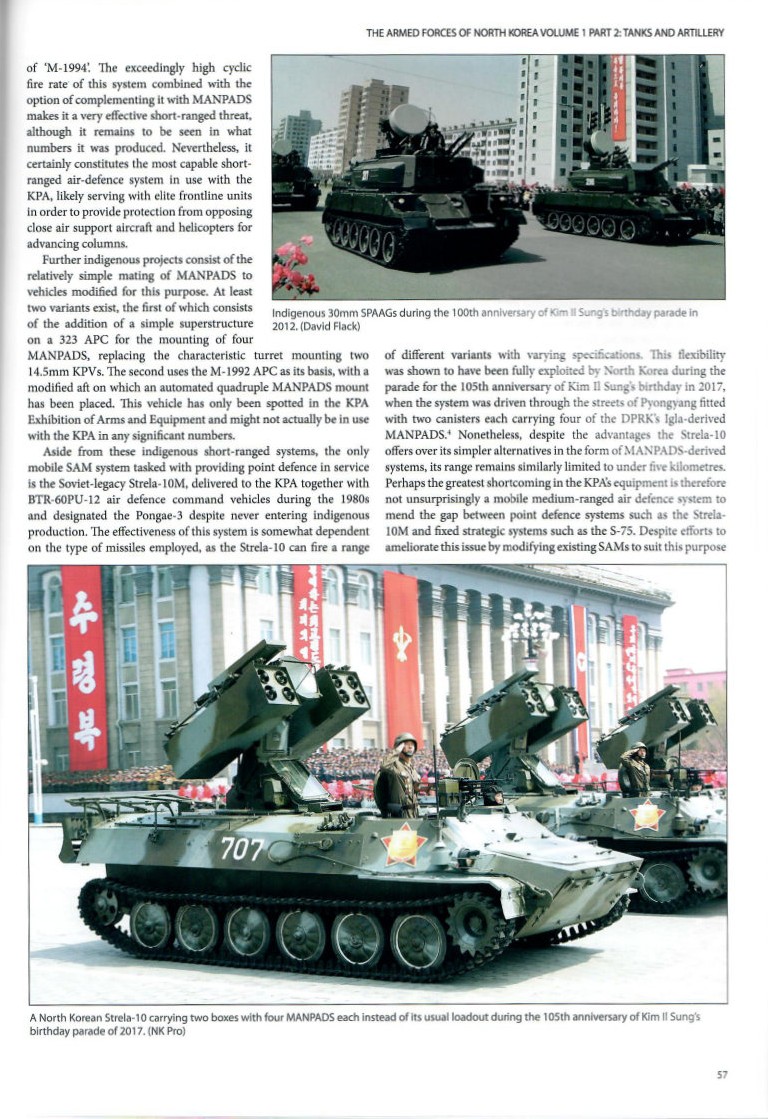
The fourth and final chapter is on Mobile Air Defence Systems, represented by both guns and missiles. The KPA uses tracked 37mm, 57mm and 30mm SPAAGs (Self Propelled Anti-Artillery Gun) along with wheeled mounted larger SAMs (Surface to Air Missiles). This is perhaps the Achilles heel in the KPA – the dominance of its air force and the ability to counter enemy air. The Korean People’s Army Air Force has much of this mission and will covered in, presumably, the next volume of this incredible series.
Modelers will find a lot of inspiration in this volume with its color photographs of the tanks and artillery outlined in this book. The evolution is impressive and modelers can find examples of Korean War, Cold War and modern weapons.
The authors did a fantastic job presenting information from an essentially closed system. This is a well-balanced book that doesn’t portray the KPA as eminently weak or impossibly invincible. Readers wanting to know more about North Korea’s armed forces are well served with this series and will be surprised and interested to learn how North Korea made its own way in the world with lessening support from her past allies.
Profuse thanks to Casemate and IPMS/USA for providing the review sample.

Comments
Add new comment
This site is protected by reCAPTCHA and the Google Privacy Policy and Terms of Service apply.
Similar Reviews