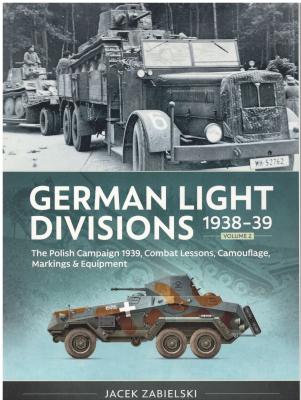
Helion is a prolific publisher of military history based in the United Kingdom. This two-volume set provides an overview of the formations, equipment, and actions of German light divisions from 1938 through the end of the Polish campaign. As with all Helion offerings, they are paperback but professionally produced. Each volume is full of beautifully reproduced black and white photographs, campaign maps, drawings of tables of equipment and organization, as well as several color profiles of German vehicles in this time. The first volume covers the formation, armament, and pre-war deployment. The second volume is devoted to the Polish campaign with additional information on camouflage, markings, and the continued evolution and ultimate dissolution of the light divisions.
May 2026
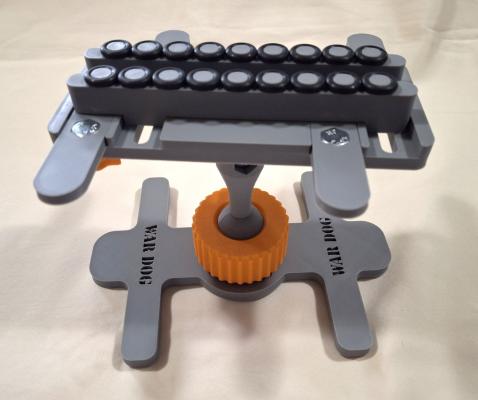
War Dog Modeling is a new company that produces work stand for all types of models, including aircraft, ships, cars, and armor (the subject of this review).
What’s in the Box
The stand arrives in a corrugated cardboard box containing the major parts and a small bag with the metal hex-bolts and plastic wing nuts, all protected by brown paper packaging. The wing nuts and main components are 3-D printed in a sturdy resin, the stand base is 6.25 inches long and the grippers will open to 4.625 inches wide.
The Instructions
Don’t look for any instructions, but do not panic as it only takes a quick visit to the War Dog Models website to see how the stand is supposed to look. Construction is beyond intuitive and takes no time at all.
I saw these modeling stands mentioned in one of the chapter newsletters Mark Young compiles and sends to all members (sorry, can’t recall which one). I decided to purchase the sets mentioned above at https://www.wardogmodeling.com/. War Dog also makes a Model Ship Stand and a Model Car Stand. My stands arrived unassembled in a plain white cardboard box, so I don’t have any box art to show you. The box contains the parts in separate plastic bags, a copy of the order information, and that’s it. No instructions, but they aren’t really needed. Assembly is straightforward.
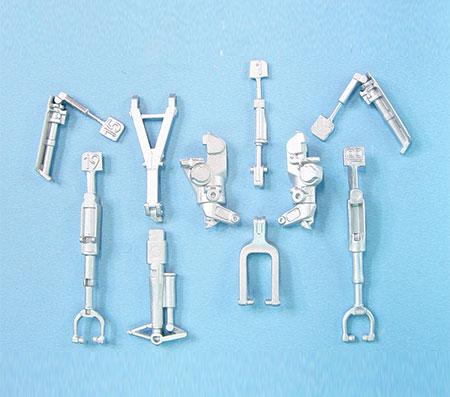
Scale Aircraft Conversions (SAC) has provided the IPMS reviewer corps with a set of 1/48th scale metal landing gear for UMa’s AV-8B Harrier II Plus. These parts are drop-in replacements and provide a more robust landing gear set given its metal properties.
In The Package
The metal pieces are packaged in a clear blister package with cardboard backing. No instructions are provided.
Review
The metal landing gear set is used as drop-in replacements for the kit parts as noted:
- Nose Gear: C1, D20, D21, and D26
- Rear Gear: D9 and D17
- Wingtip Outrigger Gear: D15, D16, D18, and D19
The metal used is malleable and has some give to allow for any minor bending if needed. Also, seam lines will need to be cleaned up prior to painting just like the plastic kit parts.
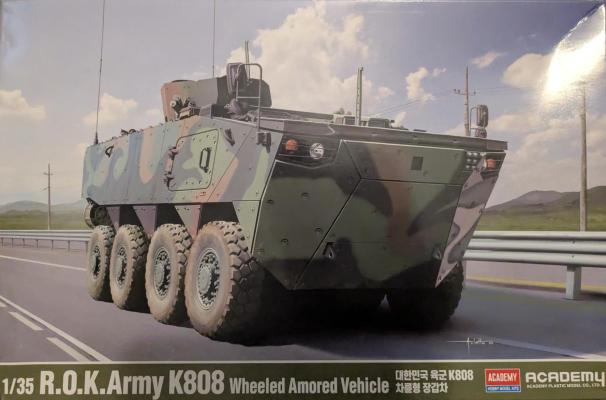
As this is a relatively new and unknown combat vehicle, Wikipedia provided some background:
The K808/806 White Tiger (Korean: 백호 "Baekho", Hanja: 白虎) wheeled armored personnel carrier (APC) is family of 8×8 and 6×6 armored vehicles. Developed by Hyundai Rotem as a private venture in 2012, the Korean Army declared a plan to acquire 600 6×6 and 8×8 wheeled APCs in order to help build rapid response forces modeled after U.S. Stryker combat brigades.
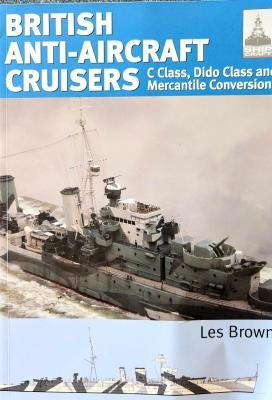
This is another book in this series, each concerning itself with one particular type or class of ship. This one is about British Anti-/Aircraft Cruisers and includes ships specifically built for this mission or converted to it. As usual for this series, it is not so much a history of the ships, although brief accounts of their careers are included, as it is a description of the various specific modifications made to them that made them anti-aircraft ships. Included are the “C” class cruisers that were converted for this work, merchant vessels that were requisitioned and converted and the more-or-less purpose build Dido Class ships.
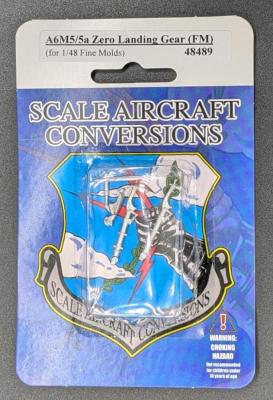
The iconic Mitsubishi A6M Zero was the Imperial Japanese Navy’s primary carrier-based fighter plane from 1940-1945. Over 10,000 of these ubiquitous fighters were produced, with the A6M5 Type 0 Model 52 being the last and most effective model. Scale Aircraft Conversion has produced its famous white metal landing gear for the A6M5/5a Zero in 1/48 scale. As aircraft modelers well know, aircraft models displayed on their landing gear are susceptible to damage from the weight of the model, especially on styrene landing gear.
Scale Aircraft Conversion has had the solution since 1990. Their white metal landing gear is designed to bear the weight of the model and complement the detailed non-load bearing plastic parts. Their extensive range covers white metal landing gear from 1/144 to 1/18 scale aircraft.
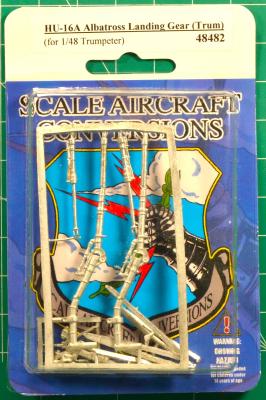
Scale Aircraft Conversions (SAC) has provided the IPMS reviewer corps with a set of 1/48th scale metal landing gear for Trumpeter’s HU-16A Albatross. These parts are drop-in replacements and provide a more robust landing gear set given its metal properties.
In the Package
The metal pieces are packaged in a clear blister package with cardboard backing. No instructions are provided.
Review Process
The metal landing gear set is used as drop-in replacements for the kit parts as noted
- Nose Gear: G12, G19 and G16 (also Metal Nose Strut parts A & B)
- RHS Gear: J19, J26, and K11 (also Metal Right Strut)
- LHS Gear: J16, J21, and K27 (also Metal Left Strut)
Note: The Trumpeter kit does provide some metal landing struts as optional parts for the builder. However, SAC does provide more replacement parts in this set.
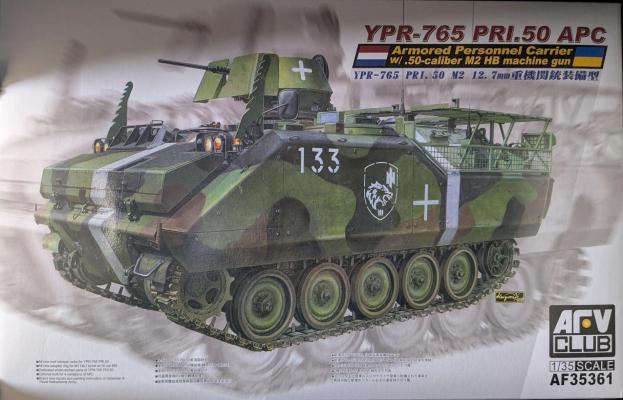
The MICV-65 (Mechanized Infantry Combat Vehicle) was a project conducted by the United States Army seeking an armored personnel carrier vehicle to replace the M113, built by the FMC Corporation (Ford Machinery & Chemical Corporation). FMC was awarded to design and build the MICV and designated XM734. The XM734 utilized the M113 as basic platform, armed with a turret manned by a single crew firing a 20mm cannon. The newly designed vehicle was re-designated the AIFV (Armored Infantry Fighting Vehicle), but the United States showed no interest in the vehicle; however, the Dutch government showed interest and placed orders in 1975. Further modifications were made and the vehicle was redesignated YPR-765 (Pantser Rups Infanterie 765). The YPR-765 PRI.50 is a lightened version, debuting in 1976, that replaced the 25mm cannon with the commander’s position and .50 caliber M2 heavy machine gun. It also allowed for a crew of three and seven fully equipped soldiers.
“I Don't Want A Pickle...”
by Ben Morton
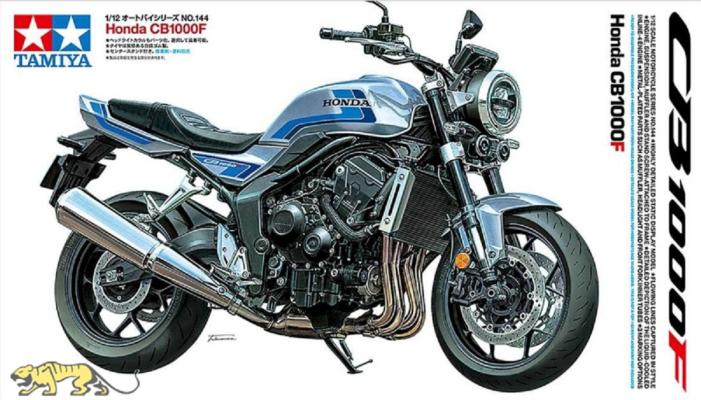
I should explain the title so as not to throw you off from the get go. The more refined and worldly among us may recall the name Arlo Guthrie. A singer-songwriter that had some notoriety for being Woody Guthrie's son and a few FM radio hits like the “Alice's Restaurant Massacre” and of course, “The Motorcycle Song”. The opening line of which is: “I don't wanna pickle, I just wanna ride my motorsickle.” Now, on with the show.
From Tamiya's website -